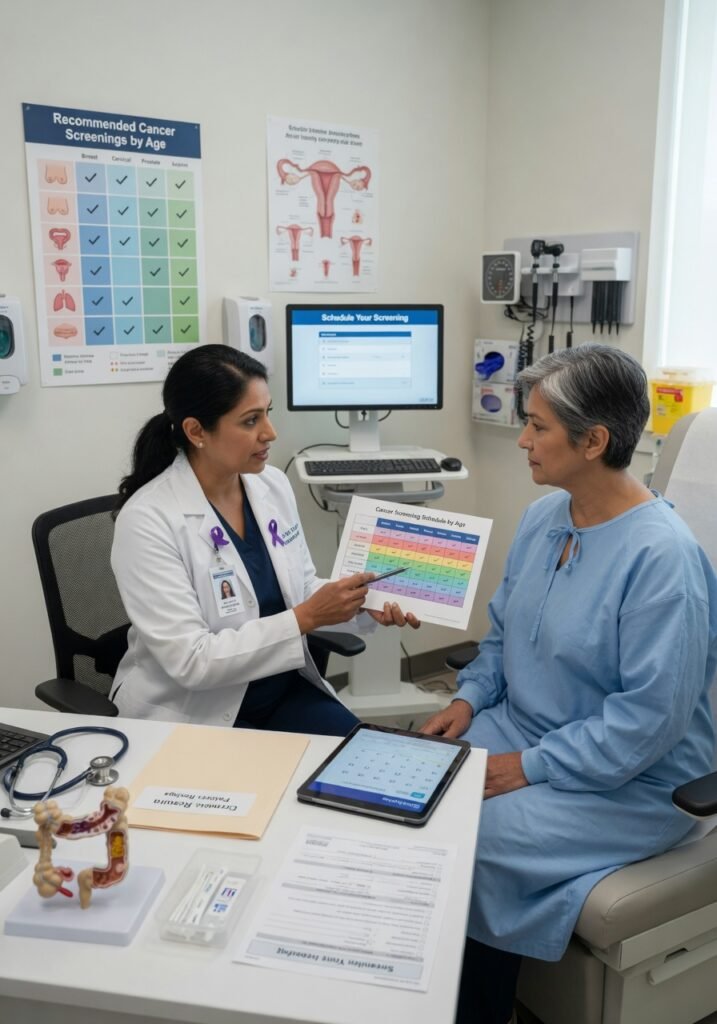
Sarah, a 42-year-old marketing director, skipped her mammogram appointment three years running. She figured that since she felt fine and had no family history of breast cancer, screening seemed unnecessary—a precaution for people at actual risk. Then her best friend was diagnosed with stage 2 breast cancer at 44. That conversation changed everything. What Sarah didn’t know—what most people don’t know—is that screening isn’t about feeling sick. It’s about catching disease before your body even registers something’s wrong. The uncomfortable truth doctors face daily is this: roughly 40% of eligible adults skip recommended cancer screenings entirely, not because they’re afraid of results, but because they fundamentally misunderstand what screening actually accomplishes.
Key Facts About Cancer Screening
- Mammography screening reduces breast cancer mortality by approximately 20% in women aged 50-74, according to research published in JAMA Oncology, yet only 58% of eligible women in the U.S. receive regular screening.
- Colorectal cancer screening with colonoscopy has documented 60-90% effectiveness at preventing colorectal cancer when adenomatous polyps are removed before progressing to malignancy.
- The five-year relative survival rate for cervical cancer exceeds 90% when detected at stage 1, compared to 17% when detected at stage 4—making HPV and Pap smear screening among the most successful prevention tools in modern medicine.
- Prostate cancer screening with PSA (prostate-specific antigen) testing and digital rectal examination remains controversial; shared decision-making between men and physicians is now the recommended approach rather than routine screening for all men over 50.
- Lung cancer screening using low-dose CT scans in high-risk smokers (those with 30+ pack-year history) reduces lung cancer mortality by 20% according to the National Lung Screening Trial, yet awareness among eligible smokers remains below 20%.
Understanding Cancer Screening: What’s Actually Happening
Most patients picture cancer screening as a hunt—you go get tested, doctors look for cancer, and hopefully they find nothing. That’s partially true, but incomplete. Screening is actually surveillance for pre-cancerous or early-cancerous changes in cells before they create symptoms. Think of it like airport security checking for threats before they reach the gate rather than dealing with problems after passengers board.
Here’s the mechanism that matters: cancers develop through accumulation of cellular mutations over time. Screening catches this progression at earlier, more treatable stages. When a mammogram finds a small cluster of microcalcifications, or a colonoscopy removes a polyp, or a Pap smear detects precancerous cervical cells—your medical team is intercepting the disease’s timeline. Without screening, these lesions might progress silently for years before symptoms appear. By then, cancer may have spread beyond the organ of origin, fundamentally changing treatment options and survival probability.
The psychological component matters too. Screening anxiety is real. You get tested, then wait for results, carrying uncertainty. Some screenings require uncomfortable procedures. Others produce false positives that necessitate additional testing. Understanding that this discomfort exists for a reason—to catch disease early—helps contextualize the experience.
Risk Factors for Cancer: Who Actually Needs Screening
Age remains the dominant risk factor across all cancers. Cancer incidence rises exponentially after age 50. But age alone is crude. Your individual risk depends on a constellation of factors.
Tobacco use matters enormously for lung, bladder, and head/neck cancers. Current smokers or those with significant pack-year histories face dramatically elevated risk. Alcohol consumption—particularly heavy drinking—increases breast, colorectal, and liver cancer risk through mechanisms involving both direct cellular damage and altered metabolism. Family history of specific cancers carries weight, though most people overestimate how much genetic predisposition matters; roughly 5-10% of cancers are hereditary.
HPV (human papillomavirus) infection is the primary risk factor for cervical cancer. Obesity and metabolic syndrome increase endometrial and postmenopausal breast cancer risk through chronic inflammation and altered hormone metabolism. Inflammatory bowel disease like Crohn’s disease and ulcerative colitis predispose to colorectal cancer due to chronic intestinal inflammation.
Here’s what most articles miss: occupational exposures often fly under the radar. Asbestos exposure decades ago continues causing mesothelioma and lung cancer. Workers in agriculture face higher skin cancer risk from UV exposure. Vinyl chloride manufacturing workers develop liver cancer at elevated rates. If your job involves chemical exposure, prolonged sun exposure, or other environmental hazards, your screening recommendation might differ from standard guidelines.
Early Warning Signs You Shouldn’t Ignore
The paradox of cancer is this: early disease often produces no symptoms. That’s precisely why screening exists. But certain warning signs warrant attention.
Persistent cough lasting more than three weeks, especially if you have smoking history, merits chest imaging. Unusual bleeding—blood in stool, blood in urine, abnormal vaginal bleeding between periods—shouldn’t be dismissed as hemorrhoids or hormonal fluctuation without investigation. Skin changes deserve scrutiny: new moles, changes in existing moles (size, shape, color), or non-healing sores on sun-exposed skin need dermatologic evaluation.
Difficulty swallowing that persists beyond a week, unexplained weight loss exceeding 10 pounds over months, or a lump in breast, testicles, or lymph nodes requires medical assessment. These don’t automatically mean cancer, but they warrant workup.
The overlooked sign: persistent fatigue that doesn’t improve with rest. Many patients attribute tiredness to stress or aging. While most fatigue has benign causes, it can signal anemia from chronic bleeding (colorectal cancer source) or constitutional symptoms from lymphomas. Pay attention to fatigue that represents a change from your baseline.
Screening Tests Explained: What Happens in the Room
Mammography uses low-dose X-rays to create detailed breast images. You’ll be positioned against a machine, and the breast tissue gets compressed between two plates. Yes, it’s uncomfortable. Most radiologists acknowledge this. The procedure takes roughly 15 minutes total.
Colonoscopy involves a flexible tube with a camera advancing through your colon. You’ll receive sedation beforehand. The procedure itself takes 30-60 minutes. During insertion, you might feel pressure or cramping. The benefit: if polyps are found, your gastroenterologist removes them immediately during that same procedure, preventing future cancer development.
Pap smears (cervical cancer screening) are quick—your gynecologist uses a small brush or spatula to collect cells from your cervix. It typically causes minimal discomfort, though some spotting afterward is normal. HPV testing has become increasingly incorporated; you might get a Pap smear plus reflex HPV testing, or HPV testing alone depending on your age and risk factors.
Low-dose CT (computed tomography) for lung screening involves lying on a table that moves through a scanning machine. The scan takes seconds. No contrast dye needed. The catch: radiation exposure exists, though at lower doses than diagnostic CT scans.
The diagnostic process after abnormal screening differs. Abnormal mammography results might require additional imaging (ultrasound, MRI) or biopsy. Abnormal colonoscopy findings are addressed during the procedure. Abnormal Pap smears typically require HPV testing or repeat cytology depending on initial findings.
Current Treatment Landscape by Cancer Type
Treatment depends entirely on cancer type, stage, and individual patient factors. I’ll discuss what screening catches and what evidence supports.
Early-stage breast cancer caught on mammography might be treated with lumpectomy (breast-conserving surgery) plus radiation therapy, or with mastectomy. Hormone receptor-positive tumors benefit from tamoxifen or aromatase inhibitors like letrozole or anastrozole. HER2-positive tumors respond to trastuzumab (Herceptin). Chemotherapy regimens vary but commonly include doxorubicin, cyclophosphamide, and paclitaxel combinations.
Early colorectal cancer detected via colonoscopy—polyps removed or stage 1 tumors resected surgically—often requires only surgery without chemotherapy. Stage 2-3 colorectal cancers typically benefit from 5-fluorouracil (5-FU)-based chemotherapy combinations like FOLFOX (5-FU, leucovorin, oxaliplatin).
Cervical cancer precursors caught on Pap smears and confirmed with colposcopy are treated with loop electrosurgical excision procedure (LEEP) or cold knife conization—outpatient procedures with high cure rates when disease hasn’t invaded deeply.
Early lung cancer detected on low-dose CT might be resectable surgically. More advanced disease frequently requires chemotherapy combinations like carboplatin plus pemetrexed, or immunotherapy agents like pembrolizumab or nivolumab.
The critical insight: what treatment you need directly correlates with screening timing. Stage 1 cancers caught early typically require less aggressive therapy, fewer side effects, and demonstrate superior survival compared to stage 3-4 diagnoses caught by symptoms.
Practical Screening Management: Making It Happen
Schedule screening appointments when they’re scheduled. Use calendar reminders set for three months before your due date. Many practices send automatic reminders—ensure your contact information is current.
Know your screening intervals. Mammography typically occurs every 1-2 years after age 40-50 depending on risk factors. Colonoscopy happens every 10 years if normal (or 5 years if polyps removed). Pap smears or HPV testing occur every 3-5 years depending on prior results. Lung cancer screening happens annually if you qualify. Mark these in your actual calendar—not mentally.
Prepare properly for procedures. Colonoscopy requires bowel preparation (polyethylene glycol solution typically) that’s admittedly unpleasant but non-negotiable. Adequate bowel cleansing determines whether small polyps get detected. Mammography is easier—wear a two-piece outfit for faster disrobing. Arrive early to avoid rushed intake.
Understand your results. Don’t accept “normal” without specifics. Ask: “What does normal mean?” “When do I need repeat screening?” “Are there any findings I should monitor?” Request copies of your mammograms, colonoscopy reports, and pathology results. These follow you between healthcare systems and prevent redundant testing.
If you’re anxious about procedures, discuss this beforehand. Many colonoscopies use moderate sedation. Mammography facilities can adjust compression if pain is excessive. Your fear doesn’t make you weak—it makes you human. Your medical team can accommodate.
Prevention: What Actually Reduces Cancer Risk
Tobacco cessation is non-negotiable for lung, bladder, and head/neck cancer prevention. Nicotine replacement therapy (patches, gum, lozenges), varenicline (Chantix), or bupropion (Wellbutrin) significantly improve quit rates compared to willpower alone. Even reducing cigarette quantity helps.
HPV vaccination (Gardasil 9) prevents cervical, anal, and oropharyngeal cancers caused by high-risk HPV strains. Ideally given at ages 11-12 but effective through age 45 in many cases. If you never got vaccinated, ask your doctor whether you’re a candidate.
Colorectal cancer prevention includes adequate fiber intake (30+ grams daily from whole grains, vegetables, legumes), limiting red and processed meat consumption, maintaining regular physical activity, limiting alcohol to ≤1 drink daily for women and ≤2 for men, and achieving healthy weight. Aspirin for colorectal cancer prevention in high-risk individuals shows modest benefit in some studies, but routine use for asymptomatic adults remains debated.
Hormone therapy (estrogen plus progestin) after menopause modestly increases breast cancer risk, which persists years after stopping. The increased risk must be weighed against symptom relief. This conversation requires nuance between patient and physician rather than universal recommendations.