Maria, a 58-year-old former accountant, noticed she couldn’t climb the stairs to her bedroom without stopping halfway to catch her breath. She blamed it on getting older, chalked it up to being out of shape, and didn’t mention it at her annual physical. Six months later, a respiratory infection landed her in the emergency room gasping for air—and that’s when she finally learned she had stage 2 COPD that had been silently progressing for years. The frustrating part? Her doctor later told her the early signs were there all along; she just didn’t recognize them as warnings.
Chronic obstructive pulmonary disease affects more people than most realize, and the gap between early detection and late diagnosis often determines quality of life. This guide walks you through what COPD actually is, how doctors identify it, and the specific strategies that help patients like Maria breathe easier and stay active.
Key Facts About COPD
- COPD is the third leading cause of death globally, accounting for approximately 9% of all deaths according to the CDC
- Current smoking and prior smoking account for 80-90% of COPD cases; occupational exposures cause 10-15% of cases
- The disease reduces life expectancy by an average of 6-7 years in current smokers versus 3-4 years in never-smokers with COPD
- Approximately 16 million Americans are diagnosed with COPD, but another 9 million likely have undiagnosed disease
- FEV1 decline in smokers with COPD progresses at roughly twice the rate of decline in non-smokers with COPD
Understanding What COPD Actually Does to Your Lungs
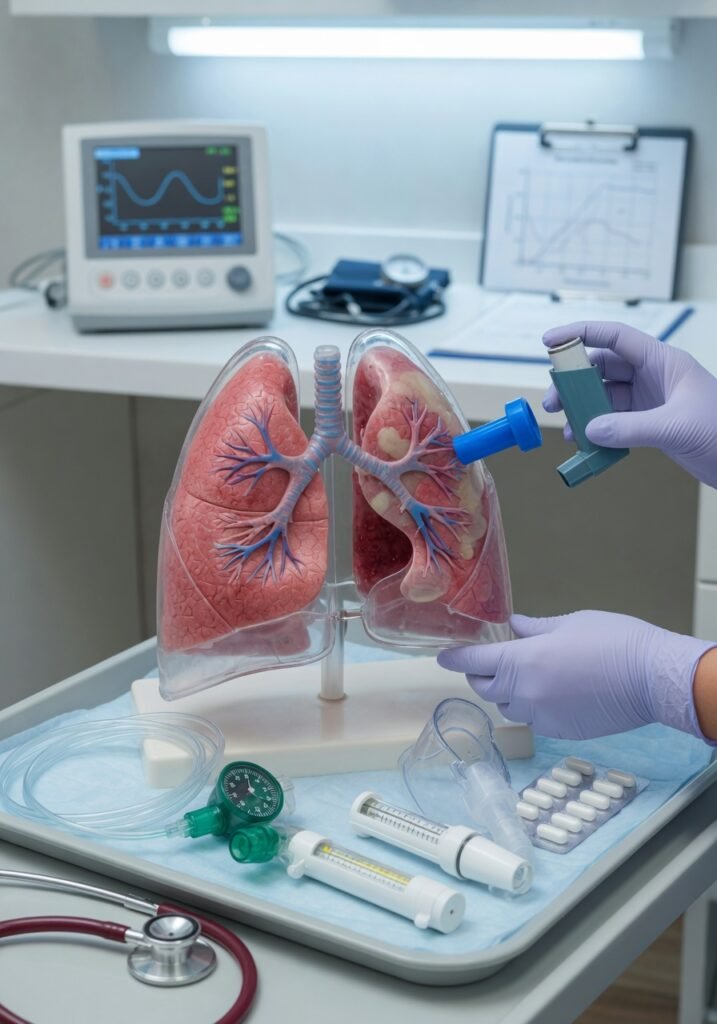
Think of your lungs as a massive tree with branches getting progressively smaller—bronchi, bronchioles, and finally the tiny air sacs called alveoli where oxygen transfers into your blood. In COPD, two destructive processes happen simultaneously. First, the walls of those smallest air sacs lose their elasticity and partially collapse, trapping stale air inside. Second, the airways themselves become inflamed and clogged with thick mucus. The combination means your lungs can’t empty properly, so you’re essentially breathing against a partially deflated balloon.
This isn’t a single disease—it’s an umbrella diagnosis covering emphysema (the air sac destruction component) and chronic bronchitis (the inflammation and mucus component). Most people with COPD have features of both, in varying proportions. The result is the hallmark struggle: your lungs work harder to move the same amount of air, your body doesn’t get enough oxygen efficiently, and you feel short of breath doing things that shouldn’t be difficult.
Causes and Risk Factors: The Real Picture
Smoking remains the dominant risk factor, accounting for the majority of COPD cases in developed countries. But here’s what gets overshadowed in typical discussions: occupational and environmental exposure to dust, chemicals, and particulates causes genuine COPD in never-smokers. Miners, welders, metal workers, agricultural laborers, and people exposed to grain dust develop airway obstruction through cumulative occupational exposure, not smoking.
Air pollution deserves serious mention too. Prolonged exposure to outdoor air pollution, particularly in urban environments with high particulate matter or in areas with biomass burning, contributes to COPD development. Indoor air pollution—wood smoke, cooking smoke in poorly ventilated kitchens, and secondhand smoke—accelerates lung decline, especially in developing countries where these exposures are substantial.
Alpha-1 antitrypsin deficiency is the less-discussed genetic factor. This inherited condition affects about 1 in 2,500 people in the United States, causing early-onset emphysema even in non-smokers. If you develop COPD before age 45 without significant smoking history, or if you have a family member with early emphysema, genetic testing for alpha-1 antitrypsin deficiency makes sense.
Asthma that persists into adulthood, with ongoing inflammation and airway remodeling, can progress to COPD-like disease. Age itself matters—COPD is uncommon before age 40 and increases significantly after 60. Nutritional status, recurrent respiratory infections during childhood, and even poverty (which correlates with smoking rates, occupational hazards, and housing quality) all influence risk.
Recognizing the Symptoms Before They Become Severe
The early warning signs often hide in plain sight. A persistent cough lasting more than three weeks—especially if it’s productive with sputum—warrants evaluation. Many people describe a “smoker’s cough” as normal and don’t mention it to their doctor. Shortness of breath that’s subtle at first—noticing you need to pause during conversations or slow your pace on walks—is another red flag easily attributed to deconditioning.
As disease progresses, patients report specific struggles. Climbing stairs becomes a calculated exercise requiring rest breaks. Pushing a shopping cart feels unusually taxing. Getting dressed demands pauses. Many don’t realize these aren’t normal aging; they’re signs of inadequate oxygenation during exertion.
Increased sputum production, often yellowish or greenish, suggests active inflammation. Wheezing—a whistling sound during breathing—reflects narrowed airways. Some patients experience fatigue disproportionate to their activity level, stemming from the extra work their respiratory muscles perform with every breath. Recurrent respiratory infections, where simple colds become lower respiratory tract infections requiring antibiotics, reflect compromised clearance mechanisms in damaged lungs.
A symptom most people overlook: swelling in the ankles and legs (edema). When COPD damages the lungs severely, the right side of the heart works harder pumping blood through those damaged vessels, eventually leading to fluid retention in the extremities.
Getting a Diagnosis: What Actually Happens
Your doctor starts with a careful history, asking specifically about smoking (current and past pack-years), occupational exposures, and symptom timeline. The physical exam includes listening to your lungs with a stethoscope—detecting decreased breath sounds or wheezing—and observing how you breathe.
Spirometry is the test that actually diagnoses COPD. You’ll blow into a machine as hard as you can after taking a deep breath, then breathe normally, then inhale and exhale forcefully again. The machine measures FEV1 (forced expiratory volume in one second) and FVC (forced vital capacity). A ratio of FEV1/FVC below 0.70 after bronchodilator administration confirms airway obstruction. The severity of FEV1 reduction determines COPD staging: GOLD 1 (mild) is FEV1 ≥80% predicted, GOLD 2 (moderate) is 50-79%, GOLD 3 (severe) is 30-49%, and GOLD 4 (very severe) is below 30%.
A chest X-ray or CT scan helps rule out other conditions and assess emphysematous changes. Blood tests check for alpha-1 antitrypsin deficiency in appropriate candidates. Some doctors order an EKG to assess the heart, since COPD puts strain on cardiac function. Arterial blood gas testing measures oxygen and carbon dioxide levels if your FEV1 is severely reduced.
Treatment Options: What Actually Works
Bronchodilators—medications that relax airway smooth muscle—form the foundation. Short-acting beta-2 agonists like albuterol provide quick relief during symptoms. Long-acting bronchodilators taken daily (salmeterol, formoterol, tiotropium) prevent symptoms and improve lung function over weeks. Many patients use a combination: a long-acting bronchodilator daily plus a short-acting rescue inhaler as needed.
Inhaled corticosteroids reduce airway inflammation. These differ from systemic steroids and work locally in the lungs with minimal whole-body effects. They’re particularly helpful for patients with COPD who have a history of frequent exacerbations or concurrent asthma features. Fluticasone and budesonide are common choices.
Combination inhalers containing both a long-acting bronchodilator and inhaled corticosteroid (Advair, Symbicort) simplify treatment for many patients. Phosphodiesterase-4 inhibitors like roflumilast reduce inflammation systemically and help certain patients with chronic bronchitis and frequent exacerbations, though they cause side effects in some.
Pulmonary rehabilitation—supervised exercise training combined with education about breathing techniques, energy conservation, and nutritional counseling—improves exercise capacity and quality of life. Studies from JAMA demonstrate that pulmonary rehabilitation reduces symptoms and hospitalizations comparable to many medications.
Oxygen therapy becomes necessary when resting oxygen saturation drops below 88-89% or during exertion in moderate-to-severe disease. Long-term oxygen therapy extends survival in hypoxic patients, particularly those with pulmonary hypertension or right heart dysfunction.
Lung volume reduction surgery removes emphysematously damaged lung tissue, allowing healthier portions to expand. It benefits carefully selected patients with upper lobe predominant emphysema and low baseline exercise capacity, offering substantial but temporary improvement.
Daily Management: Making It Work in Real Life
Proper inhaler technique determines treatment effectiveness. Many patients use their inhalers incorrectly, reducing drug delivery by 50% or more. Work with a respiratory therapist or nurse to demonstrate correct technique—this alone often improves symptoms. Using a spacer device with your inhaler increases deposition in your lungs rather than your mouth.
Pulmonary exacerbations—acute worsening of symptoms—require early recognition and treatment. Increased sputum volume or color change, worsening shortness of breath, or new wheezing warrant contact with your doctor. Early treatment with antibiotics (if infection-triggered), systemic corticosteroids like prednisone, and optimized bronchodilators prevents hospitalizations. Keep your rescue inhaler with you always.
Vaccinations matter specifically: influenza vaccine annually, pneumococcal vaccines (both PCV20 or the sequential PCV15 plus PPSV23 strategy depending on age), and RSV vaccine for those over 60. Respiratory syncytial virus causes severe disease in older adults with COPD.
Energy conservation techniques reduce symptom burden. Pace yourself—alternate activity with rest. Use a reacher tool instead of bending repeatedly. Sit while showering or dressing. Plan your day so demanding tasks occur when your energy and breathing are best, usually mornings.
Nutritional adequacy supports respiratory muscle function. Adequate protein intake maintains diaphragmatic strength. Small frequent meals reduce the bloating that restricts breathing. Limit sodium if you retain fluid. Stay hydrated—thick secretions require more effort to clear.
Pursed-lip breathing during exertion—breathing out slowly through pursed lips like whistling—backpressure in airways, keeping them open longer and improving exhalation. This simple technique improves breathlessness during activity.
Prevention: What the Evidence Actually Shows
Smoking cessation is non-negotiable and most important. Quitting slows FEV1 decline substantially—former smokers with COPD lose lung function at rates approaching non-smokers. Even late quitting helps. Pharmacologic support with nicotine replacement, bupropion, or varenicline significantly increases success rates above willpower alone.
Occupational and environmental exposure reduction prevents disease development. Proper ventilation systems, respiratory protection (appropriate masks for the specific hazard), and workplace safety standards matter profoundly. In homes, addressing secondhand smoke exposure and improving kitchen ventilation if cooking with biomass reduces risk substantially.
Maintaining good general health—cardiovascular fitness, adequate nutrition, managing other chronic conditions like diabetes—preserves respiratory reserve. Avoiding respiratory irritants and minimizing air pollution exposure through air quality monitoring slows decline in established disease.
Early detection through screening spirometry in high-risk populations prevents late-stage diagnosis. Symptomatic smokers and former smokers should undergo spirometry for diagnosis before significant disability develops.
Sources & Medical References
HealthTopics.com articles are based on peer-reviewed medical research and guidance from the NIH, CDC, and WHO. See our editorial policy for full sourcing standards.