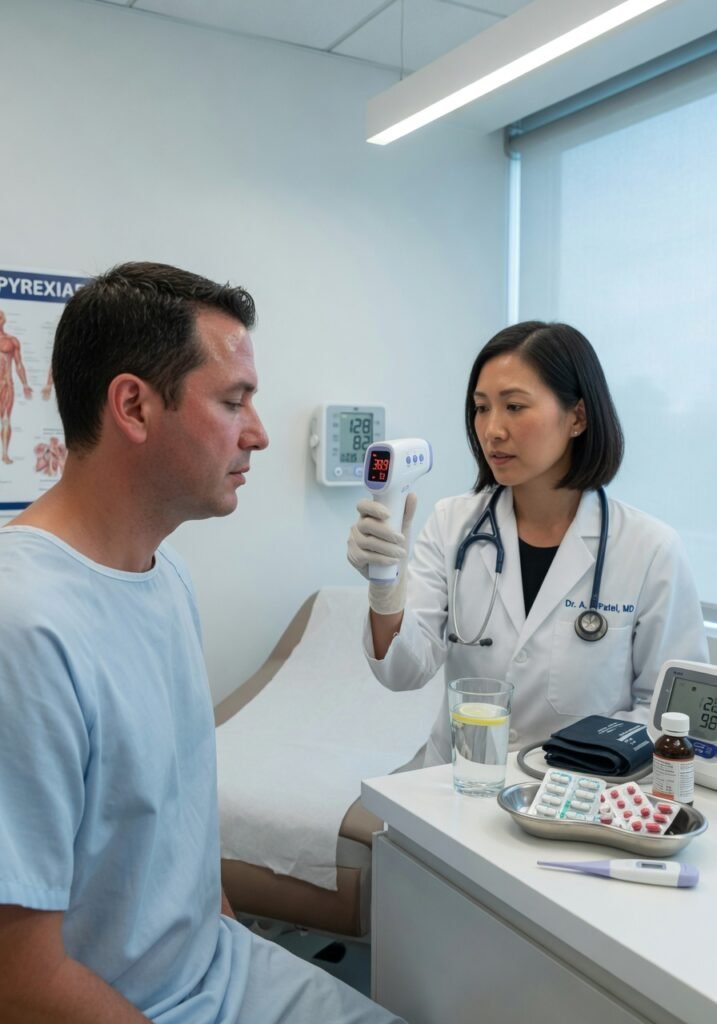

Fever: Causes, Treatment, and When to Act Fast
Research shows that roughly 40% of adults who visit urgent care facilities report experiencing a fever in the preceding week, yet most have no idea that their body’s temperature spike is actually a sign their immune system is working—sometimes too hard. Meet Sarah, a 34-year-old accountant who woke up at 3 AM with a temperature of 103.2°F, convinced she had meningitis, only to discover three days later she had a common viral upper respiratory infection that resolved on its own. Her story mirrors thousands of others annually: the panic, the uncertainty about when to seek help, and ultimately, the realization that fever itself isn’t the enemy.
Key Facts About Fever
- A normal adult body temperature ranges from 97°F to 99°F (36.1°C to 37.2°C), measured orally in the morning, but individual baseline temperatures vary by up to 1.5°F throughout the day
- According to the CDC, approximately 27% of fever cases in primary care settings are never definitively diagnosed, yet 90% resolve without complications within one week
- Acetaminophen takes 30-45 minutes to lower temperature, while ibuprofen typically works within 15-30 minutes but carries slightly higher risk of gastrointestinal side effects in prolonged use
- Fevers above 104°F (40°C) sustained for more than 48 hours warrant urgent medical evaluation, as the risk of serious underlying infection increases significantly
- Infants under 3 months with rectal temperatures of 100.4°F or higher require immediate medical attention per AAP guidelines, as bacterial infection risk is substantially higher in this age group
Understanding Fever: The Body’s Internal Thermostat Reset
Here’s what actually happens when you get a fever, and it’s more sophisticated than most people realize. Your immune system detects a threat—usually a virus or bacterium—and certain white blood cells release chemical messengers called pyrogens. These substances travel to your hypothalamus, the part of your brain that controls temperature regulation, and essentially reset your internal thermostat upward. Think of it like raising the setting on your home’s heating system from 70°F to 102°F. Your body then works to reach this new “set point,” which is why you feel cold and shiver violently even though your core temperature is already elevated. This isn’t a malfunction. The elevated temperature actually creates a hostile environment for many pathogens and helps your immune cells fight more effectively.
The problem occurs when we treat fever too aggressively or when the fever itself becomes dangerously high. Temperatures above 105°F (40.5°C) can damage proteins in your brain and cause seizures, which is why this threshold matters clinically. But here’s the clinical insight most health websites overlook: suppressing a low-grade fever (101°F to 102°F) with medication might actually prolong your illness. Studies suggest that allowing moderate fevers to run their course can shorten infection duration by 24 to 48 hours in some viral infections.
Causes and Risk Factors: Beyond the Obvious Culprits
Infections cause roughly 80% of fevers seen in clinical practice, but the infection type matters enormously for treatment decisions. Viral infections—influenza, respiratory syncytial virus (RSV), coronavirus, adenovirus—account for the majority in most seasons. Bacterial infections like strep throat, urinary tract infections, pneumonia, and meningitis require antibiotics and pose greater risks. Fungal infections are less common but serious in immunocompromised patients. Parasitic infections occur more frequently in developing nations but increasingly in travelers.
Medications can trigger fever too. Antibiotics like amoxicillin or cephalosporins occasionally provoke drug fever, typically appearing after 7 to 10 days of use and resolving within 48 hours of discontinuation. NSAIDs and beta-blockers can also trigger this reaction. Non-infectious causes include autoimmune diseases like lupus or rheumatoid arthritis, malignancies (especially lymphomas), inflammatory bowel disease, and thyroid disorders. Most people focus on infection and miss the systemic diseases that present with persistent low-grade fevers lasting weeks.
One underappreciated risk factor: recent travel or environmental exposure. Someone who returned from Southeast Asia three weeks ago with an unexplained fever might have dengue fever or malaria, not common cold. Similarly, people exposed to histoplasmosis through contaminated soil or bird droppings can develop fever weeks later. Occupational exposure matters—histoplasmosis clusters among cave explorers, farmers, and construction workers. Your history is diagnostic.
Signs and Symptoms: What You’ll Actually Experience
Early fever onset usually starts with a sensation of intense cold. You’ll shiver uncontrollably despite having a high temperature reading—a phenomenon called rigors. Your skin might develop goosebumps (piloerection). You’ll feel achiness throughout your muscles and joints, headache pressure behind your eyes, and often fatigue that’s disproportionate to how sick you “feel.” Many people report a strange sense of detachment or mental fog starting around 101°F.
As fever climbs toward 102°F to 103°F, you might experience delirium, which is different from delirium tremens—you’ll feel confused about time, slightly hallucinate, or have vivid dreams during sleep. Sweating begins when the fever peaks, often drenching your bedding. You might notice your heart racing (tachycardia develops around 103°F). The often-overlooked early warning signs include: dry mouth (caused by dehydration as your body burns energy), sensitivity to light, loss of appetite (your body diverts energy to immune response), and occasionally, a fine rash called roseola infantum if you’re an adult with certain viral infections.
Pay attention to your breathing. Rapid breathing (tachypnea) accompanying fever suggests possible pneumonia. Notice your mental clarity—persistent confusion beyond the first 12 to 24 hours isn’t normal and warrants evaluation. Watch for stiff neck pain, which could indicate meningitis and requires immediate emergency care.
Diagnosis: The Process and What Tests Actually Show
Your doctor starts with your history: onset, peak temperature, associated symptoms, and exposure context. They’ll perform a physical examination looking for localizing signs of infection—red throat, ear drum inflammation, lymph node swelling, abdominal tenderness. This matters because a patient with fever, sore throat, and enlarged tonsils likely has viral pharyngitis (no antibiotics needed), while someone with fever and flank pain probably has pyelonephritis (needs antibiotics).
Tests depend on the clinical picture. A complete blood count (CBC) shows whether white blood cell elevation suggests bacterial infection (typically higher counts and leftward shift) versus viral infection (often normal or mildly elevated with lymphocytic predominance). Blood cultures confirm bacteremia if sepsis is suspected—critical in patients over 65 or immunocompromised. A rapid antigen test or PCR for influenza takes 15 minutes and guides treatment decisions. Chest X-rays reveal pneumonia. Urinalysis with culture identifies urinary tract infections. For persistent fevers lasting more than three weeks without clear diagnosis, imaging like CT scans or specialized blood tests for atypical infections become necessary.
The honest truth: many fevers don’t require testing. A healthy adult with fever, sore throat, and cough who improves within one week likely has viral bronchitis and doesn’t need blood work. This is where clinical judgment separates good medicine from unnecessary testing.
Treatment Options: Medication and Approaches That Actually Work
Acetaminophen (Tylenol) and ibuprofen (Advil, Motrin) both reduce fever effectively, but through different mechanisms. Acetaminophen works centrally by inhibiting prostaglandin synthesis in the hypothalamus. Ibuprofen is a nonsteroidal anti-inflammatory drug that additionally reduces inflammation beyond just lowering temperature. For most adults, either works equally well at standard doses: acetaminophen 650 to 1,000 mg every four to six hours (maximum 4,000 mg daily) or ibuprofen 200 to 400 mg every four to six hours (maximum 1,200 mg daily for over-the-counter use).
The common misconception many patients hold: taking fever reducers prevents complications. Actually, suppressing fever doesn’t prevent febrile seizures in children or change infection outcomes. What matters is treating the underlying infection. If you have bacterial pneumonia, you need antibiotics; lowering your temperature doesn’t substitute. Viral infections don’t improve faster with antipyretics—they resolve when your immune system clears the virus.
For bacterial infections, antibiotics are essential. Amoxicillin-clavulanate (Augmentin) covers common respiratory pathogens. Fluoroquinolones like levofloxacin (Levaquin) work for respiratory and urinary infections. Azithromycin (Z-pack) covers atypical bacteria. Cephalexin (Keflex) treats strep throat. The specific antibiotic depends on infection location, suspected organism, and local resistance patterns.
Should you combine medications? Alternating acetaminophen and ibuprofen every three hours shows slightly better fever control than single-agent therapy in studies, but offers no advantage for infection resolution and increases medication complexity. Most physicians recommend one agent at appropriate intervals rather than alternating.
Practical Daily Management: Specific Strategies for Comfort
Stay hydrated—aim for half your body weight in ounces of fluid daily while febrile. Your metabolic rate increases roughly 13% for every 1°C rise in temperature, so you’re burning calories faster and losing fluid through perspiration. Coconut water, broths, and electrolyte drinks work better than plain water for electrolyte replacement. Avoid alcohol entirely; it impairs immune response and increases dehydration.
Dress in lightweight layers rather than bundling up, even though you’ll feel cold initially. Your body generates heat to reach its new set point; overheating doesn’t help. Once sweating begins, remove layers to facilitate cooling. Change damp bedding and clothing; sleeping in sweat-soaked sheets reduces comfort without therapeutic benefit.
Use cool washcloths on your forehead and neck if temperatures exceed 103°F, but avoid ice baths—they’re uncomfortable and can cause vasoconstriction that paradoxically makes it harder for your body to cool. Room temperature environments work adequately.
Rest genuinely, not just lying down. Your body allocates enormous energy to immune response; continued exertion diverts resources. Waiting until fever completely resolves before returning to exercise prevents relapse; returning to activity when febrile can extend illness duration by days.
Monitor your temperature at consistent times, ideally morning and evening, using the same thermometer. Oral readings taken immediately after drinking hot or cold liquids give false readings; wait 15 minutes. Ear and temporal thermometers work adequately but are less accurate than oral. Rectal temperatures are most accurate but rarely necessary in adults.
Prevention: What Evidence Actually Shows Works
Annual influenza vaccination reduces infection risk by 40% to 60% depending on strain match—the CDC documents this annually. It won’t eliminate fever entirely but dramatically reduces severe illness. Similarly, pneumococcal vaccines (Pneumovax 23 and Prevnar 20) prevent bacterial pneumonia in high-risk groups. Updated COVID-19 vaccines remain effective against severe outcomes.
Hand hygiene prevents respiratory viral transmission more effectively than wearing masks. Vigorous handwashing with soap for 20 seconds before eating and after using the bathroom cuts viral infection risk by roughly 50% in household settings. Alcohol-based sanitizers work adequately when soap and water aren’t available.
Here’s the nuance most prevention articles skip: you can’t prevent all fevers, and mild exposure to pathogens actually strengthens immunity. Isolating yourself completely isn’t feasible or desirable. What works is targeted prevention—vaccination for high-risk populations, avoiding sick people when you’re immunocompromised, and basic hygiene. Fever itself isn’t a failure of prevention; it’s evidence your immune system recognized