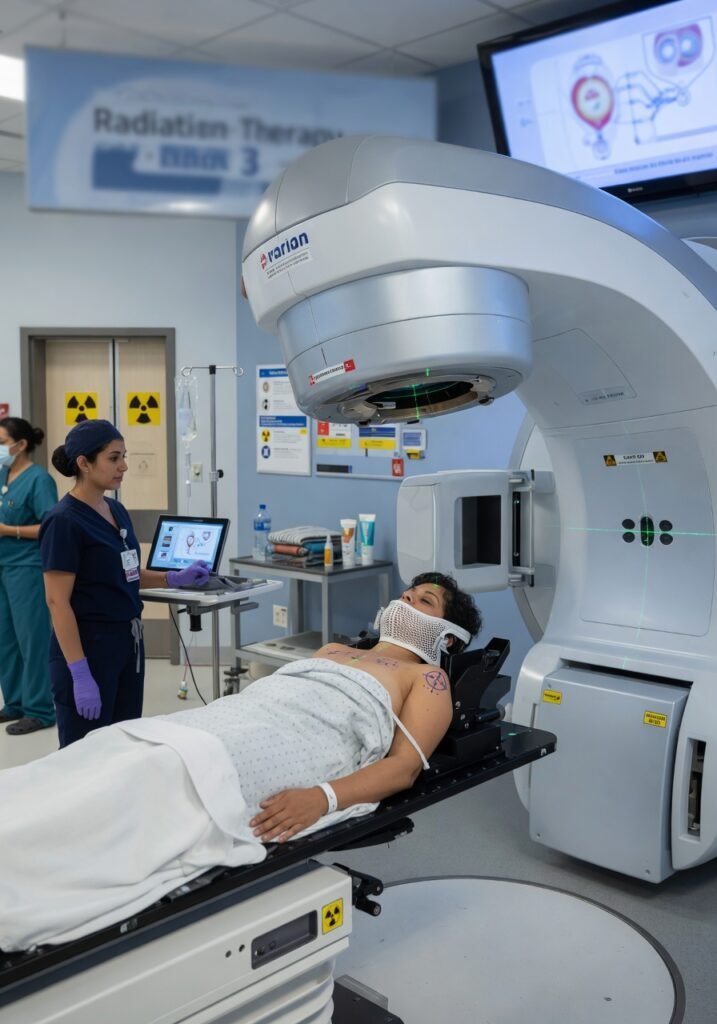
Sarah, a 52-year-old marketing director with stage II breast cancer, walked into her radiation oncology appointment expecting to hear about burning skin and nausea. What her physician explained instead surprised her: modern radiation therapy isn’t the aggressive full-body assault most people imagine from 1970s cancer stories. Today’s treatments deliver precisely calculated radiation beams to tumors while sparing surrounding healthy tissue—sometimes so effectively that side effects are minimal. Yet Sarah also learned something harder: radiation therapy still demands patience, planning, and realistic expectations about what happens during and after treatment.
Most people conflate radiation therapy with radioactivity itself, assuming it leaves patients “radioactive” or fundamentally changed at a cellular level. The actual mechanism is far more targeted and, paradoxically, both simpler and more complex than popular understanding suggests. This is what you need to know about how it works, what to expect, and how to navigate recovery.
Key Facts About Radiation Therapy
- Approximately 50% of cancer patients receive radiation therapy at some point during treatment, according to the CDC’s cancer prevention database.
- Modern intensity-modulated radiation therapy (IMRT) can conform radiation dose to tumor shape with millimeter precision, reducing exposure to healthy tissue by up to 40% compared to conventional techniques.
- Most acute side effects from radiation therapy occur during weeks 2-4 of treatment and typically resolve within 2-4 weeks after the final session concludes.
- The median course of radiation therapy lasts 6-7 weeks with daily treatments, though some regimens compress this into 3-4 weeks using higher doses per session.
- Late radiation effects—changes appearing months or years after treatment—occur in 5-15% of patients depending on dose, location, and tissue type treated.
Understanding How Radiation Therapy Actually Works
Think of radiation therapy as a precision strike weapon rather than a sledgehammer. When a linear accelerator (LINAC) delivers radiation to a tumor, the radiation energy ionizes water molecules inside and around cancer cells. This ionization creates free radicals that damage DNA. Cancer cells, which divide rapidly and often have defective repair mechanisms, can’t fix this damage and die. Normal cells can generally repair ionized damage better than cancer cells, which is why radiation preferentially kills tumors—though it’s never perfectly selective.
The trick lies in fractionation: delivering radiation in multiple smaller sessions rather than one massive dose. This allows healthy cells time between treatments to recover through their DNA repair machinery while cancer cells accumulate damage they can’t fix. Fractionated radiation typically uses 1.8-2 gray (Gy) per session, five days a week. A course might total 45-70 gray depending on cancer type and location.
Here’s what most patient education materials skip: the body’s inflammatory response to radiation actually peaks 1-3 weeks after treatment starts, not during it. Immune cells flood the radiation field attempting to clean up cellular debris, which is why side effects often worsen before improving. Understanding this timeline prevents the panic many patients experience when they feel worse mid-treatment.
Which Patients Face Higher Risks During Radiation Therapy
Certain factors genuinely predict worse outcomes. Diabetes significantly impairs wound healing and increases risk of late radiation fibrosis—the development of scar tissue months or years after treatment. Smoking reduces oxygen availability to tissues, worsening both acute and chronic radiation effects. Previous surgery in the radiation field leaves scar tissue that doesn’t tolerate additional radiation well, increasing complications by 20-30%.
But here’s the less-discussed factor radiation oncologists worry about: genetic sensitivity to radiation. Some patients carry mutations in DNA repair genes like BRCA1, BRCA2, or ATM variants that leave them exquisitely sensitive to radiation damage. These patients tolerate standard doses poorly and require modified protocols. Your radiation oncologist may recommend genetic testing if you have a strong family history of cancer or develop unusually severe reactions.
Age alone doesn’t reliably predict tolerance—an 75-year-old with excellent organ function tolerates radiation better than a 55-year-old with uncontrolled diabetes. The real risks emerge from cumulative factors: prior chemotherapy (especially anthracyclines), connective tissue disorders like scleroderma, and poor nutrition entering treatment.
What Patients Actually Experience: Daily Symptoms and Warning Signs
The first week feels anticlimactic. Treatment takes 15-30 minutes total, positioning consumes most of that time, and radiation delivery itself is silent and painless. Many patients expect to feel something happen and feel disappointed when they don’t.
By week two, skin changes begin. You’ll notice the treated area turning pink—similar to mild sunburn initially. This progresses to deeper erythema (redness), occasional itching, and dry skin that demands fragrance-free moisturizer. Avoid deodorant, powder, or adhesives on the treatment area; they can trap moisture and worsen irritation.
Fatigue creeps in gradually, usually peaking around week 4. It’s not the tiredness you recover from with sleep—it’s profound depletion despite adequate rest. Patients often underestimate this, trying to maintain full work schedules. Most people function better transitioning to part-time work during treatment weeks 3-7.
For head and neck radiation, mucositis—painful inflammation of mouth tissues—becomes the dominant issue. Eating solid foods becomes difficult by week 3-4, requiring a pivot to soft, cool foods and protein shakes. Swallowing discomfort worsens, and taste changes occur when radiation damages taste buds.
The warning signs physicians emphasize: skin breakdown with open areas (not just redness), fever during treatment suggesting infection, severe pain suggesting tissue damage, or difficulty swallowing liquids. These warrant immediate physician contact, not waiting for your next scheduled appointment.
How Radiation Therapy Gets Planned and Delivered
Radiation doesn’t begin with treatment. It begins with planning. You’ll have a simulation session—essentially a CT scan with positioning markers applied to your skin. Physicists use this imaging to design exactly where radiation beams enter your body, their angles, and their intensity. Modern treatment planning takes 5-14 days because it’s genuinely complex mathematical work.
Once approved, your first actual treatment session involves careful positioning to match the simulation. Technologists place you under imaging guidance—taking X-rays or CT images to verify position matches the plan. Then everyone leaves the room, shielded behind lead walls, and the LINAC delivers radiation in shaped beams. It’s not continuous—machines like Varian TrueBeam or Elekta accelerators pulse radiation for 30 seconds to several minutes depending on your plan.
You won’t see a physician during most treatments. A radiation oncologist oversees your plan and sees you weekly, but technologists deliver the daily treatments. This can feel impersonal, but it’s actually quality control—standardized protocols reduce mistakes.
Current Treatment Options and What Works Best
External beam radiation therapy (EBRT) remains the standard for most cancers, but delivery methods vary substantially. Three-dimensional conformal radiation (3D-CRT) shapes beams to tumor contours. Intensity-modulated radiation therapy (IMRT) varies beam intensity across the field, conforming dose even more tightly. Volumetric-modulated arc therapy (VMAT) delivers IMRT while the gantry rotates around you, shortening treatment time.
For certain cancers—prostate cancer with low metastatic risk, early-stage lung cancer in poor surgical candidates—hypofractionated regimens deliver higher doses per session over fewer weeks. A 5-fraction course of stereotactic body radiation therapy (SBRT) treats some prostate cancers in two weeks instead of eight. Toxicity profiles differ, so your specific cancer type determines which approach works best.
Brachytherapy—placing radioactive sources directly inside or against tumors—offers another option for gynecologic and prostate cancers. This delivers very high doses to the tumor with rapid dose falloff, sparing distance tissues. Recovery from brachytherapy typically involves 1-3 days of pelvic discomfort and vaginal discharge.
Combination therapy—radiation plus chemotherapy or immunotherapy—improves outcomes for certain cancers but dramatically increases side effects. Adding concurrent chemotherapy to head and neck radiation increases mucositis risk from 30% to 70% and requires nutritional support through feeding tubes for many patients.
Managing Daily Life During Treatment
Practically speaking, plan your treatment schedule around your energy patterns. Morning sessions often feel less fatiguing than afternoon ones—your body hasn’t depleted reserves yet. If you work, negotiate part-time status for weeks 3-7. Most employers accommodate this under FMLA if your cancer qualifies.
Skin care demands specificity: cleanse with fragrance-free soap, pat dry completely, apply fragrance-free and lanolin-free moisturizer immediately after (within three minutes of showering). Cetaphil, CeraVe, or Aquaphor work well. Avoid any products with alcohol, fragrance, or acids. Once acute dermatitis develops, ask your radiation oncologist about hydrocortisone cream or silver-containing dressings—these genuinely help rather than just being placebo.
Nutrition shouldn’t be guesswork. Meet with an oncology nutritionist before treatment starts. They’ll assess your baseline and recommend protein intake—typically 1.0-1.2 grams per kilogram body weight daily—to support healing. Inadequate protein during radiation therapy demonstrably worsens fatigue and impairs immune function.
For fatigue, exercise helps despite seeming counterintuitive. Aerobic activity 150 minutes weekly during radiation therapy actually reduces fatigue compared to rest alone, according to clinical trials. Start gently—30 minutes walking five days weekly provides real benefit without overwhelming depleted energy reserves.
What Prevention Actually Means in Radiation Therapy
Prevention isn’t relevant once you have cancer requiring radiation therapy. What matters is preventing complications. Before treatment starts, optimize modifiable factors: control diabetes aggressively (target HbA1c below 7%), quit smoking absolutely, ensure adequate nutrition, and correct anemia if present.
Preventive supportive care works. Oral care protocols—using fluoride trays, chlorhexidine rinse, and meticulous hygiene—reduce cavity risk and mucositis severity in head and neck patients. Pelvic floor physical therapy before gynecologic radiation therapy reduces chronic sexual dysfunction. These aren’t minor interventions—they genuinely prevent long-term complications.
Common Questions About Radiation Therapy
Sources & Medical References
HealthTopics.com articles are based on peer-reviewed medical research and guidance from the NIH, CDC, and WHO. See our editorial policy for full sourcing standards.