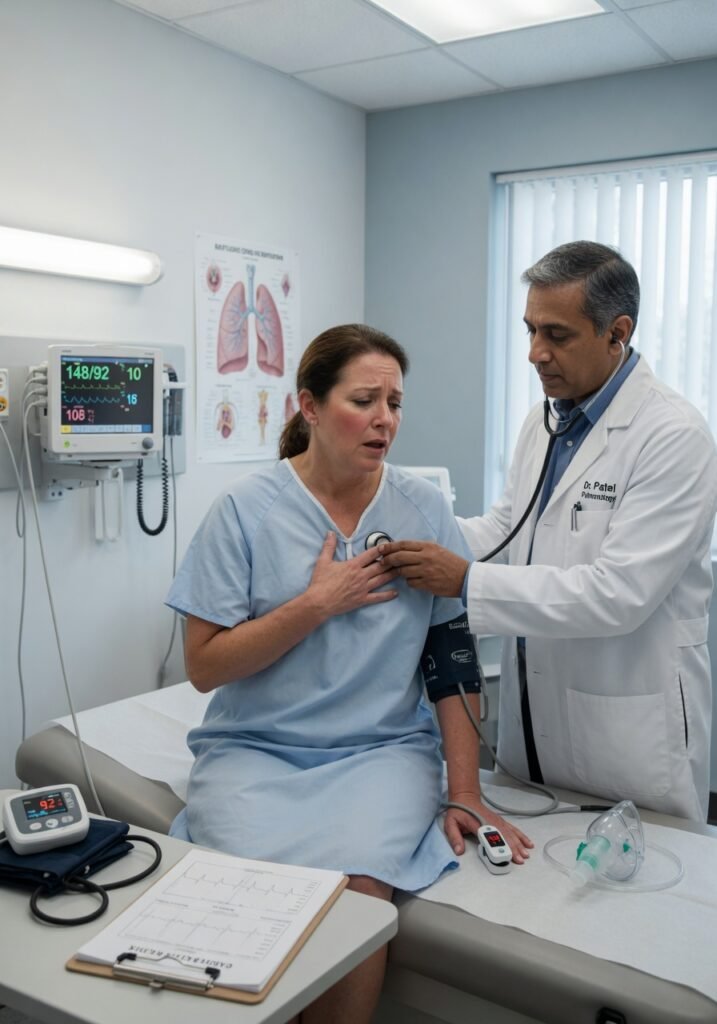
Sarah, a 52-year-old accountant who used to walk three miles every morning, found herself breathless climbing the single flight of stairs to her office. Not from exertion, but from something that felt wrong inside her chest—a tightness she couldn’t name. She attributed it to stress until one evening, sitting still on her couch, her lungs suddenly demanded more air than her body seemed willing to give. That moment forced her to finally call her doctor and ask a question millions of people avoid: why am I struggling to breathe?
Shortness of breath, medically termed dyspnea, is your body’s distress signal. It’s not always a sign of a single disease, but rather your respiratory and circulatory systems telling you something has shifted. Understanding what triggers this sensation—and when it actually matters—separates panic from actionable medical information.
Key Facts About Shortness of Breath
- Approximately 23% of adults experience dyspnea during their lifetime, according to research published in the American Journal of Respiratory and Critical Care Medicine.
- Heart disease accounts for roughly 40% of shortness of breath cases seen in primary care, while 25% stem from respiratory causes and 15% from anxiety or deconditioning.
- Women report shortness of breath 1.4 times more frequently than men in epidemiological studies, partly due to underdiagnosis of atypical cardiac presentations in female patients.
- Shortness of breath on exertion (dyspnea on exertion or DOE) that develops over months typically indicates chronic disease, while acute onset over hours or days requires urgent evaluation.
- Approximately 30% of patients who present to the emergency department with dyspnea are initially misdiagnosed, emphasizing the importance of thorough clinical assessment.
Understanding How Shortness of Breath Actually Works
Think of your breathing system like a sophisticated delivery network. Your lungs grab oxygen from the air, your heart pumps blood to exchange that oxygen, and your brain monitors carbon dioxide levels constantly. When any part of this network malfunctions, your chemoreceptors—sensors throughout your body—trigger an urgent message: get more air now.
What most people don’t realize is that shortness of breath isn’t always about lack of oxygen. Your brain might perceive a breathing threat even when blood oxygen levels (what we measure as SpO2) are completely normal. This is why someone with severe anxiety can feel more breathless than someone with mild pneumonia. The sensation lives in the brain’s interpretation, not just the lungs’ function.
When you breathe, your intercostal muscles between your ribs and your diaphragm contract in coordinated rhythm. Your vagus nerve carries sensory information from your airways back to your brainstem. If inflammation narrows your airways, if your heart can’t pump efficiently, if your blood carries too much carbon dioxide, or if your nervous system is firing false alarms, you’ll feel that tightness, that desperate reaching for the next breath.
Causes and Risk Factors: What Actually Triggers This
Cardiac causes lead the list. Heart failure, coronary artery disease, and arrhythmias all reduce your heart’s ability to circulate oxygen-rich blood efficiently. Specifically, left-sided heart failure causes fluid to back up into your lungs, creating that sensation of drowning while sitting upright.
Respiratory diseases follow closely: asthma, COPD, pneumonia, pulmonary embolism, and interstitial lung disease directly compromise gas exchange. COPD alone affects nearly 16 million Americans, making it one of your most common breathlessness culprits.
Anemia deserves attention here. When your hemoglobin—the protein that carries oxygen—drops significantly, your heart compensates by working harder to deliver the same amount of oxygen. This is why women with iron deficiency anemia often report breathlessness that improves dramatically with supplementation.
Here’s what most articles skip: deconditioning from prolonged sedentary life directly weakens your respiratory muscles and reduces your cardiac reserve. Someone who hasn’t exercised in five years will breathe harder walking to the mailbox than their active counterpart—not because their lungs are diseased, but because their system has forgotten how to work efficiently. This isn’t harmless. It’s a warning sign your cardiovascular reserve is eroding.
Thyroid disease, particularly hyperthyroidism, accelerates your metabolism and heart rate, creating phantom breathlessness. Obesity compresses your lungs and increases metabolic demand. Metabolic acidosis from diabetes makes your body perceive it needs more oxygen, even when blood oxygen is adequate.
What Shortness of Breath Actually Feels Like: Daily Symptoms
Patients describe it differently depending on the cause. Some feel a tightness across their chest, as though a band is constricting. Others describe air hunger—the sensation that each breath delivers inadequate oxygen, so they breathe faster and faster in futile compensation. Some report wheezing, a high-pitched sound during exhalation. Others feel only heaviness in their legs when they climb stairs, a vague sense that their body won’t cooperate.
Early warning signs people often dismiss: feeling winded after activities that previously felt effortless (walking from the car into a store), needing to pause mid-sentence to breathe, waking at night with an urgent need to sit up, or noticing your breathing becomes louder during conversations.
Orthopnea—breathlessness when lying flat—particularly suggests heart failure. If you suddenly need three pillows instead of one to sleep comfortably, that’s your body telling you fluid is accumulating in your lungs when gravity isn’t fighting against it.
Paroxysmal nocturnal dyspnea is the terrifying version: waking abruptly at 3 AM gasping, often after a panic-inducing dream. Your breathing was fine moments earlier. This pattern almost always indicates cardiac dysfunction or severe sleep apnea.
Diagnosis: What Your Doctor Actually Does
A thorough evaluation starts with your history. When did this start? Was it sudden or gradual? What makes it better or worse? Does it happen at rest or only with exertion? Do you have leg swelling, chest pain, or a cough?
Your physician will listen to your lungs with a stethoscope, checking for crackles (sounds like velcro tearing), wheezes, or decreased breath sounds. They’ll check your legs and abdomen for fluid accumulation. They’ll assess your oxygen saturation with a pulse oximeter, though remember—normal SpO2 doesn’t exclude serious disease.
The chest X-ray remains foundational. It reveals pneumonia, pulmonary edema (fluid in lungs from heart failure), pneumothorax (collapsed lung), and masses. An electrocardiogram (EKG) takes 10 minutes and catches arrhythmias and previous heart attacks.
If cardiac disease seems likely, your doctor orders a brain natriuretic peptide (BNP) blood test. Elevated BNP (>100 pg/mL) strongly suggests heart failure. An echocardiogram, which ultrasounds your heart, shows how well each chamber pumps—your ejection fraction. Normal is 50-70%. Heart failure typically involves ejection fraction below 40%.
Pulmonary function tests (spirometry) measure how much air your lungs hold and how fast you can expel it, diagnosing obstructive diseases like asthma and COPD. If a blood clot seems possible, a CT pulmonary angiography (CTPA) visualizes your lung arteries. For persistent unexplained dyspnea, a cardiac stress test or six-minute walk test may follow.
Treatment: What Actually Works
Treatment depends entirely on cause. That’s the crucial point: treating shortness of breath without identifying its source is like treating a warning light on your dashboard without checking your engine.
For heart failure, diuretics (furosemide or torsemide) reduce fluid overload immediately. ACE inhibitors like lisinopril or ARBs like losartan reduce the afterload your heart fights against. Beta-blockers such as metoprolol slow your heart and reduce its oxygen demand. SGLT2 inhibitors like empagliflozin have emerged as powerful heart failure medications regardless of diabetes status.
Asthma responds to bronchodilators (albuterol rescue inhalers) that open airways acutely, plus inhaled corticosteroids like fluticasone for long-term control. COPD treatment involves tiotropium or other long-acting bronchodilators, sometimes with regular corticosteroid inhalers.
Pneumonia requires antibiotics—azithromycin or levofloxacin depending on severity and local resistance patterns. Pulmonary embolism demands anticoagulation with rivaroxaban or apixaban to prevent clot expansion.
For anxiety-driven dyspnea, SSRIs like sertraline actually work when paired with breathing retraining. Cognitive behavioral therapy addresses the catastrophic thinking that hijacks your nervous system into believing you’re suffocating when you’re not.
Daily Management: Concrete Strategies That Actually Help
Pursed-lip breathing provides immediate relief. Breathe in through your nose for a count of two, then exhale through pursed lips as if blowing out a candle slowly for four counts. This creates back-pressure in your airways, keeping them open longer and improving oxygen exchange. Patients with COPD report significant relief within minutes.
Positional changes matter. Sitting upright with your shoulders relaxed removes rib compression that gravity creates when lying flat. Some patients find leaning forward slightly over a table, resting their forearms, opens their chest further.
Humidity helps. If your airways are inflamed, dry air irritates them further. A humidifier in your bedroom or sitting in a steamy bathroom for 10 minutes before bed often eases nighttime symptoms.
Pacing activities prevents the breathlessness cascade. Instead of pushing hard for 20 minutes then stopping exhausted, alternate: two minutes of light activity, one minute of rest. This is called activity pacing or energy conservation, and it prevents the post-exertional collapse that discourages people.
Track your triggers. Does walking uphill bother you more than walking on flat ground? Does cold air trigger symptoms? Does emotional stress precede episodes? This pattern recognition helps both you and your doctor understand what’s happening.
Prevention: What Science Actually Shows Works
Cardiovascular fitness is non-negotiable if you want to prevent dyspnea later. Regular aerobic exercise—150 minutes weekly of moderate intensity—maintains your cardiac reserve and strengthens respiratory muscles. Start gradually if you’re deconditioned. Your body adapts remarkably quickly.
Weight management directly reduces breathlessness. Obesity compresses your lungs mechanically and increases metabolic demand. A 10% weight reduction often produces noticeable breathing improvement.
Smoking cessation prevents progressive airway damage. COPD develops insidiously—you don’t notice declining function until it’s severe. Quitting now prevents that trajectory entirely.
Blood pressure and cholesterol control prevents atherosclerosis that narrows coronary arteries. If your BP runs 140/90 consistently, you’re building toward heart disease that manifests as dyspnea.
Pneumococcal and influenza vaccination prevents respiratory infections that trigger acute breathlessness, particularly if you have underlying lung disease or are older than 65.
Frequently Asked Questions About Shortness of Breath
Is shortness of breath always serious?
No—anxiety causes significant dyspnea in otherwise healthy people, and deconditioning from inactivity creates breathlessness that improves with gradual exercise. However, new-onset dyspnea, dyspnea at rest, or dyspnea accompanied by chest pain, leg swelling, or confusion
Sources & Medical References
HealthTopics.com articles are based on peer-reviewed medical research and guidance from the NIH, CDC, and WHO. See our editorial policy for full sourcing standards.
