
Strep Throat: Diagnosis, Treatment, and When It Becomes Dangerous
Marcus, a 34-year-old software developer, woke up on a Tuesday morning with a sore throat so intense he could barely swallow his coffee. By Wednesday, he had a fever of 101.8°F and swollen lymph nodes on his neck. He assumed it was just a viral cold and waited it out. By Friday, he was experiencing sharp chest pain and shortness of breath—symptoms that finally sent him to the emergency room, where they discovered he’d developed acute rheumatic fever, a potentially life-altering complication that could have been prevented with a single course of antibiotics started three days earlier.
Research from the CDC shows that untreated streptococcal pharyngitis progresses to acute rheumatic fever in approximately 3% of cases, yet this serious complication remains largely underestimated in public awareness. What makes strep throat uniquely dangerous isn’t the infection itself—it’s what happens if you ignore it.
Key Facts About Strep Throat
- Group A Streptococcus causes 5-15% of all sore throats in adults, but accounts for up to 30% in children aged 5-15 years, according to JAMA Pediatrics data
- Symptoms typically appear 2-5 days after exposure to the bacteria, with peak severity occurring on days 3-4 of infection
- A rapid strep test produces results in 10-15 minutes with 90-95% sensitivity, but negative results still require follow-up throat culture confirmation in certain clinical scenarios
- Untreated strep throat carries a 1-3% risk of developing post-streptococcal glomerulonephritis and a higher risk in children under age 12
- Penicillin V or amoxicillin remain first-line treatments with cure rates exceeding 95% when taken for the full 10-day course, despite significant pressure toward broader-spectrum antibiotics
Understanding Strep Throat: What’s Actually Happening Inside Your Body
When Group A Streptococcus bacteria colonize your throat, they’re not simply sitting there causing inflammation like a splinter in your finger. These organisms produce specific virulence factors—proteins that actively attack your throat tissue and trigger an aggressive immune response. Think of it less like an invading army and more like a biological saboteur that’s both damaging the building and tricking the security guards into attacking their own infrastructure.
The bacteria have a protective capsule that mimics human tissue, which is why your immune system sometimes gets confused. In susceptible people, the antibodies your body produces to fight streptococcal proteins can cross-react with similar proteins in your heart muscle, heart valves, and joints. This molecular mimicry is the actual mechanism behind acute rheumatic fever—not an overwhelming infection, but an autoimmune reaction triggered by your own antibodies mistaking your heart tissue for bacterial invaders.
This is why strep throat demands specific antibiotic treatment, not just supportive care. You’re not just treating an infection; you’re preventing your immune system from potentially attacking itself weeks later.
Causes and Risk Factors: Who Actually Gets Strep Throat?
Group A Streptococcus spreads through respiratory droplets—coughing, sneezing, shared drinks, or eating utensils. Most transmission occurs in crowded indoor settings during winter and early spring, which is why strep outbreaks cluster in schools and childcare facilities.
Age matters significantly. Children between 5 and 15 years carry the highest infection rate, though adults absolutely get strep throat too, and they often underestimate its severity. Being male carries slightly higher risk than being female, and immunocompromised individuals face more complications.
Here’s what most articles skip: psychological stress and sleep deprivation independently increase your susceptibility to strep infection by suppressing local immune function in your throat. A study published in the journal Psychosomatic Medicine found that individuals experiencing high stress had a 40% increased risk of developing streptococcal pharyngitis when exposed to the bacteria. If you’re running on four hours of sleep and dealing with work stress, your throat defenses are already compromised before you even encounter the bacterium.
Recent antibiotic use, paradoxically, can slightly increase your risk of strep because it disrupts your normal throat flora that would normally compete with pathogenic bacteria. Chronic allergies that cause post-nasal drip also create an environment where streptococcal bacteria establish themselves more easily.
Signs and Symptoms: What You’ll Actually Experience
Most people notice the sore throat first, but it’s not subtle. We’re talking about difficulty swallowing liquids that normally go down effortlessly. Many patients describe it as feeling like they’re swallowing broken glass or sandpaper rather than the mild scratchiness of viral pharyngitis.
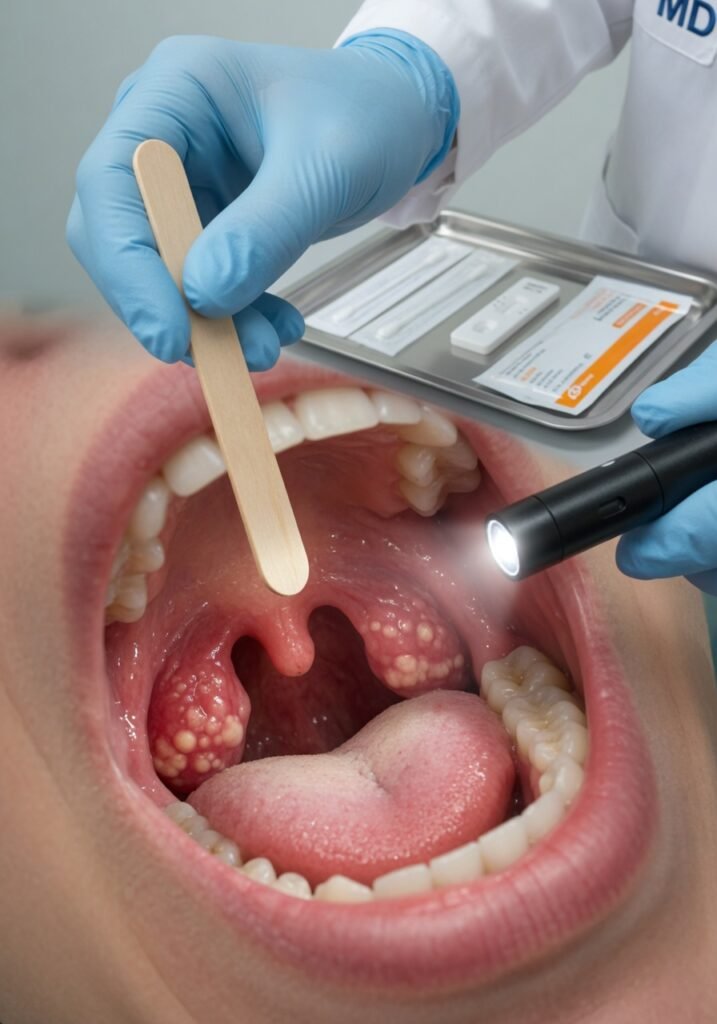
Fever typically arrives within 24-48 hours of throat pain onset and often spikes to 101-102°F rather than staying around 100°F. You’ll likely notice severely swollen lymph nodes on both sides of your neck—so enlarged that they’re visible and tender to touch. Your tonsils often develop white or yellowish exudate (pus-like coating) rather than the redness you see with viral throat infections.
The overlooked early warning sign: many patients experience general malaise and body aches before the throat pain becomes unbearable. You might feel unusually fatigued, achy in your limbs, or just generally unwell in a way that doesn’t quite match a typical cold. Headache is common and occasionally severe. Some people report mild abdominal pain or nausea, which surprises them since they associate those symptoms with stomach bugs.
Strep throat typically doesn’t cause cough or runny nose—if you’re coughing heavily or have nasal congestion, you probably have a viral infection. This distinction matters because viral sore throats need no antibiotics, while strep demands them.
How Strep Throat Gets Diagnosed
Your doctor will examine your throat visually first, looking for those characteristic white patches on the tonsils, swollen lymph nodes, and absence of cough. They’ll ask about fever onset and symptom progression.
The rapid strep test (also called a rapid antigen detection test or RADT) comes next. A nurse swabs your throat quickly—you’ll feel mild gagging but minimal discomfort—and the result appears in 10-15 minutes. This test catches strep about 90-95% of the time, which sounds good until you realize that means 5-10% of actual strep cases test negative.
Here’s the clinical nuance most patients miss: if your rapid strep test is negative but your symptoms strongly suggest strep (high fever, severe throat pain, white patches, no cough), your doctor should send a throat culture to the lab. That culture takes 24-48 hours but catches cases the rapid test misses. Don’t leave your doctor’s office falsely reassured by a negative rapid test if your clinical picture screams strep. The NIH recommends back-up cultures specifically because rapid tests aren’t 100% sensitive.
Throat cultures remain the gold standard for diagnosis, though they take longer. In children, back-up cultures after negative rapid tests are particularly important because complications from missed strep in kids are more serious.
Treatment Options for Strep Throat
Penicillin V (oral) or amoxicillin remain the first-line antibiotics and they work exceptionally well. Standard dosing is penicillin V 250mg four times daily for 10 days, or amoxicillin 500mg twice daily for 10 days. Both have cure rates exceeding 95% for susceptible strains. You’ll feel dramatically better within 24-48 hours of starting antibiotics, but you must complete the full 10 days. Stopping early because you feel better allows the bacteria to regrow and leaves you vulnerable to complications.
For patients with penicillin allergy (true allergy, not intolerance), cephalexin 500mg twice daily for 10 days works—cross-reactivity is only about 1-2% despite the same beta-lactam ring structure. If cephalosporin allergies are also a concern, azithromycin or clarithromycin (macrolide antibiotics) are alternatives, though resistance rates are climbing.
Supportive care matters alongside antibiotics. Acetaminophen or ibuprofen reduces fever and throat pain. Ibuprofen 400-600mg actually has a slight advantage over acetaminophen for sore throat discomfort. Throat lozenges with benzocaine provide temporary numbing relief. Some patients find that warm salt water gargles (1/2 teaspoon salt in 8 ounces warm water) soothe throat irritation, though this is comfort care, not treatment.
Avoid over-the-counter antibiotic throat lozenges or sprays containing benzethonium chloride—they don’t help strep throat and people sometimes use them as substitutes for actual antibiotics, which delays proper treatment.
Practical Daily Management While You Have Strep Throat
During the acute phase (days 1-4 especially), prioritize hydration. Drink cool liquids rather than warm ones—ice water, smoothies, and popsicles actually feel better than warm tea on an inflamed throat. Avoid citrus drinks and acidic beverages like orange juice or lemonade; they irritate the throat further. Milk-based smoothies provide calories and don’t irritate the way acidic foods do.
Stick to soft foods—soup, yogurt, mashed potatoes, scrambled eggs. Avoid crunchy, rough, or hard foods that require aggressive swallowing. Many patients make the mistake of trying to push through normal eating, which increases pain and prolongs discomfort unnecessarily.
Sleep more than you normally do. Your immune system fights infections more effectively during sleep, and strep throat depletes your energy reserves. Plan for 9-10 hours nightly during the acute phase if possible.
Isolate from others for at least 24 hours after starting antibiotics. You’re contagious until antibiotics have suppressed the bacterial load significantly, which takes about 24 hours. After that, you can gradually return to normal activities as your energy allows. Don’t rush back to work or school; most people feel substantially improved after 48-72 hours on antibiotics but aren’t truly back to baseline for 5-7 days.
Wash your hands frequently and don’t share drinking glasses, eating utensils, or toothbrushes during the acute infection period. Replace your toothbrush once you’ve been on antibiotics for 24 hours since bacteria can survive on bristles.
Prevention: What Actually Works
Good hand hygiene prevents strep transmission more effectively than you might think. Regular handwashing with soap and water (not necessarily antibacterial soap) reduces transmission by roughly 50% in household contacts. The mechanical action of washing matters more than antibacterial agents.
Don’t share personal items—toothbrushes, drinking glasses, eating utensils, or food—with people who have active strep throat or untreated sore throats. This seems obvious but families constantly skip this during illness.
Maintain adequate sleep and manage stress when possible, since both influence throat immunity. This isn’t a guarantee of prevention, but it meaningfully reduces your susceptibility.
There’s no strep vaccine for general population use. Rheumatic fever prevention through prompt antibiotic treatment of strep infections is how we prevent the serious long-term complications.
Frequently Asked Questions About Strep Throat
Can strep throat go away on its own without antibiotics?
Your immune system can eventually clear strep throat without antibiotics, but this takes 7-10 days and leaves you at risk for acute rheumatic fever
Sources & Medical References
HealthTopics.com articles are based on peer-reviewed medical research and guidance from the NIH, CDC, and WHO. See our editorial policy for full sourcing standards.