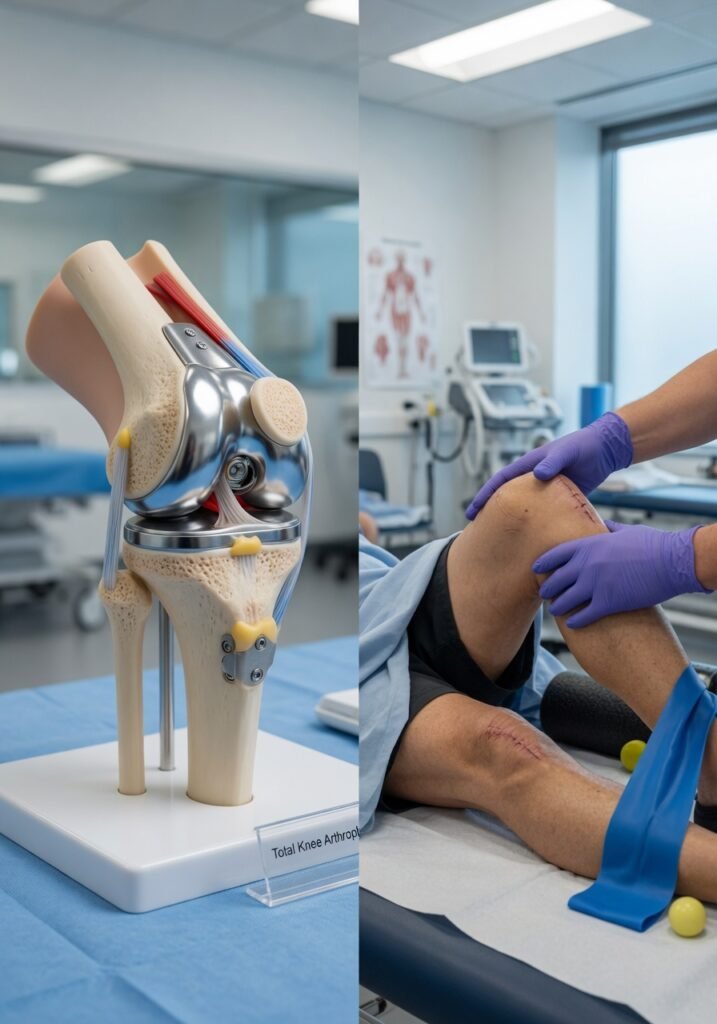

Joint Replacement Surgery: What Patients Think vs. What Actually Happens
Sarah, a 58-year-old accountant, spent three years convinced she needed a total knee replacement. She’d seen her mother struggle with one, heard horror stories about recovery, and assumed that bone-on-bone arthritis meant surgery was inevitable. What surprised her most during her consultation wasn’t the surgery itself—it was learning that her pain could be managed without it, at least for now. Most people believe joint replacement is a last resort for desperate situations. The medical reality? We’re far more selective than patients realize, and the outcomes have changed dramatically in the past decade.
Here’s what the conversation usually looks like in my clinic: patients arrive terrified that they’re one step away from the operating room, when in fact many never get there. Others wait too long, allowing cartilage destruction to accelerate unnecessarily. The gap between patient expectations and actual evidence is enormous—and it affects decisions that shape the next 15 to 20 years of someone’s life.
Key Facts About Joint Replacement
- The CDC reports approximately 1 million knee and hip replacements occur annually in the United States, with hip replacements showing a 95-98% survival rate at 15 years
- Osteoarthritis affects roughly 32.5 million American adults, yet only a fraction ever require surgical intervention
- Modern prosthetic joints last significantly longer than those from 20 years ago—some designs now demonstrate 25+ year durability in clinical studies
- The typical hospital stay for joint replacement has shrunk from 3-5 days to same-day discharge or 24-hour observation at many centers
- Revision rates (needing a second surgery) have dropped to approximately 1-2% per year, meaning most replacements avoid reoperation for over a decade
Understanding Joint Replacement: The Actual Mechanism
Let me describe what happens at the cellular level, because this changes how you think about the decision. Your knee or hip joint is like a hinge with two smooth skating rink surfaces—the cartilage. Over years or decades, that cartilage wears down, exposing the bone underneath. Imagine asphalt that’s been resurfaced a hundred times; eventually you hit the concrete base.
Joint replacement doesn’t fix cartilage. It removes the damaged bone ends and substitutes them with manufactured surfaces made of metal, plastic, or ceramic. The femoral component (the upper part) might be cobalt-chromium alloy. The tibial component (the lower part) could be polyethylene plastic backed with titanium. Your own muscles, tendons, and ligaments stay intact—we’re swapping the bearing surfaces, not rebuilding the entire joint.
Here’s what most websites don’t emphasize: the surgical goal isn’t just pain relief. It’s restoration of alignment. When cartilage wears unevenly, your knee or hip shifts out of proper mechanical alignment. This accelerates further damage. Surgery corrects that alignment, which is why patients often notice improved stability as much as reduced pain.
Causes and Risk Factors
Osteoarthritis is the leading reason for joint replacement, accounting for roughly 85% of cases. But arthritis doesn’t develop randomly. Obesity increases knee replacement risk significantly—each pound of excess weight adds four pounds of force across the knee with every step. The NIH has documented that a 10-pound weight loss reduces progression rates meaningfully in early-stage disease.
Prior injury matters tremendously. An ACL tear at age 20 might not require surgery immediately, but it predisposes that knee to post-traumatic arthritis by age 45. I’ve operated on patients whose damage traced directly to an old sports injury they’d forgotten about.
Age itself is less of a factor than most assume. Seventy-five-year-olds with good bone quality often do better than 55-year-olds with osteoporosis or diabetes. We typically avoid replacement in patients under 50 if possible—not because it won’t work, but because modern prosthetics last 15-20 years, and you don’t want a revision surgery at age 65.
Here’s the overlooked factor: inflammatory conditions like rheumatoid arthritis or lupus. These don’t just destroy cartilage—they damage the bone substrate itself, making surgical planning infinitely more complex. The bone quality might be compromised, requiring different implant fixation strategies. That’s why rheumatoid patients often need earlier intervention than those with simple osteoarthritis.
Signs and Symptoms That Matter
Pain at the end of the day is different from morning stiffness that improves with movement. Pain with stairs—specifically going down, where your quad absorbs body weight—suggests meniscal or cartilage issues. Pain walking flat surfaces that improves with rest might be something entirely different.
The overlooked warning sign? Night pain that wakes you from sleep. That usually indicates inflammatory progression or significant effusion (fluid buildup). Patients often dismiss it as “just the way I’m sleeping,” but it’s actually a marker that conservative care may be losing ground.
Swelling after activity is common. Swelling that persists three days after activity or develops without activity? That’s more concerning. Limited range of motion—specifically an inability to fully straighten your knee or flex it to 90 degrees—predicts faster cartilage loss.
Many patients describe a “catching” sensation or episodes where the knee briefly locks. These episodes often correlate with loose cartilage fragments. They’re not just uncomfortable—they’re evidence of mechanical instability that imaging should clarify.
How Diagnosis Actually Works
It starts with imaging, but not how you’d expect. X-rays show bone changes, but they’re surprisingly unreliable for early disease. I’ve seen x-rays showing severe arthritis in patients with minimal symptoms, and nearly normal films in patients in significant pain. This disconnect surprises everyone.
MRI reveals the truth: cartilage thickness, bone marrow edema, ligament integrity, meniscal damage. It’s the imaging test that actually guides surgical planning. But here’s the nuance: not every MRI abnormality requires surgery. A 62-year-old with cartilage thinning but stable alignment and controlled pain? We don’t operate. That same finding with progressive pain and mechanical symptoms? Different story.
Physical examination matters more than most patients realize. I’m testing range of motion, checking for ligamentous laxity, assessing gait. Your gait pattern—whether you’re limping, whether your knee turns inward or outward—tells me whether pain is from joint destruction or muscular weakness. These distinctions change treatment entirely.
The decision criteria are specific: persistent pain unrelieved by conservative care for at least 3-6 months, radiographic evidence of cartilage loss, functional impairment affecting daily activities, and patient age and bone quality suitable for prosthetic implants. Meeting three of four usually triggers the replacement conversation.
Treatment Options Before and Instead of Surgery
Nonsteroidal anti-inflammatory drugs like ibuprofen or naproxen reduce inflammation, but they don’t halt cartilage loss. They’re a bridge, not a solution. Taken long-term, they carry GI and cardiovascular risks that many patients underestimate.
Intra-articular corticosteroid injections—specifically triamcinolone acetonide or methylprednisolone—provide 3-6 weeks of relief for roughly 60% of patients. They don’t work forever. After three injections within a year, diminishing returns set in, and you’re approaching replacement consideration.
Hyaluronic acid injections are more controversial than their marketing suggests. JAMA reported in 2015 that they provided minimal benefit over placebo in many patient groups, though some subsets—those with early-stage disease or lower body weight—show more favorable responses.
Physical therapy is underutilized. Targeted quadriceps strengthening, hip abductor training, and weight-bearing proprioceptive exercises can delay or sometimes prevent surgery. But this requires commitment—two to three sessions weekly for 12 weeks minimum. Most patients don’t stick with it.
Weight loss, when relevant, is transformative. A 15-pound reduction in an obese patient can decrease joint loading pressure substantially and occasionally resolve symptoms without intervention.
Practical Daily Management Post-Surgery
Your first week after replacement, you’ll need help with stairs and basic self-care. Plan accordingly—don’t assume you can manage alone on day three. Arrange a walker or crutches and a stable chair that supports your leg at the right height.
Ice and elevation aren’t optional. Swelling inhibits your ability to bend the knee, which inhibits recovery. Most patients need an ice pack 15-20 minutes every 2-3 hours for the first 10 days. An elevation pillow under your calf—not under the knee, which restricts bending—works better than a regular pillow.
Physical therapy begins immediately, sometimes even in the hospital. Passive motion machines, ankle pumps to prevent blood clots, and gentle assisted bending guide your recovery. This isn’t negotiable. Patients who skip early therapy often struggle with range of motion months later.
Return to activity happens gradually. Walking without assistive devices usually takes 4-6 weeks. Driving requires pain-controlled movement and typically takes 6 weeks minimum—don’t rush this. Returning to lower-impact activities like swimming or cycling might take 8-12 weeks. High-impact activities like running should typically wait 4-6 months, though outcomes vary.
Pain medications shift over the first month. You’ll likely start with opioids for 1-2 weeks, then transition to acetaminophen and NSAIDs. Opioids longer than two weeks increase dependence risk without improving outcomes, so aggressive transition matters.
Prevention: What the Evidence Actually Shows
You can’t prevent osteoarthritis entirely if genetics predispose you or if you suffered a prior injury. But you can slow it dramatically. Weight management is the single most modifiable factor. The evidence isn’t subtle—every BMI point reduction correlates with reduced progression.
Muscle strength, specifically quadriceps and hip musculature, provides dynamic stabilization. Strong muscles absorb shock that joints otherwise absorb. This is why regular strength training—not just aerobic exercise—matters for long-term joint health.
Activity level is counterintuitive. Complete immobility accelerates cartilage degeneration. High-impact repetitive activities accelerate it further. Moderate, varied activity—walking, swimming, cycling, strength training—preserves cartilage better than extremes in either direction.
Joint protection during activities, particularly after prior injury, reduces future arthritis risk. Appropriate footwear for your gait, activity modification after acute injury, and early physical therapy for sprains or tears all matter. Many people skip PT after an ankle sprain thinking it’s “just an ankle.” That sprain often cascades into knee and hip problems years later.
Frequently Asked Questions
<div
Sources & Medical References
HealthTopics.com articles are based on peer-reviewed medical research and guidance from the NIH, CDC, and WHO. See our editorial policy for full sourcing standards.