Stroke: Warning Signs, Recovery, and Prevention
A stroke occurs when blood flow to the brain is suddenly blocked, depriving brain cells of oxygen and nutrients. Within minutes, brain cells begin to die, making a stroke a medical emergency that requires immediate treatment. Understanding the warning signs, knowing how strokes are treated, and recognizing what increases your risk can help save lives—including your own.
Key Facts
- Approximately 795,000 Americans experience a stroke each year, with about 610,000 being first-time strokes
- Stroke is the fifth leading cause of death in the United States and a leading cause of long-term disability
- Time is critical—the phrase “Time is Brain” reflects that every minute counts when someone experiences a stroke
- There are three main types of stroke: ischemic (most common), hemorrhagic, and transient ischemic attack (TIA)
- Approximately 80 percent of strokes are ischemic, caused by blood clots blocking blood vessels in the brain
What Is a Stroke?
A stroke is a cerebrovascular accident—a disruption in blood flow to the brain. Your brain requires a constant supply of oxygen-rich blood to function properly. When a blood vessel in the brain becomes blocked or ruptures, the surrounding brain tissue is deprived of this vital oxygen supply.
Ischemic stroke accounts for about 87 percent of all strokes. These occur when a blood clot blocks an artery carrying blood to the brain. The clot may form inside the brain’s blood vessels (thrombotic stroke) or travel from another part of the body, often the heart (embolic stroke).
Hemorrhagic stroke occurs when a weakened blood vessel ruptures and bleeds into or around the brain. This bleeding increases pressure on brain cells and damages them. High blood pressure is the leading cause of hemorrhagic strokes.
Transient ischemic attack (TIA), often called a “mini-stroke,” happens when blood flow to the brain is temporarily blocked. Symptoms typically resolve within minutes to hours, with no permanent brain damage, but TIAs are serious warning signs that a major stroke may follow.
Causes and Risk Factors
Understanding what causes strokes helps identify your personal risk. Some risk factors you cannot control, while others are modifiable through lifestyle changes or medical treatment.
Non-modifiable risk factors include age (stroke risk increases with age, especially after 55), family history, gender (men have higher stroke risk, though women who are pregnant or taking hormone therapy face increased risk), and race (African Americans and Hispanic Americans have higher stroke rates).
Modifiable risk factors are conditions and behaviors you can change. High blood pressure is the single most important controllable risk factor for stroke. Atrial fibrillation (irregular heart rhythm) increases stroke risk fivefold because irregular heartbeat can cause blood clots. Diabetes damages blood vessels and increases clotting risk. High cholesterol contributes to plaque buildup in arteries. Smoking damages blood vessel walls and increases blood clotting tendency. Obesity, excessive alcohol consumption, physical inactivity, and unhealthy diet all significantly increase stroke risk. Previous strokes or TIAs mean you face much higher risk of future strokes.
Signs and Symptoms
Recognizing stroke symptoms immediately is crucial. The American Heart Association promotes remembering FAST:
Face drooping: Ask the person to smile and look for uneven facial features, with one side of the face drooping.
Arm weakness: Have the person raise both arms. A stroke victim often cannot keep one arm raised, or it drifts downward.
Speech difficulty: Ask the person to repeat a simple phrase. Listen for slurred speech, difficulty finding words, or inability to speak clearly.
Time to call 911: If someone shows any of these signs, call emergency services immediately. Note the time symptoms began, as this information is critical for treatment decisions.
Additional stroke symptoms include sudden severe headache with no known cause, sudden trouble seeing in one or both eyes, sudden trouble walking, dizziness, loss of balance or coordination, and sudden confusion or difficulty understanding others.
Diagnosis Process
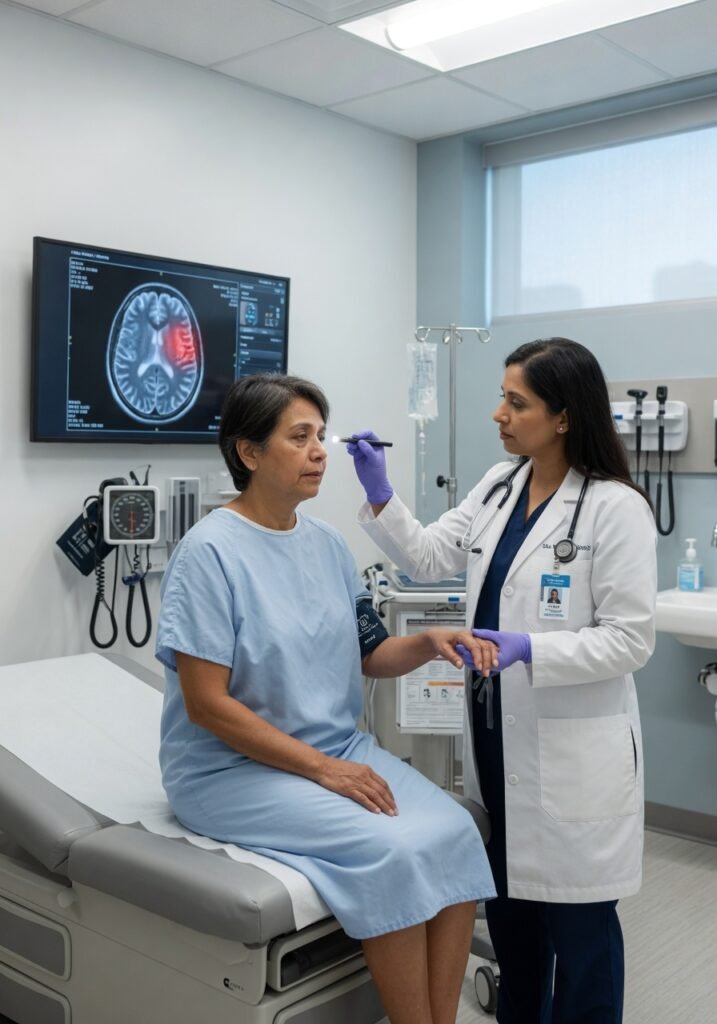
Upon arrival at the emergency department, medical teams act quickly to determine stroke type and extent of brain damage. A CT scan or MRI of the brain is performed immediately to distinguish between ischemic and hemorrhagic strokes, as treatment differs significantly.
Blood tests check clotting factors, blood glucose levels, and cardiac enzymes. An electrocardiogram (EKG) evaluates heart rhythm, as atrial fibrillation and other heart conditions increase stroke risk. Doctors will take a detailed history, including when symptoms started, medications the patient takes, and recent illnesses or injuries.
Additional imaging may include carotid ultrasound to check for narrowing in neck arteries, or angiography to visualize blood vessels in the brain. These tests help doctors understand what caused the stroke and determine the best treatment approach.
Treatment Options
Treatment depends on stroke type and timing. Ischemic stroke treatment aims to restore blood flow quickly. Thrombolytic therapy using medications like alteplase (tPA) dissolves blood clots within 4.5 hours of symptom onset, though some patients benefit up to 24 hours later with newer protocols. Mechanical thrombectomy, an interventional procedure where doctors use a catheter to physically remove the clot, works for certain large vessel strokes and may be effective up to 24 hours after symptom onset in selected patients.
Blood-thinning medications like aspirin reduce clotting risk and may be given immediately. Anticoagulants such as warfarin or newer anticoagulant drugs prevent clot formation in patients with atrial fibrillation or other clotting conditions.
Hemorrhagic stroke treatment focuses on stopping the bleeding and managing pressure in the brain. Blood pressure is carefully controlled to prevent further bleeding. Medications that reverse blood thinners may be administered. In some cases, surgery is necessary to repair ruptured blood vessels or remove accumulated blood.
After acute treatment, patients typically receive rehabilitation therapy. Speech therapy helps restore communication abilities. Physical therapy rebuilds strength and mobility. Occupational therapy helps patients relearn daily living skills. Cognitive rehabilitation addresses thinking and memory problems.
Living With and Managing Stroke
Recovery from stroke varies widely depending on severity and location. Some people recover significantly, while others experience permanent disabilities. Consistent rehabilitation and lifestyle modifications support the best possible recovery.
Many stroke survivors experience depression, which is common and treatable. Speaking with a mental health professional can help. Regular follow-up appointments with your neurologist and primary care doctor are essential for monitoring recovery and adjusting medications.
Driving safety is an important consideration. Your doctor will advise when it’s safe to resume driving, and occupational therapy evaluation can assess your readiness. Many stroke survivors must modify their home environment to improve safety and accessibility.
Prevention Strategies
Since many stroke risk factors are modifiable, prevention is highly effective. Maintain blood pressure below 130/80 mmHg through diet, exercise, stress reduction, and medications if needed. Take medications as prescribed to manage heart conditions, diabetes, and high cholesterol. Eat a heart-healthy diet rich in fruits, vegetables, whole grains, and lean proteins while limiting salt and saturated fats.
Exercise for at least 150 minutes weekly at moderate intensity. Quit smoking—within hours of quitting, your stroke risk begins decreasing. Limit alcohol to no more than one drink daily for women and two for men. Maintain a healthy weight. Manage stress through relaxation techniques, meditation, or counseling.
If you’ve had a previous stroke or TIA, your doctor may recommend daily aspirin or other antiplatelet medications. Patients with atrial fibrillation typically require anticoagulation therapy to prevent clots.
Tips
- Post FAST warning signs on your refrigerator or bathroom mirror as a reminder
- Know your blood pressure numbers and check them regularly at home or your doctor’s office
- Create a medication list and carry it with you at all times
- Enroll in a cardiac rehabilitation program if recommended by your doctor
- Join a stroke support group to connect with others managing similar challenges
- Share stroke warning signs with family and friends so others can recognize symptoms quickly
Frequently Asked Questions
Can you have a stroke without warning signs?
Yes, some people experience silent strokes with no noticeable symptoms, though brain damage still occurs. These are often detected incidentally on imaging done for other reasons. This is why managing risk factors and regular medical checkups are so important, especially if you have multiple stroke risk factors.
What is the difference between a TIA and a full stroke?
A TIA (transient ischemic attack) causes temporary stroke-like symptoms that resolve within 24 hours, usually within minutes to hours, with no permanent brain damage. A full stroke causes lasting brain damage. However, a TIA is a serious warning sign—about one-third of people who have a TIA will eventually have a full stroke if not treated aggressively to reduce risk factors.
How long does stroke recovery take?
Recovery timelines vary significantly. Most improvement occurs within the first three to six months, though recovery can continue for years with consistent rehabilitation. Some people achieve nearly complete recovery, while others experience permanent disabilities. Intensive rehabilitation and positive attitude support better outcomes.
Can young people have strokes?
Yes, strokes can occur at any age, though they’re more common with increasing age. Young stroke victims may have causes like drug use (especially cocaine), oral contraceptive use, pregnancy-related complications, heart disease, or blood clotting disorders. Anyone experiencing stroke symptoms should seek immediate emergency care regardless of age.
What should I do if I suspect someone is having a stroke?
Call 911 immediately—do not delay. Note the time symptoms began. Keep the person calm and comfortable while waiting for paramedics. Do not give them food or drinks. Stay with them to provide information to emergency responders. Every minute without treatment increases brain damage risk, so quick action saves lives.
Sources & Medical References
HealthTopics.com articles are based on peer-reviewed medical research and guidance from the NIH, CDC, and WHO. See our editorial policy for full sourcing standards.