Anti-Inflammatory Diet: What You’re Actually Eating (And Why Your Body Cares)
A 52-year-old accountant named Marcus came to my clinic complaining of constant joint stiffness, brain fog that wouldn’t lift even after coffee, and a persistent low-grade fatigue that made him feel like he was moving through water. He’d tried sleep studies, thyroid panels, everything came back normal. When I asked what he ate for breakfast, he described a protein bar, skim milk, and orange juice—foods he thought were healthy. Within six weeks of shifting to a whole-foods anti-inflammatory diet, his joint pain dropped by 60 percent and his mental clarity returned. This happens more often than most doctors discuss openly.
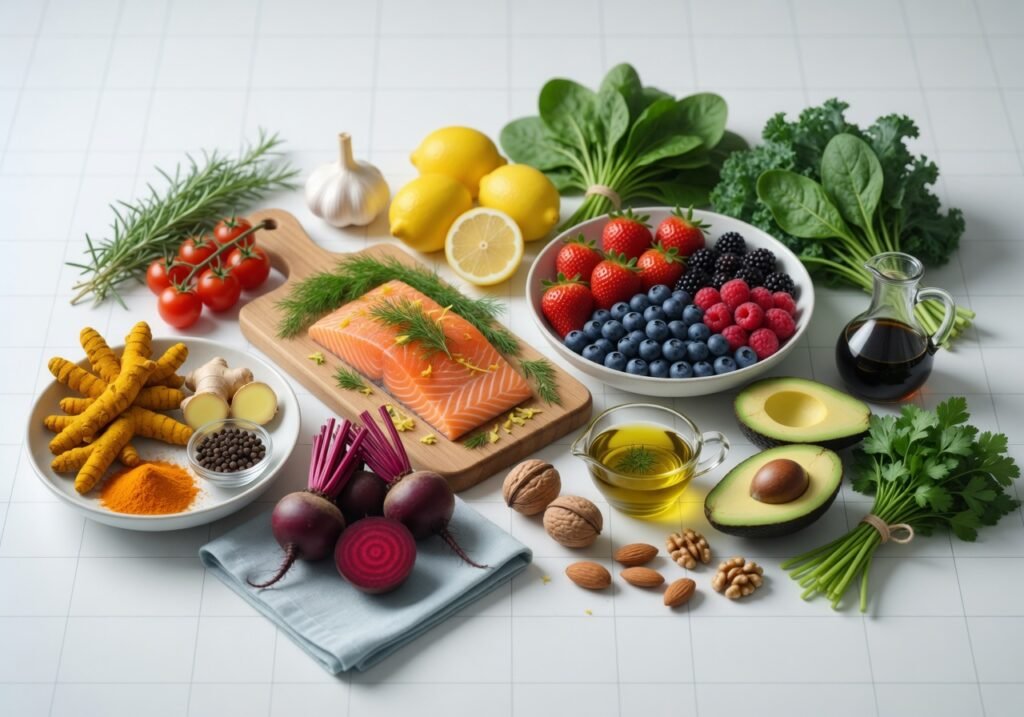
So what exactly is an anti-inflammatory diet? It’s not a fad. It’s a pattern of eating that reduces circulating inflammatory markers in your bloodstream—particularly IL-6, TNF-alpha, and C-reactive protein—by prioritizing whole foods and eliminating processed ones. Your food literally becomes a signal to your immune system.
Key Facts About Anti-Inflammatory Eating
- Chronic low-grade inflammation affects approximately 40 percent of adults over 50, according to CDC surveillance data, yet most people don’t realize their diet is driving it.
- A 2021 NIH-funded study found that switching to a Mediterranean-style anti-inflammatory diet reduced C-reactive protein (a key inflammation marker) by an average of 31 percent within 12 weeks.
- Ultra-processed foods—which include seed oils, refined grains, and added sugars—can trigger inflammatory responses within hours of consumption, measurable through blood biomarkers.
- Omega-3 fatty acids from fatty fish contain EPA and DHA, which directly inhibit NF-kappa B, a master regulator of inflammatory gene expression in your cells.
- Eliminating just refined vegetable oils can reduce arachidonic acid intake by up to 40 percent, directly decreasing prostaglandin production (which drives inflammation).
How Inflammation Actually Works in Your Body
Think of chronic inflammation like a smoke detector that never stops going off. Your immune system uses inflammation as a protective response—it’s necessary. When you cut your finger, that redness, swelling, and warmth is acute inflammation doing its job. But when your diet is constantly triggering immune activation, your immune cells stay in a heightened state, continuously releasing inflammatory cytokines into your bloodstream.
This is where most explanations fail to mention something crucial: refined carbohydrates spike blood glucose rapidly, which triggers insulin spikes, which activates the TLR4 receptor on immune cells. Processed vegetable oils are loaded with omega-6 linoleic acid, which your body converts to arachidonic acid—the precursor to pro-inflammatory prostaglandins. Ultra-processed foods contain additives like emulsifiers and artificial sweeteners that literally damage your intestinal barrier, allowing bacterial lipopolysaccharides to leak into your bloodstream and activate your immune system. This is called “leaky gut,” and it’s not pseudoscience—it’s documented in JAMA Gastroenterology.
Which Risk Factors Actually Matter
Certain people are more susceptible to diet-driven inflammation. Age matters—your intestinal barrier becomes more permeable after 50. Genetics play a role; some people carry variants in genes like FADS1 that impair their ability to convert plant-based omega-3s into the active forms your brain needs. Stress compounds everything because cortisol dysregulation amplifies immune activation.
Here’s the angle most articles miss: gut dysbiosis. If your microbiota composition is skewed toward gram-negative bacteria, you have higher baseline endotoxemia—meaning more bacterial toxins leaking across your intestinal wall. People who’ve taken multiple courses of antibiotics, or who eat mostly processed foods low in fiber, fall into this category. They respond even more dramatically to dietary changes because they’re starting with a more compromised baseline.
What Chronic Inflammation Actually Feels Like Day-to-Day
Patients describe it differently than you’d expect. Most don’t say “I have inflammation.” They say: my knees crack when I stand up, my hands feel stiff in the morning, I can’t focus in afternoon meetings, my skin breaks out predictably, my digestive system is unpredictable. Some mention brain fog specifically—that sensation where thinking requires visible effort.
Early warning signs people overlook include delayed-onset muscle soreness that lasts longer than it should, recurring low-grade fevers that doctors can’t explain, or persistent dry skin despite moisturizers. Some patients report that their recovery time from workouts increased gradually. Others notice their sinuses feel chronically congested, or they develop new food sensitivities that didn’t exist before.
How Diagnosis Actually Works
There’s no single “inflammation test” in the traditional sense. I typically order a high-sensitivity C-reactive protein (hsCRP), which is more precise than standard CRP. Normal is under 1.0 mg/L, but I consider under 0.5 mg/L optimal. I also check ESR (erythrocyte sedimentation rate), homocysteine, and fasting glucose. Some patients benefit from an omega-3 index test, which measures the percentage of EPA and DHA in red blood cells—values below 4 percent suggest deficiency.
The real diagnostic insight? Your symptoms improve when you implement dietary changes. This is functional diagnosis. I had a patient with an hsCRP of 2.8 mg/L (elevated) who switched her oils and removed seed oils from her kitchen. Three months later, her hsCRP dropped to 1.1 mg/L, and her joint pain disappeared. The blood work confirmed what she was experiencing.
Treatment: What Actually Works
Dietary modification is the first-line treatment, not supplementary. The Mediterranean diet pattern shows the strongest evidence—multiple randomized controlled trials support it. But most people need guidance on specifics, not generalities.
For patients with active inflammatory conditions like rheumatoid arthritis, I sometimes recommend an elimination diet: remove all grains, legumes, nightshade vegetables, dairy, and seed oils for 30 days, then reintroduce systematically. This reveals individual triggers that generic dietary advice would miss. Some people react severely to vegetable oils but tolerate legumes fine. Others can’t process nightshade alkaloids but do well on grains.
Supplement support matters too. Omega-3 fish oil at 2-3 grams daily of combined EPA/DHA shows measurable effects on inflammatory markers. Curcumin from turmeric (standardized to 95 percent curcuminoids) at 500-1000 mg three times daily inhibits NF-kappa B. Quercetin at 500 mg twice daily stabilizes mast cells. These aren’t replacements for dietary change—they’re adjuncts for people with significant baseline inflammation.
Practical Daily Management: Specific Strategies
Oil Selection: Replace all vegetable oils (canola, soybean, sunflower, safflower) with extra-virgin olive oil, avocado oil, or coconut oil. Heating matters—olive oil for low-to-medium heat, avocado oil for higher temperatures. One patient told me she didn’t realize she was consuming inflammatory oils in salad dressings she bought pre-made; we made her own instead.
Protein Sources: Prioritize fatty fish (salmon, mackerel, sardines) twice weekly minimum. Add grass-fed beef if available—it has better omega-3 to omega-6 ratios than grain-fed. Eggs from pasture-raised hens contain more lutein and zeaxanthin, which reduce retinal inflammation.
Carbohydrate Timing: Instead of consistent low-carb, eat refined carbohydrates immediately post-workout when your muscles can absorb glucose without triggering insulin spikes. Outside workout windows, stick to complex carbs: sweet potatoes, white rice, oats—foods with lower insulin response.
Elimination Sequencing: Start by removing seed oils and ultra-processed foods. Wait two weeks. Then remove refined grains. Wait another two weeks. This prevents the frustration of eliminating everything simultaneously and not knowing what actually triggers you.
Prevention: What the Evidence Shows
The strongest preventive evidence supports consistent patterns rather than individual foods. Eating this way for 20 years provides more protection than perfect adherence for six months then reverting. A Harvard cohort study tracked 50,000 people over a decade—those consistently consuming Mediterranean patterns had 25 percent lower all-cause mortality and substantially lower cardiovascular events.
Maintenance requires awareness. Most people slip into processed foods through convenience, not ignorance. One strategy: batch cook anti-inflammatory proteins and vegetables on Sunday. Another: identify your personal threshold—if you can tolerate 80 percent adherence and sustain it indefinitely, that beats 100 percent adherence for three months then quitting.
Frequently Asked Questions
Medical Disclaimer: This article is for informational purposes and does not replace professional medical advice. Before making significant dietary changes, especially if you take medications like anticoagulants, have chronic kidney disease, or are pregnant, consult your physician. Individual responses to dietary modifications vary; what works for one person may not work for another. If you experience adverse effects, discontinue dietary changes and contact your
Sources & Medical References
HealthTopics.com articles are based on peer-reviewed medical research and guidance from the NIH, CDC, and WHO. See our editorial policy for full sourcing standards.