Chemotherapy: What Patients Need to Know
Sarah, a 52-year-old teacher, told me in clinic that she’d been delaying her chemotherapy because she was convinced it would destroy her immune system so completely that she’d spend months bedridden with infections. What she didn’t know: modern chemotherapy protocols are specifically designed around protecting immune function during treatment, and most patients continue working, seeing family, and living relatively normal lives during their cycles. The misconception that chemotherapy automatically means becoming severely immunocompromised has kept too many people from starting treatment they need.
Here’s what’s actually true. Chemotherapy does lower white blood cell counts temporarily—that part is real. But oncologists now use supportive medications like filgrastim (a granulocyte-colony stimulating factor) to rebuild those counts between treatments, and we monitor blood work closely to catch problems early. The difference between what happened to cancer patients in 1995 and 2024 is substantial.
Key Facts About Chemotherapy
- Efficacy varies significantly: For some cancers like testicular cancer and Hodgkin lymphoma, chemotherapy alone produces cure rates exceeding 85-90%. For others like advanced pancreatic cancer, response rates hover around 20-30% even with combination regimens.
- Side effect timing is predictable: Most acute side effects (nausea, fatigue, hair loss) occur within days to weeks of infusion. CDC data shows approximately 80% of patients experience some degree of chemotherapy-related fatigue, though severity varies enormously.
- Cumulative toxicity matters: Certain chemotherapy agents like doxorubicin and daunorubicin carry lifetime dose limits (typically 450-550 mg/m²) due to irreversible heart damage beyond those thresholds.
- Treatment duration varies: A full chemotherapy course might be 4 cycles over 3 months, or it might be 12 cycles over a year. There is no single “standard” timeline—it depends entirely on cancer type, stage, and individual tolerance.
- Fertility impacts are real but manageable: Chemotherapy can damage sperm production and egg reserve, but fertility preservation options like sperm banking and egg freezing are available before treatment starts and should be discussed proactively.
Understanding How Chemotherapy Works in Your Body
Most people picture chemotherapy as poison killing cancer cells. That’s not wrong, but it misses the mechanism. Chemotherapy drugs interfere with cell division. Cancer cells divide far more rapidly than normal cells—a breast cancer cell might divide every 24 hours while a normal skin cell takes weeks. Chemotherapy drugs exploit this difference.
Think of it like this: you’re trying to stop a runaway train, and you pull the brake lever. That brake lever is the chemotherapy drug. The train slows down—sometimes it stops. Normal trains (normal cells) also slow down when you pull the brake, which is why side effects happen. Your hair follicles divide rapidly, your gut lining divides rapidly, your bone marrow divides rapidly. These get caught in the crossfire.
Different chemotherapy classes work differently. Alkylating agents like cyclophosphamide cross-link DNA strands, making them impossible for cancer cells to replicate. Antimetabolites like methotrexate trick cells into using fake building blocks during DNA synthesis. Topoisomerase inhibitors like etoposide prevent the enzymes that unwind DNA from working properly. And taxanes like paclitaxel (Taxol) disrupt the microtubule scaffolding that cells need to divide. Your oncologist chooses drugs based on which cancer you have because different cancers respond to different mechanisms.
Who Gets Chemotherapy: Risk Factors and Candidate Selection
The biggest misunderstanding here is that chemotherapy is only for “advanced” cancer. That’s false. Early-stage breast cancer patients often receive chemotherapy as adjuvant therapy (after surgery) to eliminate microscopic disease that imaging can’t detect. A 35-year-old with stage 2 breast cancer might get chemotherapy even though her cancer was “caught early.” Why? Because the biology of her tumor—hormone receptor status, HER2 status, grade—predicts whether she’s at high risk for recurrence, and chemotherapy meaningfully reduces that risk.
The real risk factors determining who should receive chemotherapy are biological, not clinical stage alone. Tumors with high Ki-67 proliferation indices (measuring how many cells are actively dividing) benefit more from chemotherapy than slow-growing tumors. Presence of specific mutations—BRCA1/BRCA2 mutations in breast cancer, for example—makes some patients better candidates because their tumors have specific vulnerabilities. Age is a factor, but not in the way many people think. An 78-year-old with excellent kidney function, normal heart function, and minimal other medical problems can tolerate chemotherapy. A 58-year-old with severe heart disease, diabetes, and kidney dysfunction cannot.
Here’s the clinical insight most websites skip: comorbidity burden matters far more than chronological age. The Charlson Comorbidity Index, which scores your other medical conditions, predicts chemotherapy tolerance better than your birthday. I’ve seen 85-year-olds complete full chemotherapy courses and 55-year-olds who couldn’t tolerate even reduced doses because of underlying organ dysfunction.
What Chemotherapy Actually Feels Like: Realistic Day-to-Day Experience
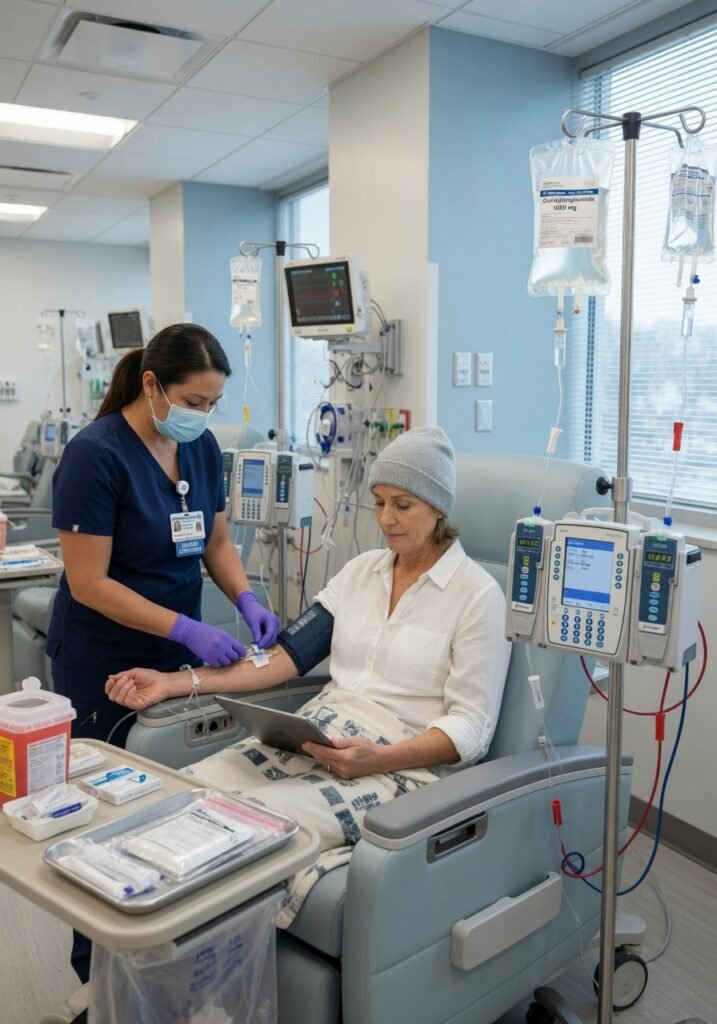
The first infusion day is typically the least typical. You’ll sit in a recliner for 2-8 hours depending on what’s being given. Nurses will run IV lines, pre-medications will flow (these prevent allergic reactions and nausea), and then the chemotherapy itself infuses slowly. You might feel nothing, or you might feel a burning sensation in your vein, or taste something metallic. Most patients describe the experience as boring more than anything—sitting, waiting, reading, or watching shows while poison flows into their arm.
Days 1-3 are often manageable. Nausea might start on day 2, usually controlled by ondansetron (Zofran) or aprepitant (Emend). You’ll feel tired. By day 4-5, fatigue often becomes prominent—the kind where your legs feel heavy and your thinking gets slower, often described as “chemo brain” or cancer-related cognitive impairment. This isn’t depression, though depression can coincide. It’s measurable and real. JAMA Oncology has documented cognitive changes in up to 75% of patients receiving certain chemotherapy regimens.
Hair loss (alopecia) happens predictably with certain drugs. Doxorubicin causes it; capecitabine (Xeloda) rarely does. If it happens, it starts around day 14-21 and progresses over weeks. You lose hair everywhere—scalp, eyebrows, eyelashes. It grows back, usually 3-6 months after treatment ends, but knowing it’s coming doesn’t make it psychologically easier.
Mouth sores (oral mucositis) are often overlooked in popular articles but genuinely affect quality of life. Your mouth becomes sore and swollen 5-10 days after infusion. Eating becomes painful. Certain foods become impossible. This usually resolves before the next cycle but makes those weeks difficult.
Diagnosis: How Oncologists Know You Need Chemotherapy
This isn’t about diagnosing cancer itself—that’s a different conversation. This is about determining whether chemotherapy is the right treatment for your specific cancer. Your oncologist needs several pieces of information. First, histology: what type of cancer is it exactly? Adenocarcinoma versus squamous cell lung cancer demands different chemotherapy. Second, stage: TNM staging (tumor size, node involvement, metastases) affects treatment selection. A stage 3 colon cancer might need chemotherapy; a stage 1 might not.
Then come biomarkers. HER2 status in breast cancer changes everything—HER2-positive cancers have specific chemotherapy regimens combined with targeted agents like trastuzumab (Herceptin). PD-L1 expression in lung cancer predicts response to immunotherapy versus chemotherapy. KRAS mutations in pancreatic cancer are now actionable with specific drug combinations. Your tumor is analyzed for these markers because they predict what will work.
Performance status matters. Your doctor will formally assess this using the ECOG scale (0-4, where 0 means fully active and 4 means bedridden). Someone with ECOG 0-1 can usually tolerate standard doses. ECOG 2-3 might need reduced doses or different drug choices entirely. Organ function gets tested: chest X-ray or echocardiogram for heart function, blood work for kidney and liver function. Certain chemotherapy drugs are cardiotoxic and shouldn’t be given to someone with heart disease. Others are nephrotoxic and need dose adjustment in kidney disease.
Treatment Options: What Actually Works for Which Cancers
Chemotherapy isn’t one thing. The choices are staggering. For metastatic colorectal cancer, FOLFOX (fluorouracil, leucovorin, and oxaliplatin) is standard first-line. For triple-negative breast cancer, anthracycline-based regimens (doxorubicin or daunorubicin) followed by taxanes (paclitaxel or docetaxel) are standard. For ovarian cancer, carboplatin and paclitaxel is the backbone, often combined now with bevacizumab, a vascular endothelial growth factor inhibitor. For acute leukemias, intensive multi-drug induction chemotherapy is necessary for any chance of cure.
The critical shift in recent years is combination therapy. Chemotherapy alone is increasingly rare. It’s now chemotherapy plus targeted agents (like trastuzumab for HER2-positive cancers), or chemotherapy plus immunotherapy (like pembrolizumab for certain lung cancers), or chemotherapy plus hormonal agents (like aromatase inhibitors in breast cancer). Your specific regimen depends on your cancer’s molecular profile.
Timing matters too. Some cancers get neoadjuvant chemotherapy—chemotherapy before surgery to shrink the tumor first. Others get adjuvant chemotherapy after surgery to kill cells that escaped. Some get concurrent chemotherapy during radiation therapy. The sequence and combination are individualized based on evidence from clinical trials specific to your cancer type and stage.
Managing Chemotherapy: Practical Strategies That Actually Help
Nutritional support during treatment: Don’t follow generic “eat well” advice. High-protein, calorie-dense foods matter because chemotherapy metabolizes muscle. If nausea makes hot foods unbearable, cold or room-temperature foods often work better. Some patients do better with smaller, frequent meals every 2-3 hours rather than three meals daily. Zinc supplementation (15-25 mg daily) can help preserve taste sensation during treatment, which often becomes distorted or metallic.
Exercise during chemotherapy: This seems counterintuitive when you’re exhausted, but supervised light exercise—walking 20-30 minutes on treatment days, gentle resistance training on recovery days—measurably reduces fatigue compared to bed rest. Studies show it also preserves heart function during cardiotoxic drugs. Don’t push hard; consistency matters more than intensity.
Blood work timing: Know your nadir—the point when your blood counts hit their lowest, usually 7-14 days after infusion. Avoid crowds and sick people around your nadir. Fever during nadir is a medical emergency requiring immediate evaluation and antibiotics. Don’t wait.
Scalp cooling for hair preservation: If hair loss bothers you and you’re receiving drugs that cause it, scalp-cooling caps (like DigniCap) reduce alopecia by 50-70% in many cases. They work by lowering scalp temperature, reducing drug delivery to hair follicles. They’re uncomfortable (your scalp gets very cold) and not always covered by insurance, but they work if hair preservation matters to you.
Fertility preservation: If you’re of reproductive age and want biological children, discuss this before chemotherapy starts, not after. Sperm