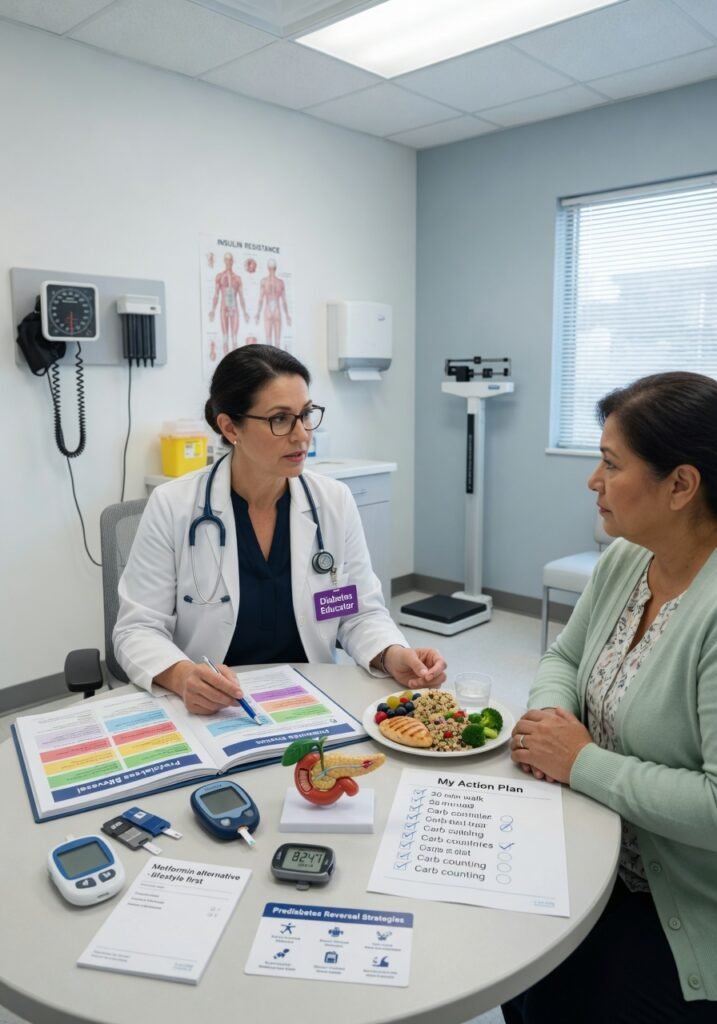
Can You Actually Reverse Prediabetes? Here’s What Your Doctor Knows
Maria, a 48-year-old accountant, sat in my office staring at her lab results: fasting glucose of 118 mg/dL, A1C of 5.9%. “Does this mean I’m diabetic?” she asked, her voice tight. The answer is no—but she was standing at a crossroads most people don’t realize exists. Prediabetes isn’t a disease yet. It’s a metabolic warning system, and unlike the marketing might suggest, reversal isn’t about willpower or boutique diets. It’s about understanding what’s actually happening in your cells and making specific, measurable changes backed by real data. The question patients actually want answered: if I act now, will I ever develop diabetes? The answer, surprisingly, depends less on genetics than most assume.
Key Facts About Diabetes and Prediabetes
- According to the CDC, 96 million American adults have prediabetes, yet 80% don’t know they have it—most are only detected through routine screening
- The Diabetes Prevention Program (DPP), published in NEJM, showed that intensive lifestyle intervention reduced diabetes progression by 58% over 3 years; in adults over 60, the reduction reached 71%
- A1C of 5.7-6.4% defines prediabetes; fasting glucose of 100-125 mg/dL is the second diagnostic marker; many people have one abnormal value without the other
- Weight loss of just 5-7% of body weight significantly improves insulin sensitivity, though the effect plateaus around 10-15% loss
- Insulin resistance typically develops 10-15 years before blood glucose becomes abnormal, meaning your body’s response to insulin worsens long before any lab abnormality appears
Understanding What’s Actually Happening Inside
Think of insulin like a key, and your cells like locked doors holding glucose. When everything works properly, insulin jingles the key, the door opens, and glucose enters the cell to fuel energy. In prediabetes, those locks start getting sticky. The key still works, but it takes more force, more turns, more insulin being produced just to get the door open. Eventually, your pancreas gets tired from making so much insulin, and glucose backs up in your bloodstream. This isn’t about eating too much sugar in the moment—it’s about your cells gradually losing responsiveness to the hormone that regulates blood sugar.
Here’s the part most articles skip: this process is largely reversible in early stages because you’re not yet destroying the insulin-making cells. You’re just making them work harder. Once actual diabetes develops, some of that beta cell damage becomes permanent, which is why catching prediabetes matters. The window for reversal is real, but it narrows over time.
What Actually Causes Prediabetes—And What Doesn’t
Everyone blames sugar. Sugar matters, but it’s not the primary culprit in most prediabetes cases. The three factors that actually drive insulin resistance are: visceral fat (the deep belly fat around your organs, not subcutaneous fat under your skin), physical inactivity, and chronic sleep disruption.
Visceral fat is metabolically toxic. It secretes inflammatory substances directly into your liver and bloodstream, actively interfering with insulin signaling. A person at normal weight can have problematic visceral fat if they’re sedentary. Meanwhile, someone overweight can have relatively good insulin sensitivity if they’re physically active. This is why BMI alone is a crude diagnostic tool—body composition matters far more.
The overlooked risk factor: sleep architecture disruption. When you skip sleep or have untreated sleep apnea, your cortisol and inflammatory markers spike, your body prioritizes fat storage, and your insulin sensitivity drops measurably. A JAMA study found that people sleeping 5 hours or fewer had significantly higher diabetes incidence than those sleeping 7-8 hours, independent of weight. Most prediabetes articles mention this in passing, if at all. Your sleep schedule is a metabolic switch.
Family history matters—if both parents have diabetes, your genetic risk is substantial. But genetics loads the gun; lifestyle pulls the trigger. Even people with high genetic risk can remain non-diabetic for decades with appropriate weight management and activity.
Early Warning Signs Most People Miss
Classic prediabetes symptoms—blurred vision, tingling fingers—don’t appear until later. What you’ll actually notice first: extreme fatigue after meals (your body is working hard to manage blood glucose), increased thirst without obvious reason, needing to urinate more frequently at night, and difficulty losing weight despite reduced calorie intake. Some people experience mood instability or difficulty concentrating in the afternoon, which they attribute to work stress.
One specific sign doctors watch for: dark velvety patches on your neck, armpits, or groin called acanthosis nigricans. This appears in about 25% of people with insulin resistance and is a direct physical marker of the underlying metabolic problem. If you see this, get your glucose checked immediately.
How Diagnosis Actually Works
Your doctor will likely order one or more of three tests: fasting glucose (you avoid food overnight, then have blood drawn in the morning—normal is under 100, prediabetes is 100-125), the oral glucose tolerance test (you drink 75 grams of sugar, then have blood drawn 2 hours later—prediabetes is 140-199), or A1C (shows your average glucose over 3 months—prediabetes is 5.7-6.4%). Some people have an abnormal value on one test but not another. This is real and requires repeat testing or multiple markers to confirm.
Most people find out accidentally during a routine physical. You don’t feel the difference between a fasting glucose of 99 and 101. Your body doesn’t announce the transition to prediabetes. This is why the CDC recommends screening every 3 years for adults over 45, or earlier if you’re overweight with additional risk factors.
Treatment and Management Strategies That Actually Work
There’s no medication that reverses prediabetes as a first-line treatment. Metformin (Glucophage) can delay progression—NIH data shows it reduces progression by about 31% over 3 years—but it doesn’t reverse the condition the way intensive lifestyle intervention does. Metformin is typically considered for people unable or unwilling to make significant lifestyle changes, or for those with very severe insulin resistance markers.
The actual reversal comes from a combination of three specific interventions: structured resistance training 2-3 times weekly (not just cardio—lifting activates large muscle groups that are insulin-sensitive), dietary modification reducing refined carbohydrates and ultra-processed foods (not necessarily low-carb, but carbs that won’t spike blood glucose), and achieving the 5-7% weight loss threshold.
For medication-naive prediabetes, I typically recommend: start with 30-40 minutes of brisk walking or cycling 5 days weekly, prioritize strength training using dumbbells or resistance bands twice weekly (muscle is your body’s largest glucose sink), and shift your plate composition—fill half with non-starchy vegetables, one quarter with lean protein, one quarter with whole grains or legumes. This isn’t about calorie restriction obsession; it’s about satiety and blood glucose stability.
Practical Daily Strategies That Stick
Generic advice to “eat healthier” fails because it has no specificity. Instead: eat protein within 30 minutes of waking (this stabilizes your glucose for hours—eggs, Greek yogurt, or lean meat work). When you do eat carbohydrates, pair them with protein and fat (a piece of bread alone spikes glucose; bread with cheese and turkey doesn’t). Take a 10-minute walk immediately after meals, especially dinner—this dramatically reduces the post-meal glucose spike by increasing muscle glucose uptake.
For sleep: set your bedroom temperature to 65-68°F, eliminate screens 60 minutes before bed, and maintain consistent sleep and wake times even on weekends. Inconsistent sleep timing damages insulin sensitivity more than short sleep duration alone.
Track your fasting glucose at home if possible—home meters cost $20-30. Seeing your own numbers respond to your behaviors is profoundly motivating in ways generic advice never is. You’ll discover your personal glucose triggers: maybe pasta spikes you but rice doesn’t, or morning exercise helps but evening exercise disrupts your sleep.
Prevention: What Evidence Actually Shows
The DPP is the gold standard here. Intensive lifestyle intervention—the kind with actual coaching and accountability—works better than medication. The Diabetes Prevention Program found that after 15 years of follow-up, the lifestyle group not only prevented diabetes at higher rates but also had sustained weight loss and improved cardiovascular markers.
Here’s the caveat: “intensive” meant 16 sessions with a lifestyle coach in the first year, then ongoing monitoring. Most people in real-world settings without that structure have less impressive results. The 58% risk reduction becomes more like 30-40% with self-directed lifestyle change. This doesn’t mean you can’t succeed without coaching, but recognize that accountability structures (group fitness classes, nutrition coaching, or even online programs with human interaction) dramatically improve outcomes compared to going solo.
Prevention also includes screening your relatives. If you have prediabetes, your first-degree relatives (siblings, children) have elevated risk. Knowing this prompts early screening and intervention for them before they develop prediabetes themselves.
Frequently Asked Questions
If I have prediabetes, will I definitely get diabetes?
No. Without intervention, about 5-10% of people with prediabetes progress to diabetes each year, but many remain stable for years. With lifestyle changes like the DPP demonstrated, you can maintain prediabetes indefinitely or even revert to normal glucose levels—this reversion happened in about 15% of the intensive lifestyle group at 15-year follow-up.
Does prediabetes cause permanent damage to my organs?
Prediabetes alone causes minimal organ damage because blood glucose levels remain below the threshold where complications develop. However, you may already have early endothelial dysfunction (damage to blood vessel linings) if your prediabetes has been present for years undetected. This is another reason early detection and intervention matter—you’re preventing future complications, not treating existing ones.
Can I reverse prediabetes with diet alone without exercise?
Diet drives weight loss, which improves insulin sensitivity, but exercise provides an independent benefit on insulin sensitivity that doesn’t require weight loss. Studies show that sedentary people can improve insulin function with resistance training alone without changing body weight. Combining both is more effective than either alone, but if you must choose one, resistance training has a more direct metabolic effect on glucose handling.
Will taking metformin prevent me from ever developing diabetes?
Metformin reduces progression risk by about 31% in studies, which is meaningful but not a guarantee. When metformin is discontinued, the benefit diminishes—you’re not changing the underlying insulin resistance, just managing it chemically. Lifestyle intervention provides sustained benefit even after the intervention ends because you’ve changed your body’s actual metabolic capacity.
Is prediabetes just a precancerous label designed to sell medications?
Predi
Sources & Medical References
HealthTopics.com articles are based on peer-reviewed medical research and guidance from the NIH, CDC, and WHO. See our editorial policy for full sourcing standards.