Can Someone Actually Freeze to Death in Mild Weather?
Yes. That’s the uncomfortable truth that surprises most people. Last winter, a 34-year-old construction worker in Michigan collapsed while working in 48-degree rain without proper gear. His core body temperature dropped to 82°F within two hours. He survived, but barely. Hypothermia doesn’t require Arctic conditions—it requires the right combination of wet clothing, wind, exhaustion, and poor judgment. What makes hypothermia particularly dangerous is how it hijacks your decision-making ability before you even realize you’re in trouble.
Key Facts About Hypothermia
- According to the CDC, an average of 1,500 Americans die annually from hypothermia, with over half occurring in temperatures above 50°F
- Core body temperature drops just 1-2 degrees Celsius per hour in water, but can drop 10 times faster in very cold water (below 40°F)
- Shivering stops completely when core temperature falls below 82°F—a critical sign of severe hypothermia, not recovery
- Men account for 80% of hypothermia deaths, primarily because they underestimate cold exposure risks and overestimate their tolerance
- The “afterdrop” phenomenon causes core temperature to continue falling even after someone is removed from cold exposure, sometimes dropping 1-2 degrees more
How Hypothermia Actually Damages the Body
Think of your body as an engine that needs fuel and proper temperature to run. When core temperature drops, your metabolism doesn’t just slow down—it becomes wildly inefficient. Your cells struggle to produce energy. Your heart muscle becomes irritable and prone to dangerous rhythms. Your brain loses its executive function. You might feel warm despite freezing, remove protective clothing, and wander into deeper danger. This isn’t weakness or stupidity; it’s neurotoxicity caused by cold.
The process happens in stages. At 95°F, shivering begins—your body’s attempt to generate heat through muscle contractions. Between 90-95°F, confusion sets in. Below 90°F, shivering stops entirely, which sounds good but actually means you’re losing the battle. Your body is conserving what little energy remains, often paradoxically causing you to feel flushed and want to undress. Between 82-90°F, you enter the danger zone where cardiac arrhythmias become likely. Below 82°F, you may appear dead—pale, rigid, barely breathing—but resuscitation is sometimes possible because the cold has dramatically slowed your metabolism.
What Actually Causes Hypothermia—and the Factor Everyone Misses
The obvious culprits are freezing air, snow, and ice. Less obvious is immersion in water above freezing. But here’s what most articles skip: alcohol is a major hidden risk factor. Alcohol doesn’t warm you—it dilates blood vessels, causing rapid core heat loss while making you feel artificially warm. According to the NIH, alcohol is involved in roughly 40% of hypothermia deaths in adults.
Other key risk factors include:
- Wet clothing without change-out capability—water conducts heat away 25 times faster than air
- Exhaustion, which depletes your glycogen stores and impairs shivering thermogenesis
- Age extremes—infants lose heat rapidly from their heads, and elderly individuals often have impaired shivering response and reduced sensation of cold
- Certain medications like beta-blockers that blunt your heart rate response and some antipsychotics that disrupt temperature regulation
- Malnutrition or dehydration, which reduces your metabolic reserve for generating heat
- Medical conditions including hypothyroidism, diabetes, and sepsis that directly impair temperature regulation
The Warning Signs You Actually Feel
Early hypothermia announces itself, but the symptoms are easily dismissed. You might feel intense, uncontrollable shivering that makes basic tasks difficult. Your fingers grow numb—you can’t manipulate buttons or zippers. Speech becomes slurred, not from alcohol but from your body’s inability to coordinate muscles efficiently. Judgment becomes terrible. You might decide that a quick dash without a jacket is fine, or that wet socks aren’t a real problem.
As hypothermia worsens, shivering paradoxically stops. Your muscles feel stiff, movements become clumsy. You might experience a false sense of warmth and remove clothing—called “paradoxical undressing.” Drowsiness sets in. Your thinking becomes so muddled that a person might curl up in the snow, making no effort to find shelter.
One often-overlooked early sign: extreme irritability. Someone becoming unreasonably angry or resistant to suggestions for warming up might actually be showing early cold-induced cognitive changes, not personality problems.
How Hypothermia Gets Diagnosed
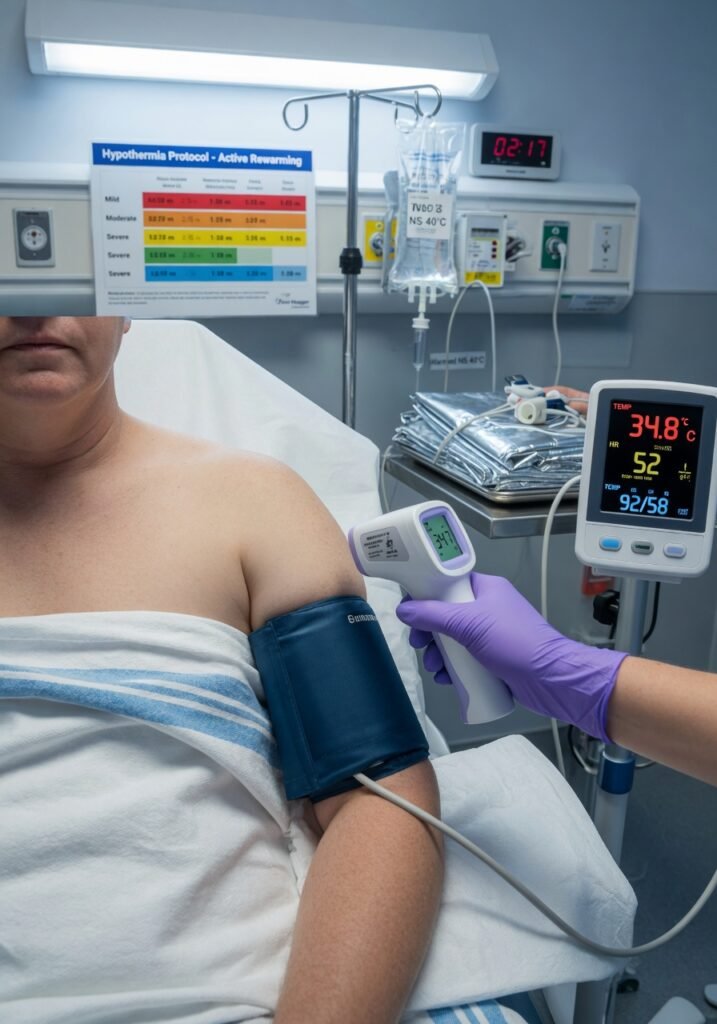
In a medical setting, diagnosis requires measuring core body temperature using a specialized low-reading thermometer—regular thermometers don’t register below 94°F, which is dangerously inadequate. Your doctor might use an esophageal probe or rectal thermometer for accuracy. The ECG (electrocardiogram) might show a characteristic finding called the Osborn wave—a distinctive bump on the heart’s electrical tracing that appears at core temperatures below 82°F.
In prehospital situations, diagnosis depends on clinical assessment. First responders look for unresponsiveness, fixed pupils, and absent pulse lasting longer than 30 seconds before assuming someone is dead. Why the extended timeline? In severe hypothermia, blood flow is so minimal that a person may appear lifeless for an hour or more yet still recover with full brain function after rewarming. The saying goes: “Nobody is dead until they’re warm and dead.”
Treatment: What Actually Works
The immediate goal is preventing further heat loss and gentle rewarming. Here’s where common sense can go wrong: you don’t vigorously rub someone or immerse them in hot water. Both cause afterdrop—peripheral blood vessels dilate, returning cold blood to the core and dropping internal temperature further. This has killed people who were “rescued” incorrectly.
For mild hypothermia (core temperature 90-95°F), passive external rewarming works—moving to shelter, removing wet clothing, adding blankets. For moderate hypothermia (82-90°F), active external rewarming might include warm (not hot) beverages if the person is alert and can swallow. For severe hypothermia (below 82°F), you need extracorporeal rewarming in a hospital—specifically ECMO (extracorporeal membrane oxygenation) or cardiopulmonary bypass if the person has cardiac instability.
Medications have limited direct roles. IV fluids are warmed before administration, but medications like epinephrine and other vasopressors are typically delayed until core temperature reaches 82°F because the severely hypothermic heart is extremely irritable and unpredictable. Antibiotics might be given if aspiration is suspected during rewarming.
Managing Hypothermia Risk in Your Daily Life
This isn’t about never going outside. It’s about specific preparation. Layer your clothing using the moisture-wicking principle: synthetic or merino wool base layers pull sweat away from skin, insulating layers (fleece, down) trap warm air, and a waterproof outer shell prevents wind and water penetration. Cotton is your enemy when cold and wet—it holds moisture against your skin.
Keep backup dry clothing in your car during winter months, even for short trips. Pack a chemical hand warmer or insulated water bottle in coat pockets. Eat adequate carbohydrates and stay hydrated before cold exposure—your body needs fuel to generate heat through metabolism.
If you’re on medications affecting temperature regulation (beta-blockers, certain psychiatric medications, thyroid disorders), discuss cold exposure precautions specifically with your doctor. If you drink alcohol and spend time outdoors in winter, understand that you’re substantially increasing your hypothermia risk. This isn’t judgment—it’s pharmacology.
Prevention: What the Evidence Shows
The most effective prevention strategies target high-risk groups. For outdoor workers, JAMA published research showing that mandatory break schedules with heated shelter access reduced cold-related injuries by 60%. For homeless populations, community warming centers and accessible shelter reduce hypothermia mortality dramatically.
For the general public, prevention comes down to three components: appropriate clothing matched to conditions, behavior modification (recognizing when you’re becoming hypothermic and taking corrective action), and medical optimization (managing conditions like hypothyroidism that impair temperature regulation).
One nuance: acclimatization helps somewhat but doesn’t create immunity. People who spend winters outdoors develop slightly better cold tolerance, but this is marginal—maybe 5-10% improvement. It doesn’t excuse poor planning.
Frequently Asked Questions
Can you get hypothermia from air conditioning?
Not in typical circumstances. You’d need to be in sub-50°F temperatures for hours. However, prolonged exposure to intense AC in hot climates while wearing wet swimwear or damp clothing could theoretically lower core temperature, especially in vulnerable people like infants or elderly individuals with impaired thermoregulation.
Is it true that you can revive someone who appears dead from hypothermia?
Yes, this is real. The severely hypothermic brain enters a state of near-suspended metabolism. People have been resuscitated after 45 minutes without pulse in some cases. Always begin CPR and continue until the person is warm—don’t assume death based on appearance alone.
What temperature should I use to rewarm someone with hypothermia?
If rewarming yourself or someone else, use lukewarm water or passive external rewarming only (blankets, shelter). Water above 104°F can cause afterdrop and is dangerous. Hospital-based rewarming using ECMO reaches body temperature gradually under controlled conditions.
Can medications cause hypothermia risk to increase?
Yes. Beta-blockers, tricyclic antidepressants, antipsychotics, and sedating antihistamines all impair your body’s ability to sense cold or generate heat appropriately. Discuss cold exposure precautions with your doctor if you take these medications.
How long can someone survive hypothermia?
This depends entirely on core temperature and circumstances. At 82°F, metabolic rate is so low that survival without brain damage is possible for many hours. In water at 35°F, someone might lose consciousness within 15 minutes but survive longer if rescued promptly. The phrase “nobody is dead until they’re warm and dead” reflects the prolonged survival times possible with severe hypothermia.
Medical Disclaimer: This article provides general medical information for educational purposes only and should not replace professional medical advice. Hypothermia is a medical emergency requiring immediate professional evaluation and treatment. If you or someone else shows signs of hypothermia, call emergency services immediately (911 in the US). Do not attempt advanced rewarming techniques without medical training. Always consult with a physician before making changes to cold exposure
Sources & Medical References
HealthTopics.com articles are based on peer-reviewed medical research and guidance from the NIH, CDC, and WHO. See our editorial policy for full sourcing standards.