“`html
Liver Disease: Types, Causes, and Treatment Options
Sarah, a 52-year-old accountant, noticed her pants fitting tighter around the abdomen despite not gaining weight. She felt unusually fatigued during her afternoon meetings and her skin had taken on a slightly yellowish tint that her daughter mentioned looked odd. Six weeks later, after blood work her doctor ordered for “routine monitoring,” she learned her liver enzymes were significantly elevated and she had nonalcoholic fatty liver disease—a diagnosis that shocked her because she’d never considered herself at risk.
Liver disease encompasses far more than cirrhosis from alcohol use. In fact, metabolic dysfunction now drives the majority of new liver disease cases in developed countries. Understanding what’s happening in your liver, recognizing early warning signs, and knowing your actual treatment options can fundamentally change your health trajectory.
Key Facts About Liver Disease
- Approximately 4.5 million Americans have been diagnosed with liver disease, but the CDC estimates an additional 7-8 million have undiagnosed chronic liver disease
- Nonalcoholic fatty liver disease (NAFLD) affects 24-27% of the global population and is now the leading cause of liver disease in developed nations
- Liver fibrosis can progress to cirrhosis within 5-10 years in 20-30% of patients with NAFLD, yet most patients never reach this stage if managed appropriately
- Hepatitis C, when treated with direct-acting antiviral medications, achieves cure rates exceeding 95% even in patients with advanced fibrosis
- Alcohol-related liver disease accounts for approximately 47,000 deaths annually in the United States, yet many cases remain reversible with abstinence during early stages
Understanding How Liver Disease Actually Develops
Think of your liver like a factory worker handling 500 different jobs simultaneously. It processes nutrients, manufactures clotting factors, filters toxins, stores energy, and produces bile. When this organ faces chronic stress—whether from excess fat accumulation, viral infection, alcohol metabolism, or autoimmune attacks—inflammation develops. Inflammation triggers fibrosis, which is essentially the liver’s scar tissue response. Imagine repeatedly injuring the same patch of skin: eventually, that scarred tissue becomes thick, inflexible, and dysfunctional.
What makes this progression insidious is that your liver keeps functioning even while damaged. You can have significant fibrosis without any symptoms whatsoever. The critical distinction most patients miss: having liver disease doesn’t mean having advanced liver disease. Catching inflammation early, before fibrosis becomes established, allows for actual reversal in many cases.
Causes and Risk Factors Worth Understanding
The traditional culprits—heavy alcohol consumption, chronic hepatitis B and C infection—remain important. But the epidemiology has shifted dramatically. Metabolic factors now dominate. Here’s what specifically matters:
Metabolic-Related Causes
Nonalcoholic fatty liver disease develops through insulin resistance and hepatic lipid accumulation. Obesity alone increases risk, but the combination of obesity plus type 2 diabetes, hypertension, or dyslipidemia accelerates fibrosis progression substantially. A patient with metabolic syndrome—all the components together—faces roughly seven times greater risk of advanced fibrosis compared to someone with fatty liver alone.
Viral and Infectious Causes
Hepatitis B affects 2.4 million Americans, though many don’t realize it. Hepatitis C, once considered a death sentence, now has cure rates that make early testing genuinely valuable. Hepatitis A and E typically cause acute inflammation only, not chronic disease.
Autoimmune and Genetic Causes
Primary biliary cholangitis and primary sclerosing cholangitis involve the immune system attacking bile ducts. Hemochromatosis causes iron overload. Wilson disease involves copper accumulation. Alpha-1 antitrypsin deficiency creates progressive fibrosis. These are less common, but treatable if caught.
The Overlooked Factor: Medications and Supplements
This is where most articles go vague. Statins rarely cause hepatotoxicity but remain vilified by patients. What actually matters more: acetaminophen use exceeding recommended doses, amoxicillin-clavulanate antibiotics (which cause a distinct cholestatic pattern of injury), and herbal supplements including kava, comfrey, and some weight-loss formulations. A patient taking over-the-counter pain relievers daily plus herbal supplements faces genuine hepatic risk that their doctor should specifically address.
Signs and Symptoms: What Patients Actually Report
Early liver disease is frequently asymptomatic. This is the uncomfortable truth. Fatigue appears first, but it’s subtle—not the exhaustion of flu, but a persistent heaviness that makes afternoon meetings feel draining. Appetite changes occur; food that normally appeals becomes uninteresting. Some patients notice their clothes fitting differently as the abdomen becomes distended from fluid accumulation or spleen enlargement.
As disease advances, more specific symptoms emerge: dark urine (resembling iced tea), pale stools, easy bruising without trauma, itching that becomes maddening at night, and mental fog that patients describe as “brain not working right.” Jaundice—the yellowing of skin and eyes—represents more advanced disease.
Portal hypertension, when scar tissue impedes blood flow through the liver, causes visible spider veins on the skin and abdominal distension from ascites (fluid accumulation). Hepatic encephalopathy, inflammation of the brain from ammonia accumulation, causes confusion, personality changes, or sleep reversal.
How Diagnosis Actually Works
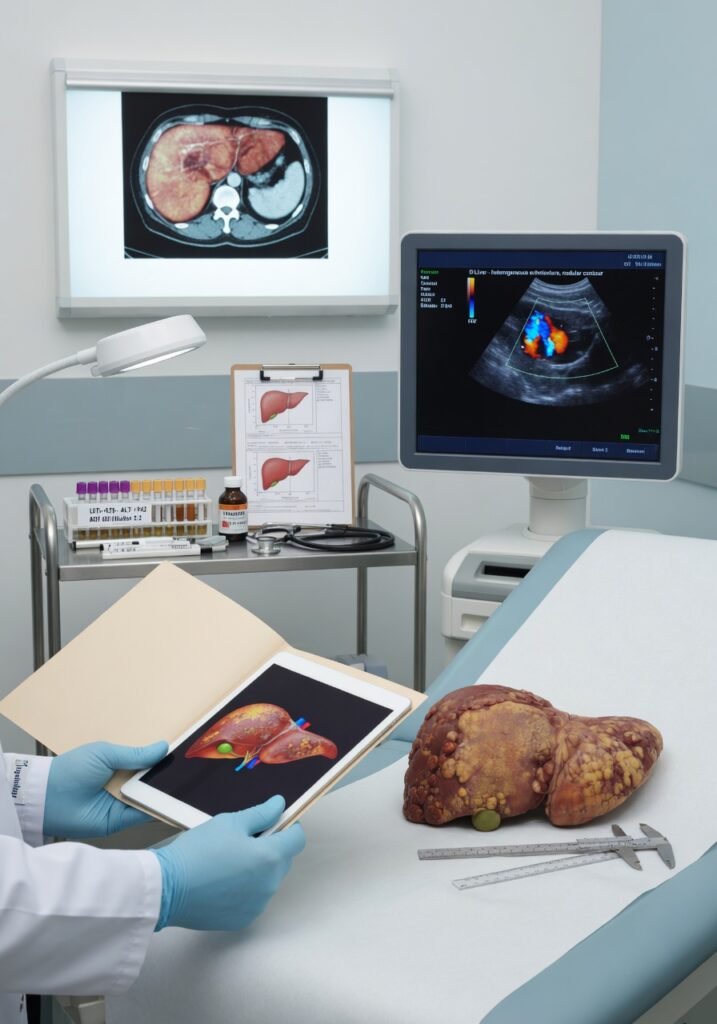
Your doctor begins with blood work: liver function tests (AST, ALT, alkaline phosphatase, bilirubin, albumin), complete blood count, and international normalized ratio (INR), which measures clotting. Elevated transaminases suggest hepatocyte injury. Elevated bilirubin indicates cholestasis. Low albumin or prolonged INR suggests advanced dysfunction.
Ultrasound comes next, assessing liver echogenicity (bright livers suggest steatosis) and checking for cirrhotic features like nodularity and ascites. Doppler ultrasound measures blood flow through the portal vein.
Fibrosis staging determines severity and treatment urgency. Transient elastography (FibroScan) measures liver stiffness via vibrations, avoiding biopsy in most cases. This takes about five minutes. When stiffness exceeds 9.6 kPa, significant fibrosis likely exists. Liver biopsy remains the gold standard for determining inflammation grade and fibrosis stage, but it’s invasive and rarely necessary anymore.
Viral hepatitis requires specific serologies: hepatitis B surface antigen and core antibody, hepatitis C antibody plus RNA if antibody-positive, hepatitis A IgM for acute infection. Autoimmune hepatitis involves specific antibody testing.
Treatment Options Based on Disease Type
Nonalcoholic Fatty Liver Disease
Weight loss through caloric restriction remains the most evidence-supported intervention. A 5-7% reduction decreases steatosis; 10% reduction improves fibrosis. This matters more than the specific diet composition. For metabolic comorbidities, GLP-1 receptor agonists (semaglutide, tirzepatide) show emerging promise in early studies. Pioglitazone, an older diabetes medication, improves liver histology in some patients. Vitamin E supplementation helps some patients without diabetes, though benefits remain modest.
Hepatitis C
Direct-acting antivirals—sofosbuvir-velpatasvir-voxilaprevir, glecaprevir-pibrentasvir, or sofosbuvir-ledipasvir—cure 95%+ of patients across all genotypes. Treatment duration ranges from 8-12 weeks. These are genuinely curative therapies, not chronic suppressors.
Hepatitis B
Nucleoside or nucleotide reverse transcriptase inhibitors (entecavir, tenofovir disoproxil fumarate, tenofovir alafenamide) suppress viral replication durably. Treatment may last years or indefinitely. Peginterferon-alpha offers a finite treatment course but works in fewer patients.
Autoimmune Hepatitis
Corticosteroids (prednisone) combined with azathioprine suppress the immune attack. Most patients require long-term maintenance therapy.
Advanced Cirrhosis
Beta-blockers (propranolol, carvedilol) reduce portal hypertension and bleeding risk. Diuretics manage ascites. Liver transplantation becomes necessary for decompensated cirrhosis—the only truly curative option for end-stage disease.
Practical Daily Management Strategies
If you have liver disease, specific behaviors matter. Alcohol consumption requires complete abstinence; even “moderate” drinking accelerates fibrosis in any liver disease. Track medication timing—take acetaminophen no more than 3 grams daily, never exceed recommended doses, and inform all providers about liver disease before taking new medications.
Dietary modifications should include reducing refined carbohydrates and added sugars, which worsen insulin resistance and hepatic lipid accumulation. Mediterranean-pattern eating—emphasizing olive oil, fish, vegetables, legumes—shows benefits in observational studies. Caffeine consumption appears protective; three to four cups daily associate with slower fibrosis progression.
Exercise intensity matters as much as duration. Resistance training plus aerobic activity produces better metabolic improvements than either alone. Aim for 150 minutes moderate-intensity weekly. Monitor your weight monthly; significant fluctuations warrant reassessment of your management plan.
Vaccinate against hepatitis A and B if not immune. Screen household contacts for hepatitis B. Discuss contraception and pregnancy planning if you have cirrhosis; portal hypertension and medications create specific risks.
Prevention: What Actually Works
Primary prevention differs by disease type. For metabolic disease, weight management through sustained lifestyle changes prevents progression. The challenge isn’t knowing what to do; it’s maintaining changes over years. Pharmacologic agents like GLP-1 agonists, by improving insulin sensitivity and body composition, represent genuine preventive interventions beyond diet alone.
For viral hepatitis, vaccination prevents infection. Hepatitis A vaccine requires two doses. Hepatitis B vaccine efficacy depends on risk stratification; some people require double-dose formulations. Hepatitis C prevention focuses on avoiding needle-sharing and practicing precautions with blood exposure.
For alcohol-related liver disease, the prevention is straightforward but difficult: abstinence or minimization. One study in JAMA Psychiatry noted that even moderate drinkers show less fibrosis progression when they reduce consumption substantially.
Frequently Asked Questions
Can fatty liver disease go away completely?
Yes, in early stages. If you have simple steatosis without inflammation or fibrosis, weight loss and improved insulin sensitivity can resolve the fat accumulation entirely. The timeline requires patience—usually 6-12 months of consistent effort. However, if fibrosis has already developed, reversal is slower and may not achieve complete normalization even with aggressive intervention.
Does cirrhosis mean the liver is permanently damaged beyond repair?
Cirrhosis represents end-stage scarring, and the scarred tissue itself doesn’t disappear. However, removing the underlying injury (stopping alcohol, curing
Sources & Medical References
HealthTopics.com articles are based on peer-reviewed medical research and guidance from the NIH, CDC, and WHO. See our editorial policy for full sourcing standards.