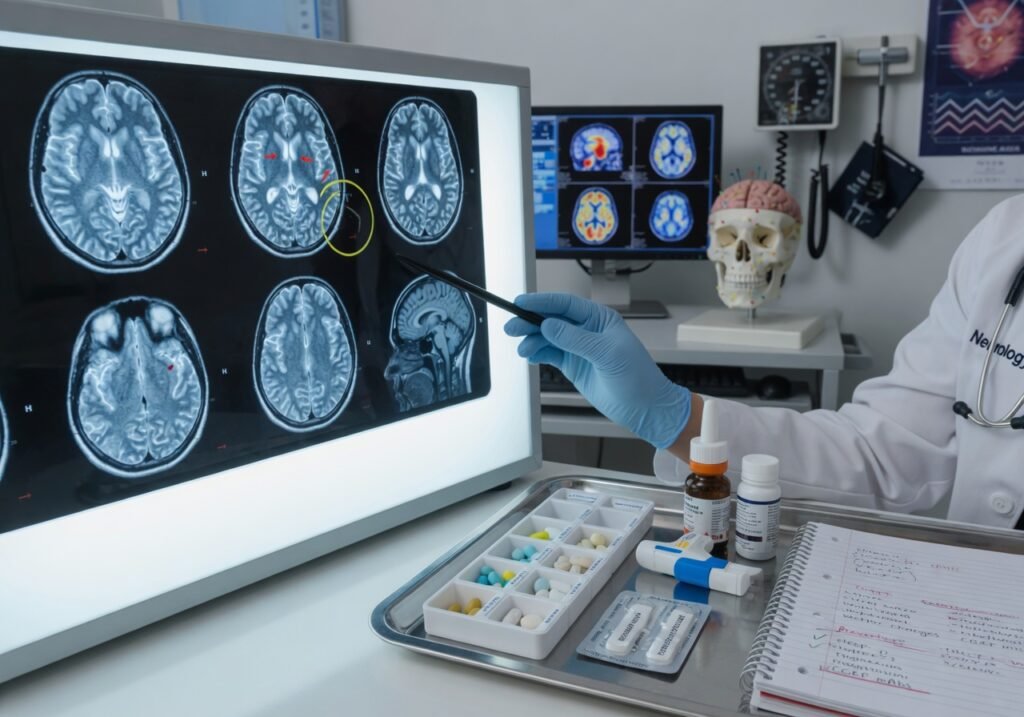
Migraine: Why Your Brain Feels Like It’s Under Siege—And What Actually Works
Why do some people get migraines while others never do, even when they experience the same stress or skip the same meals? That’s the question Sarah, a 34-year-old marketing manager, asked her neurologist after her third emergency room visit in two months. The answer isn’t simple, and it’s certainly not the same for everyone. Migraine is a neurological condition where your brain’s electrical and chemical signaling goes haywire, triggering a cascade of events that leads to intense head pain, nausea, and sometimes vision changes. It’s not just a bad headache—it’s a distinct neurological event that affects roughly 1 in 7 people worldwide, yet most people don’t understand what’s actually happening inside their skull during an attack.
The frustration for migraine sufferers is real. You might wake up fine and by noon you’re in a dark room unable to work. Or you know certain triggers set you off, but you can’t always avoid them. The good news? We’ve made significant progress in understanding migraine biology over the past decade, and treatment options have expanded far beyond what was available just a few years ago. Let’s talk about what actually triggers your migraines, how to prevent them, and which treatments are backed by solid research.
Key Facts About Migraine
- Approximately 39 million Americans experience migraines, with women 2-3 times more likely to suffer than men, according to the NIH National Institute of Neurological Disorders and Stroke
- Chronic migraines affect about 2-3% of the population, defined as 15 or more headache days per month for at least three months
- The CDC reports that migraines cost the U.S. economy over $20 billion annually in lost productivity and medical expenses
- Migraine attacks typically last 4-72 hours without treatment, though some people experience status migrainosus—attacks lasting more than 72 hours
- About 25-30% of migraine sufferers experience aura (visual disturbances, tingling, or weakness) before the headache begins, which carries different treatment implications
Understanding What Actually Happens During a Migraine
Here’s what happens: your brain’s trigeminal nerve (the main sensory nerve in your face) becomes hyperexcitable. Think of it like a smoke detector with the sensitivity turned up to maximum—even normal signals get interpreted as danger. This nerve fires off signals to your brainstem and higher brain regions, releasing inflammatory chemicals like calcitonin gene-related peptide (CGRP) and serotonin. These chemicals dilate blood vessels and inflame the tissues around them, creating that throbbing pain. Meanwhile, your brain’s pain-processing centers amplify the signal. You’re not imagining the pain—your nervous system is literally amplifying ordinary signals into an unbearable experience.
The aura phase, when it occurs, represents a wave of electrical activity spreading across your brain’s cortex, followed by a period of reduced activity. This explains why people see zigzag patterns, lose portions of their visual field, or feel tingling—the electrical storm is happening in sensory processing areas. Then comes the headache phase. The inflammation and vascular changes kick in, and you’re dealing with pain, sensitivity to light and sound, nausea, and sometimes vomiting. Your brain is also processing these sensations at higher-than-normal intensity because of altered pain regulation.
Causes and Risk Factors—The Ones That Actually Matter
Migraine has both genetic and environmental components. If both your parents have migraines, your risk climbs to about 75%. If one parent does, it’s around 50%. That’s not destiny—it’s predisposition. Your genes likely influence how your trigeminal nerve responds to triggers and how efficiently your brain regulates serotonin, dopamine, and other neurotransmitters involved in pain processing.
The most common triggers include hormonal shifts (particularly in women around menstruation), sleep disruption, stress or stress relief, caffeine withdrawal, certain foods like aged cheeses and processed meats containing tyramine, dehydration, and weather changes. But here’s what most articles miss: the individual migraine threshold. You might tolerate two cups of coffee, one stressful meeting, and poor sleep separately without triggering an attack. But combine all three and—boom—you’re triggered. It’s cumulative, not just about single factors. Your nervous system has a trigger threshold, and you only get a migraine when you exceed it.
One less-discussed risk factor is overuse of acute migraine medications. If you take triptans, nonsteroidal anti-inflammatory drugs (NSAIDs), or combination analgesics more than 10-15 days per month, you can develop medication overuse headache (MOH), where your brain becomes even more sensitive to pain signals. This creates a vicious cycle where you use more medication and get more headaches.
Signs and Symptoms—What Actually Happens to You
Most people think migraine means just head pain. The reality is broader. Prodromal symptoms—early warning signs—can appear 24-48 hours before the headache even starts. You might feel mood changes (irritability or depression), crave specific foods, experience neck stiffness, or notice difficulty concentrating. Many patients dismiss these signals until they realize they predictably precede their attacks.
Then comes the potential aura phase (if you have migraine with aura). You might see flashing lights, geometric patterns, or a shimmering effect moving across your visual field. You could experience tingling in your fingers or lips, or temporary weakness. This phase lasts 20-60 minutes and is actually somewhat protective—it gives you time to take medication before the pain becomes severe.
The headache itself is typically throbbing, one-sided (though not always), and moderate to severe—the kind of pain that stops you from functioning normally. You become hypersensitive to light (photophobia), sound (phonophobia), and sometimes smell. Nausea is common; about one-third of people vomit. You want to lie down in darkness. Some people experience dizziness, brain fog, or temporary speech difficulties. The postdrome phase follows the headache—you might feel exhausted, mentally foggy, or oddly energized for 24 hours afterward.
How Doctors Actually Diagnose Migraine
There’s no blood test for migraine. No MRI shows migraine specifically. Diagnosis relies on your history and symptom pattern, guided by criteria from the International Classification of Headache Disorders (ICHD-3). Specifically, your neurologist or primary care doctor is looking for: at least five headache episodes, attacks lasting 4-72 hours, pain on one side of the head, throbbing quality, moderate to severe intensity, and worsening with physical activity—plus at least one of these: nausea/vomiting or light and sound sensitivity.
Your doctor might order an MRI to rule out structural problems, though migraine typically looks normal on imaging. Keeping a detailed migraine diary before your appointment dramatically improves diagnostic accuracy. Track the date, time of onset, triggers you noticed, medication used, and how long it lasted. This isn’t just helpful—it fundamentally changes how your doctor understands your condition.
Treatment Options: What’s Backed by Evidence
Acute treatments (for stopping attacks) include several classes. Triptans—sumatriptan (Imitrex), rizatriptan (Maxalt), naratriptan (Amerge)—work by constricting blood vessels and blocking inflammatory chemical release. They’re most effective when taken early in the attack. About 70% of people respond well to triptans if they use them properly. NSAIDs like naproxen (Aleve) or ibuprofen work for mild-to-moderate migraines in some patients. The newer gepants, specifically ubrogepant (Ubrelvy) and rimegepant (Nurtec), block CGRP receptors and represent a genuinely different mechanism—they don’t constrict blood vessels and might suit patients who can’t use triptans.
Preventive medications reduce how frequently and severely you get migraines. Beta-blockers like propranolol work for about 50% of people. Topiramate (Topamax), a seizure medication, helps by stabilizing neuronal activity. Amitriptyline, an older tricyclic antidepressant, works through serotonin mechanisms. Valproic acid (Depakote) reduces brainstem excitability. But here’s the critical insight most websites miss: these preventive medications need 6-8 weeks at therapeutic doses to show effect. Taking propranolol for two weeks then stopping because you “don’t feel different” defeats the purpose.
The monoclonal antibodies against CGRP—erenumab (Aimovig), fremanezumab (Ajovy), and galcanezumab (Emgality)—represent the newest preventive class. Given monthly or quarterly by injection, they prevent migraines in 30-50% of patients. They work differently from other preventives and sometimes help patients who’ve failed traditional medications.
Calcitonin gene-related peptide (CGRP) antagonists offer a fresh approach because CGRP clearly plays a central role in migraine pathophysiology—this drug class actually targets the biological problem rather than masking symptoms.
Daily Management: Concrete Strategies That Work
Sleep consistency matters more than you think. Going to bed at dramatically different times on weekends triggers migraines in 50% of people. Set a consistent sleep schedule, even on days off. Aim for 7-9 hours. Skipping sleep by even a few hours lowers your migraine threshold substantially.
Hydration isn’t a myth. Dehydration concentrates blood solutes and triggers the trigeminal nerve. Drink water throughout the day, not just when you’re thirsty. A practical rule: urine should be pale yellow. Dark urine suggests dehydration.
Identify and avoid your personal triggers—don’t assume everyone’s list is identical. Keep a migraine diary for at least a month. Note everything: what you ate, how much you slept, stress level, caffeine intake, menstrual cycle phase (if applicable), weather, and whether you got a migraine. Patterns emerge. For some people, red wine triggers attacks; for others, it’s dark chocolate. Tyramine-rich foods (aged cheeses, cured meats, soy sauce) trigger some people but not others.
Manage caffeine carefully. Regular caffeine users who skip it get rebound migraines from withdrawal. If you drink caffeine daily, maintain consistency. If you want to reduce intake, do it gradually over 2-3 weeks, not cold turkey.
Stress management helps, though the stress itself matters less than your response to it. Some people benefit from relaxation techniques, but others find them unhelpful. Progressive muscle relaxation, biofeedback, or cognitive behavioral therapy (CBT) show evidence in clinical trials. Find what actually reduces your personal stress, not what generic articles recommend.
Prevention: What Evidence Shows Works
The most effective migraine prevention combines medication with trigger management. Taking propranolol alone without addressing sleep problems or caffeine abuse leaves you vulnerable. Similarly, perfect sleep hygiene without medication won’t prevent migraines if you have frequent attacks.
The research is clear on preventive medications: topiramate and propranolol reduce migraine frequency by roughly 40-50% in patients who tolerate them well. The CGRP monoclonal antibodies show similar effect sizes in clinical trials, benefiting about 30-50% of preventively-treated patients. The caveat? Response is highly individual. Some people eliminate migraines entirely on preventive therapy; others see modest improvement. Preventive medications require patience—you need 6-8 weeks minimum to assess effectiveness.
Botulinum toxin (Botox) injections administered every 12 weeks help specifically for chronic migraines (15+ headache days monthly). The FDA approved this indication in 2010. About 40-50% of chronic migraine patients see meaningful reduction with Botox, though it takes three