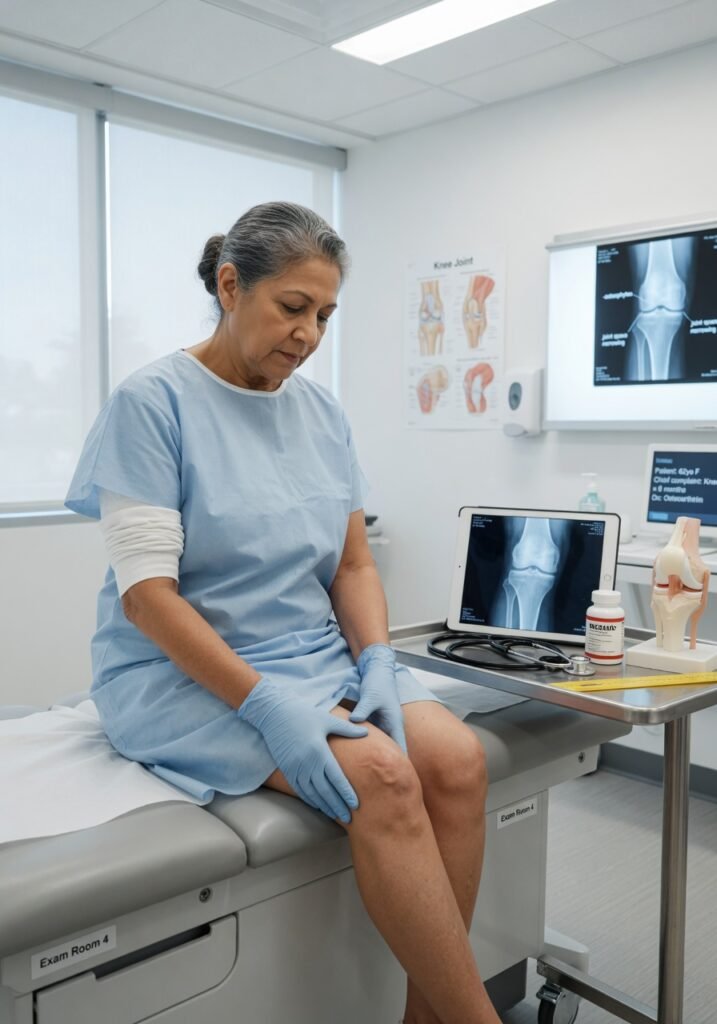

Osteoarthritis: Managing Joint Degeneration
Osteoarthritis is the most common form of arthritis, affecting millions of people worldwide. Unlike rheumatoid arthritis, which is an autoimmune disease, osteoarthritis develops when the protective cartilage that cushions the ends of bones gradually wears down over time. This progressive condition can affect any joint in the body but most commonly impacts the knees, hips, hands, and spine. While there is no cure for osteoarthritis, modern treatment approaches can effectively manage pain, maintain function, and improve quality of life.
Key Facts
- Osteoarthritis affects approximately 32.5 million American adults
- The condition develops when cartilage degenerates, allowing bones to rub together
- Age, joint injury, obesity, and genetics increase osteoarthritis risk
- Early intervention can slow progression and reduce symptom severity
- Treatment combines medication, physical therapy, lifestyle changes, and sometimes surgery
- The knee is the most commonly affected weight-bearing joint
Understanding Osteoarthritis: What Happens to Your Joints
Osteoarthritis occurs when articular cartilage—the smooth, slippery tissue that covers the ends of bones in a joint—deteriorates progressively. This cartilage normally allows bones to glide smoothly against each other with minimal friction. As it degenerates, the underlying bone becomes exposed and can develop bone spurs called osteophytes. The synovial fluid that lubricates the joint may become less effective, causing increased friction, inflammation, and pain.
This is a mechanical wear-and-tear process that differs fundamentally from inflammatory types of arthritis. Osteoarthritis develops slowly over years or even decades. Early-stage changes may produce no symptoms at all, which is why many people don’t realize they have the condition until pain becomes noticeable or imaging reveals joint damage.
Causes and Risk Factors
Osteoarthritis develops through a combination of factors. While age is the primary risk factor—most cases occur in people over 65—younger individuals can develop osteoarthritis, particularly after joint injuries or in certain occupations requiring repetitive joint stress.
Key risk factors include:
- Joint injuries: Fractures, ligament tears, or meniscal injuries dramatically increase osteoarthritis risk in that joint, sometimes years after the initial injury
- Obesity: Extra body weight increases stress on weight-bearing joints like knees and hips, accelerating cartilage breakdown
- Genetics: Family history of osteoarthritis increases your risk, suggesting a hereditary component affecting cartilage quality
- Gender: Women are more likely to develop osteoarthritis, particularly after menopause
- Repetitive stress: Occupations or sports involving repetitive joint movements can contribute to cartilage wear
- Muscle weakness: Weak muscles around joints provide less stability and support
- Alignment problems: Misaligned joints distribute weight unevenly, causing accelerated cartilage breakdown
Recognizing Signs and Symptoms
Osteoarthritis symptoms typically develop gradually and vary widely depending on which joints are affected and the degree of cartilage loss. Some people experience minimal symptoms despite significant joint damage, while others develop pronounced pain with relatively modest degenerative changes.
Common symptoms include:
- Joint pain that worsens with activity and improves with rest
- Morning stiffness that typically lasts less than 30 minutes
- Swelling or warmth in affected joints
- Reduced range of motion and flexibility
- Bone spurs that may feel like hard lumps around joints
- Creaking or grinding sensations in the joint (crepitus)
- Increasing difficulty with stairs, walking, gripping, or fine motor tasks
How Osteoarthritis is Diagnosed
Your healthcare provider begins with a thorough medical history and physical examination. They’ll assess joint pain, range of motion, swelling, and tenderness while discussing your symptoms and how they affect daily activities.
Imaging tests help confirm the diagnosis:
- X-rays: Show bone spurs, cartilage loss, and joint space narrowing. X-rays can grade osteoarthritis severity from mild to severe
- MRI scans: Provide detailed images of cartilage, bone, and soft tissues, useful for detecting early cartilage changes
- Ultrasound: Can visualize cartilage loss and joint fluid
Blood tests aren’t typically needed to diagnose osteoarthritis but may help rule out other conditions like rheumatoid arthritis. Your provider may also assess inflammatory markers to guide treatment decisions.
Evidence-Based Treatment Options
Modern osteoarthritis management uses a multimodal approach tailored to symptom severity and your functional goals. Treatment focuses on pain relief, maintaining mobility, and slowing disease progression.
Medications: Over-the-counter acetaminophen or nonsteroidal anti-inflammatory drugs (NSAIDs) like ibuprofen and naproxen are first-line treatments. Prescription NSAIDs offer stronger anti-inflammatory effects. Topical creams containing NSAIDs or capsaicin provide localized relief with fewer systemic side effects. For more severe pain, intra-articular corticosteroid injections directly into the joint reduce inflammation and pain for weeks to months.
Hyaluronic acid injections: These lubricating substances mimic natural joint fluid and may improve symptoms in knee osteoarthritis, though benefits vary among individuals.
Physical therapy: This is crucial for osteoarthritis management. Targeted exercises strengthen muscles supporting affected joints, improve flexibility, and enhance stability. Physical therapists teach proper body mechanics to reduce joint stress during daily activities.
Weight management: Losing excess weight significantly reduces joint stress and pain, particularly in weight-bearing joints. Even modest weight loss of 5-10 pounds can produce meaningful symptom improvement.
Surgical interventions: When conservative treatments fail to provide adequate relief and function is significantly impaired, procedures like joint replacement (arthroplasty) can restore mobility and quality of life. Arthroscopy is less commonly recommended for osteoarthritis alone.
Emerging treatments: Platelet-rich plasma (PRP) and stem cell therapies show promise in early research but remain investigational. Always discuss newer treatment options with your rheumatologist or orthopedic specialist before pursuing them.
Living Well With Osteoarthritis
Successfully managing osteoarthritis involves adopting long-term lifestyle strategies that support joint health and maintain function. Consistency with exercise, weight management, and pacing activities is essential.
Daily management strategies:
- Use assistive devices like canes, walkers, or ergonomic tools to reduce joint stress
- Apply heat before activities to improve mobility and cold afterward to reduce inflammation
- Practice joint protection techniques during daily tasks
- Break activities into smaller segments with rest periods
- Maintain proper posture to distribute weight evenly
- Stay engaged in low-impact activities like swimming or walking
- Communicate with healthcare providers about symptom changes
Prevention and Slowing Progression
While you cannot reverse existing cartilage damage, several evidence-based strategies can prevent osteoarthritis development or slow its progression:
- Maintain healthy weight: This single factor significantly reduces osteoarthritis risk and symptom severity
- Stay physically active: Regular moderate exercise strengthens muscles and maintains cartilage health
- Protect joints: Use proper equipment during sports and avoid high-impact activities with existing joint problems
- Practice good ergonomics: Proper posture and workspace setup reduce repetitive joint stress
- Address injuries promptly: Proper treatment of joint injuries prevents long-term complications
- Consume anti-inflammatory foods: Omega-3 fatty acids, fruits, and vegetables support joint health
- Strengthen supporting muscles: Strong thigh and hip muscles reduce knee and hip osteoarthritis risk
Tips for Daily Joint Care
- Perform gentle stretching exercises daily to maintain flexibility
- Schedule physical activity consistently rather than sporadically
- Use proper lifting techniques and assistive devices when needed
- Prioritize adequate sleep for inflammation reduction and tissue repair
- Consider water-based exercises like swimming or aquatic therapy
- Manage stress, as stress can worsen inflammation and pain perception
Frequently Asked Questions About Osteoarthritis
Q: Is osteoarthritis inevitable as we age?
A: No. While age increases risk, not everyone develops osteoarthritis. Genetics, lifestyle factors, prior injuries, and weight significantly influence development. Many people maintain joint health throughout life through exercise, weight management, and joint protection strategies.
Q: Can osteoarthritis be reversed or cured?
A: Currently, cartilage damage cannot be reversed, and there is no cure for osteoarthritis. However, treatments effectively manage pain, slow progression, and maintain function. Research into cartilage regeneration continues, with some promising therapies in development.
Q: Is it safe to exercise with osteoarthritis?
A: Yes, exercise is essential for osteoarthritis management. Low-impact activities like walking, swimming, and cycling strengthen supporting muscles and improve function. Work with a physical therapist to develop a safe program tailored to your affected joints and pain levels.
Q: How much weight loss helps osteoarthritis symptoms?
A: Even losing 5-10 pounds can improve knee and hip osteoarthritis symptoms by reducing joint stress. Greater weight loss produces more substantial improvements. Each pound of weight loss reduces knee joint stress by approximately four pounds, making weight management particularly impactful for lower extremity osteoarthritis.
Sources & Medical References
HealthTopics.com articles are based on peer-reviewed medical research and guidance from the NIH, CDC, and WHO. See our editorial policy for full sourcing standards.