
“`html
Parkinson’s Disease: What You Need to Know About Symptoms, Progression, and Treatment
Research shows that approximately 10 percent of people with Parkinson’s disease experience symptom onset before age 50, yet the average person wouldn’t recognize early warning signs if they saw them. Sarah, a 52-year-old accountant, spent two years noticing her handwriting getting smaller and her shoulder feeling stiff during her morning runs before her neurologist connected these seemingly unrelated problems to Parkinson’s. Most people think of Parkinson’s as an old person’s disease with obvious tremors, but the reality is far more nuanced—and far more common than most realize. This condition affects approximately 1 million Americans, with roughly 60,000 new diagnoses each year according to the Parkinson’s Foundation, yet many cases remain undiagnosed for years because the early signs whisper rather than shout.
Key Facts About Parkinson’s Disease
- The median age at diagnosis is 60 years old, though 4 percent of cases occur before age 40 (early-onset Parkinson’s)
- Men are 1.5 times more likely to develop Parkinson’s than women across all age groups
- Approximately 30 percent of Parkinson’s patients never develop tremor, making it a common misconception that tremor is required for diagnosis
- The disease causes a 60-80 percent loss of dopamine-producing neurons in the substantia nigra region before motor symptoms typically appear
- With current treatments, average life expectancy after diagnosis ranges from 15-20 years, though this varies considerably based on age at onset and individual factors
Understanding Parkinson’s Disease: What’s Actually Happening
Think of your brain’s dopamine system as a chemical messenger network that coordinates movement like a conductor directing an orchestra. In Parkinson’s disease, the dopamine-producing neurons in a specific brain region called the substantia nigra gradually deteriorate and die. When enough of these cells are damaged—typically around 60-80 percent—the remaining dopamine production can’t keep up with demand, and movement becomes disorganized.
But here’s what most articles get wrong: Parkinson’s isn’t just a movement disorder. The accumulated damage happens over a decade or more before you feel anything. During this silent phase, protein clumps called Lewy bodies form inside neurons throughout your brain and nervous system. These clumps spread like an infection, damaging not only movement centers but also areas controlling mood, memory, and automatic functions like digestion and blood pressure regulation.
Causes and Risk Factors: Beyond Simple Genetics
We don’t have a single explanation for why someone develops Parkinson’s, but we have strong suspects. Genetics certainly matters—having a parent or sibling with Parkinson’s increases your risk about fourfold. The genes LRRK2 and GBA carry particularly high risk, though most people with these mutations never develop symptoms, suggesting other factors must align.
Environmental exposure deserves serious attention. Long-term exposure to pesticides increases Parkinson’s risk by 50-80 percent according to multiple NIH studies. Welding, farming, and work around heavy metals appear especially risky. Head trauma, particularly repeated impacts, correlates with earlier-onset disease—think athletes in contact sports or people injured in motorcycle accidents.
Here’s the overlooked factor most articles skip: your gut microbiome. Recent research indicates that people with Parkinson’s have distinctly different bacterial compositions in their intestines, and some researchers believe these microbial changes might actually trigger the cascade that leads to neurodegeneration. This isn’t proven causation yet, but it explains why some patients experience significant digestive problems years before movement issues emerge.
Age remains your strongest risk factor—Parkinson’s incidence climbs sharply after 60. Smoking actually appears protective (don’t start smoking for this reason), though the mechanism remains unclear.
Signs and Symptoms: Reading the Body’s Language
Tremor at rest—that characteristic shaking—gets all the attention, but it’s not the early warning sign most patients experience. Instead, watch for these overlooked changes: handwriting gradually becoming smaller and cramped, your arm not swinging normally when walking, or stiffness in your shoulder and neck that stretches don’t relieve.
Non-motor symptoms often precede movement problems by years. Constipation can appear a decade before tremor. Reduced sense of smell—losing the ability to detect odor in one nostril distinctly—appears in 70-90 percent of Parkinson’s patients before motor symptoms. REM sleep behavior disorder, where you physically act out dreams violently, shows up in many patients years before diagnosis.
Once motor symptoms begin, they typically progress through recognizable stages. Early on, asymmetrical symptoms appear on one body side—your right hand trembles or your left leg feels stiff. Facial expression flattens. Speech becomes quieter and more monotone. Balance shifts, though falls usually come later. Bradykinesia—slowness of movement—makes getting dressed and eating frustrating tasks.
The rate of progression varies dramatically. Some patients remain stable for years; others decline noticeably month to month. There’s no reliable way to predict your personal trajectory at diagnosis.
Diagnosis: Getting to Certainty
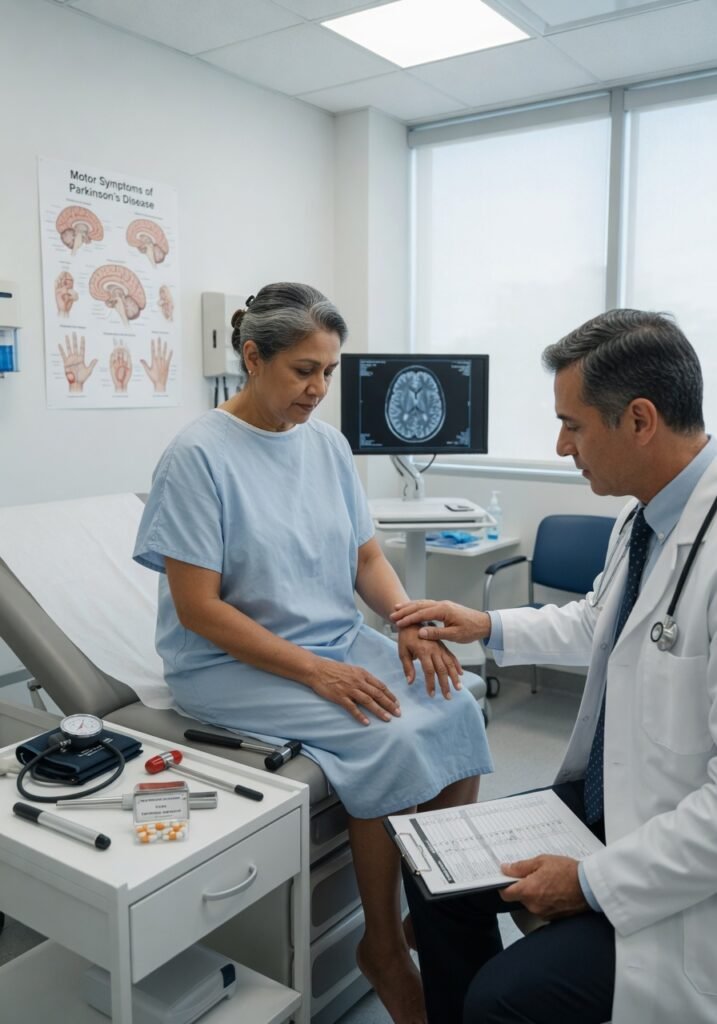
There’s no blood test or imaging study that confirms Parkinson’s. Your neurologist diagnishes it clinically by observing you walk, watching your tremor or rigidity, testing your reflexes, and evaluating your response to levodopa medication. The UK Parkinson’s Disease Society Brain Bank Criteria remain the gold standard, requiring rest tremor or bradykinesia plus at least two additional findings like rigidity or postural instability.
Brain imaging—MRI or PET scans—helps rule out conditions that mimic Parkinson’s like normal pressure hydrocephalus or multiple system atrophy. Sometimes a dopamine transporter scan (DaT scan) shows reduced dopamine activity in the striatum, supporting the diagnosis. The reality? Diagnosis requires skill and pattern recognition, not just test results.
Many patients see multiple doctors before diagnosis. Subtle cases get attributed to arthritis or aging. Variant presentations like primary progressive gait freezing (you can’t initiate walking steps) get missed entirely.
Treatment Options: Matching Medication to Need
Levodopa (combined with carbidopa or benserazide) remains the gold standard—nearly every Parkinson’s patient eventually uses it. Carbidopa prevents levodopa from breaking down in the bloodway before reaching your brain, while the levodopa itself converts to dopamine where it’s needed. Most patients start on lower doses and increase gradually. The catch? Levodopa’s effectiveness fluctuates as the disease progresses, causing on-off periods where medication suddenly stops working.
Dopamine agonists like ropinirole, pramipexole, and rotigotine directly stimulate dopamine receptors. These work well early on and can delay levodopa introduction, though they carry risk of impulse control problems—some patients develop gambling addiction or hypersexuality.
MAO-B inhibitors such as selegiline or rasagiline slow dopamine breakdown and might slightly slow disease progression, though evidence remains controversial. COMT inhibitors like entacapone extend levodopa’s effectiveness by preventing its breakdown.
For motor fluctuations and involuntary movements (dyskinesia), doctors consider extended-release formulations, combination drugs, or advanced therapies. Duodopa pump therapy—continuous levodopa infusion into the small intestine through a tube—and apomorphine injections help patients with severe fluctuations. Deep brain stimulation surgery reduces tremor and rigidity dramatically in carefully selected patients, particularly those under 70 at the time of surgery.
Non-motor symptoms need separate attention. Antidepressants, typically SSRIs like sertraline, address depression and anxiety. Mirapex or other dopamine agonists help restless leg syndrome. Stool softeners and increased water and fiber manage constipation.
Practical Daily Management: Real-World Strategies
Physical therapy specifically designed for Parkinson’s—using large, exaggerated movements and auditory cues—helps maintain function longer than general exercise. The Lee Silverman Voice Treatment (LSVT) improves speech volume through intensive vocal exercises. Occupational therapy teaches adaptive techniques for dressing and eating as function declines.
Medication timing matters enormously. Taking levodopa with protein-rich meals blocks its absorption—your doctor will recommend taking it 30-60 minutes before eating or with carbohydrates only. Some patients benefit from splitting doses or adjusting timing based on when they notice medication wearing off.
Address falling risk directly. Remove throw rugs, improve lighting, install grab bars in bathrooms. Cueing—walking to a beat or following lines on the floor—helps overcome freezing episodes. Weighted walkers work better than standard ones for many patients.
Manage orthostatic hypotension (dizziness upon standing) through compression stockings, increased salt and fluid intake, and sometimes the medication fludrocortisone. Sleep problems respond better to sleep hygiene modifications than sedating medications, which worsen Parkinson’s confusion.
Prevention: What Evidence Actually Shows
Can you prevent Parkinson’s? Probably not completely, but specific factors show promise. Regular aerobic exercise, particularly high-intensity training, correlates with slower disease progression in people already diagnosed and might reduce risk in unaffected people. Coffee and caffeine consumption shows a protective association—people drinking 4+ cups daily have 25 percent lower Parkinson’s risk, though causation remains unproven.
Avoid pesticide exposure when possible. Wear protective equipment if your occupation involves chemicals. Protect your head with appropriate gear during activities with collision risk.
Here’s the nuance: preventive strategies work better when you start before symptoms appear. Once Parkinson’s develops, no medication actually stops the underlying neurodegeneration—we only manage symptoms.
Frequently Asked Questions
Sources & Medical References
HealthTopics.com articles are based on peer-reviewed medical research and guidance from the NIH, CDC, and WHO. See our editorial policy for full sourcing standards.