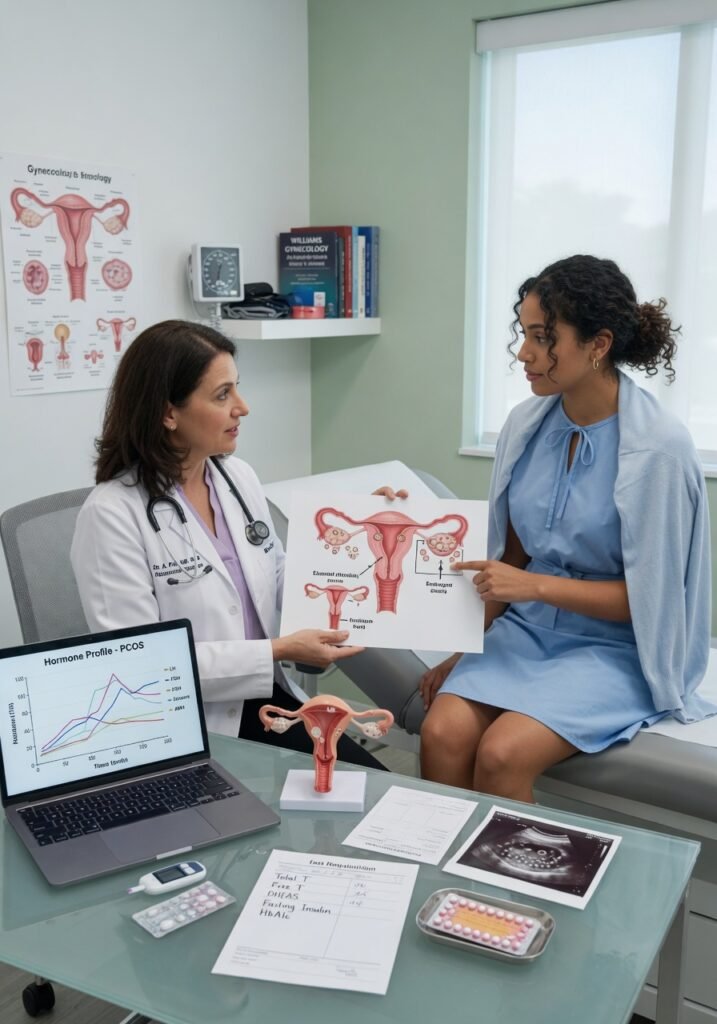
Sarah, 28, had been gaining weight despite eating less and exercising more. Her periods came irregularly—sometimes twice a month, sometimes not at all for three months straight. When she finally saw her gynecologist about the persistent chin hair she’d been plucking and the acne that wouldn’t quit despite using Accutane in her twenties, the ultrasound revealed the culprit: dozens of small cysts clustered on both ovaries, and blood work showed testosterone levels nearly triple the normal range. She had polycystic ovary syndrome, and suddenly her body’s confusing behavior made sense.
PCOS affects roughly 1 in 10 women of reproductive age, yet many spend years being dismissed or misdiagnosed. This guide walks you through what actually happens in PCOS, how doctors identify it, and the specific treatments that move the needle on symptoms.
Key Facts About PCOS
- Between 6% and 12% of women of reproductive age meet diagnostic criteria for PCOS, according to the CDC, making it one of the most common endocrine disorders in women
- Women with PCOS are 3 times more likely to develop type 2 diabetes and have a 4-fold increased risk of metabolic syndrome compared to women without the condition
- Elevated androgen levels (male hormones) occur in only 60-80% of women diagnosed with PCOS—some patients have normal testosterone but still have the ovarian cysts and metabolic features
- Fertility issues affect 70-80% of women with PCOS who seek pregnancy, but ovulation can often be restored with targeted interventions like metformin or clomiphene citrate
- PCOS typically first appears in the late teens to early 30s, frequently around the time hormonal contraceptives are stopped or after significant weight gain
Understanding What Happens in PCOS
Picture your ovaries as a factory where eggs are supposed to mature and release in an organized monthly rhythm. In PCOS, the factory’s quality control system misfires. The brain and ovaries aren’t communicating properly about hormone levels, so multiple eggs start developing simultaneously but none fully mature. They get stuck as small cysts, and the ovaries compensate by pumping out excess androgen—testosterone and androstenedione—which then triggers a cascade of problems downstream.
Here’s the less-discussed piece that most articles gloss over: insulin resistance plays a starring role in this dysfunction. Between 50-70% of women with PCOS have insulin resistance independent of their weight, according to research published in JAMA. When your cells don’t respond properly to insulin, your pancreas works harder, flooding your bloodstream with more insulin. That excess insulin directly stimulates the ovaries to produce more androgens. This is why some lean women develop PCOS and why weight alone doesn’t explain the condition.
The ovarian cysts themselves are mostly harmless—they don’t rupture or cause cancer. But the hormonal imbalance they represent creates real problems: irregular periods, acne, unwanted hair growth, fertility struggles, and metabolic dysfunction that can lead to diabetes if left unmanaged.
Causes and Risk Factors
Doctors still don’t fully understand what triggers PCOS, but several factors increase your likelihood. Genetic predisposition matters—if your mother or sister has PCOS, your risk rises substantially. Low-grade inflammation appears elevated in PCOS, and some evidence suggests early exposure to excess androgens in the womb may increase susceptibility.
Weight gain during adolescence or young adulthood is a significant risk factor, though not a cause. Women who gain 5-10 pounds in their early 20s sometimes experience PCOS symptoms that weren’t present before. Conversely, some women are genetically prone and develop PCOS regardless of weight.
Here’s the overlooked risk factor: your metabolic environment before PCOS develops matters. Women with a history of gestational diabetes or prediabetes during pregnancy have higher PCOS risk. Environmental endocrine disruptors—chemicals like bisphenol A (BPA) and phthalates found in plastics and personal care products—show associations with PCOS in some studies, though the evidence remains preliminary. This doesn’t mean you should panic about plastic, but it suggests PCOS isn’t purely genetic.
Signs and Symptoms You Might Actually Notice
The hallmark symptom is irregular periods, ranging from unpredictable timing to extended gaps of 6 months or longer. Some women menstruate frequently—every 2-3 weeks—while others skip months entirely. Many describe their cycle as “doing whatever it wants.”
Excess androgen causes virilization symptoms that women often attribute to other causes. Thick dark hair on the chin, upper lip, arms, and lower abdomen (hirsutism) frustrates many patients who pluck or wax constantly only to have hair return within days. Acne that started in late teens or early 20s and persists into your 30s or 40s despite good skincare is another clue. Scalp hair thinning or male-pattern baldness affects some women, which can be particularly distressing.
Weight gain is common—not because PCOS makes you eat more, but because insulin resistance increases hunger, particularly for carbohydrates. Many patients report gaining 15-30 pounds without any change in eating habits, and losing weight becomes substantially harder despite calorie restriction. Some describe a “metabolic plateau” where moderate diet and exercise efforts produce minimal results.
Mood changes including depression and anxiety occur more frequently in PCOS than in the general population. Pelvic pain or pressure, particularly during periods, affects some women. Darkened skin patches (acanthosis nigricans) appearing on the neck, armpits, or groin signal insulin resistance and warrant investigation.
How Doctors Actually Diagnose PCOS
There’s no single test that definitively says “you have PCOS.” Instead, doctors use the Rotterdam Criteria, which requires 2 of the following 3 features: irregular or absent periods, clinical or biochemical evidence of elevated androgens, and ovarian cysts visible on ultrasound.
Your gynecologist will start with blood work. Testosterone (total and free), androstenedione, and DHEA-S get measured to establish androgen status. LH and FSH levels matter too—in PCOS, the LH-to-FSH ratio is often elevated, typically 2:1 or 3:1 compared to a normal 1:1 ratio, though this isn’t part of the diagnostic criteria anymore and some experts consider it less useful than once thought.
A transvaginal ultrasound shows your ovarian appearance. PCOS ovaries typically contain 12 or more follicles per ovary, each 2-9 millimeters in diameter, or have increased ovarian volume. The technician might describe them as “string of pearls” appearance. Important detail: having cysts on ultrasound alone doesn’t mean PCOS—you need the hormonal or clinical evidence too.
Blood glucose and insulin levels, sometimes measured via fasting glucose and insulin, or a glucose tolerance test, help identify insulin resistance. Thyroid function (TSH, free T4) gets checked because hypothyroidism mimics PCOS symptoms. Your doctor screens for prolactin elevation and sometimes measures 17-hydroxyprogesterone to exclude 21-hydroxylase deficiency, which is a different condition.
The diagnostic process feels frustrating to many patients because your symptoms are real and acknowledged, but the testing is methodical and takes time. A single blood draw rarely settles the question—your doctor needs the pattern across multiple hormones.
Treatment Options With Teeth
Treatment depends on your primary complaint. For irregular periods and fertility, first-line options include metformin (500-1000 mg twice daily) or hormonal contraceptives like combined oral contraceptive pills. Metformin improves insulin sensitivity and can restore ovulation in some women without affecting fertility when stopped. Birth control pills suppress the LH surge and reduce androgen production, regulating periods and clearing acne, but they prevent pregnancy while you use them.
For women pursuing pregnancy, clomiphene citrate (Clomid) 50-100 mg daily induces ovulation in roughly 75-80% of women with PCOS, with pregnancy rates around 40% per cycle. If clomiphene fails, letrozole (a different ovulation-inducing medication) works as well or slightly better in some patients. Injectable gonadotropins are reserved for women who don’t respond to oral agents.
Hirsutism and acne respond to hormonal contraceptives, often combined with spironolactone (25-100 mg daily), an androgen-blocking agent that takes 6-9 months to show full effect. For acne alone, isotretinoin (Accutane) remains an option if topical and oral antibiotics fail, though PCOS-driven acne may recur.
Insulin resistance requires attention regardless of fertility plans. Metformin 1500-2000 mg daily is standard. GLP-1 receptor agonists like semaglutide (Ozempic) show promise for weight loss and metabolic improvement in PCOS, though they’re not yet standard first-line therapy for non-diabetic patients with PCOS. Inositol supplements—myoinositol combined with D-chiro-inositol—improve ovulation and metabolic markers in some studies, though evidence remains mixed and they’re not FDA-regulated like medications.
Practical Daily Management That Actually Works
Dietary approaches should focus on stabilizing blood sugar rather than restricting calories aggressively. Low-glycemic index foods—legumes, whole grains, vegetables—matter more than total calorie reduction for many women. Adding protein and fiber to meals slows carbohydrate absorption and reduces insulin spikes. Some women respond better to slightly higher fat and protein ratios with moderate carbohydrates, though the “keto for PCOS” trend lacks strong evidence beyond general weight loss benefits.
Exercise should combine resistance training with aerobic activity. Strength training 2-3 times weekly improves insulin sensitivity independently of weight loss. A brisk 30-minute walk most days provides cardiovascular benefit without excess cortisol stress that intense daily exercise can cause.
Sleep quality directly affects PCOS symptoms. Poor sleep worsens insulin resistance and increases hunger hormones. Aim for 7-9 hours nightly in a cool, dark room. Many women find their PCOS symptoms worsen during high-stress periods when sleep suffers.
Monitor your cycle patterns—track periods, energy, acne severity, and hunger in a simple calendar or app. This helps you and your doctor recognize what’s working and what’s not. Don’t expect dramatic changes overnight; most treatments take 3-6 months to produce noticeable effects.
Prevention: What the Evidence Actually Shows
If you have family history but haven’t developed PCOS, can you prevent it? The evidence is indirect. Maintaining a healthy weight through young adulthood, particularly avoiding rapid weight gain in your teens and 20s, appears protective based on observational studies. Regular physical activity and good sleep patterns support metabolic health. Beyond that, we lack randomized trials proving prevention in at-risk women without established PCOS.
For women already diagnosed, the goal shifts from prevention to management—preventing progression to type 2 diabetes, cardiovascular disease, and metabolic complications through medication, weight management when appropriate, and regular screening.
Frequently Asked Questions
Does PCOS mean I can’t get pregnant?
No. While 70-80% of women with PCOS struggle with fertility compared to the general population, most can conceive with treatment. Metformin, clomiphene citrate, or letrozole restore ovulation in the majority of women. Weight loss of even 5-10% sometimes restores regular ovulation. About 50% of women with PCOS conceive without fertility treatment if they wait long enough or make lifestyle changes.
<div class="htp
