Most people think pneumococcal disease only affects the very elderly or immunocompromised—that it’s a rare condition they don’t need to worry about until they’re seventy. Here’s what actually happens: pneumococcal bacteria kills roughly 23,000 adults annually in the United States, according to CDC data, including healthy middle-aged people who never saw it coming. A 52-year-old construction supervisor I treated last winter developed pneumococcal pneumonia after what felt like a normal cold. He spent four days in the ICU on a ventilator. He’d been vaccinated once, decades earlier—and assumed he was protected for life. He wasn’t. The bacteria changes. Your immunity fades. And vaccination protection isn’t permanent, which almost nobody knows.
Key Facts About Pneumococcal Disease
- Streptococcus pneumoniae causes approximately 150,000 hospitalizations yearly in the US, with pneumonia being the most common severe form (NIH data)
- Twenty-one percent of adults over 65 who receive the newer pneumococcal vaccine (PCV20) develop improved protection compared to older single-vaccine protocols
- The bacteria produces over 97 different serotypes, but modern vaccines target the most virulent 20 types, explaining why vaccination doesn’t guarantee zero risk
- Case fatality rates reach 5–7 percent for pneumococcal pneumonia and escalate to 15–20 percent for bacteremia (bloodstream infection) even with antibiotics
- Revaccination intervals matter: immunity from prior pneumococcal shots declines measurably within 3–5 years, making boosters essential for high-risk groups
Understanding Pneumococcal: How This Bacterium Actually Works
Think of pneumococcal bacteria as a microscopic burglar with a sophisticated security bypass. The organism normally lives harmlessly in the nose and throat of about 25–30 percent of healthy people. But when your immune system is momentarily weakened—maybe you just fought off influenza, or you’re sleep-deprived from travel—this bacterium slips past your defenses and crosses into your lungs or bloodstream. Once inside, it produces toxins that trigger severe inflammation. Your own immune response, not just the bacteria itself, is what causes the tissue damage and that characteristic severe pain.
The pneumococcus has a polysaccharide capsule—essentially a chemical cloak that helps it hide from your white blood cells. Your body recognizes this cloak through antibodies, which is exactly why vaccination works. But here’s the key detail most patients never learn: those antibody levels drop over time, even after successful vaccination. This isn’t vaccine failure in the traditional sense. It’s simply how human immunity works. Your immune system doesn’t maintain permanent sentinel duty without occasional reminders.
Causes and Risk Factors: Who Really Gets This Disease
Certain groups carry genuinely higher risk. Adults over 65, people with chronic lung disease (COPD, asthma), cardiovascular disease, or diabetes face increased susceptibility. Those with compromised immunity—HIV patients, cancer patients on chemotherapy, people on chronic corticosteroids—are especially vulnerable. Smokers, even current ones without diagnosed lung disease, have significantly elevated risk because smoking damages the ciliated cells that normally clear bacteria from airways.
But here’s what gets overlooked: alcohol use disorder independently increases pneumococcal risk through multiple mechanisms. Heavy alcohol impairs neutrophil function, damages your gag reflex (allowing aspiration), and affects complement proteins essential for bacterial killing. A patient with active alcohol use disorder has risk comparable to someone with uncontrolled diabetes. Additionally, occupational exposures matter more than most articles mention. People in enclosed spaces—teachers in poorly ventilated classrooms, healthcare workers, military recruits in barracks—encounter pneumococcus more frequently. Frequency of exposure plus waning immunity creates a dangerous equation.
Signs and Symptoms: What Patients Actually Experience
Pneumococcal disease doesn’t announce itself with dramatic symptoms in the first 24 hours. Most people describe a typical viral illness: sore throat, body aches, fatigue. Then something shifts. The cough worsens rather than improving by day three or four. You develop a high fever—often 102°F or higher—that doesn’t respond adequately to acetaminophen or ibuprofen. The cough becomes productive with sputum that’s sometimes tinged with blood or rust-colored (a classical finding called rusty sputum, though not everyone produces this).
Chest pain develops, typically worse with deep breathing or coughing. This pleurisy—inflammation of the membrane surrounding your lungs—sends many patients to the emergency department thinking they’re having a cardiac event. Shortness of breath creeps in gradually. Some patients experience confusion or altered mental status, which indicates the infection has triggered a systemic inflammatory response. This confusion often gets missed, especially in older adults, because family members assume it’s just delirium from fever. Early warning signs that warrant urgent evaluation include persistent fever beyond five days despite over-the-counter fever reducers, inability to take full breaths without sharp pain, and any confusion or difficulty concentrating.
Diagnosis: What the Process Actually Involves
When you arrive at your doctor’s office or emergency department with suspected pneumococcal pneumonia, the workup includes a chest X-ray to visualize lung infiltrates. The radiograph typically shows lobar consolidation—an area of the lung that appears white or opaque instead of the normal dark appearance. Blood cultures get drawn before antibiotics start; these cultures identify the organism and its antibiotic sensitivities, though results take 24–48 hours. Sputum culture can be attempted, but honestly, many patients don’t produce adequate samples for reliable culture.
A complete blood count usually shows elevated white blood cells, often in the 12,000–20,000 range, though some severe cases paradoxically show lower counts. Procalcitonin levels help distinguish bacterial from viral causes—bacterial pneumococcal infection produces higher procalcitonin, typically above 0.5 ng/mL. Pulse oximetry shows oxygen saturation; most hospitalized cases have SpO2 below 92 percent on room air. The diagnosis often becomes clinical rather than definitively confirmed. Your doctor sees the clinical picture—fever, lobar pneumonia on imaging, elevated inflammatory markers—and starts antibiotics before waiting for culture results. Rapid testing for respiratory viruses and urinary antigen testing for pneumococcus can accelerate diagnosis, though not all facilities offer these tests.
Treatment Options: What Actually Works
First-line antibiotic therapy for pneumococcal pneumonia involves a beta-lactam antibiotic, most commonly amoxicillin-clavulanate (for milder cases in outpatient settings) or ceftriaxone intravenously for hospitalized patients. Some patients receive high-dose penicillin G intravenously instead, depending on local resistance patterns and pneumococcal susceptibility testing results. Many clinicians add azithromycin or a fluoroquinolone like levofloxacin to cover atypical organisms that might coexist.
For penicillin-allergic patients, fluoroquinolones like moxifloxacin or respiratory fluoroquinolones work reasonably well, though they’re less ideal than beta-lactams for severe disease. Vancomycin intravenously becomes necessary when resistance is documented or when treating meningitis, where drug penetration into cerebrospinal fluid matters critically.
Treatment duration typically spans 7–10 days for community-acquired pneumonia. Severity determines setting—mild pneumonia gets treated as an outpatient, moderate disease might warrant hospitalization, and severe pneumonia (hypoxia, sepsis, altered mental status) requires ICU-level care including possible mechanical ventilation. Adjunctive care includes supplemental oxygen, intravenous fluids, and treatment of any complications like empyema (pus in the pleural space).
Practical Daily Management During Recovery
Once antibiotic therapy starts, expect a slow improvement trajectory. Fever typically breaks within 48–72 hours, which feels like dramatic improvement, but cough and fatigue linger for weeks. This prolonged recovery frustrates patients who expect to return to normal functioning quickly. Plan for at least 4–6 weeks before stamina genuinely returns.
Keep oxygen saturation monitoring ongoing if you had hospitalization; a pulse oximeter at home costs under fifty dollars and catches concerning dips. Avoid return to strenuous exercise for at least three weeks even if you feel better. Pneumococcal infections sometimes trigger myocarditis (heart inflammation), and pushing too hard too soon risks complications.
Maintain adequate hydration—aim for roughly half your body weight in ounces of fluid daily. A lingering productive cough responds better to staying hydrated than to cough suppressants. Chest wall pain persists weeks beyond active infection; a heating pad and acetaminophen or ibuprofen help more than rest does. Attend your follow-up chest X-ray, typically scheduled 4–6 weeks after diagnosis. Occasionally, infiltrates persist longer than expected or complications develop—you want imaging confirmation that your lungs have actually cleared.
Prevention: What the Evidence Actually Shows
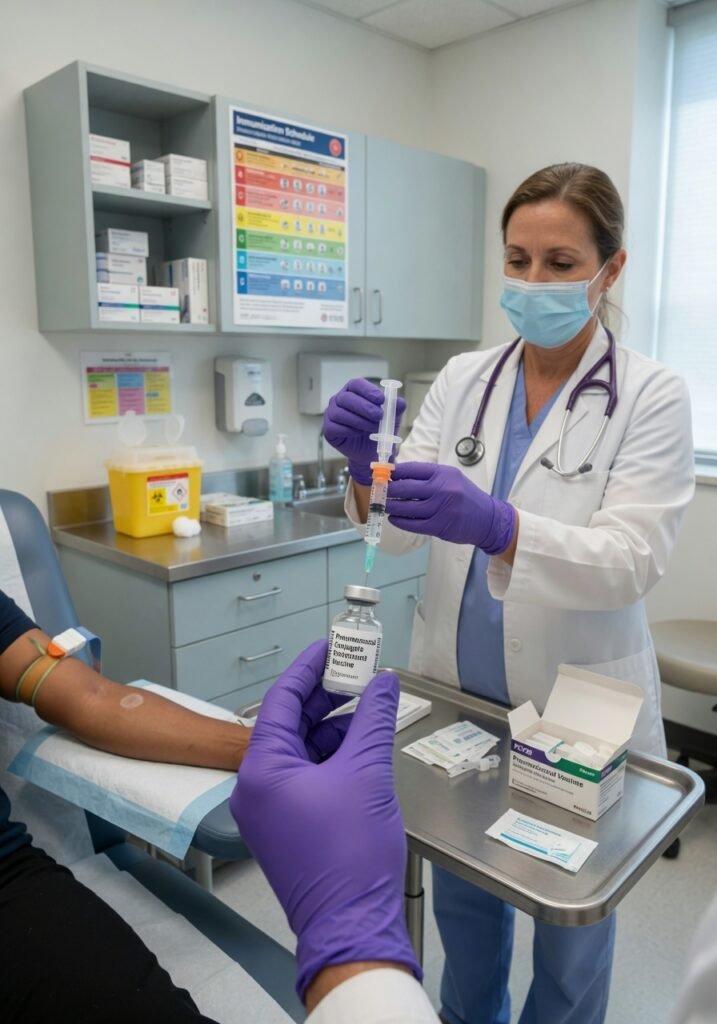
Pneumococcal vaccination works, but the details matter enormously. The newer conjugate vaccine PCV20 (Pneumovax 20) provides single-dose protection against 20 serotypes and is now preferred over the older two-dose PCV13 plus PPSV23 sequential approach for most adults. Adults 50 and older should receive PCV20. Adults 19–49 with chronic conditions (heart disease, lung disease, diabetes) should receive PCV20. Those with asplenia, HIV, or immunocompromising conditions need both PCV20 and additional PPSV23.
Here’s the critical nuance: vaccination reduces pneumococcal disease risk by approximately 45–70 percent depending on age and serotype, but it doesn’t eliminate risk entirely. No vaccine achieves 100 percent effectiveness against every serotype. Additionally, immunity wanes, which is why periodic revaccination matters for high-risk groups. If you received PPSV23 five or more years ago, you likely benefit from PCV20 now, even if nobody’s mentioned updating your status.
Influenza vaccination also prevents pneumococcal disease indirectly by reducing your risk of secondary bacterial superinfection following viral illness. Annual flu shots meaningfully decrease pneumococcal pneumonia rates in vaccinated populations. Smoking cessation, alcohol moderation if applicable, and management of chronic conditions like COPD and diabetes all reduce risk. These aren’t glamorous interventions, but they work.
Current Vaccination Recommendations
The CDC recommends PCV20 as a single dose for all adults 60 and older, or for those 19–59 with chronic lung disease, cardiovascular disease, diabetes, or immunocompromising conditions. If you previously received PPSV23, you can now receive PCV20 regardless of timing. Adults with asplenia or functional asplenia require both vaccines. High-risk adults under 50 should discuss pneumococcal vaccination status with their physician annually.
Frequently Asked Questions
Is pneumococcal vaccine the same as pneumonia vaccine?
Not exactly. Pneumococcal vaccines protect against Streptococcus pneumoniae bacteria, which causes pneumonia but also other diseases like meningitis and bacteremia. The pneumonia vaccine specifically refers to pneumococcal conjugate vaccines like PCV20. Other vaccines like Pneumovax 23 (PPSV23) also protect against pneumococcal disease. Neither vaccine prevents all pneumonia—viral pneumonia, Legionella, or atypical bacteria require different prevention strategies.