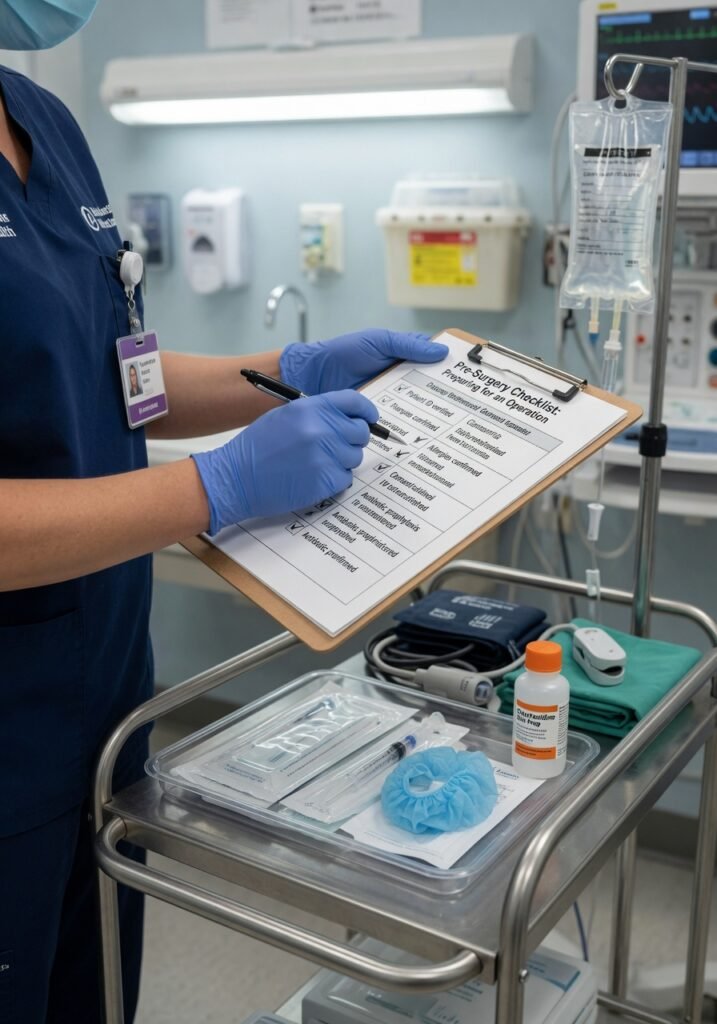
Pre-Surgery Checklist: Preparing for an Operation
Last month, a 58-year-old electrician named Marcus came to my office the day before his scheduled knee arthroscopy. He’d already stopped eating at midnight as instructed, filled his prescriptions, and arranged time off work. But when I asked about his blood pressure medication, he looked confused. “I figured I should skip it this morning since I can’t eat,” he said. That’s the misconception I need to correct first: pre-surgery preparation isn’t just about fasting and showing up on time. Many patients believe the preparation period means stopping everything medical—but actually, understanding what to continue, what to pause, and what to start is what separates complications from smooth operations.
Key Facts About Pre-Surgery Preparation
- According to the CDC, approximately 15% of surgical patients experience an adverse event within 30 days of operation, with many preventable through proper pre-operative optimization
- Patients who complete comprehensive pre-surgery assessments have a 23% lower rate of unexpected hospital readmissions compared to those with minimal preparation
- Anesthesia complications increase by 40% when patients don’t follow nothing-by-mouth (NPO) guidelines correctly, as documented in the Journal of the American Medical Association
- Pre-operative anxiety affects roughly 60% of surgery patients, yet only 20% receive specific behavioral preparation interventions
- Medication timing errors in the 24 hours before surgery account for approximately 8% of preventable surgical incidents according to NIH Safety Center data
Understanding Pre-Surgery Preparation: What’s Actually Happening
Your body during the pre-surgery period is like an athlete before competition—you need rest, proper fuel, mental clarity, and equipment check. But unlike athletic training, surgical prep involves turning off certain systems temporarily. When you fast before surgery, you’re not just following rules; your stomach needs to be empty so anesthesia medications don’t cause aspiration (stomach contents entering your airway). This isn’t paranoia—aspiration during surgery can cause chemical pneumonia or require emergency intubation.
Physiologically, your anesthesiologist is trying to create a controlled state where your body doesn’t fight back. Blood pressure stays stable. Pain signals don’t fire. Your muscles relax. But this controlled state only works if your baseline health is optimized. That’s why pre-surgery labs measure kidney function, liver function, blood counts, and glucose levels. A surgeon operating on a patient with uncontrolled diabetes faces completely different bleeding and infection risks than one operating on someone optimized beforehand.
Mentally, pre-surgery preparation also primes your nervous system. Studies show patients who understand exactly what will happen—the sounds in the OR, the positioning, what they’ll feel—have lower cortisol levels and faster post-operative recovery. Your anxiety isn’t irrational; it’s your amygdala preparing for threat. But threat awareness differs from threat overload.
Causes and Risk Factors for Pre-Surgery Complications
Not all patients carry equal surgical risk. Age matters—a healthy 70-year-old might have fewer complications than a 45-year-old with uncontrolled hypertension. But specific factors predict trouble better than age alone.
Cardiac risk tops the list. Patients with coronary artery disease, congestive heart failure, or uncontrolled arrhythmias need cardiac clearance before major surgery. Your surgeon won’t proceed without knowing your heart can handle increased demands. Diabetes dramatically increases infection risk and impairs wound healing—hyperglycemia literally impairs white blood cell function.
Sleep apnea deserves special attention because it’s often missed. Many patients don’t know they have it. Untreated sleep apnea increases post-operative respiratory complications by 300%, yet it’s frequently not addressed in pre-op assessment. Ask your primary care doctor about screening if you snore, stop breathing during sleep, or wake unrefreshed.
Medication interactions and timing create another risk category. Warfarin needs bridging. Metformin occasionally needs temporary discontinuation. NSAIDs increase bleeding. Herbal supplements like ginkgo, ginger, and garlic have anticoagulant properties—patients often forget to mention these because they think “natural” means “safe for surgery.”
Obesity increases multiple risk factors simultaneously: anesthetic drug dosing becomes complex, positioning becomes difficult, and infection risk climbs. Chronic obstructive pulmonary disease means your lungs have less reserve for anesthesia. Renal insufficiency affects medication clearance and fluid management.
Signs and Symptoms: What Pre-Surgery Patients Actually Experience
Anxiety looks different in each person. Some patients describe racing thoughts at 3 AM—replaying conversations with their surgeon, imagining complications, running through worst-case scenarios. Others experience physical symptoms: tight chest, nausea, inability to focus at work despite trying. A few become almost numb, moving through appointments mechanically.
You might notice sleep disruption starting 5-7 days before surgery. Your appetite changes—some people can’t eat despite not being NPO, others feel perpetually hungry from stress. Irritability with family members is common. You might find yourself researching your procedure obsessively online, which sometimes reassures but often spirals into complication rabbit holes.
Blood pressure elevation is real—it’s called “white coat syndrome” when it happens at the surgeon’s office, but pre-operative stress can sustain elevated readings. If your baseline blood pressure is 120/78 but your pre-op reading is 155/92, that’s meaningful. Headaches and muscle tension often appear, particularly in shoulders and jaw.
An overlooked early sign is decision fatigue. You might find yourself stuck on small choices—what time to arrive, what to wear, which parking area—that seem disproportionately difficult. This isn’t weakness; it’s your executive function depleted by sustained stress activation.
Pre-Surgery Diagnosis and Assessment
Pre-operative assessment isn’t a single test but a systematic evaluation. It typically begins 1-4 weeks before surgery, depending on complexity. For minor procedures like mole removal or cataract surgery, you might only need a basic health history. For major surgery like coronary artery bypass or hip replacement, expect comprehensive workup.
Here’s what that workup includes: Complete blood count (CBC) checks for anemia and infection. Comprehensive metabolic panel (CMP) measures electrolytes, kidney function, liver function, and glucose—critical for anesthesia safety. Coagulation studies (PT/INR) assess bleeding risk. EKG happens for anyone over 50, anyone with cardiac history, or anyone with diabetes. Chest X-ray screens for unsuspected lung disease in higher-risk patients.
Your surgeon might order cardiac stress testing if you have multiple risk factors or functional limitations. You’ll meet with anesthesia, either in person or via questionnaire. They’re not being paranoid asking detailed questions about family history of anesthetic complications or previous reactions—malignant hyperthermia runs in families and can be lethal if not recognized.
The patient experience during this phase is often tedious. You schedule multiple appointments, get poked for blood work, fill out the same medical history form three times at different offices. You might feel like you’re repeating information unnecessarily. Actually, redundancy here saves lives—when anesthesia double-checks that you told surgery you have sleep apnea, that’s not inefficiency; that’s safety.
Treatment Options: Pre-Surgery Optimization Strategies
Pre-surgery “treatment” is really optimization. If you have uncontrolled hypertension, your surgeon might increase antihypertensive dosing before surgery—adding amlodipine (Norvasc) or increasing lisinopril dose weeks in advance. If your glucose runs 250-300, endocrinology might adjust insulin regimens.
For anxiety specifically, some patients benefit from short-term anxiolytics. Alprazolam (Xanax) or lorazepam (Ativan) taken 30 minutes before arrival at the surgical center reduces anxiety without major complications. But this only works for situational anxiety; it’s not a substitute for genuine psychiatric disorders needing ongoing treatment.
Behavioral approaches matter enormously. Pre-operative education—actual explanation of what will happen, not just paperwork—reduces anxiety ratings by 30-40%. Virtual reality tours of operating rooms exist at some institutions. Some surgeons use pre-operative hypnotherapy. Progressive muscle relaxation taught even briefly before surgery reduces post-operative pain requirements.
Physical optimization deserves mention. Patients scheduled for major surgery benefit from pre-surgery physical therapy. A few weeks of pulmonary hygiene for lung surgery patients—breathing exercises, incentive spirometry—genuinely improves outcomes. Walking daily in the weeks before surgery improves cardiovascular reserve.
Medication management is crucial. Aspirin usually continues through surgery. Beta-blockers continue. ACE inhibitors continue unless specific contraindication exists. NSAIDs typically stop 1-2 weeks before surgery. Anticoagulants (warfarin, dabigatran, apixaban) require specific protocols—sometimes bridging with heparin, sometimes just stopping.
Practical Daily Management Before Surgery
Start a calendar 4 weeks out. Mark when you need pre-op appointments, when medications require changes, when fasting begins. Write down questions—you’ll forget them between scheduling the surgery and the actual procedure.
Two weeks before surgery, review all medications with your primary care doctor. Don’t just ask “should I take my meds?” Show them your complete list (including supplements and OTC medications) and ask specifically about timing. A patient taking both aspirin and fish oil needs different guidance than one on aspirin alone.
One week before surgery: Confirm your NPO time. Write it down. “After midnight Tuesday” is vague—you need “nothing to eat or drink after 11:59 PM on Tuesday, June 18th.” Arrange childcare if needed. Confirm your ride home (you cannot drive after most anesthesia, even if you “feel fine”).
Three days before surgery: Fill all prescriptions. Don’t wait until the morning of surgery to discover your pharmacy is closed. Review instructions about which medications to continue.
The night before: Shower with the antiseptic soap if provided (chlorhexidine or iodine-based—these reduce skin bacteria colonization). Wash your hair if instructed. Lay out comfortable, loose clothing for the day of surgery. Avoid nail polish, makeup, and jewelry despite the temptation to look good—medical staff need to assess your color and circulation.
Morning of surgery: If not NPO, eat a light breakfast early (at least 2 hours before arrival time if allowed). Take your pre-operative medications with a tiny sip of water unless specifically told otherwise. Arrive early—rushing increases anxiety and increases medication errors during intake.
Prevention: What Reduces Complications
The best way to prevent surgical complications is to optimize before surgery starts. Smoking cessation at least 2-4 weeks before surgery reduces infection risk and improves wound healing. Even one month without cigarettes improves outcomes. Weight optimization matters—if you have time, even 5-10% weight loss reduces anesthetic risk.
Controlling chronic diseases aggressively in the weeks before surgery prevents complications. Diabetics should aim for glucose 150-200 during surgery (tight control paradoxically increases risk); that means adjusting regimens weeks in advance. Hypertensive patients need controlled readings before surgery day.
Sleep matters. Studies from JAMA show patients sleeping less than 6 hours nightly have significantly higher infection rates post-operatively. Aim for 7-8 hours starting 1-2 weeks before surgery.
Preoperative exercise capacity predicts outcomes. Patients who can walk 3-4 blocks without stopping have fewer post-operative complications than sedentary patients. Starting a walking program 3-4 weeks before surgery—even 10-15 minutes daily—improves cardiac reserve.
Alcohol cessation matters if you’re a regular drinker. Chronic alcohol affects liver function and increases bleeding. If you drink daily, tell your surgeon weeks in advance so they can manage withdrawal risk appropriately (sometimes requiring benzodi