Sarah, a 52-year-old accountant, sat in her gastroenterologist’s office holding a prescription for polyethylene glycol solution and wondering why her doctor seemed so casual about what felt like an invasion of privacy. She’d been putting off screening for three years, partly from embarrassment, partly from genuine anxiety about the procedure itself. What she didn’t know was that colonoscopy had detected precancerous polyps in her father at age 58—and that her 90-minute procedure today would likely prevent her from ever needing chemotherapy.
Colonoscopy remains one of medicine’s most effective cancer prevention tools, yet it’s also one of the most misunderstood. Let’s talk about what actually happens during the procedure, why the preparation matters more than most people realize, and what you’ll genuinely experience from start to finish.
Key Facts About Colonoscopy
- According to the CDC, colorectal cancer screening with colonoscopy reduces mortality by approximately 70% in screened populations
- Colonoscopy detects adenomatous polyps in 25-40% of average-risk adults over age 50, with detection rates improving when bowel preparation quality is adequate
- The procedure itself takes 20-30 minutes on average, though preparation typically requires 24 hours of dietary modification and laxative use
- Serious complications occur in fewer than 1 in 1,000 procedures, but preparation quality directly correlates with diagnostic accuracy and safety outcomes
- Medicare and most private insurers cover preventive colonoscopy every 10 years for adults age 45-75 with normal results
Understanding What Colonoscopy Actually Does
Think of your colon as a muscular tube roughly five feet long, with folds and curves that create hiding spots—similar to a highway with multiple exit ramps and shadowy overpasses. A polyp growing in one of those folds could be completely invisible to you for years while silently transforming from benign growth to cancer.
Colonoscopy uses a thin, flexible tube about the width of your pinky finger with a camera and light source at its tip. Your gastroenterologist threads this instrument through your entire colon, examining every millimeter of tissue. Unlike CT scans or virtual colonoscopy, this procedure is real-time and interactive. When a suspicious lesion appears on the monitor, your doctor can biopsy it instantly or remove it completely right there—no second procedure needed.
The sedation matters here. You’ll receive propofol (the same medication used in operating rooms) or midazolam with fentanyl, creating what patients describe as “conscious sedation”—you’re relaxed and unaware, but not fully asleep. This allows your colon to relax while you don’t experience the pressure, urgency, or discomfort of the instrument advancing through your intestines.
Risk Factors That Actually Determine Your Screening Timeline
Your age matters, certainly. The U.S. Preventive Services Task Force recommends beginning screening at age 45 for average-risk adults (changed from 50 in 2021). But age alone doesn’t dictate urgency.
Family history carries real weight. If a first-degree relative developed colorectal cancer before age 60 or had advanced adenomatous polyps, you should start at age 40 or 10 years before your relative’s diagnosis—whichever comes first. This isn’t arbitrary. Hereditary syndromes like Lynch syndrome account for 2-4% of colorectal cancers, and affected families face 70-80% lifetime risk without surveillance.
Inflammatory bowel disease changes everything. Ulcerative colitis and Crohn’s disease increase colorectal cancer risk by 2-4 fold depending on disease duration and extent. If you’ve had ulcerative colitis for more than 8 years involving the entire colon, colonoscopy should happen every 1-2 years, not every 10.
Here’s what gets overlooked: obesity, metabolic syndrome, and insulin resistance independently increase colorectal cancer risk through mechanisms involving chronic inflammation and altered estrogen metabolism. A BMI over 30 increases risk by roughly 20-30%, yet rarely does screening discussion address this modifiable factor. Someone with metabolic syndrome might benefit from aggressive lifestyle intervention before or alongside their screening schedule.
Smoking, alcohol consumption exceeding two drinks daily for women or three for men, and a diet high in processed red meat all contribute. Type 2 diabetes adds another layer of risk, particularly if glucose control is suboptimal.
What You Actually Experience: Before, During, and After
The day before your procedure, most gastroenterologists recommend a clear liquid diet only—broth, apple juice without pulp, sports drinks, black coffee. Your mind might race with hunger by afternoon. This isn’t arbitrary hardship. The colon must be completely empty for your doctor to visualize every surface. Missed polyps in poorly prepped colons happen more often than anyone wants to admit.
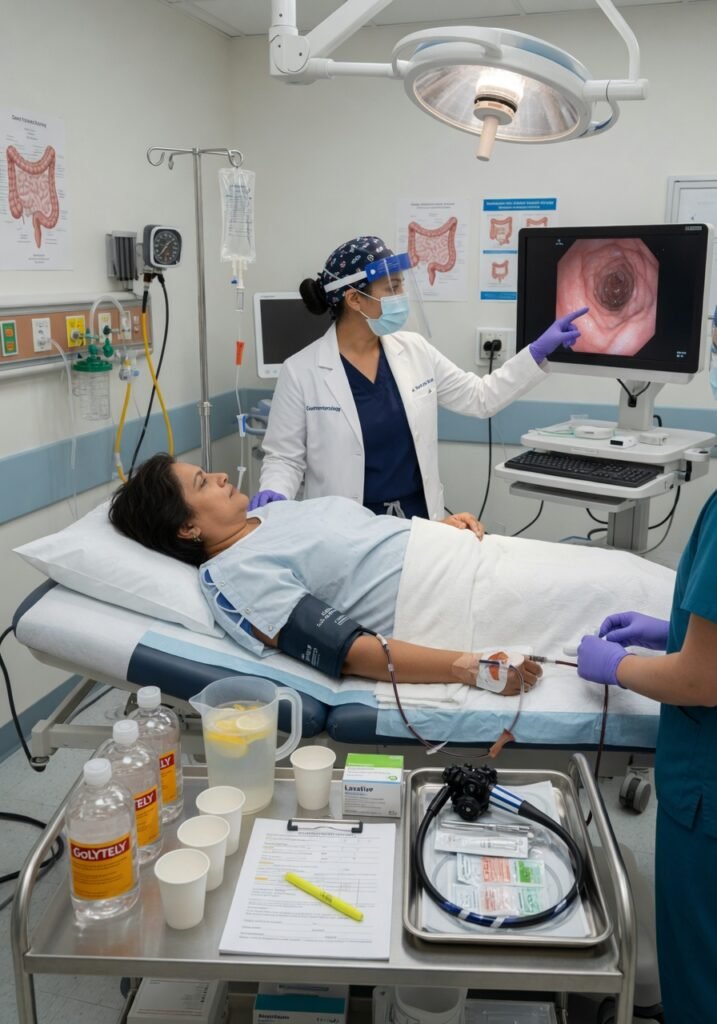
The evening before, you’ll drink the bowel preparation solution. If your doctor prescribed polyethylene glycol (GoLYTELY, NuLYTELY), you’re looking at drinking a gallon of salty liquid over 2-3 hours. Your bowel response will be dramatic—frequent, watery stools that clear intestinal debris completely. Some patients tolerate this better if they chill the solution, add Crystal Light flavoring, or drink it through a straw to minimize taste.
Morning of the procedure, you might take additional doses of preparation solution or use bisacodyl tablets and osmotic laxatives depending on your protocol. You’ll arrive at the facility NPO (nothing by mouth) for at least 6 hours.
In the procedure room, a nurse establishes an IV line and administers sedation. You remember brief moments—the sensation of the scope entering, perhaps the urge to pass gas as the colon is insufflated with air for visibility. Then consciousness fades. Afterward, you wake in recovery with no memory of the procedure and feeling surprisingly fine, though disoriented. The sedation typically wears off within an hour, which is why you need someone to drive you home.
Post-procedure, mild abdominal bloating and gas discomfort occur as your colon reabsorbs the air used during examination. This resolves within hours. Most patients resume normal eating immediately, though some doctors recommend starting with bland foods for the first meal.
The Diagnostic Process: When and Why It Happens
Colonoscopy serves dual purposes: screening asymptomatic adults at regular intervals and diagnosing symptoms in symptomatic patients. Screening colonoscopy happens on a scheduled basis. Diagnostic colonoscopy follows concerning symptoms—persistent abdominal pain, blood in stool, unexplained anemia, or chronic diarrhea.
Before your procedure, your gastroenterologist reviews your medical history, current medications (certain blood thinners require adjustment), and any previous colonoscopies. The quality of your bowel preparation determines diagnostic yield. If your preparation is excellent, polyp detection rates hover around 40% in average-risk screening populations. Poor preparation? Detection drops to 15-20%. Your pre-procedure effort directly impacts whether precancerous lesions get found.
During the procedure, your doctor carefully advances the scope while examining the mucosa. Polyps discovered are classified by size, morphology (appearance), and location. Small hyperplastic polyps in the rectosigmoid region may warrant no follow-up. Larger adenomatous polyps get removed using snare polypectomy—a wire loop cuts through the polyp base using electrocautery.
Findings are documented photographically and reported with recommendations for future surveillance. If advanced adenomas (polyps larger than 10 mm or with high-grade dysplasia) are removed, your next colonoscopy might occur in 3 years rather than 10. If no polyps are found, you’re typically cleared for 10 years.
Managing Preparation and Optimizing Your Experience
Success hinges on bowel preparation. Start your clear liquid diet the day before—this isn’t optional if you want your doctor to see everything. Avoid red or purple beverages, which can be mistaken for blood.
If you have a history of poor tolerance to standard polyethylene glycol solutions, discuss alternatives with your doctor. Sodium sulfate-based preparations (Suprep) require drinking less total volume, though they taste worse. Magnesium citrate solution causes stronger cramping but takes less time. Newer agents like low-volume polyethylene glycol with electrolytes (MiraLAX-based protocols) work well for many patients.
Timing matters. Most protocols split the preparation—half the evening before, half the morning of the procedure (within 4-6 hours of start time). This improves second-half colon visualization compared to drinking everything the night before, when colon fluid accumulates.
Arrange transportation in advance. Propofol sedation impairs judgment and motor control for several hours. Driving yourself creates liability for your doctor’s office and genuine risk for you.
Wear comfortable, easily removable clothing. You’ll change into a procedure gown, and quick transitions minimize exposure and discomfort.
Prevention Through Screening and Lifestyle
Colonoscopy is prevention—it prevents cancer by removing precancerous polyps before they transform. But what prevents polyp formation in the first place?
Calcium intake of 1,000-1,200 mg daily shows modest protective effects in observational studies, though randomized controlled trials show less dramatic benefit. Folate and vitamin D may offer some protection, though supplementation hasn’t definitively proven superior to adequate dietary intake.
Physical activity—150 minutes weekly of moderate exercise—reduces colorectal cancer risk by approximately 20%. The mechanism involves improved insulin sensitivity, enhanced gut motility, and reduced inflammatory markers.
Dietary patterns matter more than individual nutrients. Mediterranean-style diets rich in vegetables, legumes, whole grains, and olive oil consistently correlate with lower colorectal cancer incidence compared to Western diets high in processed meats and refined carbohydrates. Red meat consumption—particularly processed red meat like bacon and sausage—increases risk meaningfully. Limiting to less than 18 ounces weekly seems reasonable based on epidemiologic evidence.
Weight management and maintaining a BMI below 30 addresses multiple cancer risk factors simultaneously.
Aspirin use for cardiovascular disease incidentally reduces colorectal cancer risk by roughly 20-30% with regular use, though your doctor wouldn’t prescribe aspirin solely for cancer prevention without other cardiovascular indications.
Addressing Common Patient Misconceptions
Let me correct a widespread misunderstanding: colonoscopy doesn’t hurt. The bowel has no pain receptors—it perceives pressure, stretching, and temperature, but not pain. The preparation causes discomfort (from frequent bowel movements and cramping), and the anticipatory anxiety is real, but the procedure itself is painless. Propofol sedation eliminates even the awareness of discomfort.
Another myth: colonoscopy is only for cancer prevention. Absolutely false. It diagnoses and treats active disease, investigates unexplained symptoms, and removes bleeding sources. It cauterizes vascular malformations causing chronic bleeding. For symptomatic patients, it’s therapeutic intervention, not just screening.
Some patients believe they need colonoscopy annually if they’ve ever had a polyp. Not necessarily. Surveillance intervals depend on polyp characteristics. Small hyperplastic polyps warrant routine 10-year screening. Advanced adenomas might require 3-year follow-up. Your gastroenterologist individualizes recommendations based on findings.
Frequently Asked Questions
Will I feel the colonoscope inside my colon?
No. The propofol sedation (or midazolam and fentanyl) creates amnesia for the procedure. You’ll have no awareness of the scope’s presence during the examination. Some patients report vague sensations of pressure or the ur
Sources & Medical References
HealthTopics.com articles are based on peer-reviewed medical research and guidance from the NIH, CDC, and WHO. See our editorial policy for full sourcing standards.