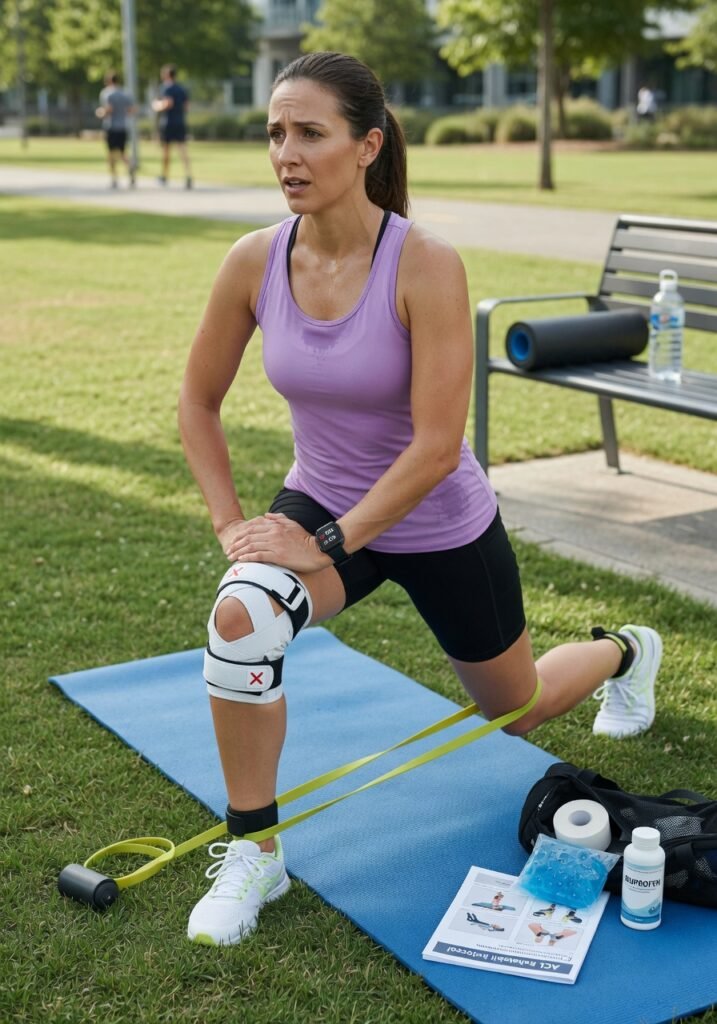

Sports Injuries: Why Your First Instinct About Recovery Is Usually Wrong
A 34-year-old recreational runner came to my clinic convinced his ACL tear meant he’d never run again. He’d read that ligament tears are permanent, irreversible damage—a one-way street to the sidelines. What surprised him was learning that modern surgical reconstruction of the ACL using autografts or allografts now has success rates above 90% for returning to sport, and that many athletes actually come back stronger than before injury, not weaker. His misconception? That tissue damage equals permanent functional loss. The reality is far more complex.
Here’s what most people get wrong about sports injuries: they assume damage to tissue is damage to your ability to compete. But tissue heals. Muscle fibers regenerate. Ligaments rebuild. The brain’s protective mechanisms often create more limitation than the injury itself. Understanding this distinction changes everything about how you approach treatment and recovery.
Key Facts About Sports Injuries
- Approximately 8.6 million sports and recreation-related injuries occur annually in the United States, according to CDC surveillance data—that’s roughly one injury every 3.6 seconds
- Athletes aged 5-14 years account for roughly 28% of all sports-related emergency department visits, making youth the highest-risk population despite having better healing capacity
- Ankle sprains represent the single most common sports injury, occurring in about 1 per 10,000 athletic exposures in high school sports, per NIH epidemiologic studies
- Return-to-sport protocols that follow graduated progression reduce reinjury rates by 35-50% compared to time-based return decisions, according to JAMA orthopedic literature
- Psychological readiness for return-to-sport correlates as strongly with successful outcomes as physical rehabilitation metrics—athletes with confidence confidence scores below threshold show 2.6 times higher reinjury rates
Understanding What Actually Happens When You Get a Sports Injury
Think of tissue injury like a building sustaining structural damage. The initial impact causes immediate mechanical failure—fibers tear, blood vessels rupture, inflammation floods the area. But here’s where most explanations stop, and where I think the real story gets interesting. Your body doesn’t just repair. It overprotects.
When you tear an anterior cruciate ligament in your knee, the immediate damage might occupy millimeters of tissue. But your nervous system reads that damage as a threat and activates protective mechanisms that can suppress muscle activation patterns, alter proprioception (your sense of limb position), and create movement compensations throughout your entire kinetic chain. A localized injury to one ligament can create dysfunction from your hip stabilizers to your ankle mechanics. This is why a simple ankle sprain sometimes takes months to resolve—not because the ligament heals slowly, but because the nervous system remains cautious long after tissue repair completes.
The inflammation phase also deserves respect. Within minutes, your body releases cytokines and chemokines that initiate healing but also cause swelling, pain, and temporary loss of range of motion. This isn’t punishment—it’s protection. The swelling immobilizes the injured area naturally. The pain prevents you from immediately demanding too much of healing tissue. Understanding inflammation as beneficial rather than purely detrimental changes how you approach the first 72 hours after injury.
Causes and Risk Factors: What Actually Predicts Injury
Most articles list generic risk factors: previous injury, poor conditioning, inadequate warm-up. All true, but incomplete. Let me focus on what actually matters in clinical practice.
Previous injury is the strongest predictor—athletes with prior injuries have 2-6 times higher reinjury rates depending on body region. But here’s the mechanism: previous injury doesn’t just weaken tissue. It leaves proprioceptive deficits and motor control deficits that can persist for years even after tissue heals completely. This is why an athlete who “fully recovered” from a hamstring strain often reinjures that same hamstring within 12 months if they don’t address the neuromuscular component.
Training load errors drive more acute injuries than intrinsic weakness. Specifically, rapid increases in training volume—jumping from 20 miles to 35 miles weekly running, or suddenly increasing intensity without gradual progression—create injury risk that proper conditioning couldn’t prevent. The tissue simply isn’t exposed to adequate stimulus to adapt. This explains why injuries spike at the start of seasons and after vacations.
Movement asymmetries matter more than most athletes realize. If your left leg has 15% less hip abductor strength than your right, your pelvis tilts during running, changing knee mechanics throughout every stride. Over thousands of repetitions, this asymmetry accumulates stress unevenly. Assessment of bilateral strength and mobility reveals these patterns before injury occurs.
Here’s what most articles miss: sleep deprivation and inadequate recovery between sessions increase injury risk as much as mechanical factors. Athletes sleeping under 7 hours nightly show 60% higher acute injury rates in research published through the NIH. Sleep is when growth hormone peaks, when muscle protein synthesis accelerates, when the nervous system consolidates motor learning from training. Shortchanging sleep doesn’t just make you tired—it undermines tissue adaptation itself.
Signs and Symptoms: What You’ll Actually Experience
The immediate presentation varies by injury type, but patterns emerge. Acute tears typically cause sudden onset pain with specific mechanism—you land wrong, hear or feel a pop, and immediately know something changed. Chronic overuse injuries creep in gradually. You notice pain only after activity, then pain during activity, then pain at rest.
Early warning signs most athletes miss: asymmetric fatigue (one leg tiring before the other), altered movement patterns you can feel but can’t quite describe, or pain that migrates (pain starts in your lower back, then appears in your hip, then your knee). These represent your nervous system’s protective adaptations before frank injury occurs. Addressing them prevents progression.
Functional limitations tell you more than pain levels. Can you perform sport-specific movements? A soccer player might tolerate pain during walking but lose ability to cut sharply or accelerate explosively. That functional loss is more clinically meaningful than a pain rating.
Swelling patterns matter. Immediate swelling (within minutes) suggests ligamentous injury. Delayed swelling (over hours) suggests muscle strain or contusion. Swelling that worsens despite rest suggests continued inflammation from inadequate modification of aggravating activities.
Getting the Right Diagnosis: What the Process Involves
Diagnosis starts with history and physical examination. I want to know exactly how the injury happened, what movements provoke symptoms, what improves them. Physical examination includes strength testing, range of motion assessment, and provocative tests designed to stress specific structures. For an ACL injury, I perform the Lachman test, anterior drawer test, and pivot-shift test. Each has specific sensitivity and specificity that guides clinical probability.
Imaging follows clinical suspicion, not the other way around. An MRI shows tissue architecture but doesn’t determine whether tissue is actually causing current pain. Many athletes have MRI findings of “degeneration” or “partial tears” without any symptoms. Ordering imaging too early wastes money and often creates false certainty. I typically perform clinical examination first, and order imaging only when findings suggest specific structural injury.
The actual patient experience involves some discomfort during examination—provocative tests deliberately stress injured structures to reproduce symptoms. This feels unpleasant but is diagnostically essential. Once we have diagnosis, we can determine prognosis and treatment pathway.
Treatment: What Actually Works, Specifically
Treatment depends entirely on injury type and severity. Minor ligament sprains respond to conservative management: ice in the first 48-72 hours, compression to limit swelling, elevation to reduce dependent edema, early active range of motion, and progressive strengthening. NSAIDs like ibuprofen or naproxen reduce inflammation but don’t accelerate healing—they’re for symptom management. I prescribe them early to allow athletes to perform rehabilitation exercises, not as a magic solution.
Complete ligament tears or ACL injuries requiring stability typically need ACL reconstruction surgery using either autograft (tissue from your own body, usually patellar tendon or hamstring) or allograft (tissue from donor). Autografts have higher long-term stability but require longer rehabilitation. Allografts feel good earlier but show higher reinjury rates in young athletes. The choice depends on age, activity level, and individual healing capacity.
Muscle strains are rarely surgically repaired unless complete rupture occurs. Grade 1 strains (microscopic tearing) heal with rest and gradual loading. Grade 2 strains (partial tears) need 2-4 weeks of modified activity plus progressive eccentric strengthening. Grade 3 complete ruptures might need surgery if they involve explosive athletes, but conservative management works for most people. Physical therapy involving eccentric loading—lowering against resistance—actually strengthens muscle better than concentric strengthening (lifting against resistance).
Tendon injuries are notoriously slow because tendons have poor blood supply. Patellar tendinopathy or Achilles tendinopathy requires 6-12 months of consistent loading programs. Corticosteroid injections provide temporary relief but actually impair long-term healing by suppressing inflammation. I avoid them unless specifically indicated for very limited flare-ups.
Rehabilitation protocols matter more than individual treatments. Graduated return-to-sport (RTS) protocols reduce reinjury compared to time-based decisions. These protocols progress through phases: initial pain management and range of motion restoration, strength building with sport-specific demands, agility and plyometric training, return to practice participation, and finally return to competition. Each phase requires meeting specific criteria before progressing—not just waiting a certain number of weeks.
Practical Daily Management: Concrete Strategies That Work
During the acute phase (first 48-72 hours), apply ice for 15-20 minutes every 2-3 hours. Not longer—prolonged icing can impair healing by reducing necessary inflammatory response. Compression using elastic bandages prevents swelling escalation. Elevation uses gravity to reduce fluid accumulation in injured tissue.
Begin gentle active range of motion as soon as pain allows. Moving the injured joint actively (not passively stretched by someone else) maintains proprioceptive input and prevents stiffness. Start isometric strengthening—tensing muscles without moving joints—even while in pain.
After acute inflammation resolves (typically 1-2 weeks), progressively load the injured area. Your nervous system needs graduated stimulus to rebuild confidence. If you had an ankle sprain, progress from walking on level ground to figure-8 walking to gentle agility drills. Each step should feel challenging but not painful.
Cross-training maintains cardiovascular fitness without stressing injured tissue. A runner with knee injury can swim or use an elliptical. An upper extremity injury doesn’t prevent lower extremity training. Maintaining fitness accelerates return to sport.
Address the psychological component explicitly. Set small, achievable milestones. Many athletes experience fear-avoidance—they’ve become so cautious about reinjury that they protect the injury excessive, which actually perpetuates dysfunction. Gradual exposure to previously painful movements, in controlled settings, rebuilds nervous system confidence.
Prevention: What Research Actually Shows Works
Preseason conditioning reduces injury rates, but specificity matters. Generic fitness isn’t enough. Sports-specific movements, addressing bilateral asymmetries, and sport-specific agility training show the strongest injury prevention effects. A basketball player needs ankle stability work. A baseball pitcher needs rotator cuff endurance training. Generic “getting in shape” doesn’t cut it.
Eccentric strengthening particularly reduces tendon injuries. For lower extremity, single-leg eccentric calf raises prevent Achilles problems. Eccentric hamstring exercises prevent hamstring injuries. The eccentric phase—the lowering phase—creates the strongest stimulus for muscular adaptation and actually appears to strengthen tendons as well.
Proprioceptive training, particularly balance training and agility work, reduces ankle reinjury rates significantly. Using balance boards, single-leg exercises, and sport-specific agility drills trains the nervous system to detect and correct movement imbalances before they create injury-producing forces.
Adequate recovery between sessions isn’t negotiable. Hard training days need easy days afterward