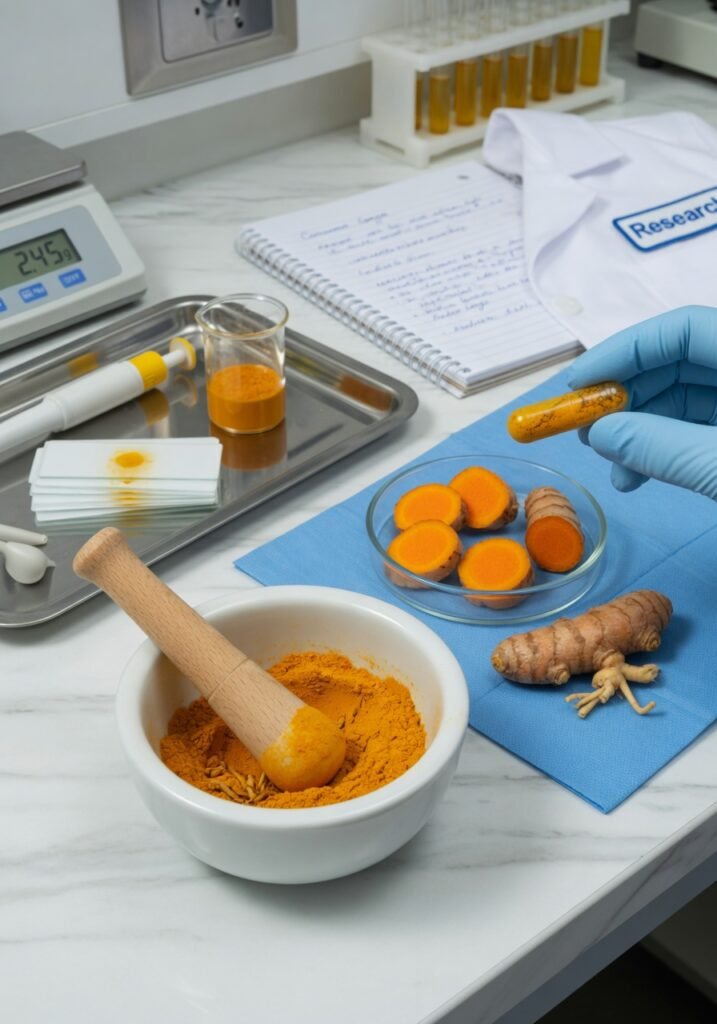

Turmeric and Curcumin: Separating What Actually Works from Marketing Hype
Marcus, a 52-year-old accountant, started taking turmeric supplements after his knee arthritis made climbing stairs painful. His brother swore by it for inflammation, his yoga instructor mentioned it casually, and he found dozens of bottles at the health food store. But when he asked his rheumatologist whether it would replace his naproxen, she gave him an honest answer: it might help at the margins, but the evidence is more limited than the marketing suggests. That conversation—and the actual research behind it—is what you need to know.
Key Facts About Turmeric
- Curcumin comprises only 2-8% of turmeric by weight, which is why supplement dosing matters far more than simply cooking with the spice
- The NIH reports that curcumin bioavailability increases by 2000% when consumed with black pepper (piperine), explaining why quality supplements pair these ingredients
- A 2019 JAMA study found curcumin reduced osteoarthritis knee pain similarly to 2000mg ibuprofen daily, but only in participants taking 1500mg+ of standardized curcumin
- Turmeric activates nuclear factor erythroid 2-related factor 2 (Nrf2), a cellular pathway that upregulates antioxidant defenses rather than directly neutralizing free radicals
- Approximately 60% of turmeric supplements tested by independent labs contain less than 50% of their labeled curcumin content, making brand verification essential
How Turmeric Actually Works in Your Body
Here’s what distinguishes turmeric from simple antioxidants you’ve read about: curcumin doesn’t just mop up inflammatory molecules like a chemical sponge. Instead, it acts more like a dimmer switch on your immune system’s inflammatory circuits. When your body detects injury or infection, specialized white blood cells called macrophages release cytokines—chemical messengers that trigger inflammation. Curcumin suppresses the production of TNF-alpha and IL-6, two key cytokines driving this cascade, by inhibiting NF-kappa B, a protein that essentially tells your cells to manufacture inflammatory signals.
What makes this relevant clinically is timing. Curcumin works best when inflammation is already developing, not as prevention in healthy people. Taking it daily for weeks before experiencing joint pain produces minimal benefit in most studies. But someone like Marcus, who has active arthritis, might see real reduction in morning stiffness and swelling because his inflammatory pathways are already activated.
Which Conditions Respond Best—and Which Don’t
The evidence isn’t uniform across all inflammatory conditions. Research consistently shows benefit in knee osteoarthritis, particularly when curcumin doses reach 1000-1500mg daily in standardized form. Rheumatoid arthritis shows promise in smaller studies, though it hasn’t yet matched the evidence strength seen with DMARDs like methotrexate. Inflammatory bowel disease demonstrates some positive effects in preliminary research, but gastroenterologists rarely recommend it as monotherapy because the evidence remains preliminary.
What gets overlooked in most articles: turmeric appears ineffective for certain inflammatory states, particularly acute post-surgical inflammation where the inflammatory cascade is too intense and rapid. High-dose NSAIDs outperform curcumin in those settings. Similarly, people with autoimmune conditions should consult their rheumatologist before supplementing, as some evidence suggests curcumin might theoretically amplify immune response in certain contexts.
Bioavailability—The Reason Your Kitchen Turmeric Isn’t Medicine
Cooking with turmeric provides culinary benefits and trace amounts of curcumin, but doesn’t deliver therapeutic doses. Your digestive system absorbs turmeric poorly. Studies show that taking a teaspoon of turmeric powder results in blood curcumin levels barely measurable by laboratory standards. This isn’t a criticism of turmeric as food—it’s delicious and has cultural value—but it explains why clinical trials use standardized extracts containing 95% curcumin, not whole-plant powder.
The black pepper factor matters tremendously. Piperine, the compound giving black pepper its heat, inhibits the liver enzyme that normally breaks down curcumin before it enters the bloodstream. Add piperine to curcumin and you get meaningful absorption. Most quality supplements now include this pairing at 5-10% piperine by weight. Without it, you’re essentially paying for expensive urine, as your body eliminates unabsorbed curcumin.
Real Side Effects and Drug Interactions
Turmeric supplements are generally well-tolerated, but side effects do occur. Gastrointestinal upset—nausea, diarrhea, or constipation—affects roughly 15-20% of people taking doses above 1000mg daily, particularly those with sensitive stomachs or irritable bowel syndrome. High doses can also cause dizziness and headaches in some patients. These effects are dose-dependent and reversible upon discontinuation.
More concerning are drug interactions. Curcumin inhibits several cytochrome P450 enzymes, meaning it slows the metabolism of warfarin, clopidogrel, certain statins, and some cancer medications. If you take any blood thinner or anticoagulant, you need your physician’s approval before supplementing. Some chemotherapy agents require careful interaction screening. Additionally, curcumin might increase stomach acid production, potentially problematic for people with peptic ulcer disease or GERD.
Practical Dosing and Selection Strategy
The therapeutic window appears to be 1000-1500mg daily of standardized curcumin (95% purity) combined with 5-10mg piperine. This is notably different from capsule count—some supplements market multiple capsules daily to hit lower doses of actual curcumin, creating unnecessary pill burden. Look for third-party tested products bearing NSF, USP, or ConsumerLab seals, since the supplement industry has documented quality control problems.
Timing matters somewhat. Taking curcumin with a meal containing fat (olive oil, nuts, or protein) improves absorption, as curcumin is fat-soluble. Taking it on an empty stomach reduces bioavailability despite what some supplement companies claim. For osteoarthritis, most research participants took divided doses—500-750mg twice daily—rather than single large doses, possibly because this maintains more consistent blood levels throughout the day.
Cost ranges dramatically. A month of high-quality curcumin typically costs $15-35, compared to generic ibuprofen at $5-10. Insurance won’t cover supplements, so cost-effectiveness becomes a patient calculation: if it reduces your NSAID use even modestly, it may justify the expense given that chronic ibuprofen carries its own GI and renal risks. If it produces no noticeable benefit after 4-6 weeks, stopping makes financial and practical sense.
What Prevention Studies Actually Show
Healthy people taking turmeric to prevent future inflammation rarely see measurable benefit. The evidence for primary prevention is thin. Where turmeric might assist is in secondary prevention—people with established osteoarthritis taking it to slow progression or people with inflammatory markers elevated on routine blood work. Even then, the benefit appears modest compared to weight management, appropriate exercise, and smoking cessation.
One understudied area: whether curcumin helps recovery after injury. Athletes and physical therapists anecdotally report benefit for post-workout soreness, yet controlled trials are scarce. The mechanism could theoretically work—reducing excessive inflammation after exercise without suppressing beneficial inflammatory repair processes—but evidence remains preliminary. This is exactly the type of claim that sounds plausible based on mechanism but hasn’t been rigorously tested in human studies.
Frequently Asked Questions
Can turmeric replace my ibuprofen for arthritis pain?
Probably not completely, though it might reduce how much ibuprofen you need. The JAMA study showed curcumin performed similarly to standard ibuprofen dosing in osteoarthritis, but at the high end of supplementation (1500mg daily). If your pain is mild to moderate, turmeric might be worth trying alongside physical therapy. For severe pain or rheumatoid arthritis, prescription medications remain more predictable.
Is turmeric safe to take long-term?
Yes, for most people at standard doses (up to 1500mg curcumin daily), turmeric appears safe for extended use based on decades of culinary consumption and research. However, long-term high-dose studies lasting years are limited. If you take blood thinners, have liver disease, or are pregnant, discuss it with your doctor first. Periodic breaks from supplementation (taking it for 3 months, then pausing for 1) represent a reasonable cautious approach given the limited long-term data.
Why do some turmeric supplements cost three times more than others?
Price differences reflect standardization level, piperine inclusion, third-party testing, and brand markup. A bottle labeled “turmeric extract” might contain 50% curcumin, while a premium brand guarantees 95% standardized curcumin with piperine included. Cheaper products often fail independent testing—ConsumerLab found some contained 80% less curcumin than labeled. Spending $20-30 monthly for verified products beats spending $5 on something that doesn’t actually absorb.
Should I take turmeric if I’m scheduled for surgery?
Stop turmeric supplementation at least one week before planned surgery and discuss this with your surgical team beforehand. While turmeric isn’t a direct anticoagulant, it does have mild antiplatelet properties at high doses that theoretically increase bleeding risk during surgery. Resume it only after your surgeon approves, typically once you’ve stopped prescription pain medications and your surgical site has begun healing properly.
Is golden milk or turmeric lattes an effective way to get health benefits?
As a beverage, golden milk tastes pleasant but delivers minimal curcumin—typically less than 50mg per cup compared to the 1000-1500mg used in research. The milk fat does improve absorption slightly, but the dose is too low to produce the anti-inflammatory effects seen in clinical trials. Think of golden milk as an enjoyable daily ritual with trace medicinal components rather than therapeutic treatment.
A Clinical Note on Expectations
Patients often expect turmeric to work like medication—rapidly and dramatically. In reality, curcumin’s benefits emerge gradually over 2-4 weeks of consistent dosing. Some people notice nothing. Others report subtle reduction in morning stiffness or joint swelling. Setting a specific endpoint helps: try it for 6 weeks at adequate dosing with piperine, keep a simple pain or stiffness log, then decide whether it’s working for you individually. Medicine isn’t about population statistics—it’s about whether your symptoms improve.
Medical Disclaimer
This article is for educational purposes and does not replace professional medical advice. Turmeric supplements can interact with medications, particularly blood thin
Sources & Medical References
HealthTopics.com articles are based on peer-reviewed medical research and guidance from the NIH, CDC, and WHO. See our editorial policy for full sourcing standards.