Can You Catch Pneumonia From Someone Who Doesn’t Even Sound That Sick?
Most people think pneumonia starts with someone coughing violently in your face. The truth is messier. Sarah, a 42-year-old accountant, came into my clinic last November convinced she had just a lingering cold. Her coworker had been “under the weather” the week before—nothing dramatic, just tired and a bit cough-y. By day five of Sarah’s symptoms, she couldn’t climb a flight of stairs without gasping. Her chest X-ray showed bilateral infiltrates. The person who infected her? Never even went to the doctor. This is why pneumonia catches people off guard: it doesn’t always announce itself loudly.
Key Facts About Pneumonia
- The CDC reports that pneumonia and influenza combined cause approximately 57,000 deaths annually in the United States, with pneumonia accounting for roughly 50,000 of those deaths.
- Community-acquired pneumonia affects about 4 million adults each year in the U.S., resulting in more than 600,000 hospitalizations according to NIH data.
- Bacterial pneumonia caused by Streptococcus pneumoniae remains the most common bacterial pathogen, responsible for 25-35% of cases requiring hospitalization.
- Recovery time varies dramatically: uncomplicated viral pneumonia may resolve in 3-4 weeks, while bacterial pneumonia typically requires 4-6 weeks for full lung function restoration even with antibiotics.
- People over 65 have a 5-7 fold increased risk of developing severe pneumonia compared to adults aged 18-49, even when vaccinated.
Understanding Pneumonia: What’s Actually Happening Inside Your Lungs
Pneumonia isn’t just inflammation—it’s an invasion where your alveoli (those tiny air sacs responsible for oxygen exchange) fill with fluid or pus. Think of your lungs like a building’s ventilation system. Normally, air flows cleanly through thousands of tiny rooms where oxygen gets traded for carbon dioxide. With pneumonia, someone left the windows open and now water’s pouring in, clogging those rooms. Your body can’t extract oxygen efficiently, so you feel like you’re breathing through a wet sponge.
What distinguishes pneumonia from bronchitis is location and depth. Bronchitis affects the larger airways—the hallways. Pneumonia settles deeper, in those air sacs themselves. This is why a chest X-ray shows actual infiltrates (white cloudy areas) rather than just bronchial inflammation. Your oxygen saturation drops because gas exchange literally cannot happen in waterlogged tissue.
Causes and Risk Factors: Why Some People Get It and Others Don’t
Bacteria cause roughly 50% of community-acquired pneumonia cases, viruses about 30%, and atypical organisms or mixed infections account for the remainder. Streptococcus pneumoniae, Haemophilus influenzae, Legionella pneumophila, and Mycoplasma pneumoniae are the usual suspects. But here’s what most articles skip: your own oral bacteria play a critical role. People with poor dental hygiene have higher pneumonia risk because they’re aspirating bacteria from their mouth into their lungs more frequently.
Risk factors divide into those you can’t change and those you theoretically can. Age over 65, immunosuppression (whether from HIV, chemotherapy, or immunosuppressive medications for rheumatoid arthritis), and smoking create vulnerability. Chronic obstructive pulmonary disease (COPD) is perhaps the single biggest risk factor—people with COPD are 3-4 times more likely to develop pneumonia. But here’s the clinically important detail most sources miss: recent viral infections dramatically amplify pneumonia risk for 2-3 weeks afterward. That’s why pneumonia surges during flu season. The influenza virus damages your respiratory epithelium, creating a welcome mat for bacterial superinfection.
Alcohol use disorder increases risk independent of aspiration risk alone—it impairs immune function directly. Stroke or neurological disease that affects swallowing puts you at risk. Even gastroesophageal reflux disease (GERD) matters because stomach contents reaching your lungs create chemical irritation and bacterial inoculation simultaneously.
Signs and Symptoms: The Daily Experience
Pneumonia symptoms follow a loose pattern, but patients experience them differently than textbooks suggest. Day one or two often feels like regular cold symptoms—fatigue, mild cough, general malaise. This is the deceptive window where people think “I’ll wait it out.” By day three or four, the cough becomes more insistent and productive (bringing up sputum), often tinged yellow, green, or rust-colored. Fever typically develops, though not always—older adults frequently develop pneumonia with minimal or no fever, which delays diagnosis dangerously.
The hallmark symptom is pleuritic chest pain—sharp discomfort that worsens when you breathe deeply or cough. This happens because pneumonia often inflames the pleural lining around your lungs. Shortness of breath comes next, progressing from exertional (only with activity) to present at rest. Some patients develop confusion or altered mental status, particularly elderly patients—this is a red flag sign.
Early warning signs that get missed: persistent fatigue despite mild symptoms, a cough that’s producing any sputum (clear mucus is still significant), and any fever lasting more than three days. Night sweats can occur, sometimes profusely. Nausea and diarrhea happen occasionally, especially with atypical pneumonias.
Diagnosis: What Actually Happens
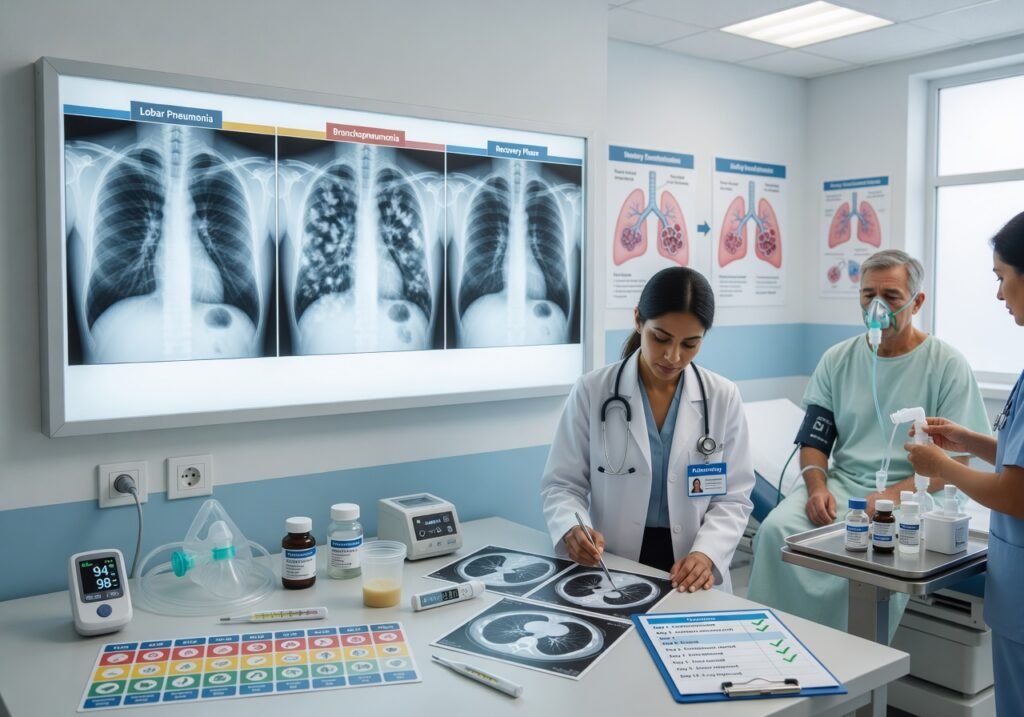
Your doctor starts with clinical judgment. They’ll listen to your lungs with a stethoscope and listen for crackles or consolidation. A chest X-ray is the confirming test—it shows infiltrates (areas of consolidation) that distinguish pneumonia from bronchitis. The pattern can hint at the cause: lobar pneumonia (one lobe affected) suggests bacterial infection, while bilateral diffuse infiltrates suggest viral or atypical causes.
Blood cultures should be drawn if you’re being admitted to the hospital—they identify the specific organism and guide antibiotic selection. A complete blood count (CBC) shows if your white blood cells are elevated (suggesting bacterial infection) or relatively normal (suggesting viral). Procalcitonin testing, a biomarker, increasingly helps distinguish bacterial from viral pneumonia, though it’s not universally available.
Pulse oximetry measures your oxygen saturation. Anything below 92% is concerning and usually warrants at least supplemental oxygen consideration. Arterial blood gas testing measures oxygen and carbon dioxide directly if you’re hospitalized with significant hypoxia.
Treatment Options: What Evidence Shows Actually Works
For bacterial pneumonia, antibiotics are essential. Your choice depends on whether it’s community-acquired or healthcare-associated, your severity, and local resistance patterns. Amoxicillin-clavulanate (Augmentin) works for mild-to-moderate outpatient cases. Fluoroquinolones like levofloxacin (Levaquin) or moxifloxacin (Avelox) cover a broader spectrum and reach lung tissue well—they’re commonly used for older patients or those with comorbidities. For moderate-to-severe hospitalized cases, ceftriaxone (Rocephin) plus azithromycin (to cover atypicals) is standard. Severe cases might require combination therapy with vancomycin (Vancocin) if drug-resistant organisms are suspected.
Here’s the clinical reality: most outpatient pneumonia doesn’t require hospital admission. The CURB-65 score (assessing confusion, urea level, respiratory rate, blood pressure, and age) helps determine who needs hospital care versus oral antibiotics at home. A score of 0-1 suggests outpatient management is safe.
For viral pneumonia, antibiotics don’t help—treatment is supportive. Oxygen supplementation keeps your saturation above 88-90%. Acetaminophen or ibuprofen controls fever and discomfort. Antiviral medications like oseltamivir (Tamiflu) for influenza are only effective if started within 48 hours of symptom onset. Nebulized albuterol helps if you have bronchospasm (wheezing).
Most patients improve significantly within 48-72 hours of starting appropriate antibiotics. Fever typically resolves first, followed by improving cough and energy. However, radiographic improvement (what shows on X-ray) lags behind clinical improvement by 2-4 weeks.
Practical Daily Management: Concrete Strategies
Beyond medications, specific actions matter. Sleep in a semi-recumbent position (propped up at 30-45 degrees) rather than flat—this improves lung mechanics and reduces aspiration risk if you’re coughing during sleep. Stay hydrated by drinking at least 2-3 liters of fluid daily unless you have heart failure—thin secretions are easier to clear.
Use a humidifier in your bedroom, particularly with a cool mist, to prevent mucous membrane drying. If cough is interfering with sleep specifically, dextromethorphan (the DM in cough syrups) can help at night, but productive coughs shouldn’t be completely suppressed during the day—you need to clear secretions.
Walking short distances at a comfortable pace aids recovery better than complete bed rest, but don’t push into significant dyspnea. If you become more short of breath, chest pain worsens, or confusion develops, seek immediate evaluation—these suggest complications like pleural effusion or sepsis.
For cough relief, honey (1-2 teaspoons) is actually supported by evidence—it suppresses cough through multiple mechanisms. Guaifenesin (Mucinex) helps thin secretions. Avoid smoking and secondhand smoke exposure entirely during recovery.
Prevention: What The Evidence Actually Shows
Pneumococcal vaccines reduce your risk significantly. There are now multiple pneumococcal vaccines with different coverage: PCV20 (Pneumovax 20) covers 20 serotypes and is increasingly recommended as a single dose, while PCV15 (Prevnar 15) plus PPSV23 (Pneumovax 23) offers an alternative two-dose approach. Vaccination reduces severe pneumonia risk by roughly 45-50% and death by 75% in vaccinated older adults who do develop infection.
Influenza vaccination prevents influenza, which prevents the secondary bacterial pneumonia that so often follows flu. Getting flu shots annually reduces your pneumonia risk by about 40% indirectly through preventing flu-related complications.
Smoking cessation is non-negotiable—smokers have 3-4 times higher pneumonia risk. Even secondhand smoke exposure increases risk. Managing chronic conditions like COPD or diabetes reduces susceptibility. Dental hygiene matters more than commonly appreciated: brushing twice daily and flossing reduce oral bacteria that might be aspirated.
Hand hygiene and avoiding sick contacts during peak respiratory illness seasons (October through March) reduce transmission risk. If you’re immunocompromised, annual flu shots and pneumococcal vaccination become even more critical.
Frequently Asked Questions
How long does pneumonia last, and when can I return to normal activities?
Uncomplicated bacterial pneumonia typically shows significant improvement within 7-10 days of antibiotics, but complete resolution takes 4-6 weeks. Most people can return to light activities within 2-3 weeks, but full exercise capacity (running, heavy lifting) usually requires 6-8 weeks. Fatigue often lingers the longest—don’t be surprised if you’re tired for several weeks even after fever and cough resolve.
Is pneumonia contagious
Sources & Medical References
HealthTopics.com articles are based on peer-reviewed medical research and guidance from the NIH, CDC, and WHO. See our editorial policy for full sourcing standards.