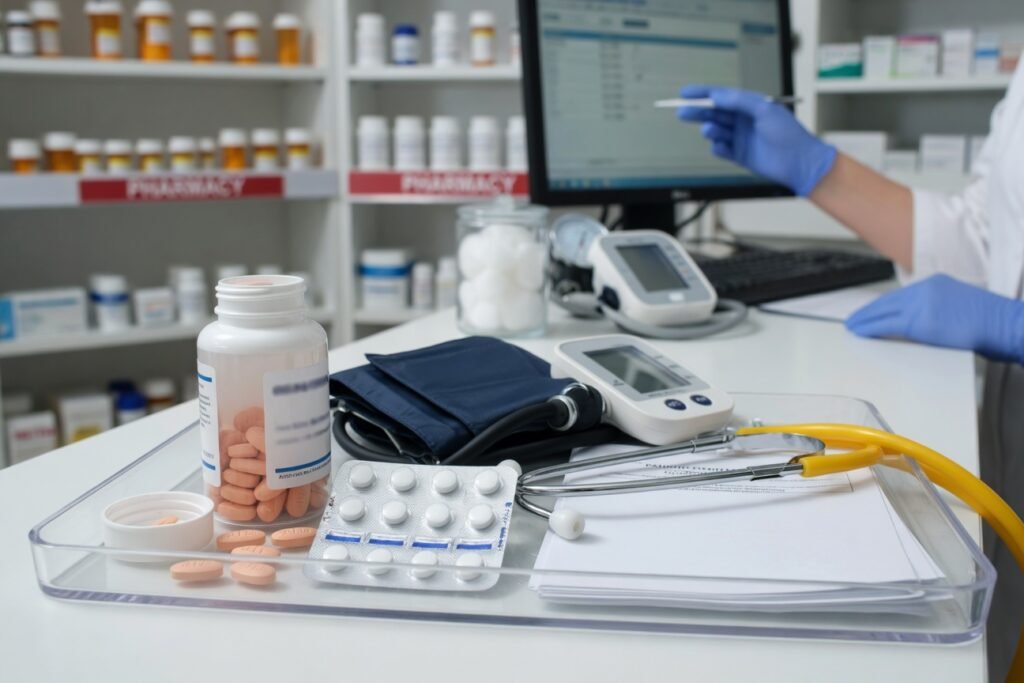
Most people assume ACE inhibitors work like a dimmer switch on blood pressure—just turning down the volume gradually. But here’s what most health websites won’t tell you: ACE inhibitors actually interrupt a specific chemical chain reaction in your kidneys and blood vessels. A patient I saw last month, Robert, had been on lisinopril for three years thinking it simply “relaxed his arteries.” When I explained that ACE inhibitors block angiotensin-converting enzyme from creating angiotensin II—a potent chemical that tightens blood vessels—he finally understood why his doctor chose this drug over others. That’s the real mechanism, and it matters for understanding both how well it’ll work for you and what side effects might show up.
Key Facts About ACE Inhibitors
- ACE inhibitors reduce blood pressure by approximately 8-15 mmHg systolic in most patients, according to data published in JAMA Cardiology
- About 10-20% of patients experience a dry, persistent cough within the first month of starting these medications
- ACE inhibitors provide heart protection beyond blood pressure reduction, reducing heart attack risk by roughly 20% in high-risk patients
- The most commonly prescribed ACE inhibitor, lisinopril, costs between $4-12 monthly for generic formulations
- ACE inhibitors can increase potassium levels by 0.3-0.5 mEq/L, requiring periodic blood tests to monitor
Understanding How ACE Inhibitors Actually Work
Let me walk you through what happens inside your body when you take an ACE inhibitor. Your kidneys naturally produce a substance called angiotensinogen. When your blood pressure dips slightly, an enzyme called renin starts a cascade—converting angiotensinogen into angiotensin I. Then ACE (angiotensin-converting enzyme) shows up and transforms angiotensin I into angiotensin II, which is essentially your body’s natural “tighten-the-vessels” signal. ACE inhibitors slam the brakes on that last step.
Think of it this way: imagine a factory assembly line where ACE is the final worker screwing on the lid that makes the product active. Block that worker, and the lid never gets screwed on. Blood vessels stay more relaxed. Your kidneys hold onto less sodium and water, which means less fluid in your bloodstream. Lower blood pressure follows naturally.
What makes this approach clever is the side benefit. Angiotensin II also promotes scarring in the heart muscle after a heart attack. By blocking its production, ACE inhibitors don’t just lower pressure—they actually slow heart damage progression. That’s why your cardiologist might prescribe them even if your blood pressure is only mildly elevated, if you’ve had a previous cardiac event.
Who Needs ACE Inhibitors: Risk Factors That Matter
The obvious candidates include anyone with hypertension and diabetes, since ACE inhibitors specifically protect the kidneys in diabetic patients—a benefit that shows up clearly in long-term studies. High cholesterol combined with elevated blood pressure? That’s another indication. Prior heart attack or heart failure diagnosis? Absolutely.
Here’s what I see missed constantly: chronic kidney disease without diabetes. Many patients don’t realize their declining kidney function itself becomes an indication for ACE inhibitors, because these drugs slow the progression of kidney damage. A glomerular filtration rate (GFR) below 60 mL/min/1.73m² warrants serious consideration of starting one, even if blood pressure seems controlled.
Age matters too. Older adults with systolic hypertension—that’s the top number consistently above 140—respond particularly well to ACE inhibitors compared to some other classes. African American patients sometimes show modestly lower blood pressure response than other populations, though they still benefit from the kidney protective effects.
One underappreciated risk factor is family history of early-onset kidney disease. If your parent developed kidney problems before age 60, ACE inhibitors become even more valuable as preventive therapy, independent of blood pressure readings.
Recognizing the Signs You Might Need This Medication
You won’t “feel” high blood pressure most of the time—that’s the dangerous part. But occasional headaches, especially in the back of your skull, combined with fatigue that doesn’t match your activity level? Get your pressure checked. Some people describe a vague heaviness in their chest or shortness of breath with mild exertion.
The early warning signs doctors actually care about appear during eye exams. Retinopathy—damage to blood vessels in your retina—often shows up before symptoms. Or your doctor notices at a routine visit that your blood pressure readings have drifted upward over months. That’s why consistent monitoring matters.
If you already know you have hypertension, the question isn’t whether you feel sick—it’s whether your current regimen is working. Target blood pressure for most adults is below 130/80 mmHg. If you’re consistently hitting 145/92, something needs adjustment, potentially including starting or adding an ACE inhibitor.
How Doctors Diagnose and Decide on ACE Inhibitors
Diagnosis starts with blood pressure readings taken correctly—sitting quietly for five minutes, feet flat, arm at heart level. One elevated reading doesn’t trigger treatment. Your doctor wants to see a pattern across multiple visits, preferably including home readings or ambulatory monitoring.
Then comes the detective work. Labs reveal kidney function through creatinine and GFR. Potassium levels get checked because ACE inhibitors raise potassium. Your urine might be tested for protein, especially if diabetes is present. An EKG or echocardiogram sometimes happens if heart disease seems possible.
The decision to start lisinopril versus enalapril versus ramipril versus one of the other six ACE inhibitors depends on several factors. Do you have diabetes? Lisinopril has slightly more kidney protective data. Do you have heart failure? Enalapril has strong evidence. Insurance coverage and cost matter too—some formulations cost significantly more.
What patients often don’t realize: your doctor might start you at a low dose like lisinopril 5 mg, then increase every 2-4 weeks until blood pressure reaches target. Patience matters here. Rushing to higher doses increases side effect risk without necessarily improving results faster.
Treatment Options and Medication Specifics
ACE inhibitors come in several forms. Lisinopril (Prinivil, Zestril) remains the most prescribed, available in doses from 2.5 mg to 40 mg daily. Enalapril (Vasotec) works similarly but requires twice-daily dosing for some patients. Ramipril (Altace) and perindopril (Aceon) offer once-daily options with slightly different kidney protection profiles.
Some patients tolerate one ACE inhibitor but not another, even though the mechanism is identical. The dry cough, the most common side effect, varies dramatically between drugs. If lisinopril triggers cough within two weeks, switching to enalapril sometimes eliminates it completely.
Combination therapy often works better than monotherapy. An ACE inhibitor plus a diuretic (like hydrochlorothiazide) or a calcium channel blocker (like amlodipine) frequently achieves target pressure when either drug alone falls short. Some medications actually combine these—lisinopril/hydrochlorothiazide (Prinzide) comes as a single pill.
How long before you notice results? Blood pressure drops within hours, but full benefit takes 4-6 weeks as your body adjusts. Don’t abandon the medication after two weeks because you “don’t feel different”—that’s normal and expected.
Daily Management: Practical Strategies That Actually Work
Take your ACE inhibitor simultaneously every morning. Consistency matters more than timing, but consistency with timing prevents missing doses. Set a phone reminder if needed—skipped doses undermine control.
Monitor potassium intake. You don’t need to avoid bananas entirely, but don’t suddenly start eating them daily when starting an ACE inhibitor. A baseline potassium of 4.5 mEq/L combined with an ACE inhibitor can creep toward dangerous levels around 5.5 mEq/L. Check labs at 2-4 weeks, then annually.
Watch for that dry cough. It’s not an infection. It typically develops within 4 weeks and can persist for months even after stopping. It’s not dangerous, but it’s annoying enough that some patients switch to ARBs (angiotensin receptor blockers) instead. Losartan (Cozaar) causes cough in only 2-3% of patients, making it a sensible alternative if cough becomes intolerable.
Blood pressure monitoring at home catches problems earlier than office visits alone. Readings drift upward gradually. Home monitoring every other day identifies trends your doctor might miss at quarterly visits.
Avoid NSAIDs like ibuprofen when possible. They reduce ACE inhibitor effectiveness and increase kidney stress. If you need pain relief, acetaminophen is safer, or discuss with your doctor about occasional NSAID use with careful monitoring.
Prevention and Long-Term Outlook
Can ACE inhibitors prevent hypertension in people with normal blood pressure? The evidence here is limited. The NIH stopped one major prevention trial early because the benefit was smaller than hoped. However, for people with prehypertension (130-139 systolic) who also have diabetes or kidney disease, starting an ACE inhibitor early might prevent progression to requiring multiple medications later.
What we know works: if you’re already on an ACE inhibitor, consistency prevents cardiovascular events. Stopping the medication—even for a few weeks—increases heart attack and stroke risk. Your body doesn’t “reset” to baseline; it deteriorates rapidly.
Lifestyle modifications amplify ACE inhibitor effects dramatically. A 15-pound weight loss, reducing sodium to under 2,300 mg daily, 150 minutes of moderate exercise weekly, and limiting alcohol to one drink daily can drop pressure by 10-15 mmHg. Combined with your medication, you’re far more likely to reach goal.
Frequently Asked Questions
Sources & Medical References
HealthTopics.com articles are based on peer-reviewed medical research and guidance from the NIH, CDC, and WHO. See our editorial policy for full sourcing standards.