Why Do Some Antibiotics Stop Working? Understanding Your Options in an Era of Resistance
Sarah, a 34-year-old accountant, developed a urinary tract infection last month. Her doctor prescribed trimethoprim-sulfamethoxazole, but her symptoms persisted for five days. When she finally felt better, she stopped taking the remaining pills—a decision that worried her for months afterward. She wondered: if that antibiotic didn’t work, would the next one fail too? And what exactly was happening inside her body when bacteria seemed to ignore the medication?
That question sits at the heart of modern medicine. Antibiotics revolutionized healthcare in 1941, turning pneumonia from a death sentence into a manageable infection. Yet today, we face a crisis where bacteria outsmart our drugs faster than we develop new ones. Understanding what antibiotics actually do, when they work, and why they sometimes fail isn’t just medical curiosity—it’s essential knowledge for anyone who takes them.
Key Facts About Antibiotics
- Antibiotic resistance causes approximately 2.8 million infections annually in the United States, resulting in at least 35,000 deaths per year, according to the CDC’s latest estimates.
- Only about 10% of antibiotics prescribed in outpatient settings are for bacterial infections—the remaining 90% are used for viral infections where they provide no benefit.
- Methicillin-resistant Staphylococcus aureus (MRSA) now appears in community settings, not just hospitals, affecting previously healthy individuals with skin and soft tissue infections.
- A single course of antibiotics can disrupt your gut microbiome for up to six months, even after the medication is finished.
- Fluoroquinolones like ciprofloxacin are effective against gram-negative bacteria but carry risks of tendon rupture, peripheral neuropathy, and central nervous system effects that may develop weeks after treatment ends.
How Antibiotics Actually Work
Think of bacterial cells as tiny fortresses with walls, internal machinery, and reproduction systems. Your immune system alone can’t breach these defenses quickly enough. Antibiotics are more like specialized siege weapons—each type targets a different vulnerability in the bacterial fortress.
Beta-lactam antibiotics (penicillins and cephalosporins) punch holes in the bacterial cell wall. Aminoglycosides like gentamicin jam up the protein-making machinery inside bacteria. Fluoroquinolones damage the DNA itself, preventing replication. Macrolides such as azithromycin interrupt protein synthesis by binding to ribosomes. This specificity matters enormously—some antibiotics work only against gram-negative bacteria, while others target gram-positive species exclusively.
Here’s what most patients don’t realize: antibiotics don’t destroy bacteria outright in most cases. They weaken or slow them down enough that your immune system can finish the job. This is why finishing the entire course matters. Stop early, and surviving bacteria regroup and multiply.
What Drives Antibiotic Resistance and Risk Factors
Resistance develops through a brutal process of natural selection. When you expose bacteria to an antibiotic, most die—but some possess genetic mutations that let them survive. These survivors reproduce, creating a new population resistant to that drug. Use antibiotics frequently or incompletely, and you accelerate this process dramatically.
Hospitalized patients face the highest risk. According to the NIH, approximately 1 in 25 hospital patients develops a healthcare-associated infection. Prolonged antibiotic exposure in these settings selects for highly resistant organisms. Agricultural use of antibiotics contributes significantly too—roughly 70% of medically important antibiotics sold in the United States go to animals, not humans, driving resistance in food supply chains.
One underappreciated risk factor: your previous antibiotic history. If you’ve taken fluoroquinolones before, your bacteria have already encountered them. Your next infection might harbor resistance genes, making treatment more complicated. This is why doctors increasingly ask detailed medication histories—they’re trying to predict what will actually work against your specific bacterial population.
Age, immunosuppression, recent hospitalization, and chronic kidney disease increase your likelihood of encountering resistant organisms. But here’s the nuance: even healthy young people can get resistant infections if they’ve been exposed to antibiotics repeatedly or worked in healthcare settings.
Recognizing Bacterial Infections
Most people can’t distinguish bacterial from viral infections by symptom alone. But certain patterns suggest bacteria. Urinary tract infections typically cause burning with urination, urgency, and occasionally blood-stained urine. Bacterial sinusitis brings thick, discolored nasal discharge lasting more than 10 days with facial pressure and fever. Strep throat causes severe sore throat, fever, and sometimes a sandpaper-like rash.
Early warning signs get missed frequently. A cough that produces thick, greenish sputum for three weeks might be bacterial pneumonia, not just bronchitis. A small, red, increasingly painful skin bump could be early cellulitis. Fever alone tells you almost nothing—it’s the pattern of fever alongside other symptoms that matters.
The concerning part: many serious infections start subtly. Sepsis often begins with nonspecific symptoms—confusion, rapid breathing, or feeling generally unwell—before obvious infection appears. This is why doctors sometimes prescribe antibiotics “just in case” during emergency presentations, even before confirming bacteria caused the problem.
How Doctors Diagnose Bacterial Infections
Diagnosis requires actual evidence, not guessing. For UTIs, urinalysis shows white blood cells and nitrites suggesting bacteria. Urine culture identifies the specific organism and tests which antibiotics kill it—this is called susceptibility testing. For respiratory infections, chest X-rays show infiltrates. Blood cultures, when taken correctly through sterile technique, grow the causative organism.
The frustration patients experience: results take time. A urine culture takes 24 to 48 hours. Doctors often start antibiotics before results return, using empiric therapy—educated guesses based on the most likely culprits. Once culture results arrive, they might switch to a more targeted antibiotic.
Rapid tests exist for some infections. A rapid strep test takes minutes. PCR testing for respiratory pathogens identifies organisms in hours. But for many infections, traditional culture remains the gold standard despite its slowness.
Treatment Options and Medication Classes
Selection depends on the infection site, severity, and local resistance patterns. For simple urinary tract infections in otherwise healthy women, trimethoprim-sulfamethoxazole or nitrofurantoin remain first-line if local resistance rates permit. For resistant UTIs, fosfomycin (a single-dose option) works well. Fluoroquinolones like levofloxacin are reserved for more complicated cases.
Skin infections caused by Staphylococcus aureus might be treated with cephalexin (first-generation cephalosporin) if susceptibility is confirmed. MRSA skin infections require different agents—trimethoprim-sulfamethoxazole, doxycycline, or clindamycin depending on local patterns.
Pneumonia caused by Streptococcus pneumoniae responds to amoxicillin or amoxicillin-clavulanate in outpatients without complications. Severe pneumonia in hospitalized patients requires broader coverage: typically a respiratory fluoroquinolone like levofloxacin or a beta-lactam plus a macrolide combination.
Duration varies tremendously. Simple UTIs need 3 to 5 days of treatment. Pneumonia typically requires 5 to 7 days, though some specialists advocate for shorter courses in low-risk patients. Serious infections like endocarditis require 4 to 6 weeks of intravenous antibiotics.
Managing Your Antibiotic Course
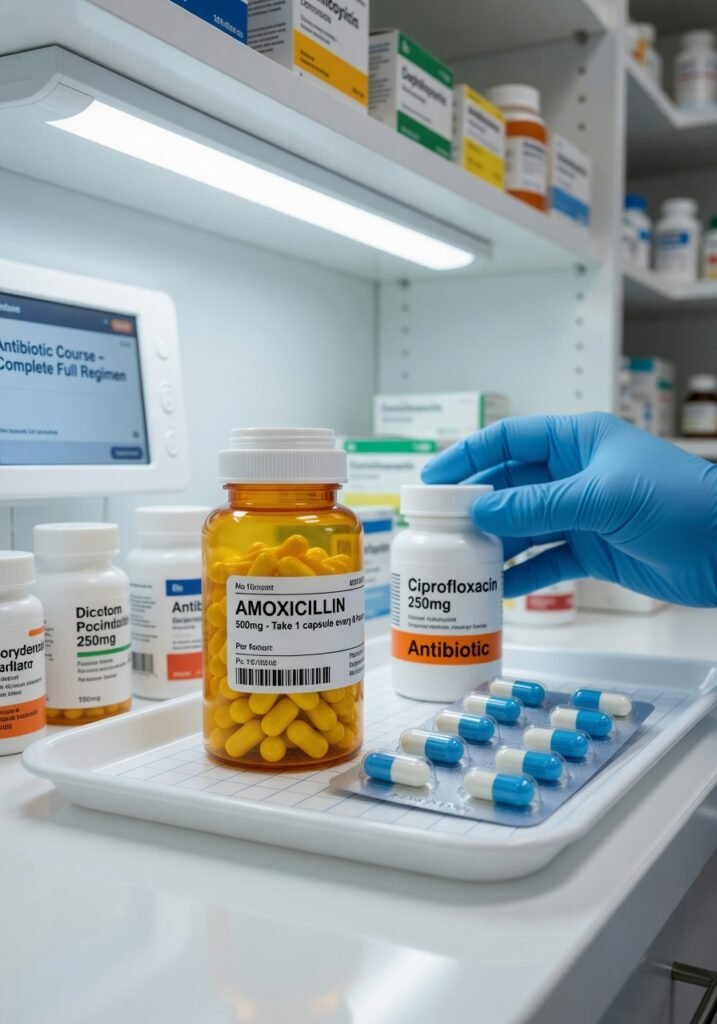
Take exactly as prescribed—not stronger, not longer, not shorter. If you’re prescribed amoxicillin twice daily for 10 days, take it every 12 hours for the full 10 days, even if you feel better on day 5. Set phone alarms if timing matters. For once-daily antibiotics like azithromycin, pick the same time each morning.
Food interactions matter with certain drugs. Fluoroquinolones absorb poorly with calcium, magnesium, or iron supplements—take them two hours apart. Doxycycline shouldn’t be taken with dairy products. Metronidazole causes severe nausea with alcohol.
Watch for side effects beyond the infection itself. Nausea from amoxicillin-clavulanate is common but manageable with food. Diarrhea from any antibiotic might indicate clostridioides difficile infection if it’s severe and bloody—contact your doctor immediately. Rashes could be innocent or indicate allergy; describe them clearly to your provider.
Keep antibiotics in original containers. Don’t share with family members, even if they have “the same” infection. Don’t save unused antibiotics for future infections. Throw away leftover medication according to pharmacy or DEA guidelines.
Preventing Antibiotic-Resistant Infections
Prevention starts with using antibiotics appropriately. Most colds, coughs, and sore throats are viral. Antibiotics won’t help and only drive resistance. Ask your doctor whether antibiotics are truly indicated before accepting a prescription.
Hand hygiene prevents transmission of resistant organisms. Wash hands before eating and after using the bathroom. Healthcare workers should use alcohol-based hand sanitizers between patients. Good sanitation in hospitals and long-term care facilities reduces spread of resistant pathogens.
Vaccination prevents some infections entirely. Pneumococcal vaccines reduce pneumonia risk. Flu vaccines prevent influenza, which reduces secondary bacterial pneumonia. Pertussis vaccination protects against a serious cough that often gets treated with inappropriate antibiotics.
For healthcare workers and people with recurrent infections, screening for colonization with resistant organisms (like MRSA) helps identify carriers. Decolonization with mupirocin nasal ointment and chlorhexidine bathing reduces transmission rates.
Frequently Asked Questions
Sources & Medical References
HealthTopics.com articles are based on peer-reviewed medical research and guidance from the NIH, CDC, and WHO. See our editorial policy for full sourcing standards.