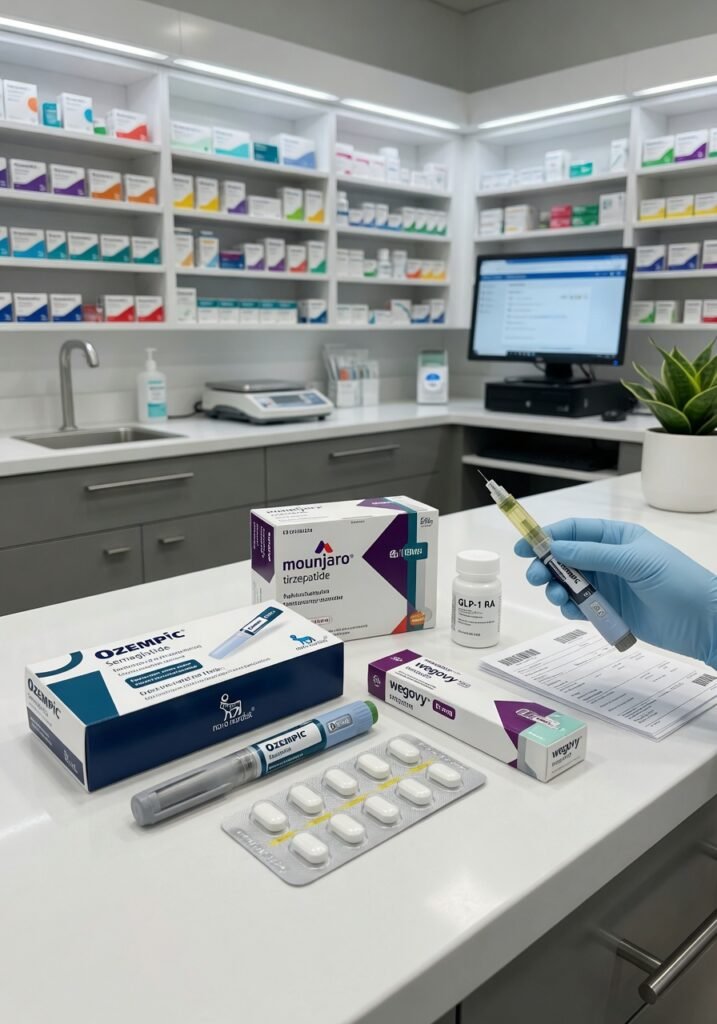

GLP-1 Agonists: Separating Hype from Clinical Reality
Most people think GLP-1 drugs like semaglutide (Ozempic, Wegovy) work like appetite suppressants—basically shrinking your stomach or making food taste bad. That’s not even close to what’s actually happening. A 47-year-old marketing director came to my clinic last month convinced Ozempic would be her “weight loss magic wand.” She’d read about celebrities using it, watched TikTok videos, and expected to stop wanting food entirely. What she discovered instead was something far more interesting: her brain’s relationship with hunger itself had fundamentally changed. The medication wasn’t erasing her appetite through willpower or restriction. It was altering how her pancreas, intestines, and brain communicate about satiety, glucose levels, and meal timing. That distinction matters tremendously for realistic expectations and long-term success.
GLP-1 receptor agonists represent a genuine breakthrough in metabolic medicine, but the narrative you’re hearing in popular media misses the actual neurobiology. These aren’t diet pills. They’re medications that mimic a natural hormone your body already produces, and understanding that difference changes everything about how you use them safely and effectively.
Key Facts About GLP-1 Agonists
- Semaglutide injection (Ozempic for diabetes; Wegovy for weight loss) achieved average weight loss of 15-22% of baseline body weight in clinical trials, compared to 2-3% with placebo, according to data published in the New England Journal of Medicine.
- GLP-1 drugs slow gastric emptying by 30-50%, meaning food stays in your stomach longer, creating genuine physical satiety rather than appetite suppression.
- The CDC reports that approximately 42% of American adults have obesity, yet fewer than 5% of eligible patients currently use GLP-1 medications, creating a significant treatment gap.
- Approximately 30-40% of patients discontinue GLP-1 therapy within 12 months due to gastrointestinal side effects (nausea, vomiting, diarrhea), not lack of efficacy.
- Semaglutide carries black box warnings for medullary thyroid carcinoma risk in animal studies and pancreatitis risk, meaning these are serious medications requiring physician oversight, not over-the-counter weight loss aids.
Understanding How GLP-1 Agonists Actually Work
Here’s what happens at a cellular level: Your small intestine and pancreas naturally produce glucagon-like peptide-1, a hormone that tells your brain “we’ve eaten, we’re satisfied, stop thinking about food.” When you inject semaglutide, you’re essentially turning up the volume on this existing conversation. The medication binds to GLP-1 receptors scattered throughout your brain, pancreas, and gut, amplifying signals that most overweight people have partially lost the ability to feel.
Think of it like adjusting the dial on a radio that was already there but playing too quietly. You’re not creating a new sensation; you’re making an existing one louder and clearer. Simultaneously, semaglutide slows how quickly your stomach empties into your small intestine. That extra 20-30 minutes of food sitting in your stomach sends prolonged fullness signals to your brain. Your blood sugar rises more gradually, meaning fewer insulin spikes, fewer energy crashes, and less of that frantic hunger that sends people back to the refrigerator at 3 p.m.
One detail most articles skip: GLP-1 agonists also affect dopamine pathways involved in food reward. You might still taste your favorite pizza, but the psychological “I need more of this” drive diminishes. That’s not willpower. That’s neurobiology changing.
Who Benefits Most and Why: Risk Factors and Candidate Selection
GLP-1 drugs work best for people with specific metabolic profiles. If you have type 2 diabetes alongside excess weight, these medications address both problems simultaneously—lowering A1C by 1.5-2 percentage points while facilitating weight loss. The synergy matters. But here’s what your typical clinic website won’t tell you: GLP-1 agonists work less impressively in patients with normal insulin secretion who’ve simply overeaten for years. They’re most powerful when there’s underlying metabolic dysfunction—insulin resistance, impaired glucose tolerance, or beta cell exhaustion.
Age matters too. Patients over 65 often tolerate these drugs poorly because their gastrointestinal systems are more sensitive. That nausea that a 35-year-old experiences for a few days? It might persist for weeks in someone older. Kidney function matters—semaglutide requires dose adjustment if your eGFR drops below 15.
Here’s the overlooked risk factor: Previous eating disorder history. I’ve seen patients with recovered bulimia or anorexia nervosa struggle with GLP-1 therapy because the appetite suppression reactivates disordered thought patterns. They feel “allowed” to restrict again under medical cover. This population needs specialist oversight, not routine prescription.
Family history of medullary thyroid cancer is an absolute contraindication. Multiple endocrine neoplasia type 2 (MEN2) syndrome? Don’t use these drugs. These black box warnings exist because animal studies showed thyroid cancer development, and we simply don’t have long-term human data yet.
What Patients Actually Experience: Beyond Weight Loss Numbers
The first week on semaglutide, most patients feel nothing. The second week, many experience moderate nausea, especially if they eat fatty foods. By week three or four, something shifts. You sit down to dinner and realize you’re full after eating half your usual portion. Not hungry. Not forcing yourself to stop. Genuinely satisfied with less.
But that’s not the whole story. Patients describe changes that don’t show up on a scale: improved sleep quality (probably from stable blood sugar), reduced afternoon fatigue, clearer thinking mid-day, less time spent thinking about food. One patient told me, “I didn’t realize how much mental energy I was spending on food decisions until that noise just… stopped.”
The gastrointestinal side effects are real and deserve respect. Nausea peaks around doses 0.5-1.0 mg and often improves with slow titration. But constipation—that sneaks up. By week six, some patients report they’re going 3-4 days between bowel movements, which feels dramatic compared to their baseline. Drinking extra water and eating adequate fiber helps, but nobody talks about this during their clinic visit.
Early warning signs that are often missed: A bitter or metallic taste sensation, particularly in the first 2-3 weeks. A subtle decrease in thirst (your body’s fluid intake actually normalizes). Unexpected food aversions—that steak you loved tastes unappetizing now. These aren’t side effects; they’re the medication working as intended, but they surprise patients.
The Clinical Diagnosis and Assessment Process
Before prescribing semaglutide, your physician should assess three things: metabolic status, gastrointestinal tolerance, and contraindications.
First, metabolic status: A fasting glucose, hemoglobin A1C, fasting insulin level, and lipid panel tell me whether you’re insulin-resistant or have metabolic dysfunction justifying this medication. BMI alone doesn’t determine eligibility—the FDA approves GLP-1 for weight loss at BMI ≥30 or BMI ≥27 with weight-related conditions, but clinical benefit varies tremendously by metabolic profile.
Second, gastrointestinal tolerance: Has gastric surgery altered your anatomy? Do you have pancreatitis history or gallbladder disease? These matter because GLP-1 agonists increase gallbladder contractility. I’ve seen patients develop acute pancreatitis on these drugs—it’s rare but serious.
Third, family history and personal history screening for medullary thyroid cancer or MEN2. This takes five minutes but is non-negotiable. A baseline calcitonin level (the tumor marker for medullary thyroid cancer) helps establish your normal, though routine monitoring isn’t standard of care.
Your doctor should also check kidney function and discuss realistic expectations. Weight loss takes 12-16 weeks to become obvious. If you’re expecting results by week three, you’ll feel like you’re failing.
Treatment: Starting Semaglutide and Managing the Journey
Injectable semaglutide comes in two brands for two purposes: Ozempic (subcutaneous injection, 0.5-1.0 mg weekly) for type 2 diabetes, and Wegovy (same active ingredient, different packaging and dosing schedule up to 2.4 mg weekly) for weight loss in non-diabetic patients. Both require weekly injections, though an oral form (rybelsus) exists but has less impressive results—roughly 50% the weight loss of injectable forms.
The standard protocol starts at 0.25 mg weekly for four weeks, then escalates by 0.25 mg increments every four weeks until reaching your target dose or side effects become intolerable. This slow titration matters. Starting at 0.5 mg causes significant nausea in 60-70% of patients.
Other GLP-1 agonists exist: tirzepatide (Zepbound, Mounjaro) is a newer dual GLP-1/GIP receptor agonist showing slightly better weight loss results (21-24% in trials) but carries similar side effect profiles. Liraglutide (Saxenda) is older and requires daily injections rather than weekly. If tolerating tirzepatide matters more than injection frequency, it’s worth considering.
Here’s the nuance people miss: GLP-1 therapy works best combined with modest behavioral changes—not strict dieting, but attention to protein intake and hydration. Your medication handles appetite; you handle sustainable nutrition choices. That combination beats either approach alone.
Daily Management Strategies That Actually Work
Inject on the same day each week—I recommend Wednesdays so you hit nausea peaks during the workday when you’re distracted, rather than on weekends when you’re monitoring every sensation.
Eat protein first at each meal. Protein slows gastric emptying even further, stacking with your medication’s effects. You’ll feel fuller longer with less food overall. Aim for 30-40 grams per meal.
Stay ahead of dehydration. GLP-1 agonists cause subtle fluid losses through nausea and altered thirst signaling. Drink water throughout the day, not just when thirsty. Your urine should be pale yellow, not dark.
Avoid fatty foods in the first 8 weeks. Semaglutide amplifies nausea from dietary fat while your body adjusts. A grilled chicken breast with rice feels fine; the same meal in butter sauce causes significant discomfort.
Take your regular medications with food if they cause stomach upset—GLP-1 agonists slow stomach emptying, which helps other medications absorb properly and causes less irritation.
If constipation develops, increase fiber gradually and increase fluids substantially before using laxatives. Polyethylene glycol (MiraLAX) works better than stimulant laxatives for GLP-1-related constipation.
Don’t skip your weekly injection hoping to take a “break.” These medications work on dose-dependent curves. Skipping a week reduces efficacy for weeks after you restart.
Prevention: Can You Avoid Needing These Drugs?
The honest answer: For people with strong genetic predisposition to metabolic dysfunction, lifestyle alone prevents roughly 30-40% of weight gain and diabetes development, according to the Diabetes Prevention Program. That’s meaningful but incomplete. Your genetics aren’t destiny, but they’re not nothing either.
If you have normal metabolic function, sustained 30-45 minutes of moderate exercise most days, adequate sleep (7-9 hours), and mindful eating prevent most weight gain. But if you’re insulin-resistant—something you can only know