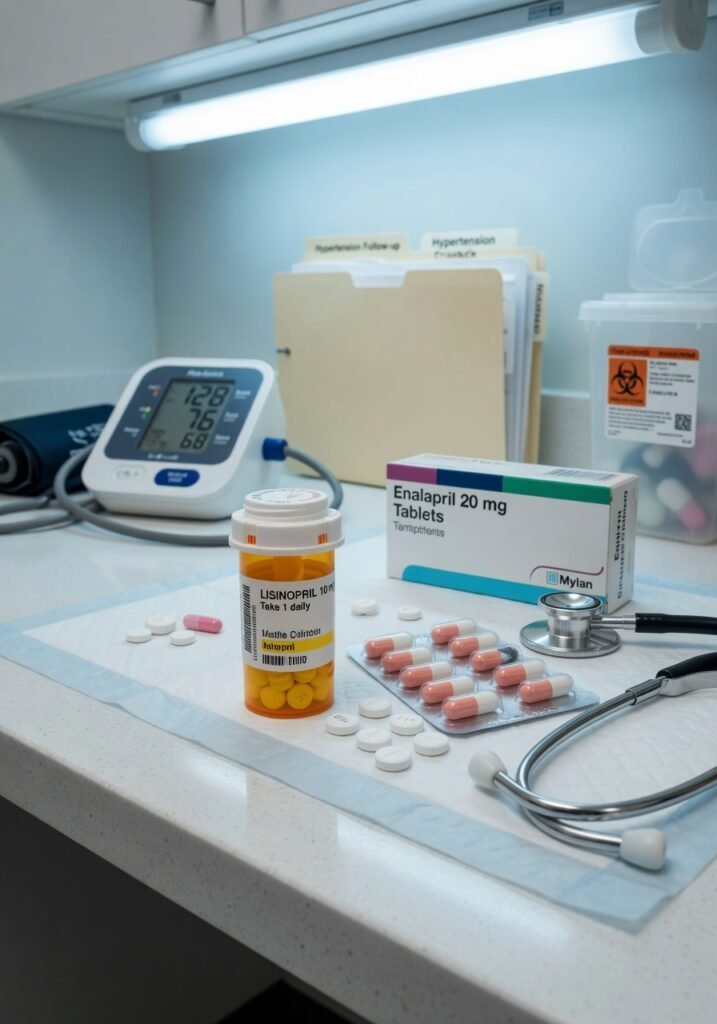
ACE Inhibitors: What Your Doctor Knows That Changes Everything About How You Take Them
Sarah, a 52-year-old accountant, started lisinopril last month after her cardiologist found her blood pressure hovering around 158/94 mmHg. She expected to feel sick—that’s what her neighbor told her would happen. Instead, she felt almost nothing for three weeks, then noticed a persistent dry cough that made her sound like she’d permanently caught a cold. She nearly stopped taking the medication thinking it was broken. Here’s what most people get wrong about ACE inhibitors: they work so quietly you might convince yourself they’re doing nothing, and the side effects that do show up aren’t the ones you’d predict.
Key Facts About ACE Inhibitors
- ACE inhibitors reduce blood pressure by an average of 8-12 mmHg systolic and 5-7 mmHg diastolic, according to a meta-analysis published in NEJM in 2015
- Approximately 40% of patients experience a dry cough within the first three months, caused by accumulation of bradykinin in the lungs
- These medications reduce the risk of heart attack and stroke by roughly 20-25% in patients with hypertension and existing cardiovascular disease
- Lisinopril, enalapril, and ramipril are among the most commonly prescribed ACE inhibitors, with lisinopril accounting for over 45 million prescriptions annually in the US
- The onset of blood pressure reduction typically occurs within 1-2 hours of the first dose, but maximum effectiveness takes 2-4 weeks of consistent use
Understanding How ACE Inhibitors Actually Work
Your kidneys produce an enzyme called ACE—angiotensin-converting enzyme. This enzyme activates a hormone system called the renin-angiotensin-aldosterone system, which acts like your body’s internal blood pressure amplifier. When ACE does its job, it converts angiotensin I into angiotensin II, which tightens blood vessels, increases sodium retention, and tells your adrenal glands to release aldosterone. The result? Your blood pressure climbs.
Think of it this way: imagine a water hose with a valve. Normally the valve is partly closed, maintaining steady pressure. ACE inhibitors wedge into that valve’s mechanism, preventing it from tightening further. The vessels stay more relaxed. Your kidneys hang onto less sodium, so less fluid builds up in your bloodstream. You’re not fighting against your body’s natural systems—you’re just removing the brakes from the brake system.
This is why ACE inhibitors do more than lower blood pressure. By reducing angiotensin II, they decrease the workload on your heart muscle itself. That’s why cardiologists choose these drugs not just for hypertension, but specifically for patients who’ve had heart attacks or developed heart failure. The medication protects the organ, not just the pressure reading.
Who Actually Needs These Medications: Risk Factors That Matter Most
High blood pressure itself is the primary reason people take ACE inhibitors, but several overlapping conditions make these drugs especially valuable. Diabetes is one—if you have diabetes and hypertension, ACE inhibitors protect your kidneys in ways other blood pressure medications don’t. The drug slows diabetic kidney disease by reducing pressure inside the kidney’s filtering units. That’s not just a side benefit; it’s a major reason an endocrinologist will specifically recommend an ACE inhibitor over other options.
Previous heart attack or a weakened heart (heart failure with reduced ejection fraction) puts ACE inhibitors at the top of the list. Chronic kidney disease—even mild—makes these drugs preferable because they slow the progression of kidney damage. Proteinuria, the spilling of protein into urine that signals kidney stress, often improves when ACE inhibitors are started.
Here’s the less-discussed factor: metabolic syndrome. Patients with the constellation of central obesity, elevated triglycerides, low HDL cholesterol, elevated fasting glucose, and hypertension benefit from ACE inhibitors not just for blood pressure, but because these drugs actually improve insulin sensitivity slightly. They don’t cause the metabolic worsening that some other blood pressure medications can trigger. If you have three or more features of metabolic syndrome, your doctor probably should be thinking ACE inhibitor before considering certain other classes.
What You’ll Actually Experience: The Symptom Reality
Most people taking ACE inhibitors experience nothing—and that’s the point. You won’t feel your blood pressure dropping. You won’t wake up feeling medicated. Days pass identically to before you started. This absence of sensation causes real problems: patients stop taking medications they believe aren’t working.
The dry cough is the exception. It typically starts two to six weeks into treatment and ranges from barely noticeable throat irritation to a persistent hacking that disrupts sleep and meetings. The cough happens because ACE also breaks down bradykinin, a substance that dilates blood vessels. When you block ACE, bradykinin accumulates in the lungs, triggering that irritation. No, honey or lozenges won’t help—it’s happening at the cellular level.
Other early signs include a metallic taste in your mouth, mild dizziness when standing up quickly (especially in the first week), and occasionally, mild diarrhea. Some patients report unusual fatigue, though this often represents baseline energy returning after their blood pressure was dangerously high. Hyperkalemia—elevated potassium—is rare but serious, typically causing muscle weakness or palpitations if it develops. Your doctor will check potassium levels roughly two weeks after starting and periodically thereafter.
One overlooked symptom: a swollen tongue or lips (angioedema) is a medical emergency requiring immediate hospital evaluation. It occurs in 0.1-0.2% of patients, usually within the first week but sometimes months into treatment. If your face feels puffy or your throat feels tight, don’t wait.
Diagnosis: How Your Doctor Decides You Need This Drug
Your blood pressure gets measured in your doctor’s office—ideally multiple times, sometimes across multiple visits, because single readings can be deceiving. Modern guidelines define stage 2 hypertension as 140/90 mmHg or higher. Stage 1 is 130-139 systolic or 80-89 diastolic.
But the diagnosis of hypertension isn’t just about the number. Your doctor reviews your cardiovascular risk factors: Do you smoke? Family history of heart disease? Is your cholesterol elevated? Diabetes present? Do you have signs of kidney or heart damage? Blood tests measure kidney function (creatinine, estimated glomerular filtration rate) and electrolytes, particularly potassium. These baseline numbers matter because they’re what your doctor will compare to when checking whether the medication is safe for you.
An EKG might be done to check for previous silent heart attacks or left ventricular hypertrophy—thickening of the heart muscle from years of pumping against high pressure. Some patients get a urinalysis specifically looking for protein, which suggests kidney involvement. These aren’t standard for every patient with high blood pressure, but they help your doctor understand whether you have the kind of hypertension where ACE inhibitors offer extra protection.
Treatment: Specific Medications and Evidence
The most commonly prescribed ACE inhibitors are lisinopril (Prinivil, Zestril), enalapril (Vasotec), ramipril (Altace), and perindopril (Aceon). Lisinopril is usually first-line because it’s affordable, well-tolerated, and extensively studied. It starts at 10 mg once daily, often increasing to 20 mg or occasionally higher.
Enalapril works similarly but has a shorter half-life, sometimes dosed twice daily. Ramipril is more potent—25 mg of lisinopril roughly equals 5 mg of ramipril in effect. Perindopril is often chosen when a once-daily low-dose option is preferred.
The evidence is substantial. The SOLVD trial demonstrated that enalapril reduced mortality in heart failure patients. Multiple randomized controlled trials in hypertensive patients showed ACE inhibitors prevent strokes and heart attacks. The MICRO-HOPE study showed ramipril specifically reduced cardiovascular events in diabetic patients by 25%.
Your doctor might combine an ACE inhibitor with other classes: a calcium channel blocker like amlodipine, a thiazide diuretic like hydrochlorothiazide, or both. Fixed-dose combinations like lisinopril-hydrochlorothiazide exist and simplify dosing, though they reduce flexibility if you need to adjust one component.
If you develop that characteristic cough, switching to an ARB (angiotensin receptor blocker) like losartan or valsartan is standard. These drugs block the receptor for angiotensin II rather than preventing its formation, so they don’t cause bradykinin accumulation. ARBs work similarly well for blood pressure reduction and cardiovascular protection without the cough in most patients.
Managing Your Daily Life on ACE Inhibitors
Timing matters more than most patients realize. Take your lisinopril at the same time each day—morning or evening, but consistent. If you take it sporadically, your blood pressure will fluctuate, defeating the purpose. Set a phone reminder if needed.
Monitor your potassium intake carefully. You don’t need to avoid bananas or orange juice obsessively, but don’t suddenly start eating potassium-rich foods heavily either. Salt substitutes containing potassium should be discussed with your doctor first. Combined with an ACE inhibitor, they can raise potassium dangerously.
Check your blood pressure at home if possible. A simple automatic cuff costs thirty dollars and gives your doctor real data rather than office readings alone. Take multiple readings over several days to establish a pattern. Most patients benefit from tracking this—you’ll see the medication working as numbers trend downward over weeks.
Stay hydrated, especially if you develop diarrhea. If you feel persistently dizzy, particularly when standing, contact your doctor—this might mean your dose is too high or you’re dehydrated. If you start an NSAID like ibuprofen for arthritis pain, tell your doctor. NSAIDs combined with ACE inhibitors stress the kidneys.
Pregnancy is critical: ACE inhibitors cause birth defects. If you’re of childbearing age and might become pregnant, discuss this explicitly with your doctor. Switching to a safe alternative before conception is essential.
Prevention: What Stops High Blood Pressure from Developing
The CDC reports that reducing sodium intake to under 2,300 mg daily lowers blood pressure by roughly 5-6 mmHg on average. For salt-sensitive individuals, the effect is larger. Most Americans consume 3,400 mg daily.
Regular aerobic exercise—30 minutes most days—reduces blood pressure by 4-9 mmHg independently. Weight loss of 10 pounds in an obese person might lower blood pressure by 5-20 mmHg. The Dietary Approaches to Stop Hypertension (DASH) diet, emphasizing vegetables, fruits, whole grains, and lean protein while limiting saturated fat, reduces blood pressure comparably to some medications when followed strictly.
Limiting alcohol to one drink daily for women or two for men helps. Smoking cessation matters—smokers often need higher doses of antihypertensive medications because nicotine constricts blood vessels continuously.
Here’s the nuance: these lifestyle measures are genuinely powerful, but they work best for prevention in people who haven’t yet developed hypertension or for mild elevations. Once your blood pressure is significantly elevated, usually both lifestyle modification and medication are needed. ACE inhibitors allow you to benefit from both approaches simultaneously rather than choosing one.
Frequently Asked Questions
Can I stop taking my ACE inhibitor if my blood pressure gets normal?
No. High
Sources & Medical References
HealthTopics.com articles are based on peer-reviewed medical research and guidance from the NIH, CDC, and WHO. See our editorial policy for full sourcing standards.