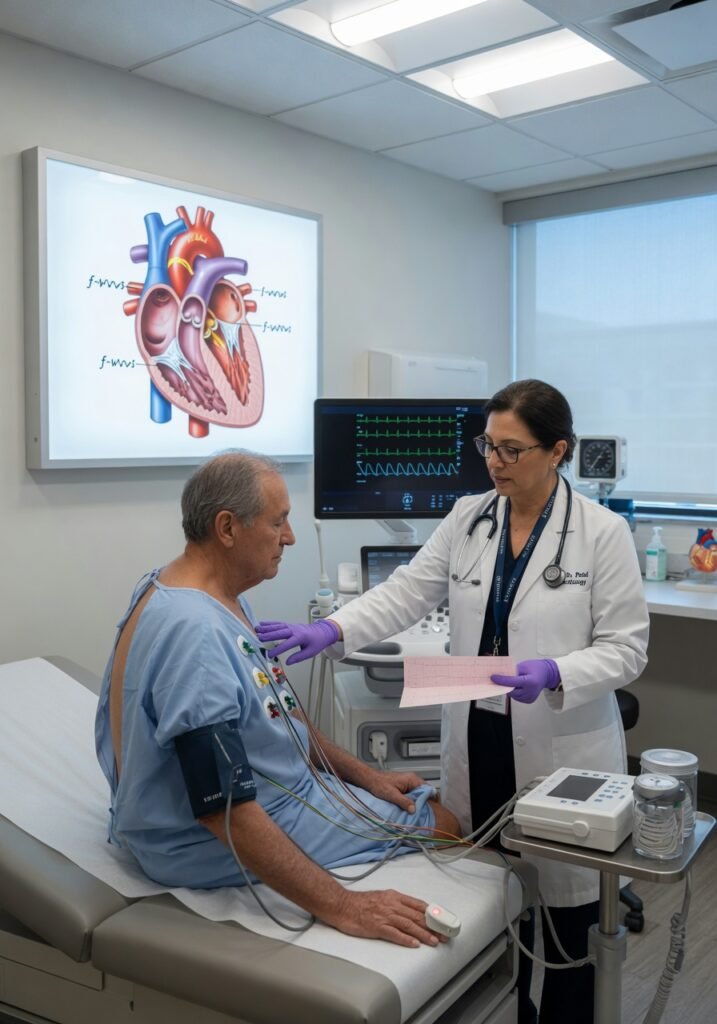
Sarah had always dismissed the flutter in her chest as caffeine jitters. Then one Tuesday morning at work, her heart felt like a trapped bird, racing at 140 beats per minute while she sat perfectly still at her desk. The sensation lasted fifteen minutes, and when it finally settled, she felt wrung out—exhausted in a way she’d never experienced before. That afternoon, her primary care doctor’s EKG showed what he called “atrial fibrillation,” and suddenly Sarah realized this wasn’t about cutting back on coffee.
Key Facts About Atrial Fibrillation
- Approximately 2.7 to 6.1 million Americans currently have atrial fibrillation, according to CDC data
- AFib increases stroke risk by nearly five-fold, which is why anticoagulation therapy becomes critical for most patients
- The condition accounts for roughly one-third of all arrhythmia-related hospitalizations in the United States
- Men are 1.5 times more likely to develop AFib than women, though women tend to have worse outcomes once diagnosed
- Paroxysmal AFib (episodes that come and go) affects about 50% of diagnosed patients, while persistent or permanent AFib characterizes the other half
What Actually Happens During Atrial Fibrillation
Your heart’s electrical system normally operates like a synchronized orchestra. The sinoatrial node fires in an orderly rhythm, triggering the atria to contract, then the ventricles follow in precise sequence. With atrial fibrillation, imagine that orchestra suddenly abandoning the conductor. The atria start firing chaotically—sometimes at rates exceeding 400 beats per minute—creating a disorganized electrical environment. This chaotic activity prevents your atria from contracting effectively, meaning blood pools rather than being pumped efficiently into the ventricles below.
This pooling is the real danger. Stagnant blood clots easily, and clots can travel to your brain, causing stroke. Meanwhile, your ventricles are bombarded with these erratic electrical impulses, so they contract irregularly too. Some beats get through quickly, others get held back. You feel this as a fluttering, pounding, or skipping sensation—your heart’s rhythm becomes genuinely unpredictable rather than reassuringly steady.
Understanding Your Risk: The Causes and Risk Factors
The classic culprits everyone knows about—high blood pressure, heart disease, obesity—do drive AFib risk significantly. Hypertension alone accounts for roughly 50% of attributable risk in men and 60% in women, according to data from the Framingham Heart Study. But here’s what most articles overlook: sleep apnea is an independent and powerful risk factor that deserves screening. Obstructive sleep apnea increases AFib risk even in people without the traditional risk factors, likely through repeated oxygen desaturations and sympathetic nervous system surges.
Age matters tremendously—your risk roughly doubles for each decade after age 50. Excessive alcohol consumption, particularly binge drinking, can trigger episodes even in younger people. Hyperthyroidism accelerates your heart rate and destabilizes the electrical system. Chronic lung disease, particularly COPD, increases risk substantially. And one factor that gets mentioned briefly but deserves emphasis: permanent pacemaker implantation for other conditions increases AFib risk by about 20-30%, making it important to discuss this possibility upfront.
Interestingly, intense athletic training in endurance sports (marathon running, cycling) shows association with AFib in some studies, though this remains debated. The mechanism isn’t fully understood but may relate to atrial remodeling from chronically elevated cardiac output demands.
What You’ll Actually Experience: Symptoms and Early Signs
Some people experience absolutely nothing. Their AFib gets discovered incidentally during an EKG for an unrelated reason. Others describe symptoms vividly: a heart rate that feels impossibly fast and irregular simultaneously, as if your chest contains a sparrow trapped in a cage. Shortness of breath happens because your heart isn’t pumping efficiently—your body isn’t getting enough oxygen with each irregular beat. Dizziness and lightheadedness result from reduced cerebral perfusion.
Fatigue is insidious and often underestimated. Patients report feeling exhausted disproportionate to physical activity, especially after an AFib episode. Chest discomfort isn’t always classic angina—it might feel like pressure, tightness, or just a generalized heaviness. Some people notice their episodes correlate with specific triggers: large meals, caffeine, emotional stress, or infections.
The overlooked early warning sign is what I call “heart awareness”—suddenly becoming conscious of your heartbeat when you’ve never noticed it before. Many patients report a few weeks of increasingly noticeable heart sounds or sensations before their first documented AFib episode. Occasional palpitations that feel different from anxiety-related symptoms deserve evaluation.
Getting Diagnosed: What the Testing Actually Involves
Your doctor will start with an EKG, which typically shows the characteristic absence of the P wave (the atrial contraction signal) and an irregularly irregular ventricular response. But here’s the challenge: if you’re having paroxysmal AFib, you might have completely normal rhythm when you’re actually in the office. This is why doctors often recommend a Holter monitor (24-hour continuous recording) or an event monitor that you wear for weeks, triggered when you feel symptoms.
More recent technology includes patch monitors (worn for up to two weeks) and implantable loop recorders for patients with infrequent episodes who need definitive diagnosis. An echocardiogram (ultrasound of the heart) checks for structural problems like valve disease or reduced pumping function. Blood work evaluates thyroid function, electrolytes, and kidney function—all of which influence AFib risk and treatment decisions.
Some centers now use rhythm strips from smartwatch devices, which can be surprisingly accurate for detecting AFib, though they shouldn’t replace formal medical evaluation. The diagnosis isn’t just about confirming irregular rhythm; it’s also about determining the type (paroxysmal versus persistent), identifying underlying causes, and assessing stroke risk using scoring systems like CHA2DS2-VASc.
Your Treatment Options: What the Evidence Shows Works
Anticoagulation comes first for most patients. If you have even one additional stroke risk factor (most people do), you need a blood thinner. Warfarin was historically standard, but newer direct oral anticoagulants like apixaban (Eliquat), rivaroxaban (Xarelto), edoxaban (Savaysa), or dabigatran (Pradaxa) work as well or better with simpler dosing and fewer food interactions.
For rate control—slowing down the ventricular response so you don’t feel like your heart is racing—beta-blockers like metoprolol or propranolol are standard first-line agents. Calcium channel blockers (diltiazem or verapamil) work similarly. Digoxin is older but still useful, particularly in sedentary patients. Some cardiologists choose to pursue rhythm control instead, attempting to restore normal rhythm using antiarrhythmic drugs like flecainide (Tambocor) or sotalol (Betapace), or through ablation.
Catheter ablation has evolved dramatically. The procedure involves inserting catheters into your heart and using radiofrequency energy (or increasingly, cryotherapy) to scar the tissue causing the chaotic electrical signals. Success rates for paroxysmal AFib hover around 70-80% for freedom from recurrence without medications, though many patients require repeat procedures or will take medications long-term anyway. Ablation works less reliably for persistent AFib.
The NEJM published data showing that for most people with newly diagnosed AFib, either rate or rhythm control strategies produce similar long-term outcomes—so the choice often depends on your specific situation, preferences, and whether you have other heart conditions.
Living With AFib: Practical Management Strategies
Track your episodes meticulously. Note the time, duration, what you were doing, what you ate, your stress level, sleep quality, and caffeine intake. You’ll identify patterns. Some people need to avoid caffeine entirely; others tolerate it fine. Alcohol is a common trigger—particularly excessive amounts or dehydration after drinking.
Sleep matters enormously but not always in obvious ways. Getting sufficient sleep helps, but paradoxically, some people experience AFib episodes when they’re well-rested and sedentary. Movement and exercise generally help AFib patients, despite the concern that strenuous activity might trigger episodes. Regular moderate exercise like brisk walking or swimming actually reduces AFib burden.
Stress management isn’t just about relaxation. Some patients benefit from specific strategies: slow breathing during anxious moments, avoiding sudden temperature changes (hot showers sometimes trigger episodes), and maintaining electrolyte balance. Stay hydrated—dehydration creates an electrolyte imbalance that destabilizes heart rhythm.
If you’re on rate control medications, monitor your heart rate regularly with a pulse check or pulse oximeter. Know your target range (typically 60-100 beats per minute at rest). If you develop new symptoms like severe shortness of breath or chest pain, seek emergency care immediately rather than waiting for an appointment.
Prevention: What the Evidence Actually Shows
Blood pressure control is non-negotiable—it’s the single most modifiable risk factor. Maintaining systolic pressures below 130 mmHg reduces AFib incidence significantly. Weight loss matters if you’re overweight; even a 10% reduction can improve outcomes. Regular physical activity (at least 150 minutes of moderate intensity weekly) shows protective benefits across multiple studies.
Limiting alcohol to no more than two drinks daily (one for women) appears to be the threshold above which AFib risk increases notably. Mediterranean-style diets with emphasis on fish, vegetables, and healthy fats correlate with lower AFib incidence, though no single food prevents it.
Treating underlying conditions prevents AFib from developing in the first place. If you have sleep apnea, CPAP therapy reduces AFib occurrence. Thyroid disorders need appropriate treatment. Controlling diabetes and managing COPD also matter.
For people without prior AFib but with significant risk factors, aspirin doesn’t prevent AFib (contrary to what some believe). Nor does fish oil supplementation or magnesium supplementation, despite popular claims. The evidence simply isn’t there.
Frequently Asked Questions About AFib
Sources & Medical References
HealthTopics.com articles are based on peer-reviewed medical research and guidance from the NIH, CDC, and WHO. See our editorial policy for full sourcing standards.