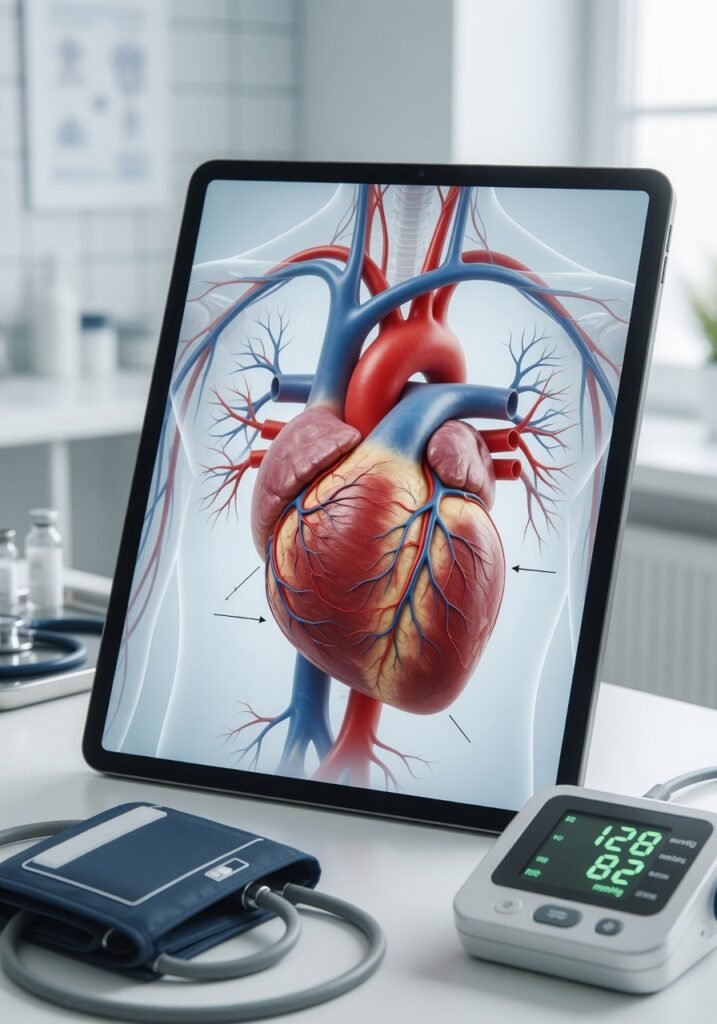

Blood Pressure Goals: What Actually Works (And What Most People Get Wrong)
Sarah, a 52-year-old accountant, came to my office convinced that her blood pressure reading of 138/86 mmHg was “pretty close to normal.” She’d read online that 140/90 was the cutoff, so she figured she was fine. What she didn’t know—and what surprised her when we talked through the data—was that her specific risk profile as a woman with prediabetes meant her actual target should be closer to 130/80. That gap between what patients assume their goal should be and what the evidence actually supports is where most people stumble. It’s not about hitting some universal number everyone sees in health articles. Your blood pressure goal is more like a personalized prescription.
Key Facts About Blood Pressure Goals
- The 2017 ACC/AHA guidelines lowered the hypertension threshold to 130/80 mmHg for most adults, affecting approximately 46% of U.S. adults according to CDC data
- Patients with diabetes or chronic kidney disease benefit from targets of 130/80 or lower, while those over 65 without prior stroke may tolerate 130-139 systolic targets
- Each 10 mmHg reduction in systolic blood pressure reduces cardiovascular mortality risk by approximately 10-15%, per NEJM analysis
- Only about 1 in 4 Americans with hypertension achieve their individualized BP goal despite access to effective medications
- Home BP monitoring catches white-coat hypertension (elevated readings only at doctor visits) in roughly 20-30% of patients, changing treatment decisions
Understanding Your Blood Pressure Goal: The Mechanism Behind the Numbers
Think of your blood vessels like a city’s water system. When pressure gets too high, it damages the pipes—the inner lining of your arteries called the endothelium. This damage doesn’t announce itself loudly. It’s silent. Over months and years, high pressure causes the arterial walls to thicken, become stiff, and accumulate plaque. Your goal blood pressure number represents the threshold where we know this damage slows dramatically.
Here’s what most websites miss: your goal isn’t arbitrary. It’s based on the pressure at which your specific organs—kidneys, brain, heart, eyes—stop accumulating microscopic injury. For someone with diabetes, that threshold is lower because their blood vessels are already more vulnerable. For an elderly patient whose organs have adapted to higher pressures over decades, pushing too aggressively downward too quickly can actually reduce blood flow where it’s needed most.
The systolic number (top) matters more than the diastolic (bottom) for predicting heart attacks and strokes in most people. Diastolic pressure becomes less important after age 50, which is why your doctor might focus more on bringing down that top number.
Who’s at Risk: The Factors That Shape Your Goal
Age alone doesn’t determine your blood pressure goal—your overall cardiovascular disease risk does. Someone who’s 58 with high cholesterol, a history of smoking, and family history of early heart disease needs a lower target than a 62-year-old with normal cholesterol and no other risk factors.
Chronic kidney disease deserves mention here because many patients don’t realize their kidneys directly influence their BP goals. Kidney disease causes your kidneys to retain sodium and fluid more aggressively, which drives pressure up. Ironically, lowering BP protects the kidneys further, creating a positive cycle. But damaging your kidneys is one of the most common unintended consequences of untreated hypertension.
Race and ethnicity matter in ways that go beyond genetics. Black Americans develop hypertension earlier and experience more severe complications from it. This means your physician might recommend different targets or medication choices based on ancestry—not as a limitation, but because the evidence shows what actually prevents strokes and kidney failure in your population.
One underappreciated risk factor: sleep apnea. Many patients with “hard-to-control” hypertension actually have untreated sleep apnea. Their blood pressure spikes multiple times nightly when their airway collapses. Treating the apnea with CPAP or other interventions sometimes normalizes BP without adding more pills.
What Hypertension Actually Feels Like Day-to-Day
Here’s the cruel part: you probably won’t feel your blood pressure being too high. That silence is why we call it the silent killer. Most people with stage 2 hypertension have zero symptoms. They feel fine until the blood vessel bursts or the heart muscle thickens so much it can’t relax properly.
Some patients do notice subtle things. A mild headache that sits in the back of the head, particularly in the morning. Occasional shortness of breath when climbing stairs that doesn’t quite match your usual fitness level. A sense of heaviness in the chest that comes and goes. But these symptoms are so nonspecific that many people attribute them to stress or aging.
The early warning sign most articles skip: erectile dysfunction in men often appears years before a heart attack, driven by the same endothelial damage high BP causes throughout the body. It’s worth mentioning to your doctor as a symptom that correlates with uncontrolled hypertension.
How We Actually Diagnose and Set Your Target
One reading doesn’t diagnose hypertension or set your goal. We need a pattern. I ask patients to check their pressure at home on multiple mornings and evenings over two weeks before we make treatment adjustments. The reason: office readings are artificially elevated in about 25% of people because of the anxiety of being there. We call this white-coat hypertension.
The diagnosis requires either elevated BP on multiple office visits, or home readings showing consistent elevation, or continuous monitoring. We’re not hunting for one bad number—we’re looking for a persistent pattern that suggests your vessels are under chronic stress.
Once we diagnose hypertension, we determine your goal based on your cardiovascular risk category. Low risk might mean a goal of less than 140/90. High risk (history of stroke, heart attack, or diabetes) means less than 130/80. We might use a 10-year cardiovascular risk calculator to frame this, or simply use clinical judgment if you have obvious risk factors already present.
Treatment: What Actually Gets Blood Pressure Down
For many patients, especially those with stage 1 hypertension (130-139 systolic), we start with intensive lifestyle modification rather than pills. But research from the Systolic Blood Pressure Intervention Trial (SPRINT) showed that for patients with existing cardiovascular disease or diabetes, medication gets you to goal faster and safer than waiting to see if diet alone works.
The medication classes that form the backbone of treatment are: ACE inhibitors (lisinopril, enalapril), angiotensin receptor blockers (losartan, valsartan), calcium channel blockers (amlodipine, diltiazem), and thiazide diuretics (hydrochlorothiazide, chlorthalidone). Most patients need two medications to reach goal. Some need three.
Here’s what’s often misunderstood: we typically don’t use just one medication at maximum dose. Combining two medications at moderate doses usually works better and causes fewer side effects than maxing out one drug. A combination of lisinopril 10 mg with hydrochlorothiazide 12.5 mg often outperforms lisinopril 40 mg alone.
For resistant hypertension—failure to reach goal on three medications—we investigate secondary causes like sleep apnea, primary aldosteronism, or thyroid disease. We might add a fourth medication like spironolactone, which blocks aldosterone, a hormone that makes kidneys hold onto sodium.
Daily Management: Concrete Strategies for Reaching Your Goal
Home monitoring is non-negotiable if you want to reach goal. You need a wrist cuff or arm cuff that’s validated (the Dabl Educational Trust website lists them), and you need to use it consistently—ideally the same time each morning and evening, seated, after five minutes of quiet rest. Log the readings in an app or a notebook and bring them to appointments.
Dietary sodium matters more than most people realize. A reduction from the typical American intake of 3,500 mg daily down to 1,500 mg can drop BP by 5-10 mmHg in salt-sensitive individuals. That means reading labels obsessively. One can of soup is often 800-1200 mg sodium alone. Processed meats, canned vegetables, and bread are the hidden sources most people miss.
Potassium intake deserves equal attention. Aiming for 3,500-4,700 mg daily (from spinach, sweet potatoes, beans, avocados, bananas) counterbalances sodium. But if you’re on ACE inhibitors, ARBs, or spironolactone, discuss high-dose potassium supplementation with your doctor first—these medications reduce potassium excretion and too much can be dangerous.
Exercise matters, but not how most people think. Thirty minutes of moderate aerobic activity five days weekly reduces BP by 5-8 mmHg. Resistance training twice weekly provides additional benefit. But you need consistency—skipping the gym for two weeks usually erases three weeks of gains.
Alcohol and caffeine are worth addressing individually. Two drinks daily or less doesn’t significantly raise BP in most people. But consuming more does. Caffeine’s effect is temporary—your BP rises acutely but your body adapts with regular use, so switching to decaf won’t help if you were never drinking excessive amounts.
Prevention: What the Evidence Actually Shows
If you don’t have hypertension yet but have family history or borderline readings, your goal is preventing progression. This means treating your BP like cholesterol—tracking it regularly and making lifestyle changes before you need medication.
The DASH diet (Dietary Approaches to Stop Hypertension) reduces systolic BP by 8-14 mmHg when truly followed. That’s comparable to one medication. It emphasizes vegetables, fruits, whole grains, lean proteins, and low-fat dairy while restricting sodium and added sugars. But it requires planning and knowledge of cooking—it’s not something you can accidentally follow.
Stress management has measurable effects. Chronic psychological stress elevates cortisol and activates your sympathetic nervous system, increasing both BP and heart rate. Meditation, yoga, or simply daily walks in nature have shown BP reductions of 3-5 mmHg in some studies. This isn’t a substitute for medication in people with established hypertension, but it’s part of the foundation.
Weight loss is powerful. Each kilogram of weight lost typically reduces systolic BP by approximately 1 mmHg. For someone 20 pounds overweight, losing it could drop BP by 9 mmHg—potentially moving you from needing medication to not needing it.
Frequently Asked Questions About Blood Pressure Goals
What’s the difference between my BP goal and the numbers I see advertised as “normal”?
Normal blood pressure is less than 120/80 mmHg. But your individual goal depends on your health history. If you have diabetes, chronic kidney disease, or prior cardiovascular events, your goal is 130/80 or lower. If you’re an otherwise healthy adult without these conditions, your goal might be less than 140/90 (though many physicians now target 130/80 for everyone). The 2017 ACC/AHA guidelines shifted targets downward because newer evidence showed that treating to lower numbers prevented more strokes and heart attacks.
Can I stop taking my BP medication once my pressure stays normal for a few months?
Don’t stop without discussing it with your doctor first. Some patients can gradually reduce medications if they’ve made substantial lifestyle changes and maintained them. But most
Sources & Medical References
HealthTopics.com articles are based on peer-reviewed medical research and guidance from the NIH, CDC, and WHO. See our editorial policy for full sourcing standards.