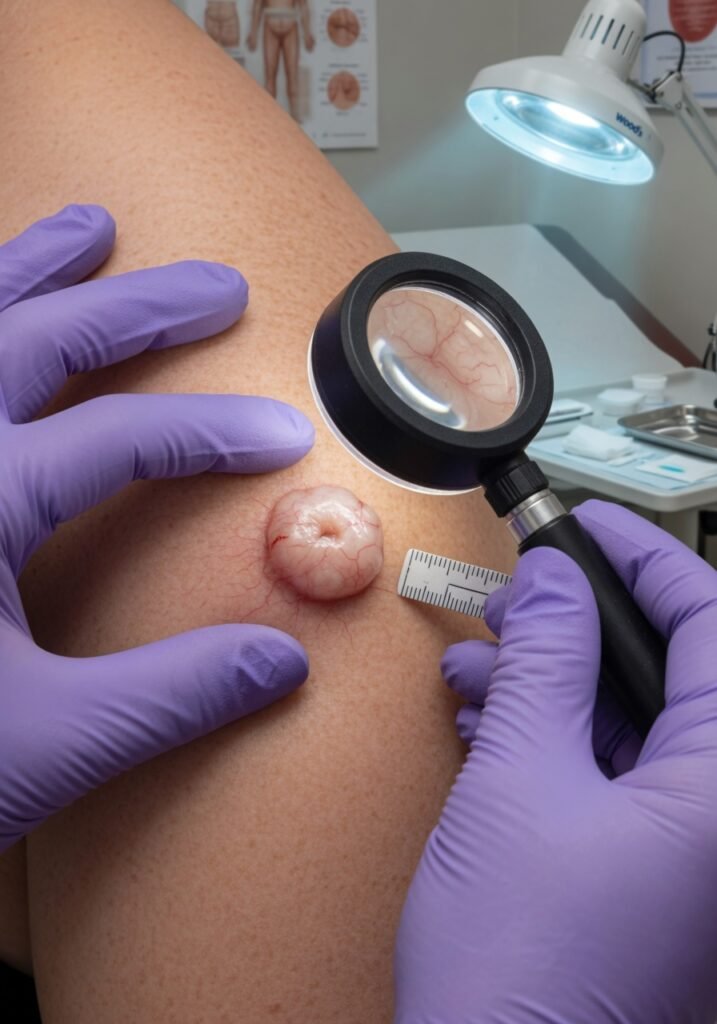
Maria, a 58-year-old accountant, noticed a small, pearly bump on her forehead that wouldn’t heal after she accidentally scratched it shaving. It didn’t hurt, didn’t itch, and she almost ignored it for three months until her dermatologist spotted it during a routine skin check. The biopsy confirmed basal cell carcinoma—the most common cancer in the United States, affecting roughly one in five Americans during their lifetime. What struck her most wasn’t the diagnosis itself, but learning that she’d actually had warning signs for years that she’d written off as normal aging.
Basal cell carcinoma (BCC) is a cancer of the basal cells in the epidermis, the outermost layer of your skin. Unlike melanoma, which can spread aggressively, most BCCs grow slowly and rarely metastasize. But here’s what makes BCC different from what you’ve probably read elsewhere: it’s not just one disease. The growth pattern, aggressiveness, and treatment response vary dramatically based on which subtype you have, and this changes everything about your prognosis and management strategy.
Key Facts About Basal Cell Carcinoma
- BCC accounts for approximately 80% of all non-melanoma skin cancers, with the CDC estimating over 4 million cases diagnosed annually in the United States
- Cumulative lifetime risk reaches 20-30% for fair-skinned individuals, but BCC can occur in any skin type with sufficient UV exposure
- Five-year survival rates exceed 99% for localized disease, making early detection critical but not an emergency in most cases
- Recurrence rates range from 3-40% depending on treatment type, tumor size, and location—areas like the nose and ears have higher recurrence
- Median age of diagnosis is 68 years, though BCC increasingly appears in younger adults due to cumulative sun exposure and tanning bed use
Understanding How Basal Cell Carcinoma Develops
Think of your skin like a brick wall. The basal cells form the bottom row—the foundation. They normally divide slowly and predictably, replacing themselves as they move upward and eventually shed. When UV radiation damages the DNA in these basal cells, usually through accumulated sun exposure over decades, something breaks in the normal copying process. The cell keeps dividing without the usual checkpoints that stop abnormal growth. Unlike a forest fire that spreads rapidly everywhere, basal cell cancer is more like a small leak in a pipe—slow, persistent, and contained in most cases.
What’s crucial here is that BCC doesn’t develop from a single bad sunburn. It’s the accumulation. Someone who got severe sunburns as a child and then worked outdoors for 40 years has significantly different risk than someone with gradual, chronic sun exposure. The mutation typically involves the PTCH1 gene or TP53 gene, which normally act as growth brakes. When these brakes fail, the basal cells just keep reproducing, forming that characteristic bump or ulcer.
Causes and Risk Factors You Should Know
UV radiation exposure—both UVA and UVB—is the dominant cause. This isn’t newsworthy. What most articles don’t mention clearly enough: the type of exposure matters. Intermittent, intense sun exposure with burning (like a two-week beach vacation every year) appears more dangerous for melanoma, but chronic, cumulative exposure matters most for BCC. Construction workers and farmers have stratospheric BCC rates compared to office workers, even if the office workers got worse sunburns as kids.
Your genetics matter significantly. Fair skin, blue eyes, and red or blonde hair increase risk dramatically. But here’s the overlooked factor that changes practice: immunosuppression. Organ transplant recipients taking long-term immunosuppressive medications have BCC rates 40-250 times higher than the general population. If you’ve had a transplant, your dermatology screening needs are different. HIV-positive individuals with CD4 counts below 200 cells/mm³ also show markedly elevated rates.
Other documented risk factors include arsenic exposure (historically from contaminated well water or certain pesticides), radiation therapy to the skin (even decades prior), and chronic inflammatory skin conditions. Age itself is a risk factor—not because old skin is inherently different, but because you’ve had more time to accumulate damage.
What Basal Cell Carcinoma Actually Looks Like and Feels
The classic description is a pearly nodule with a rolled border and central ulceration—that’s accurate, but incomplete. Most people don’t feel anything. There’s no pain, no itching unless it’s irritated. You notice it because it looks weird or it won’t heal after minor trauma. The “non-healing sore” that everyone warns about is real, but many BCCs never ulcerate.
Early warning signs people miss: a small, shiny bump that looks almost like a scar or a patch of skin that seems slightly discolored or scaly. Some BCCs are flesh-colored. Others are tan or brown (which confuses people who think skin cancer is always dark). The nodular type—the most common—appears as a dome-shaped bump. The superficial type looks like a scaly patch and might be mistaken for eczema. The infiltrative type is actually dangerous because it doesn’t look like much on the surface but spreads deeper.
Location matters for what you’ll notice. A BCC on your scalp under hair is easily missed for months. One on your earlobe or nose is harder to ignore because it’s visible and might bleed or crust over. Some people have multiple BCCs at once—about 20-25% of patients with one BCC will develop another within the next three years.
How Doctors Diagnose Basal Cell Carcinoma
Your dermatologist will examine the lesion under magnification—sometimes with a dermatoscope, which is basically a specialized magnifying glass that shows patterns invisible to the naked eye. Certain patterns (arborization, telangiectasia, pearly borders) are highly suggestive of BCC. But diagnosis requires histopathology. That means a biopsy.
The biopsy process is straightforward. The dermatologist numbs a small area with lidocaine and removes a sample—either a shave biopsy (scraping off the top layer), punch biopsy (removing a small cylinder of skin), or sometimes an excision that removes the entire lesion. This takes five minutes. You’ll have stitches if it’s an excision, or the wound may be cauterized if it’s a shave. Healing takes one to three weeks depending on size and location.
The pathologist then examines the cells under a microscope and classifies the BCC subtype. This matters enormously. Nodular and superficial BCCs are lower-risk. Infiltrative, micronodular, and basosquamous subtypes are more aggressive and have higher recurrence rates. Your pathology report should specify the subtype—if it doesn’t, ask your dermatologist to clarify what they’re treating.
Treatment Options Based on Type and Location
For small, low-risk BCCs in non-critical areas, several options exist. Mohs micrographic surgery is considered the gold standard when available, with recurrence rates as low as 0.7-1.5%. The surgeon removes the tumor layer by layer, examining each layer under a microscope in real-time to ensure complete removal while preserving as much normal skin as possible. It’s more expensive and time-intensive, but for BCCs on the face, eyelid, or other cosmetically sensitive areas, it’s often worth it.
Standard surgical excision works well for most BCCs and costs less. The surgeon removes the lesion with a margin of normal skin (usually 3-4 millimeters) and closes the wound with stitches. Recurrence rates are reasonable—around 5-10% depending on subtype. For superficial BCCs only, curettage and electrodesiccation (scraping the lesion away and burning the base) can work, though recurrence is higher at 5-15%.
Non-surgical options exist but have narrower applications. Topical imiquimod (Aldara) is a cream that activates your immune system against the cancer cells. It’s FDA-approved for superficial BCC but requires six to twelve weeks of application and is irritating. Photodynamic therapy uses a photosensitizing agent and light activation to destroy tumor cells—useful for multiple superficial lesions.
Hedgehog pathway inhibitors like vismodegib (Erivedge) are oral medications for locally advanced or metastatic BCCs that can’t be treated surgically. They block a key signaling pathway that BCC cells depend on. But they’re expensive (thousands per month) and reserved for cases where surgery isn’t an option. Sonidegib (Odomzo) is another hedgehog inhibitor with similar indications.
For older, frail patients who can’t tolerate surgery, topical 5-fluorouracil or imiquimod might be used as palliative therapy, though cure isn’t guaranteed.
Managing Basal Cell Carcinoma in Daily Life
After treatment, you need surveillance. Schedule skin checks every six to twelve months with your dermatologist—more frequently if you’ve had multiple BCCs or have immunosuppression. Buy a body-length mirror and spend five minutes monthly examining your entire skin, including your scalp (use a handheld mirror or ask a family member). Photograph any suspicious lesions so you can track changes.
Sun protection becomes non-negotiable. Wear SPF 30 or higher broad-spectrum sunscreen daily, reapply every two hours if you’re outside. Wear protective clothing—long sleeves, hats, sunglasses. Avoid peak sun hours (10 AM to 4 PM) when possible. Tanning beds are absolutely off-limits; they increase your risk substantially. Retinoid creams like tretinoin might lower future BCC risk based on some studies, though the evidence is mixed—discuss with your dermatologist if you’re a high-risk patient.
If you had a BCC removed from a cosmetically important area, discuss scar management with your surgeon. Some scars fade significantly over 12-18 months. Others benefit from silicone ointments, microdermabrasion, or laser resurfacing months later when healing is complete.
Prevention: What Actually Works
The evidence from randomized controlled trials is clear: regular sunscreen use reduces BCC risk. A landmark JAMA study demonstrated that consistent daily sunscreen application (SPF 15 or higher) reduced BCC risk by 40% compared to occasional use. The protection improved further with regular reapplication.
Protective clothing is equally effective and doesn’t rely on remembering to reapply. UPF-rated clothing (UPF 50+ offers near-complete protection) beats sunscreen consistency. Wide-brimmed hats, rashguards for water activities, and lightweight long sleeves are practical options that people actually use.
Avoiding tanning beds is non-negotiable for anyone concerned about skin cancer risk. Tanning beds emit UVA radiation at doses equivalent to several hours of midday sun. The NIH has clearly documented the association.
One caveat: some evidence suggests that vitamin D deficiency might influence skin cancer risk, though the data is inconsistent. You don’t need to choose between sun protection and vitamin D—you can maintain adequate D through dietary sources, supplements, or brief unprotected sun exposure (10-15 minutes of midday sun for most skin types). Discuss vitamin D supplementation with your primary care physician if you’re concerned.
Frequently Asked Questions
Will my basal cell carcinoma spread to other parts of my body?
Metastasis from BCC is extraordinarily rare—less than 0.05% of cases according to dermatologic literature. It stays local almost always. However, the lesion will continue growing if untreated, and recurrence at the same site or development of new BCCs elsewhere on sun-exposed skin
Sources & Medical References
HealthTopics.com articles are based on peer-reviewed medical research and guidance from the NIH, CDC, and WHO. See our editorial policy for full sourcing standards.