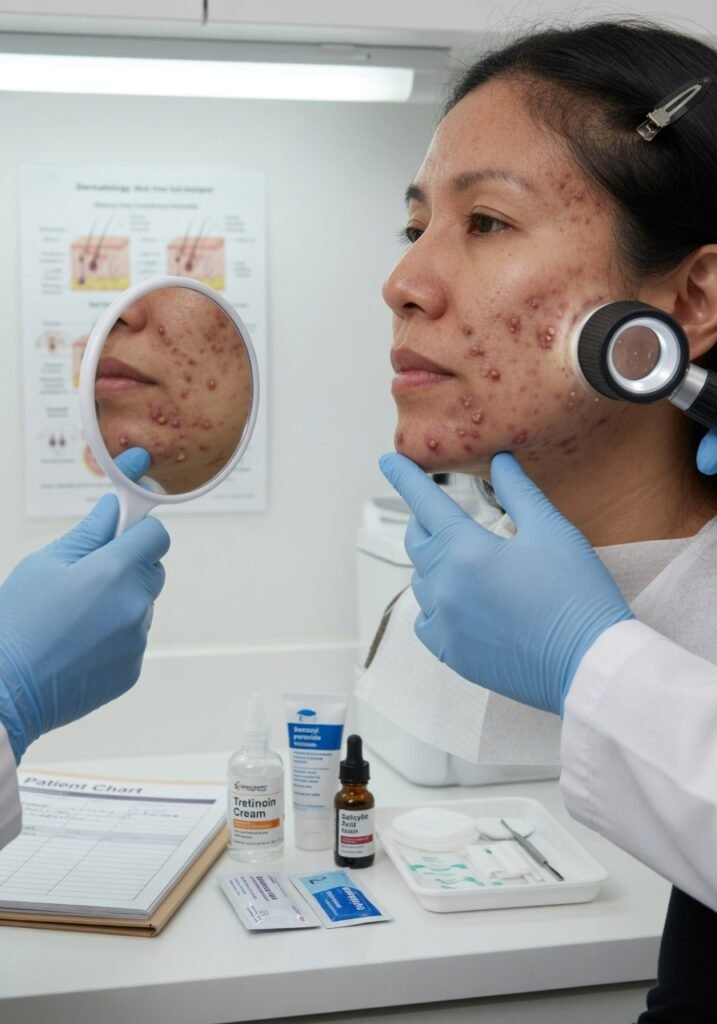
Adult Acne: Why You’re Breaking Out Now and What Actually Works
Sarah, a 34-year-old marketing director, hadn’t had a pimple in years. Then at 31, her skin erupted—not the angry teenage acne she remembered, but deeper, painful nodules along her jawline that wouldn’t respond to the benzoyl peroxide wash that once saved her in high school. She spent six months assuming she was doing something wrong, washing her face more aggressively, applying harsher products. The truth? Her acne wasn’t caused by poor hygiene or eating chocolate. It was hormonal, driven by her body’s sensitivity to androgens, and her old teenage strategy was making it worse.
Here’s what most articles get wrong about adult acne: they treat it like adolescent acne’s embarrassing older sibling—same disease, just happening at an inconvenient age. That’s false. Adult acne, especially in women, operates under different biological rules. The breakouts are deeper. The triggers are different. The treatments that worked at 17 often fail at 37. Understanding this distinction changes everything about how you approach it.
Key Facts About Adult Acne
- Approximately 40% of adults aged 20-40 experience acne, according to data from the Journal of the American Academy of Dermatology, with women accounting for the majority of cases in this age group
- Adult women are more likely to develop acne along the lower face, jawline, and neck—a pattern distinctly different from adolescent acne distribution
- Hormonal fluctuations trigger breakouts in up to 70% of women with adult acne, with peaks typically occurring during the luteal phase of the menstrual cycle
- Isotretinoin (Accutane) achieves a permanent cure in approximately 70-80% of patients with severe nodular acne, but carries significant risks requiring strict monitoring
- The average time to see improvement with prescription topical retinoids is 8-12 weeks, not the 2-3 weeks many patients expect from over-the-counter products
Understanding How Acne Actually Develops
Think of your skin like a city with an intricate plumbing system. Each follicle is a tiny pipe—the sebaceous gland produces oil (sebum) that normally flows smoothly to the surface to keep your skin hydrated. But when certain conditions converge, that pipe gets clogged. Not just with dead skin cells, though that’s part of it. The lining of the follicle starts producing cells at an abnormal rate, essentially creating a blockage inside the pipe before the oil even has a chance to reach the surface.
Then a bacterium called Cutibacterium acnes (formerly known as Propionibacterium acnes) moves in. This is where people get confused—acne isn’t an infection in the traditional sense. The bacteria are already on your skin, always present. What changes is your follicle’s environment. When oil backs up behind that cellular blockage, it creates an oxygen-poor pocket where these bacteria thrive and multiply. Your immune system recognizes this as a problem and sends inflammatory cells to fight back, which is when you see redness, swelling, and the actual pus-filled lesion.
In adults, hormones—particularly androgens—amplify every step of this process. Even if your hormone levels are technically “normal” by blood test standards, your skin cells might be hypersensitive to them, essentially turning up the volume on sebum production, follicle blockage, and inflammation.
What Actually Causes Adult Acne
The most obvious culprit is hormonal fluctuation. In women, this might mean your acne flares predictably before your period, or perhaps you notice it got worse after starting birth control, or surprisingly worse after stopping birth control. In men, it’s often connected to testosterone sensitivity in the skin itself. Stress elevates cortisol, which indirectly increases androgen activity—this is why your skin often erupts during major work deadlines or life transitions.
Skincare products themselves are often the problem. Many adults layer heavy moisturizers, makeup, and occlusive sunscreens without realizing that some of these products—especially anything labeled “non-comedogenic” but still heavy—can still clog follicles in sensitive individuals. Silicone-based foundations are notorious for this.
But here’s the factor most health websites gloss over: your microbiome. Not just facial bacteria, but your gut health. Research published in the Gut journal has found correlations between certain gut bacteria and acne severity, suggesting that dysbiosis—an imbalance in your intestinal bacterial community—might increase intestinal permeability, allowing bacterial lipopolysaccharides to trigger systemic inflammation that manifests on your skin. If you’ve been on multiple rounds of antibiotics, taken isotretinoin, or eat a diet high in processed foods and low in fiber, your gut microbiome might be working against your skin.
Dairy consumption shows a real, measurable connection in multiple studies. Not because of hormones in the milk necessarily, but because milk proteins trigger insulin-like growth factor 1 (IGF-1) production in your body, which amplifies all the acne-generating mechanisms we discussed earlier. This doesn’t mean everyone who drinks milk gets acne—it means milk is a meaningful trigger for a subset of acne-prone adults.
Less discussed: air pollution. Particulate matter from traffic and industrial sources penetrates follicles and triggers inflammatory responses. If you live in or work in an urban environment, this is a genuine contributing factor.
Recognizing Adult Acne: What You’ll Actually Experience
Adult acne doesn’t feel the same as teenage acne. The lesions tend to be deeper—nodules and cysts rather than surface whiteheads and blackheads. They hurt. You might notice one on Monday that wasn’t there Sunday, or you might notice a tender lump under the skin days before anything visible appears. This deep pain is your immune system responding to the inflammation.
The distribution tells a story. If your breakouts cluster along your jawline, lower cheeks, and chin, you’re likely dealing with hormonal acne. If they’re scattered across your cheeks and forehead, it might be contact dermatitis from products or friction. Forehead acne often points to hair products or hats creating follicle blockage.
Early warning signs people miss: slight roughness of the skin texture before any actual lesion forms, a dull ache in a localized area (often the day before a cyst appears), or sudden oiliness in a specific zone of your face that wasn’t oily yesterday. These precursors give you a window to intervene before a full lesion develops.
How Acne Is Actually Diagnosed
You don’t need blood tests for typical acne. A dermatologist diagnoses it by looking at your skin, understanding your history, and asking specific questions: When did this start? Does it cycle with your period? What products are you using? How long have you had this? Any family history of severe acne?
The challenge with adult acne diagnosis is distinguishing it from rosacea, perioral dermatitis, or contact dermatitis—all of which can look superficially similar but require completely different treatments. A dermatologist will look at the specific pattern and type of lesions. True acne includes comedones (blackheads and whiteheads), papules (small red bumps), pustules (pus-filled bumps), and potentially nodules or cysts. If you have only flushing and redness without comedones, that’s likely rosacea, not acne.
If you have severe acne, especially nodular acne, your dermatologist might order blood work before prescribing isotretinoin. This medication requires baseline liver function tests and lipid panels because it can affect these markers.
Proven Treatments for Adult Acne
Topical retinoids are the foundation of adult acne treatment. Tretinoin (Retin-A), adapalene (Differin), and tazarotene (Tazorac) work by normalizing the abnormal cell turnover in follicles and reducing inflammation. Start with the lowest concentration and increase gradually—tretinoin 0.025% is gentle enough for most adults to tolerate. Expect dryness, peeling, and possibly initial worsening before improvement at 8-12 weeks. This isn’t optional if you want real results; over-the-counter retinol is significantly weaker.
Benzoyl peroxide kills bacteria and breaks the inflammatory cycle. A 2.5% concentration is effective and less irritating than 5% or 10%. Use it alongside tretinoin only if your skin tolerates it—some people get severe irritation.
Oral antibiotics like doxycycline or minocycline reduce bacterial load and inflammation. Doxycycline at low doses (20-50 mg daily) has anti-inflammatory effects beyond just killing bacteria. Use these for 3-6 months maximum, then step down to topical treatments alone, because antibiotic resistance develops with prolonged use.
For hormonal acne in women, birth control containing norgestimate or levonorgestrel (Ortho Cyclen, Yasmin) can reduce sebum production and improve acne in 60-70% of women. Spironolactone, an anti-androgen medication, at doses of 50-100 mg daily, blocks androgen receptors in skin cells. This takes 2-3 months to show benefit.
Isotretinoin (Accutane) is the only treatment that can permanently cure acne. Reserved for severe nodular acne or acne that hasn’t responded to other treatments, it requires monthly pregnancy tests if you’re a woman of childbearing age, monthly liver function tests, and strict avoidance of tetracycline antibiotics. The typical dose is 0.5-1 mg per kilogram of body weight daily for 15-20 weeks. Side effects include severe dryness, potential mood changes (though the psychiatric risk is debated), and birth defects if pregnancy occurs.
Chemical peels with salicylic acid or glycolic acid help unclog pores and reduce surface lesions. These work better for comedonal acne than inflammatory acne.
Practical Daily Acne Management
Cleanse twice daily with a gentle, non-foaming cleanser. CeraVe Hydrating Cleanser or La Roche-Posay Toleriane Purifying Foaming Cleanser work well for most. Avoid scrubbing or using washcloths—your hands or a soft cloth are sufficient. Water temperature matters: warm water, not hot, because heat increases sebum production.
If you’re using tretinoin, apply it to completely dry skin (wait 15-20 minutes after cleansing), then wait another 5 minutes before applying moisturizer. This timing reduces irritation significantly. Use a pea-sized amount for your whole face.
Sunscreen is non-negotiable—tretinoin increases photosensitivity. Zinc oxide 10-20% or avobenzone-based sunscreens work without clogging pores in most people. Reapply every two hours if you’re outdoors.
Choose one active treatment at a time. Don’t use tretinoin, benzoyl peroxide, and salicylic acid simultaneously—your skin will become irritated and barrier-damaged, worsening acne. Start with tretinoin as your foundation, add benzoyl peroxide if needed, skip salicylic acid entirely if you’re on tretinoin.
Keep a breakout calendar. Note the date, location, and severity of lesions, along with your menstrual cycle if applicable. After two cycles, you’ll see patterns. This informs whether your acne is hormonal or triggered by specific products.
Resist the urge to pick or squeeze. Every time you manipulate a lesion, you introduce bacteria, delay healing, and increase the risk of permanent scarring. If lesions are inflamed and you feel pressure, ask your dermatologist about intralesional steroid injections (