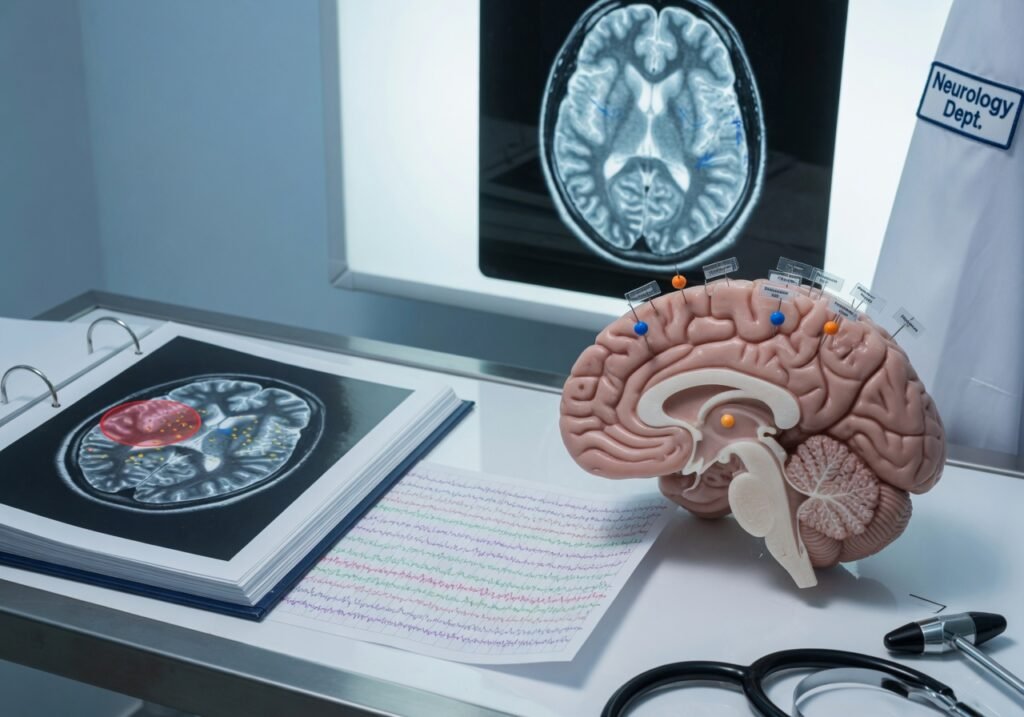

Epilepsy: Understanding Seizure Types, Treatment, and Driving Rights
Sarah, a 34-year-old accountant, was pulling out of her office parking lot when her vision flickered and her hands began tingling. Within 30 seconds, she lost consciousness and woke to paramedics checking her vital signs. Her first seizure had arrived without warning—and with it, a cascade of questions about her future, her job, and whether she could legally drive again. What Sarah didn’t know then was that roughly one in 26 Americans will develop epilepsy during their lifetime, yet only about 70% of people with newly diagnosed seizure disorders will achieve sustained seizure control with their first antiepileptic medication.
Key Facts About Epilepsy
- Approximately 3.4 million people in the United States have epilepsy, with nearly 1 in 4 of those cases occurring in people over age 60
- About 30% of people with epilepsy develop drug-resistant seizures that don’t respond adequately to two or more antiepileptic drugs
- Women taking certain oral contraceptives may experience reduced contraceptive effectiveness when taking enzyme-inducing antiepileptic drugs like phenytoin or carbamazepine
- The risk of sudden unexpected nocturnal death in epilepsy (SUDEP) is approximately 1 in 1,000 for people with poorly controlled seizures
- Status epilepticus—a seizure lasting longer than 5 minutes or repeated seizures without full consciousness between them—occurs in about 150,000 Americans annually and requires emergency medical intervention
Understanding What Actually Happens During a Seizure
Think of your brain as an electrical orchestra. Normally, billions of neurons fire in coordinated patterns, each following a conductor’s baton. Epilepsy happens when that electrical signaling goes haywire—suddenly, entire sections of the orchestra start playing at maximum volume simultaneously, drowning out everything else. This excessive, synchronized electrical discharge disrupts the brain’s ability to process information and control the body.
The specific location where this electrical storm begins determines what you experience. A seizure originating in the motor cortex will look completely different from one starting in the temporal lobe. That’s why two people with epilepsy can have almost nothing in common in how their seizures manifest. Some patients describe it as a total blackout. Others remain partially aware throughout, watching themselves act without being able to control their movements—a profoundly disturbing experience that shouldn’t be minimized.
What Actually Causes Epilepsy
About 40% of epilepsy cases have an identifiable structural cause—a scar from a previous head injury, a brain tumor, a stroke, or malformed brain tissue from birth. For the remaining 60%, we often can’t pinpoint a specific culprit, though genetic factors frequently play a role.
The common risk factors everyone knows about: head trauma (particularly with loss of consciousness), brain infections like meningitis, and stroke. But here’s what most articles gloss over—autoimmune encephalitis, where your immune system mistakenly attacks brain cells, causes epilepsy in roughly 3-4% of new-onset cases in adults. Patients often spend months being misdiagnosed with psychiatric conditions while their immune system silently damages their brain. Testing for autoimmune markers should happen earlier than it typically does, especially in patients under 50 with seizures of unclear origin.
Other frequently overlooked triggers include sleep deprivation (one of the most potent precipitants), alcohol withdrawal, severe electrolyte imbalances, and even excessive caffeine consumption in susceptible individuals. Some women experience catamenial epilepsy—seizures clustered around their menstrual cycle due to hormonal fluctuations—yet this pattern often goes unrecognized even after years of treatment.
How Seizures Actually Present
Seizures fall into two major categories based on how they originate in the brain. Generalized seizures begin with synchronized electrical activity across both hemispheres simultaneously. The classic tonic-clonic seizure involves sudden rigidity (the tonic phase) followed by rhythmic jerking (the clonic phase), loss of consciousness, and post-seizure confusion lasting minutes to hours. But generalized seizures can also look like brief lapses of awareness, sudden drops to the ground without jerking, or rapid repetitive jerking lasting just seconds.
Focal seizures begin in one specific brain region and may or may not spread. If you remain conscious and aware during a focal seizure, it’s called a focal aware seizure—you might experience strange tastes or smells, involuntary arm movements, or intense emotional sensations while knowing exactly what’s happening. If consciousness is impaired, it’s focal impaired awareness. These can appear bizarrely—repetitive lip smacking, picking at clothing, or emotional responses that seem disconnected from reality.
What people often miss: the warning signs before a seizure even begins. About 60-70% of patients experience prodromal symptoms hours or even days before a seizure—irritability, fatigue, changes in appetite, or concentration difficulties. Some experience an aura immediately before—a visual distortion, dizziness, or specific smell that signals an imminent seizure. Recognizing these patterns lets patients take preventive steps, modify activity, or alert caregivers.
How Doctors Actually Diagnose Epilepsy
The diagnosis isn’t made from a single test. You need clinical history (what actually happened during the event) plus objective evidence of abnormal brain activity. The electroencephalogram, or EEG, records electrical activity across your scalp. A routine 30-minute EEG catches abnormalities in maybe 30-40% of patients with epilepsy, which is why doctors often order prolonged monitoring or specialized variants like sleep-deprived EEG.
Brain MRI is standard to look for structural abnormalities—scarring, tumors, or malformations. PET scans and functional MRI can sometimes reveal abnormal metabolic activity even when conventional MRI looks normal. The key: diagnosis requires a pattern of recurrent seizures (at least two unprovoked seizures more than 24 hours apart) or one seizure plus something on testing suggesting a strong likelihood of future seizures.
This often takes time. Some patients have imaging done in an emergency room after their first seizure, get told “it looks normal,” and then wait months for neurology follow-up. That’s backwards. You should see a neurologist within weeks, not months, of a suspected first seizure so they can order appropriate testing and assess seizure risk.
Treatment That Actually Works
First-line antiepileptic drugs vary by seizure type and individual factors. For generalized tonic-clonic seizures, options include valproic acid (Depakote), lamotrigine (Lamictal), levetiracetam (Keppra), and topiramate (Topamax). Each has different side effect profiles. Valproic acid is highly effective but carries risks of birth defects and weight gain. Levetiracetam works well but some patients report mood changes. Lamotrigine requires slow dosing due to rare but serious rash risk, but many patients tolerate it well long-term.
For focal seizures, carbamazepine (Tegretol) and oxcarbazepine (Trileptal) have strong evidence. Newer drugs like perampanel (Fycompa) and lacosamide (Vimpat) offer alternatives when standard options fail.
Here’s the critical insight most websites miss: medication selection should account for your entire health picture, not just seizure control. A woman of childbearing age shouldn’t start valproic acid if alternatives exist, due to high teratogenic risk. Someone with kidney disease needs drugs that don’t accumulate. Someone with bipolar disorder might benefit from valproic acid or lamotrigine’s mood-stabilizing properties. This requires actual neurology expertise, not just prescribing by reflex.
For drug-resistant epilepsy, surgical options exist. Temporal lobe resection cures seizures in about 60-70% of appropriate candidates with mesial temporal lobe sclerosis. Other options include responsive neurostimulation devices (implanted electrodes that detect and interrupt seizures), vagal nerve stimulation, or deep brain stimulation. These require evaluation at comprehensive epilepsy centers.
Managing Epilepsy in Daily Life
Sleep is non-negotiable. Irregular sleep or sleep deprivation is one of the most reliable seizure triggers. This means consistent sleep-wake schedules, even on weekends. Yes, this feels restrictive, but it works.
Medication adherence matters profoundly. Missing doses, even once, can destabilize seizure control. Set phone reminders, use a pill organizer, involve a family member if needed. Ask your pharmacy about automatic refill programs.
Know your specific triggers. Keep a seizure diary noting time, circumstances, sleep, stress level, menstrual cycle if applicable, and any prodromal symptoms. Patterns emerge. Maybe you seize more after alcohol. Maybe stress at work is the primary factor. Maybe your seizures cluster around ovulation. This information drives actual prevention.
Discuss driving restrictions with your neurologist honestly. Don’t just guess based on what you’ve read. Your legal driving status depends on local law and your specific seizure control, which your doctor understands better than you do.
What Actually Prevents Seizures
Medication prevents seizures when used consistently. The evidence is overwhelming. Beyond that, seizure prevention relies on trigger avoidance—maintaining sleep, managing stress, limiting alcohol, maintaining electrolyte balance, and staying hydrated. Some evidence supports cognitive behavioral therapy for stress management in patients with psychological triggers.
One caveat: you cannot completely eliminate seizure risk through lifestyle measures alone if you have epilepsy. The idea that “just manage stress” will cure epilepsy is harmful nonsense. Medications work. Lifestyle supports them. Neither replaces the other.
Epilepsy and Driving: What You Need to Know
Driving laws vary by state and country. In most U.S. states, you’re prohibited from driving if you’ve had a seizure without a clear, non-recurrent trigger. The typical restriction period is 3-6 months seizure-free before driving privileges can be restored. Some states require physician reporting; others rely on patient honesty.
The key detail: this usually applies to seizures that cause loss of consciousness or impaired awareness. A brief focal seizure with full awareness might not legally require driving cessation, but this varies. Discuss your specific seizure type with your neurologist and check your state’s Department of Motor Vehicles guidelines.
Frequently Asked Questions
Can epilepsy be cured?
Epilepsy can go into remission—meaning seizure-free for extended periods while on medication. About 50% of people eventually stop needing medications without seizure recurrence. For some, particularly those with correctable causes like benign tumors or focal scarring, surgery can be curative. But epilepsy itself cannot be “cured” in the traditional sense; it’s managed until remission occurs.
Is it dangerous to be around someone having a seizure?
The person having the seizure is at risk; bystanders are not. Your role is to ensure they don’t fall and hit their head, place them on their side if possible to prevent aspiration, and stay present until consciousness returns. Don’t put anything in their mouth or restrain their movements. Call 911 if the seizure lasts more than 5 minutes, if they have multiple seizures in succession, or if this is their first seizure.
Can you have epilepsy without
Sources & Medical References
HealthTopics.com articles are based on peer-reviewed medical research and guidance from the NIH, CDC, and WHO. See our editorial policy for full sourcing standards.