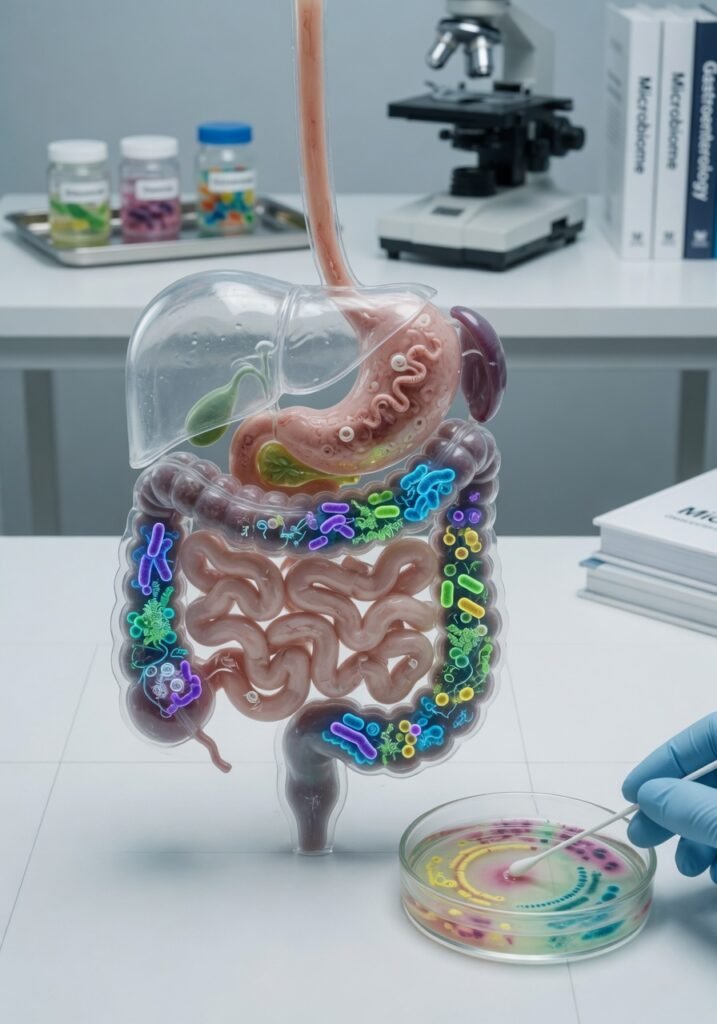

Your Gut Microbiome: The 37 Trillion Organisms Running Your Body
Sarah came to my clinic complaining of brain fog so thick she couldn’t focus on spreadsheets by 2 PM, despite sleeping well and drinking enough water. Her gastroenterologist had cleared her for celiac disease and IBS. What we discovered after reviewing her antibiotic history and dietary patterns was that her gut bacterial diversity had dropped to roughly 40% of what we’d expect for someone her age—a key marker I now check before assuming someone needs cognitive testing. Research shows that 60% of Americans have significantly reduced gut bacterial diversity compared to populations eating traditional diets, yet most physicians never discuss microbiome composition with their patients.
Key Facts About Your Gut Microbiome
- Your gut contains approximately 37 trillion bacterial cells—roughly equivalent to the total number of human cells in your body, according to NIH estimates
- A healthy gut microbiome contains between 500-1000 different bacterial species, though the specific species vary dramatically between individuals
- The CDC reports that broad-spectrum antibiotic use can reduce gut bacterial diversity by 30-40% within days, with recovery taking 6-12 months even after treatment stops
- Dysbiosis (microbial imbalance) has been associated with conditions ranging from depression to type 2 diabetes, with JAMA Psychiatry publishing research showing links between specific bacterial ratios and major depressive disorder
- Short-chain fatty acids produced by gut bacteria regulate 70-80% of your intestinal immune function, making them critical for everything from allergic responses to cancer prevention
Understanding How Your Gut Microbiome Actually Works
Think of your gut bacteria less like passengers and more like employees in a factory. They’re not just sitting there—they’re manufacturing, processing, and shipping products your body desperately needs. When you eat a piece of broccoli, your human enzymes can’t break down all the fiber. Your bacteria move in, ferment it, and produce butyrate—a short-chain fatty acid that strengthens the walls of your intestines and travels through your bloodstream to calm inflammation throughout your body.
What most people miss is that your microbiome composition actually changes within 24-48 hours of dietary shifts. Eat a lot of refined carbohydrates for two days, and the bacteria that thrive on sugar explode in numbers while the bacteria that need fiber begin starving. This isn’t permanent damage, but it does change how you feel—sometimes dramatically. The bacteria producing serotonin start declining, the inflammatory-promoting species increase, and suddenly you’re more irritable and craving more junk food. It’s a vicious cycle that happens because you’ve literally changed the ecosystem through food selection.
Causes and Risk Factors That Harm Microbiome Diversity
Antibiotics remain the biggest culprit—and I mean all antibiotics, not just the heavy hitters. Even a five-day course of amoxicillin or azithromycin for a sinus infection can delete 25-30% of your microbial diversity. Some bacteria recover within weeks; others never fully return. This is why I always ask patients whether they’ve had multiple antibiotic courses before age 18, since childhood disruptions seem to have outsized effects on lifelong microbiome composition.
Diet quality matters more than most realize. Ultra-processed foods don’t contain the fiber diversity that different bacteria need to survive. When you eat the same refined carbohydrates repeatedly, you’re selecting for bacteria that thrive on that monotonous diet. The less common but critically overlooked factor? Chlorinated drinking water. Research shows that chlorine kills some bacteria preferentially while leaving others unaffected, creating a subtle skew in your microbial balance that most people never connect to their health changes.
Other significant risk factors include chronic stress (which alters gut pH and blood flow to the intestines), extended proton pump inhibitor use for acid reflux (suppressing stomach acid removes a natural bacterial filter), and sedentary lifestyle (physical activity stimulates different types of bacterial growth). Interestingly, proximity to diverse natural environments—basically spending time outdoors—increases your exposure to environmental bacteria that colonize your gut, which is why people who garden or spend time in forests often have more diverse microbiomes.
Signs and Symptoms You Should Actually Pay Attention To
Most people think about their microbiome only when they have diarrhea or constipation. That’s backwards. The early warning signs are usually subtler. Brain fog that coffee doesn’t fix? That’s often dysbiosis before it causes gut symptoms. Persistent fatigue even after adequate sleep. Food cravings that don’t make sense—sudden desperate wanting of bread or sweets. A change in your mood toward more anxiety or depression without obvious life stressors. These neurological symptoms often precede GI complaints by months.
The GI symptoms themselves tell a story. Inconsistent bowel movements—sometimes loose, sometimes constipated—suggest an unstable bacterial ecosystem. Excessive bloating that gets worse as the day progresses. Gas with a noticeably bad smell, which indicates bacterial fermentation of undigested material rather than normal gas production. Skin issues like persistent acne or rosacea flare-ups that don’t respond to topical treatments. Some patients also report sudden food intolerances to things they previously tolerated fine—their microbiome has shifted enough that they lack the bacterial species needed to break down certain foods.
How Microbiome Testing Actually Works
If you think you have dysbiosis, the first step is usually a stool test. There are several options: the GI-MAP (which looks for specific pathogenic bacteria and parasites), standard comprehensive stool analysis through labs like Ova and Parasites tests, or 16S rRNA sequencing, which is what most research studies use and what companies like Thorne and Ombre offer directly to consumers. I typically recommend starting with 16S testing because it gives you a clear picture of your bacterial diversity and which phyla dominate your ecosystem.
The process is straightforward from your perspective—you collect a small stool sample at home and mail it to the lab. Results come back in 1-2 weeks showing your bacterial composition as percentages and ratios. You’ll see terms like “Firmicutes to Bacteroidetes ratio,” which is actually less clinically useful than many companies suggest, but you’ll also get your overall diversity score, which matters tremendously. A diversity score below the 25th percentile for your age is a red flag.
One important caveat: microbiome tests are descriptive, not diagnostic. They tell you what bacteria you have, but they don’t definitively prove those bacteria are causing your symptoms. A single test also represents one moment in time. Your microbiome shifts week to week, especially if you change your diet. Some practitioners recommend retesting after 12 weeks of interventions, but that’s optional and depends on your response to treatment.
Treatment Approaches That Actually Work
Here’s where most online articles get vague. Let me be specific: the gold standard for dysbiosis caused by antibiotic overuse is targeted dietary change plus time, not replacement probiotics (which often don’t stick around). You need to feed the bacteria you want to keep while starving the overgrown pathogens.
For bacterial overgrowth like SIBO (small intestinal bacterial overgrowth), the treatment is different: rifaxomicin, an antibiotic that doesn’t absorb well and stays in your intestines, combined with a low-FODMAP diet during treatment. This actually reduces the bacterial load, then you rebuild diversity afterward.
For dysbiosis from general diversity loss, I recommend high-fiber foods (inulin, partially hydrolyzed guar gum, resistant starch) that feed the good bacteria back. Fermented foods like sauerkraut, kimchi, and kefir provide beneficial bacteria, though the amount of viable bacteria varies by brand. Specific probiotics have weak evidence overall, but Saccharomyces boulardii has decent research for preventing antibiotic-associated diarrhea, and certain Lactobacillus and Bifidobacterium strains show modest benefit in specific conditions.
The overlooked tool? Fecal microbiota transplantation (FMT) for severe dysbiosis. If you’ve had multiple antibiotic courses and haven’t recovered, FMT—transplanting stool from a healthy donor—can rapidly restore diversity. It’s FDA-approved for recurrent C. difficile and increasingly used off-label for intractable dysbiosis, though insurance coverage varies widely.
Practical Daily Management Strategies
Forget generic “eat more fiber” advice. Here’s what actually works: eat 30 different plant foods per week. Not per day—per week. This seems easier for most people and dramatically increases the variety of bacteria you’re feeding. Track it in a spreadsheet for two weeks to see where you fall short. Most people land at 15-18 different plants weekly, so you have specific room to improve.
Eat fermented foods with lunch or dinner rather than sporadic consumption. A spoonful of kimchi daily beats a jar of sauerkraut eaten haphazardly. Include resistant starch—cooked and cooled rice, cooked and cooled potatoes, underripe bananas. These feed specific beneficial bacteria that most people don’t consume enough of.
If you take antibiotics, ask your prescriber whether the specific infection actually requires antibiotics versus watchful waiting. Many sinus infections and ear infections resolve without treatment. When antibiotics are truly necessary, ask about narrow-spectrum options (like penicillin V for strep throat instead of azithromycin for respiratory infections). Take probiotics during and after antibiotics, though space them by 2+ hours from the antibiotic dose. Soil-based organisms (like Bacillus species) seem to survive antibiotics better than Lactobacillus species.
Move your body regularly. Walking 30 minutes daily correlates with greater bacterial diversity independent of diet. The mechanism isn’t entirely clear, but it seems to increase blood flow to your intestines and alter your stress hormones in ways that favor diverse bacteria.
Prevention: What the Evidence Actually Shows
The strongest prevention strategy is dietary diversity early in life. Children exposed to diverse foods, especially plants and fermented foods, develop more robust microbiomes by adulthood. If you have kids, stop worrying obsessively about germs—exposure to environmental bacteria (playing outside, getting dirty) is actually protective for long-term microbiome health.
Chronic stress reduction matters more than most health articles emphasize. Stress hormones like cortisol shift your gut environment in ways that favor inflammatory bacteria. Meditation, exercise, and adequate sleep all improve bacterial composition, which is why treating anxiety sometimes fixes digestive symptoms.
One evidence gap worth mentioning: there’s no clear consensus on the “perfect” microbiome composition. What’s optimal for you depends on your genetics, diet, environment, and health conditions. The goal is diversity and resilience—a microbiome that bounces back quickly when disrupted—not some ideal ratio of specific bacteria.
Frequently Asked Questions
Can probiotics alone fix my microbiome?
Probiotics help, but they’re not sufficient alone. Most probiotic strains don’t permanently colonize your intestines—they pass through like tourists. The bacteria you want to keep need continuous feeding through high-fiber, diverse foods. Think of probiotics as reinforcements, not the foundation. Food change must be primary.
How long does it take to restore a damaged microbiome?
After a single antibiotic course, most people recover 50% of their diversity within 4 weeks and approach baseline within 6-12 months. However, if you’ve had multiple courses or ongoing dysbiosis factors, recovery takes 6-24 months depending on how aggressively you address diet and lifestyle. Some bacterial species may never fully return.
Sources & Medical References
HealthTopics.com articles are based on peer-reviewed medical research and guidance from the NIH, CDC, and WHO. See our editorial policy for full sourcing standards.