
“`html
Healthy Aging: What Actually Works After 65
Margaret, 68, came to my clinic convinced that the joint pain shooting through her knees meant she had to accept slower mornings and fewer walks. She’d read that “aging just happens” and figured decline was inevitable. Here’s what most people get wrong: aging itself isn’t the problem. Poor maintenance habits combined with specific treatable conditions masquerading as normal aging—that’s the real issue. The difference between a 70-year-old who runs 5K races and one who struggles walking to the mailbox usually comes down to choices made between 50 and 70, not genetics.
Key Facts About Healthy Aging
- Adults over 65 who engage in 150 minutes of moderate physical activity per week have a 30% lower mortality rate than sedentary peers, according to NIH longitudinal studies spanning 15 years
- Cognitive decline accelerates in people with untreated hypertension—systolic blood pressure above 140 mm Hg increases dementia risk by 45% over a decade
- Sarcopenia (age-related muscle loss) begins around age 30 but doesn’t become clinically significant until 60—and resistance training can reverse up to 50% of lost muscle mass even in people over 80
- The CDC reports that 60% of Americans over 65 have at least two chronic conditions, but only 25% of those receive coordinated care addressing all conditions together
- Sleep quality matters more than sleep quantity after 65—people with untreated sleep apnea have 3 times higher stroke risk, while those sleeping 7 hours with good architecture show better cognitive preservation
Understanding What Healthy Aging Actually Means Biologically
Your body doesn’t have a single “aging clock.” Think of it more like different systems running on different schedules. Your mitochondria—those cellular power plants—gradually lose efficiency starting around 40. Your immune system doesn’t disappear; it just gets confused, spending more energy fighting old infections you already beat while missing new threats. Collagen in your skin and joints stiffens because cross-linking increases between protein molecules. None of this is irreversible at 65, 75, or even 85. What matters is whether you’re actively counteracting these processes or just accepting them.
The real biological story: aging involves accumulating cellular damage, slower repair mechanisms, and decreased autophagy (your cells’ garbage disposal system). But here’s the clinical insight most websites miss: your cells don’t know your birthday. A sedentary 55-year-old often has more age-related cellular damage than an active 75-year-old. The biological age can lag decades behind your chronological age if you intervene properly.
Causes and Risk Factors for Unhealthy Aging
Sure, genetics matter—about 30% of your longevity potential. The other 70% is you. The big hitters everyone knows about include sedentary lifestyle, poor nutrition, chronic stress, and smoking. But here’s what most articles skip: chronically elevated cortisol from unmanaged stress literally shrinks your hippocampus (the memory center) and accelerates telomere shortening. This isn’t metaphorical—brain imaging shows measurable hippocampal atrophy in people with sustained high cortisol.
Then there’s the often-ignored factor: social isolation. A 2023 JAMA analysis found that loneliness increases mortality risk in people over 60 by 26%—comparable to smoking and exceeding the risk from obesity alone. It’s not that lonely people die from sadness; isolation triggers inflammatory cascades and dysregulates immune function. Your nervous system literally interprets isolation as a threat.
Other specific contributors: uncontrolled diabetes accelerates vascular aging and cognitive decline; chronic inflammation from poor gut health feeds into joint disease and cardiovascular problems; inadequate sleep disrupts metabolic hormone balance and immune regulation; and medication interactions (polypharmacy) cause subtle cognitive fog that people attribute to normal aging.
Signs and Symptoms: What Healthy Aging Looks Like vs. What Doesn’t
Here’s where patient experience matters more than textbook definitions. You might notice a slow creep of morning stiffness that doesn’t improve with movement (that’s different from the stiffness that goes away in 10 minutes—that’s normal). Difficulty standing up from a low chair without using your hands, or needing to hold the bannister going upstairs—these suggest weakness, not just aging. Waking up five times a night isn’t normal aging; it’s often sleep apnea, urinary tract issues, or mood disorders.
Forgetfulness about recent events (where you put your glasses) differs from forgetting that your granddaughter visited yesterday. Occasional word-finding pauses are normal; regularly losing the thread of conversations isn’t. Feeling tired some days is fine; persistent fatigue despite adequate sleep suggests anemia, thyroid dysfunction, or depression—all treatable.
Early warning signs people overlook: a slight tremor in your hands when holding a cup, balance issues that make you nervous on stairs (vestibular dysfunction or neurological changes), decreased sense of smell (correlates with cognitive decline risk), and recurrent falls. Most people treat these as inevitable, but they’re often signaling problems worth investigating.
Diagnosis: How We Actually Assess Aging Status
There’s no single “healthy aging” test, which frustrates patients. Instead, I assess multiple systems. Basic labs include a complete metabolic panel, lipid panel, thyroid function (TSH and free T4—TSH alone misses cases), hemoglobin A1C, and vitamin B12 level. Many people over 65 have B12 deficiency from reduced intrinsic factor production, causing cognitive symptoms they blame on aging.
Functional assessment matters more than any number. Can you walk 400 meters without stopping? Climb stairs? Get up from a chair without using your arms? Rise from lying down easily? These simple tests predict 10-year mortality better than blood pressure alone. I also screen for sarcopenia using grip strength testing and sometimes leg muscle imaging.
Cognitive screening involves the Montreal Cognitive Assessment (MoCA) or Mini-Cog, not just asking “do you feel sharp?” Cardiovascular risk gets reassessed with updated guidelines—your 10-year stroke and heart attack risk, not just your cholesterol number. Bone density screening (DEXA scan) matters for fracture prevention. Sleep evaluation through a questionnaire or, if indicated, sleep study helps catch apnea. Depression screening (PHQ-9) catches mood disorders that mimic dementia. The process sounds extensive because it is—but rushed checkups miss reversible problems.
Treatment Options: What Actually Moves the Needle
If I find hypertension, first-line agents include lisinopril or losartan (ACE inhibitors or ARBs) because they protect kidney function and the brain, not just the heart. For someone with diabetes, metformin remains the standard unless they have kidney issues, then we pivot to GLP-1 agonists like semaglutide, which also reduce cardiovascular events. These aren’t just blood sugar drugs; they prevent complications.
For cognitive health, no magic pill exists, but we treat underlying causes: controlling blood pressure reduces dementia risk, managing sleep apnea with CPAP improves alertness and mood, treating depression with SSRIs like sertraline restores motivation for physical activity. Statins aren’t universally recommended over 75 unless there’s existing heart disease, contrary to older guidelines.
For bone health, vitamin D3 supplementation (1000-2000 IU daily) combined with calcium (from food ideally, 1000-1200 mg daily) plus resistance training prevents osteoporosis better than bisphosphonates alone. For muscle loss, resistance training twice weekly beats any medication—there’s no drug that builds muscle like weights do.
Depression and anxiety respond well to combination therapy: an SSRI like sertraline or citalopram plus behavioral activation (structured activity scheduling) plus cognitive behavioral therapy. Isolation requires practical solutions: joining groups, regular phone calls with family, volunteer commitments that create social obligation.
Practical Daily Management for Healthy Aging
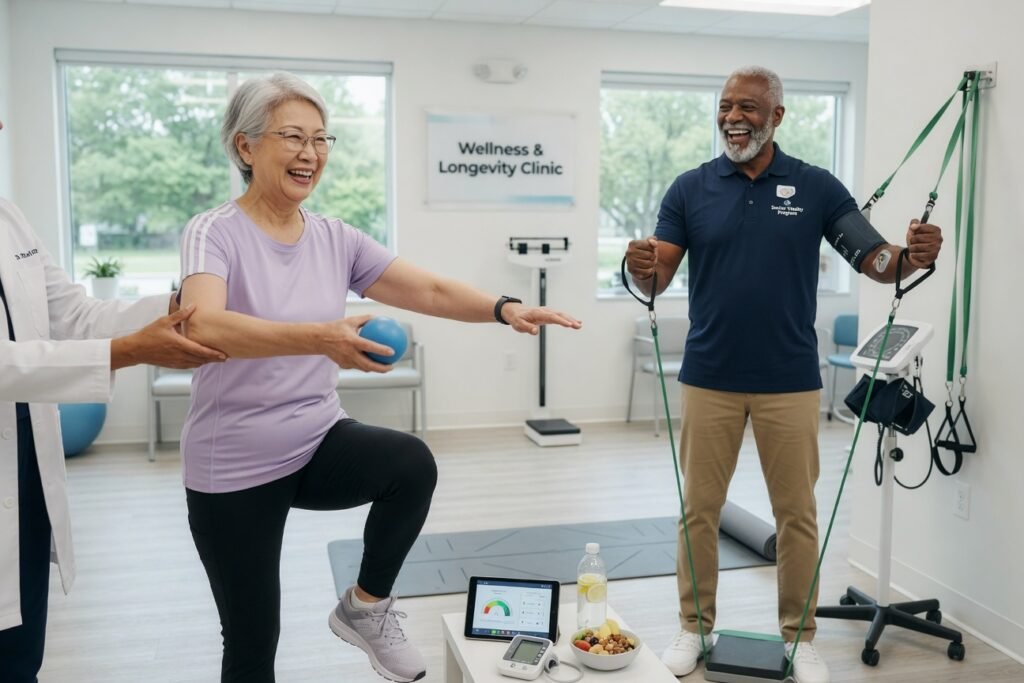
Stop thinking in categories like “exercise” and start thinking in movement patterns. Three days a week, do something with resistance—weights, resistance bands, bodyweight exercises like squats. One day add balance work: tai chi, single-leg stands, walking backward. Two days do something that elevates your heart rate sustainably—brisk walking, swimming, cycling. That’s it. Not “exercise for an hour”; it’s structured movement.
Food matters but not the way popular media suggests. You don’t need expensive superfoods. You need consistency: eat vegetables at lunch and dinner (half your plate), include protein at each meal (fish twice weekly for omega-3 fatty acids, eggs, legumes, poultry), choose whole grains over refined, limit processed foods. Specifically, Mediterranean diet patterns show the strongest evidence for cognitive preservation and longevity in people over 65.
Sleep hygiene isn’t optional: consistent bedtime and wake time (even weekends), no screens one hour before bed, bedroom temperature around 65°F, darkness. If you wake at 3 AM and can’t return to sleep, get up and read in dim light—don’t lie there frustrated, which triggers cortisol. Magnesium glycinate (300-400 mg at bedtime) helps many people without the morning grogginess of sleeping pills.
Cognitive engagement matters more than crossword puzzles. Learning something genuinely new—a language, an instrument, woodworking—creates novel neural pathways. Passive mental activity doesn’t have the same effect.
Prevention: What the Evidence Actually Shows
Preventing unhealthy aging isn’t mainly about avoiding disease; it’s about maintaining function. A person can have high blood pressure and still have good healthy aging if it’s controlled. The goal is compression of morbidity—having most of your life healthy and only a brief period of illness at the very end.
What works: controlling blood pressure saves cognitive function more than it prevents heart attacks after 75. Physical activity prevents falls, maintains independence, and improves mood—it’s not really about living longer at that point, it’s about living better. Cognitive engagement shows modest benefits for maintaining mental sharpness, particularly if combined with physical activity and social engagement.
What doesn’t work as we thought: aggressive cholesterol lowering in people over 75 without existing heart disease; routine hormone replacement therapy; mega-dose antioxidant supplements (they can paradoxically increase mortality in some studies). Preventive medications work when targeted at specific high-risk conditions—not as blanket prescriptions to “slow aging.”
The nuance: prevention requires knowing your individual risk profile. Your family history of early heart disease demands different prevention than a family history of dementia. Your own early warning signs guide what deserves attention.
Frequently Asked Questions About Healthy Aging
No. Studies show people beginning resistance training in their 70s gain muscle mass and strength within 8-12 weeks. Start with bodyweight exercises like squats and wall push-ups, progress gradually, and see improvement rapidly. The biological response to training doesn’t fundamentally change with age—the barrier is starting, not capability.
Not necessarily. Normal aging includes slower processing speed and occasional memory lapses. Mild cognitive impairment (MCI) involves noticeable decline but preserved independence. Only some people with MCI develop dementia; others plateau or even improve with treatment of underlying causes like sleep apnea or depression. Actual Alzheimer’s shows specific pathology on imaging, not just subjective
Sources & Medical References
HealthTopics.com articles are based on peer-reviewed medical research and guidance from the NIH, CDC, and WHO. See our editorial policy for full sourcing standards.