
Margaret, 68, noticed she was getting winded walking from the parking lot to her grandson’s soccer game—something she’d done without thinking just two years ago. Her doctor found her blood pressure had crept to 148/92, and an EKG showed subtle changes suggesting her heart wasn’t pumping quite as efficiently. She wasn’t having chest pain, no dramatic symptoms, just this creeping fatigue she’d chalked up to getting older. But her cardiologist said what she had detected early could be managed aggressively, and that made all the difference.
Your heart ages differently than your skin or your knees. After 65, structural and functional changes happen gradually—sometimes without obvious warning signs. Understanding what’s changing, why it matters, and what actually helps separates people who stay active into their 80s from those who don’t.
Key Facts About Senior Heart Health
- One in four deaths among people aged 65 and older is caused by heart disease, making it the leading cause of mortality in this age group (CDC, 2022).
- Approximately 37% of adults aged 60 and older have hypertension, yet only 48% of those have their condition controlled to below 130/80 mmHg (NIH data).
- Atrial fibrillation affects 9% of people over 65, increasing stroke risk sixfold if untreated—yet many experience minimal symptoms and remain undiagnosed.
- Women over 65 experience heart attacks differently than men: they’re more likely to report shortness of breath, nausea, and back pain rather than classic chest pressure.
- Diastolic dysfunction (the heart’s inability to relax between beats) becomes the most common form of heart failure in older adults, affecting roughly 50% of those over 70 with hypertension.
Understanding What Happens to Your Heart After 65
Think of your heart like a rubber ball. When you’re young, it squeezes hard and bounces back quickly, elastic and responsive. Starting around 65, that rubber gradually becomes stiffer. The ventricle walls thicken from decades of pumping against resistant arteries. The electrical system—those precise signals that keep your rhythm steady—becomes more prone to hiccups. Blood vessels lose elasticity. Fat deposits inside arteries that had been building quietly for decades suddenly matter more because your heart has less reserve capacity to compensate.
Here’s the thing physicians see constantly: most 65-year-olds with healthy hearts don’t “feel” this stiffening happening. There’s no pain or dramatic symptom. The changes are measurable on an echocardiogram or stress test, but you might notice nothing except feeling slightly more winded than last year, or needing an afternoon nap more often.
This is why screening after 65 isn’t optional—it’s foundational. Your cardiologist can detect structural changes, valve problems, or rhythm disturbances before they cause a crisis.
Risk Factors That Matter Most in Your 60s and Beyond
Yes, you know about high blood pressure, high cholesterol, and diabetes. Those remain the big three. But let me tell you what gets overlooked: sleep apnea. Studies show untreated obstructive sleep apnea dramatically increases cardiovascular risk in older adults through repeated oxygen drops and sympathetic nervous system activation. Many older people just assume snoring and daytime sleepiness are normal parts of aging. They’re not.
Inflammation markers matter more now too. Your doctor might order a high-sensitivity CRP (C-reactive protein) test to assess underlying arterial inflammation even if your cholesterol looks fine. Chronic kidney disease, which affects nearly 35% of adults over 70, accelerates cardiovascular decline and changes how medications work.
Social isolation is medically significant—it increases heart disease risk by roughly 30% in older populations, comparable to smoking or obesity. And then there’s medication-related risk that’s often underappreciated: NSAIDs like ibuprofen or naproxen, which many seniors take regularly for arthritis, can raise blood pressure and increase heart attack risk, especially in those already at risk.
Signs You Shouldn’t Dismiss as “Normal Aging”
Shortness of breath climbing stairs is not normal. Neither is unusual fatigue, swelling in your ankles and feet that wasn’t there before, or a persistent dry cough that gets worse when you lie down. These can indicate heart failure developing.
Palpitations—the sensation that your heart is racing, skipping, or pounding—happen to everyone occasionally, but if they’re new or frequent, they warrant an evaluation. Dizziness, especially if it comes with chest discomfort or shortness of breath, isn’t something to observe from home.
Here’s what people miss: Sometimes the first sign of a heart problem is simply that you can’t do what you used to do. Not because you’re tired generally, but because your heart’s output drops during exertion. If your exercise tolerance has noticeably decreased over months, that’s information your doctor needs.
Red flag symptoms: Chest discomfort (pressure, heaviness, or tightness), severe shortness of breath at rest, fainting, or rapid heartbeat with dizziness—call 911 or go to the ER immediately.
How Diagnosis Actually Works
Your primary care doctor might start with an EKG—a 10-second recording that shows your heart’s electrical activity. If something looks off, or if your symptoms warrant it, you’ll likely see a cardiologist who’ll order an echocardiogram (ultrasound of your heart) to see how well it’s pumping and moving blood, and assess valve function.
A stress test—either on a treadmill or with medication that simulates exercise—reveals how your heart behaves under demand. Some cardiologists use advanced imaging like cardiac CT or positron emission tomography (PET) scans to assess for blockages or viability of heart tissue.
Blood work becomes more informative now. Your doctor checks troponin (a protein released when heart tissue is damaged), B-type natriuretic peptide or BNP (elevated when the heart is stressed), and your lipid panel—but they interpret these values differently in someone 68 than someone 48.
Holter monitoring or event monitors capture your heart rhythm over days or weeks, useful if your symptoms suggest arrhythmia. The entire process takes time and sometimes feels tedious, but each test adds a piece to understanding your specific situation.
Treatment Options That Actually Work
For hypertension: ACE inhibitors like lisinopril or enalapril remain first-line agents because they protect the heart and kidneys. Thiazide diuretics (hydrochlorothiazide) are effective and inexpensive. Calcium channel blockers like amlodipine work well and have fewer side effects than some alternatives. The goal for most older adults is now 130/80 mmHg, not the previously accepted 140/90.
For coronary artery disease: Statins (atorvastatin, rosuvastatin) reduce plaque progression and are recommended even if your cholesterol is moderate, based on your overall risk. Antiplatelet agents like aspirin and clopidogrel prevent blood clots. Beta-blockers (metoprolol, carvedilol) slow your heart rate and reduce workload. If you have significant blockages, percutaneous coronary intervention—a stent procedure—or coronary artery bypass grafting may be appropriate.
For atrial fibrillation: Rate control medications like beta-blockers or calcium channel blockers help prevent your resting heart rate from staying too high. Anticoagulants like apixaban, rivaroxaban, or warfarin prevent stroke. Some patients benefit from rhythm control medications like amiodarone.
For heart failure: ACE inhibitors or ARBs (angiotensin II receptor blockers) reduce strain. SGLT2 inhibitors like empagliflozin improve outcomes in both diabetic and non-diabetic heart failure. Diuretics like furosemide relieve fluid overload. Aldosterone antagonists like spironolactone protect the heart muscle.
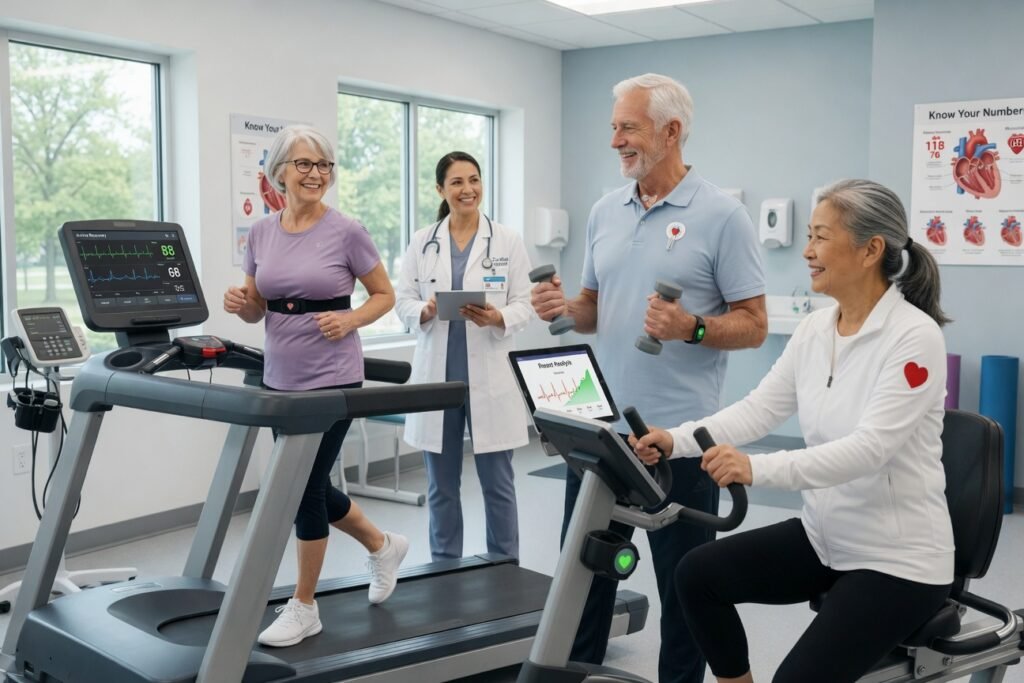
Cardiac rehabilitation programs—supervised exercise with education—improve outcomes more than most medications alone, yet fewer than 25% of eligible seniors attend them.
Daily Management That Actually Changes Outcomes
Take your medications exactly as prescribed. Not “close enough”—exactly. Your pharmacist can set up a pill organizer or you can use phone reminders. Blood pressure medication works only if it’s in your system consistently.
Monitor your blood pressure at home. Get a validated automatic cuff (wrist or upper arm, not finger), measure in the morning before medication and before bed, and keep a log. Share these readings with your doctor—they reveal patterns that office visits miss.
Know your weight trend. Gain 3 pounds overnight? That might be fluid retention from heart failure progression. Weigh yourself daily, same time, same clothing. If you’ve gained 5 pounds in a week, call your cardiologist.
Move. Not intensely necessarily, but consistently. 30 minutes of walking most days reduces cardiovascular risk substantially. Swimming is excellent for those with joint pain. Your cardiac rehab team can prescribe safe, effective exercise.
Manage sodium carefully. Not just avoiding added salt, but checking labels on canned soups, deli meats, and prepared foods—many contain 30-50% of your daily sodium allowance in a single serving.
Prevention: What the Evidence Actually Shows
The Mediterranean diet—emphasis on olive oil, fish, legumes, vegetables, and whole grains—consistently reduces cardiovascular events in older adults (JAMA, 2013). Not as dramatically as medication, but meaningfully.
Blood pressure control matters more than anything else you can control. Each 10 mmHg reduction in systolic pressure drops cardiovascular event risk by roughly 20%.
Managing diabetes aggressively—targeting HbA1c around 7-8% in most older adults—prevents complications. Aggressive control (below 6.5%) can actually harm some seniors through hypoglycemic episodes.
Quitting smoking—even at 70—reduces heart attack risk within months. It’s never too late.
Sleep matters. Poor sleep quality and sleep apnea independently increase cardiovascular risk. If you suspect sleep apnea (witnessed apnea episodes, severe snoring, daytime sleepiness), get tested. CPAP therapy helps.
One thing people get wrong: Many assume that once they’ve had a heart problem or reached a certain age, they should “take it easy.” Actually, appropriately prescribed exercise after cardiac events reduces mortality more than rest does.