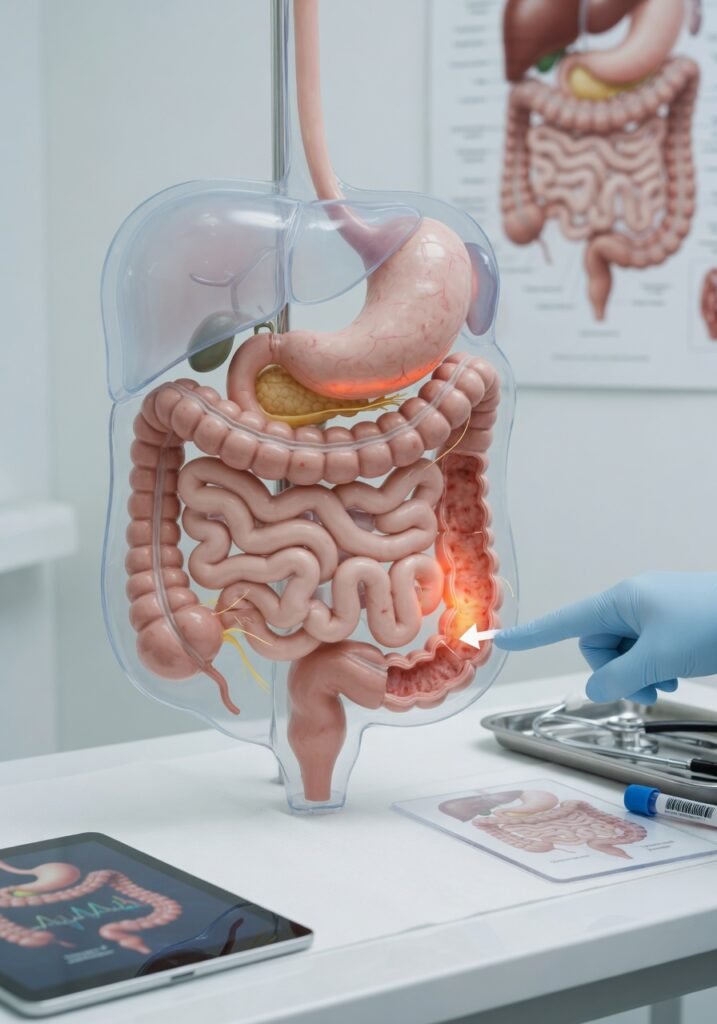

Irritable Bowel Syndrome: Full Patient Management Guide
Sarah, a 34-year-old marketing manager, spent two years visiting gastroenterologists before learning she had IBS. What surprised her most wasn’t the diagnosis—it was discovering that her gut bacteria composition differed measurably from healthy controls, yet no doctor had mentioned this until her third opinion. Research shows that approximately 11% of the global population meets IBS diagnostic criteria, yet fewer than 10% of patients receive a diagnosis within the first year of symptoms. More striking: studies indicate that women are twice as likely to be diagnosed with IBS as men, not because they experience it more often, but because they’re significantly more likely to actually seek medical evaluation for gastrointestinal complaints. Understanding IBS requires grasping something counterintuitive—this isn’t primarily a disease of visible tissue damage. Your intestines look normal on colonoscopy. The problem is functional: your gut’s communication network has developed a faulty signal pattern.
Key Facts About IBS
- Prevalence: IBS affects approximately 45 million Americans, with women representing 60-65% of diagnosed cases according to the American Gastroenterological Association
- Subtypes: Four distinct patterns exist—IBS-D (diarrhea-predominant, 30% of patients), IBS-C (constipation-predominant, 25%), IBS-M (mixed, 35%), and IBS-U (unclassified, 10%)
- Economic impact: IBS generates $20-30 billion in annual healthcare costs in the US alone, primarily through work absence and diagnostic testing
- Symptom onset: Median age of first symptoms is 29 years old, yet diagnosis often comes 5-10 years later due to misattribution to stress or dietary factors
- Gut-brain axis dysfunction: Brain imaging studies show altered neural connectivity in IBS patients’ prefrontal cortex, demonstrating measurable physiological differences beyond psychological causes
Understanding What’s Actually Happening Inside
Think of your digestive system as having a control center with multiple communication channels between your brain and intestines. In IBS, these channels develop static—the messages get scrambled. Your intestinal muscles may contract too forcefully or too weakly. Your gut’s sensory nerves become hypersensitive, so normal digestive signals feel exaggerated or even painful. Meanwhile, the invisible ecosystem of bacteria lining your intestines (your microbiome) may be less diverse and less populated with beneficial species than in people without IBS.
The gut-brain axis isn’t a metaphor—it’s neuroanatomically real. Your vagus nerve runs directly from your brain to your intestines, carrying both electrical and chemical signals constantly. In IBS patients, this connection appears dysregulated. Stress doesn’t just cause IBS symptoms through worry; stress literally alters how your intestinal muscles contract and how permeable your intestinal lining becomes. Some research suggests a prior infection (viral or bacterial) can trigger this dysregulation permanently, essentially reprogramming your gut’s communication network.
Causes and Risk Factors You Should Know
IBS isn’t caused by a single factor—it’s multifactorial, which explains why different treatments work for different people. Genetic predisposition matters; if your parent or sibling has IBS, your risk approximately doubles. But genetics loads the gun; environmental triggers pull the trigger.
Infections represent one of the clearest causal pathways. Post-infectious IBS develops in 5-30% of people following severe gastroenteritis, particularly from bacteria like Campylobacter or Salmonella. The intestinal inflammation resolves, but the altered signaling patterns persist. Psychological stress accelerates symptom onset and worsens severity—this isn’t psychosomatic weakness, it’s neurobiology. Chronic stress literally changes your intestinal permeability and reduces beneficial bacterial diversity.
Here’s what most articles overlook: food timing and eating speed matter as much as food choice. Rapid eating triggers exaggerated intestinal contractions in IBS patients. Eating irregular meals disrupts the gastrocolic reflex and alters bacterial fermentation patterns. Antibiotic use, even years before IBS symptoms appear, reduces microbiome diversity and increases disease susceptibility. Conversely, fiber intake seems protective—but only when increased gradually, as rapid increases worsen symptoms temporarily.
Recognizing IBS Symptoms and Early Warning Signs
The classic triad involves abdominal pain, altered bowel habits, and bloating. But the actual experience varies dramatically. Some patients describe their worst symptom as urgency—sudden, undeniable need to use the bathroom immediately, sometimes multiple times within hours. Others experience the opposite: infrequent, difficult bowel movements that require significant straining effort.
What catches people off-guard? The fatigue. Many IBS patients report exhaustion disproportionate to their objective symptom severity. This partly reflects poor sleep—intestinal discomfort naturally disrupts sleep cycles—but also reflects the constant low-level inflammation that characterizes IBS. Bloating often worsens throughout the day, meaning morning symptoms differ markedly from evening symptoms in the same person.
Early warning signs frequently missed: alternating constipation and diarrhea within the same week, stomach pain that improves after bowel movements, mucus in stool (which feels alarming but is benign), and symptom flares exactly correlating with stressful life periods. Many patients with IBS-C describe “intestinal pain” at specific times daily, often early morning or shortly after meals. Keep a symptom diary for three weeks before your gastroenterology appointment—precise patterns help differentiate IBS from other conditions.
Getting an Accurate Diagnosis
Diagnosis relies on the Rome IV criteria—a standardized set of symptom patterns rather than laboratory tests. You need abdominal pain at least one day per week for the past three months, with symptom onset at least six months prior. The pain should be associated with defecation and/or changes in bowel movement frequency or consistency. Sounds straightforward, but the reality? Most patients undergo colonoscopy first, find nothing alarming (which is actually reassuring, yet somehow unsettling), and then receive an IBS diagnosis more or less by exclusion.
Smart clinicians now use the ROME IV checklist explicitly rather than assuming diagnosis. Some red flags prompt further investigation: blood in stool, unexplained weight loss, anemia, family history of inflammatory bowel disease or celiac disease, or first symptom onset after age 50. These warrant colonoscopy and small bowel imaging. Most IBS patients need surprisingly little testing—perhaps stool studies to check for parasites or pathogens, breath testing for small intestinal bacterial overgrowth (SIBO), and celiac serology to exclude celiac disease.
The diagnosis conversation often includes frustration. Patients have real, disabling symptoms. Hearing “your colonoscopy was normal, so it’s IBS” can feel dismissive. It isn’t. Normal colonoscopy in the context of chronic GI symptoms with Rome IV criteria is actually a clear diagnostic statement—not a diagnosis of exclusion, but a diagnosis of functional dysregulation.
Evidence-Based Treatment Strategies
Treatment should be personalized by IBS subtype. For IBS-D, antidiarrheals like loperamide (Imodium) help acutely, but eluxadoline (Viberzi), a selective mu-opioid receptor agonist, provides sustained improvement by reducing intestinal secretion and muscle contractions. Alosetron (Lotronex) works for severe IBS-D in women (it carries FDA black-box warnings due to rare but serious complications), providing approximately 40% symptom relief in roughly 60% of patients who tolerate it.
For IBS-C, linaclotide (Linzess) and lubiprostone (Amitiza) increase intestinal fluid secretion and contractility—they’re genuinely effective, with clinical trials showing 30-40% improvements in global symptoms. Polyethylene glycol (MiraLAX) remains first-line for constipation-predominant disease; it’s less expensive and well-tolerated, though slower-acting than prescription agents.
Tricyclic antidepressants like amitriptyline (10-50mg at bedtime) reduce both pain and overall GI symptoms through mechanisms independent of mood—they modulate pain perception at the spinal cord level. Selective serotonin reuptake inhibitors (SSRIs) help when anxiety is prominent but show less consistent pain reduction than tricyclics.
Psychological therapies—particularly gut-directed hypnotherapy and cognitive-behavioral therapy—demonstrate efficacy equivalent to many medications in clinical trials. Gut-directed hypnotherapy specifically addresses the gut-brain communication dysfunction. These aren’t placebo effects; they produce measurable changes in intestinal physiology.
The low FODMAP diet deserves specific attention. FODMAPs are fermentable carbohydrates that draw water into the intestinal lumen and get fermented by colonic bacteria, producing gas. The diet restriction helps approximately 50-75% of IBS patients substantially. However, it requires working with a dietitian trained in low FODMAP restriction—done incorrectly, it’s nutritionally incomplete and unnecessarily restrictive.
Daily Management and Practical Strategies
Consistency matters more than perfection. Eat meals at the same times daily; your intestines establish rhythmic contractions around meal timing. Set a realistic bathroom schedule—even if not needed, spending 15 minutes on the toilet at your usual symptom time can help reset the pattern.
Identify your personal triggers through systematic documentation. Not everyone with IBS reacts to the same foods. Some patients react primarily to fat content, others to fructose or lactose. Trial elimination of suspected foods for two weeks, reintroduction, and symptom tracking works better than following generic IBS diets.
Physical activity improves symptoms in published studies, likely through multiple mechanisms: stress reduction, enhanced gut motility, and favorable microbiome changes. Aim for 150 minutes weekly of moderate activity—brisk walking, swimming, or cycling. High-intensity exercise sometimes worsens symptoms during activity but improves overall patterns.
Sleep quality directly predicts symptom severity the following day. Prioritize consistent bedtime and wake time, even weekends. Intestinal pain often responds to heating pads or warm baths applied to the abdomen, which relaxes musculature through heat-mediated mechanisms.
Stress management tools with actual evidence: breathing exercises (4-6 breaths per minute slows sympathetic nervous system activation), yoga specifically designed for gut health, and meditation. Apps like Calm or Insight Timer provide guided sessions specifically for digestive health if therapist access feels expensive or unavailable.
What Prevention Actually Means for IBS
True primary prevention is limited since IBS often has genetic underpinnings. However, secondary prevention—preventing worsening from current mild symptoms—is quite possible.
Probiotics show mixed evidence, but specific strains demonstrate efficacy. Saccharomyces boulardii and Bifidobacterium longum appear beneficial in multiple trials; most commercial probiotics show no benefit. Choose strains with published clinical data specific to IBS rather than marketing hype.
Avoiding unnecessary antibiotics preserves microbiome diversity, reducing long-term IBS risk. When antibiotics are genuinely necessary, discuss probiotic supplementation with your clinician simultaneously.
Avoiding post-infectious IBS is impossible if you’re exposed to contaminated food or water, but thorough handwashing and food safety reduce risk. For travelers, bismuth subsalicylate prophylactically reduces traveler’s diarrhea risk, occasionally preventing post-infectious IBS development.
Frequently Asked Questions
Can IBS turn into inflammatory bowel disease (IBD)?
No. IBS and IBD are fundamentally different conditions. IBS shows no intestinal inflammation on colonosc
Sources & Medical References
HealthTopics.com articles are based on peer-reviewed medical research and guidance from the NIH, CDC, and WHO. See our editorial policy for full sourcing standards.