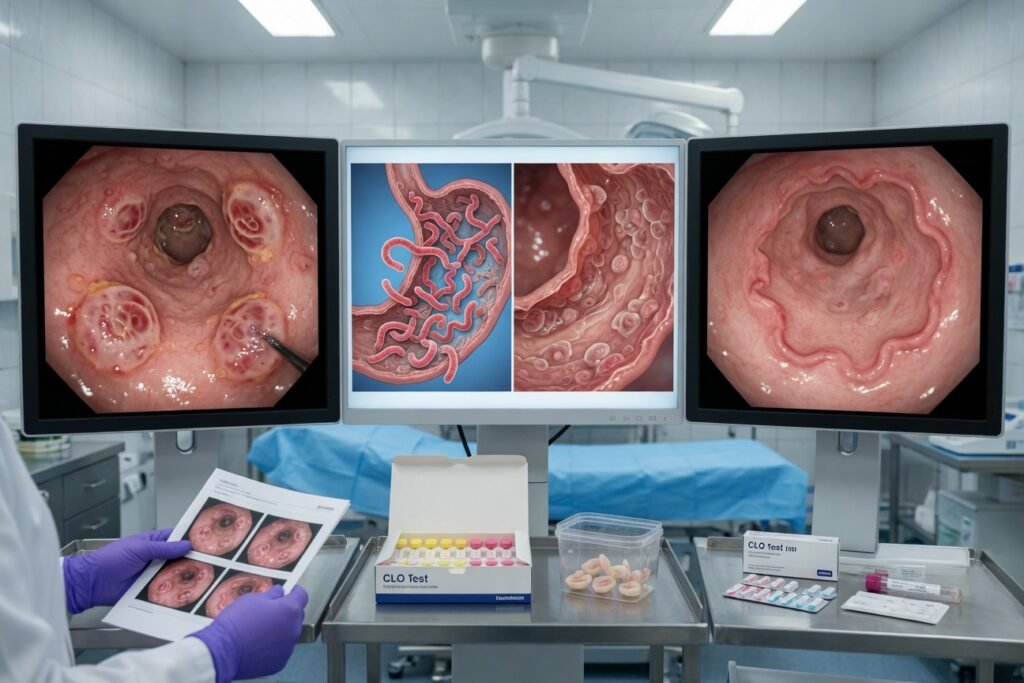
Peptic Ulcers: What You Actually Need to Know About H. pylori
Most people think peptic ulcers happen because they’re stressed or eat spicy food too often. Sarah, a 42-year-old accountant, believed exactly that when she started having sharp burning pain in her upper abdomen. She cut out coffee, took antacids religiously, and tried stress-reduction techniques for six months. Nothing worked. What Sarah didn’t know—and what most patients never learn until it’s discovered by accident—is that her real problem was a bacterium called Helicobacter pylori that had been silently eroding her stomach lining for years. The truth about peptic ulcers is far different from popular belief: roughly 90% of them are caused by either H. pylori infection or nonsteroidal anti-inflammatory drugs (NSAIDs), not stress or diet. Once doctors identified the bacterial culprit in Sarah’s case, a two-week course of antibiotics actually healed her ulcer permanently.
Key Facts About Peptic Ulcers
- H. pylori infects approximately 4.4% of the U.S. population, but up to 50% globally, according to research published in JAMA
- Only about 10-15% of people infected with H. pylori actually develop ulcers, meaning infection alone doesn’t guarantee disease
- NSAIDs cause roughly 24% of peptic ulcers in developed countries, with risk increasing 3-4 fold in users over age 65
- Triple therapy (two antibiotics plus a proton pump inhibitor) achieves 90% eradication rates in H. pylori infections when compliance is good
- Untreated peptic ulcers can perforate, causing sudden severe pain and potential sepsis—a true medical emergency requiring surgery
Understanding How Peptic Ulcers Actually Form
Think of your stomach’s lining like a protective barrier wall that normally regenerates faster than any damage occurs. H. pylori bacteria work like tiny demolition crews—they burrow into the mucus layer, trigger chronic inflammation, and weaken the stomach’s natural defenses. The bacteria produces an enzyme called urease that neutralizes stomach acid locally around itself, creating a protected pocket where it can survive and multiply. This ongoing assault prevents the normal repair mechanisms from keeping pace, and eventually the lining erodes deep enough to form an actual hole or ulcer.
NSAIDs like ibuprofen and naproxen work differently but achieve the same destructive result. They inhibit cyclooxygenase enzymes that normally protect the stomach lining by promoting mucus production and blood flow. Take NSAIDs regularly, and you’re essentially removing the stomach’s built-in defense system while acid continues its work. What makes this mechanism particularly insidious is that symptoms often don’t appear until significant damage has already occurred.
What Actually Causes Peptic Ulcers: The Real Risk Factors
H. pylori transmission happens through contaminated food, water, or saliva—usually in childhood in developing countries, or through fecal-oral contact in areas with poor sanitation. Once infected, the bacteria can persist for decades without causing problems until some trigger tips the balance. NSAID use is straightforward: regular consumption (daily or near-daily) substantially increases ulcer risk, particularly in people over 65 or those taking corticosteroids simultaneously.
But here’s what most articles miss entirely: psychological stress genuinely affects peptic ulcer outcomes, though not through the old “stress causes ulcers” myth. Stress doesn’t initiate the disease, but it does suppress immune function and worsen H. pylori-related inflammation. Someone with an active infection who’s also under tremendous stress shows worse symptoms and slower healing. Similarly, smoking reduces stomach lining blood flow and impairs healing—a mechanism that’s actually measurable on endoscopy.
Less commonly discussed is the role of alcohol. While alcohol doesn’t directly cause ulcers in most people, it does increase acid production and can exacerbate existing ulcers. The risk profile changes in someone using alcohol heavily while also taking NSAIDs and carrying H. pylori—that’s a genuinely dangerous combination. Additionally, certain genetic polymorphisms affect how strongly someone’s immune system responds to H. pylori, explaining why some infected people develop severe ulcers while others remain asymptomatic.
Recognizing Peptic Ulcer Symptoms Day to Day
The classic symptom is burning pain in the upper abdomen between meals or at night, sometimes relieved temporarily by food or antacids. But symptoms vary more than most sources acknowledge. Some patients describe gnawing discomfort rather than sharp pain. Others experience early satiety—feeling uncomfortably full after eating small amounts. A few have predominantly nausea without obvious pain, leading to missed diagnoses.
Early warning signs that slip past most patients: vague indigestion that’s different from their baseline, unexplained appetite loss, or bloating after meals. Blood in vomit or black tarry stools indicate more serious bleeding and demand immediate medical attention. The less obvious early signal is a gradual shift in what foods feel tolerable—if spicy or fatty foods that never bothered you previously suddenly cause discomfort, that’s worth investigating rather than assuming your tolerance has just changed with age.
How Doctors Actually Diagnose Peptic Ulcers
The gold standard is upper endoscopy (esophagogastroduodenoscopy or EGD), where a thin flexible scope with a camera lets the doctor visualize the ulcer directly and take biopsies. But before ordering endoscopy, doctors typically test for H. pylori using one of several methods. The noninvasive urea breath test has about 95% sensitivity—you drink a solution containing labeled urea, and if H. pylori is present, it metabolizes the urea and you exhale labeled carbon dioxide that’s measured.
Stool antigen testing works similarly well and requires no fasting or special preparation. Serology (blood antibody tests) shows past or present infection but can’t distinguish between current active infection and old exposure. If you’ve recently taken antibiotics or proton pump inhibitors, you need to stop them at least two weeks before testing to avoid false negatives. Many patients don’t realize this timing matters, and their negative test results are meaningless.
During endoscopy, the doctor can see whether the ulcer is actively bleeding, has a clot, or shows signs of recent bleeding. Biopsies from the stomach lining can confirm H. pylori presence and check for gastric cancer (a real concern with severe chronic infection). The entire procedure takes 15 minutes typically, uses sedation so you’re comfortable, and you’ll need someone to drive you home.
Treatment: What Actually Cures Peptic Ulcers
For H. pylori-positive ulcers, the goal is eradication. Standard triple therapy combines omeprazole (a proton pump inhibitor), amoxicillin, and clarithromycin for 14 days. This works in roughly 85-90% of cases, but resistance patterns are shifting—in some regions, clarithromycin resistance now approaches 30%, reducing efficacy. If triple therapy fails, quadruple therapy adds bismuth subsalicylate and works in resistant cases, though side effects are more pronounced.
Newer sequential therapy regimens (five days of dual therapy followed by five days of triple therapy) show marginally better eradication rates in some studies but aren’t yet standard in the United States. Compliance matters enormously—missing doses reduces eradication chances substantially. Some patients struggle with the side effects of clarithromycin (metallic taste, diarrhea) or bismuth (black stools), and switching regimens can improve adherence.
For NSAID-caused ulcers, stopping the NSAID is the essential first step if medically feasible. Proton pump inhibitors like esomeprazole (40 mg daily) or pantoprazole (40 mg daily) heal ulcers in 4-8 weeks by suppressing acid production. If NSAIDs must continue (severe arthritis, cardiac protection), adding a proton pump inhibitor or switching to a COX-2 selective inhibitor like celecoxib reduces ulcer recurrence risk.
Histamine-2 receptor antagonists like famotidine are weaker acid suppressors and rarely used as primary therapy now, though some patients tolerate them better. The bottom line: once H. pylori is eradicated or NSAIDs are stopped, combined with adequate acid suppression for 4-12 weeks, most ulcers heal completely and stay healed.
Practical Daily Management While Healing
Your diet matters less than people assume—spicy foods don’t cause ulcers and don’t necessarily slow healing. However, if specific foods trigger your pain, avoiding them during the healing phase makes sense. Coffee and caffeine stimulate acid production, so cutting back often reduces symptoms faster. Alcohol delays healing and increases bleeding risk, so complete avoidance during treatment is wise.
Take your medications exactly as prescribed, even if you feel better within days. H. pylori eradication requires completing the full course. Set phone alarms if remembering multiple daily medications is challenging. Taking antibiotics with food as directed reduces nausea. Proton pump inhibitors work best taken 30-60 minutes before breakfast. If you’re on triple therapy, diarrhea from antibiotics often worsens around day 4-5; some doctors recommend a probiotic during and after treatment, though evidence is mixed.
If you’re in pain, acetaminophen is safer than NSAIDs. Avoid NSAIDs entirely until your doctor confirms complete healing. If you need pain relief for other reasons during treatment, discuss this with your prescriber—sometimes switching to celecoxib temporarily is better than risking ulcer complications.
Prevention: What Evidence Actually Shows Works
For people without current infection: proper food handling and sanitation prevent H. pylori transmission. Handwashing, not sharing utensils or toothbrushes, and avoiding contaminated water matter more in developing countries. In the United States, screening asymptomatic people for H. pylori is generally not recommended, though some gastroenterologists screen those with a strong family history of gastric cancer.
For NSAID prevention: the evidence is clear. Use the lowest effective dose for the shortest duration necessary. If you need chronic NSAIDs, combine them with a proton pump inhibitor—this reduces ulcer risk by approximately 70%. People over 65 should prefer acetaminophen or topical NSAIDs when safe alternatives exist. Anyone with a prior ulcer history taking NSAIDs needs concurrent acid suppression.
Smoking cessation directly improves ulcer healing and reduces recurrence. The mechanism is increased mucus protection and improved blood flow. Limiting alcohol to moderate amounts (if you drink at all) while taking NSAIDs or harboring H. pylori reduces your ulcer risk. These aren’t magical interventions—they’re addressing the actual mechanisms that make ulcers worse.
Frequently Asked Questions
No—stress doesn’t initiate ulcer formation. However, in someone already infected with H. pylori or regularly using NSAIDs, stress worsens symptoms by suppressing immune function and increasing acid production. The old belief came from observing that stressed patients had worse ulcer outcomes, but causation was backwards.
Not necessarily. Only 10-15% of H. pylori-infected people develop ulcers. Your genetic background, immune response, smoking status, and other factors determine whether you progress to actual disease. Some people carry the bacteria their entire lives without problems.
Sources & Medical References
HealthTopics.com articles are based on peer-reviewed medical research and guidance from the NIH, CDC, and WHO. See our editorial policy for full sourcing standards.