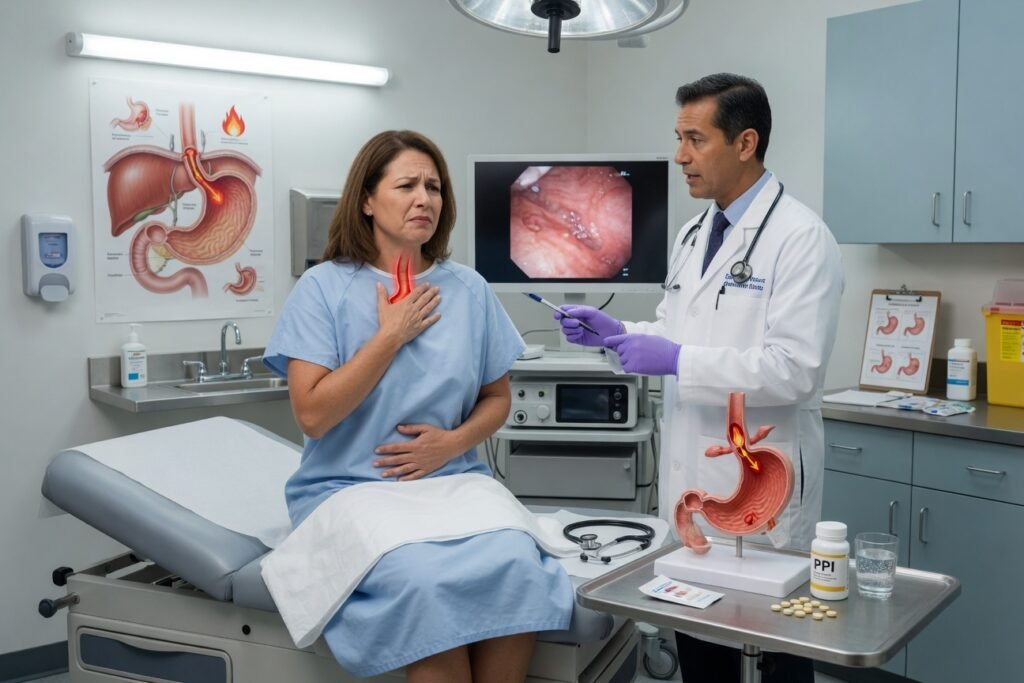
GERD: Why Your Stomach Acid Becomes Your Enemy at Night
Sarah, a 47-year-old accountant, woke at 3 AM with a burning sensation climbing from her chest into her throat. She’d had this happen dozens of times over the past year, but what she didn’t know was this: research shows that approximately 20% of Americans experience GERD symptoms weekly, yet nearly 40% of those people never mention it to their doctor because they assume it’s just something they have to live with. That statistic comes from data published in JAMA in 2005, and the numbers haven’t improved much since then. Sarah wasn’t alone—but she was undertreated. The mechanism causing her nighttime suffering is straightforward once you understand it: her lower esophageal sphincter, the muscular valve that should seal off her stomach from her food pipe, had weakened enough that acidic stomach contents were leaking backward into her esophagus several times daily. Unlike occasional heartburn after a heavy meal, GERD represents a chronic condition where this backflow happens repeatedly, causing inflammation and damage over months and years.
Key Facts About GERD
- Approximately 20% of the U.S. population experiences GERD symptoms at least once weekly (JAMA, 2005)
- The condition affects 15-30 million Americans, with prevalence increasing approximately 5% per decade in some demographics
- GERD causes an estimated $10-15 billion in direct and indirect healthcare costs annually in the United States
- Patients with untreated GERD have a 10-15 times higher risk of developing Barrett’s esophagus, a precancerous condition
- Proton pump inhibitors reduce acid production by up to 99%, making them the most potent acid-suppressing medications available
Understanding GERD: What’s Actually Happening
Your esophagus isn’t designed for acid. Think of it like a waterslide made of delicate tissue—it can handle the rush of food moving down, but if you start pumping acid up through it repeatedly, damage happens quickly. The lower esophageal sphincter (LES) is a ring of muscle about the size of a grape at the junction between your stomach and esophagus. When working properly, it contracts to seal the stomach off after food passes through, acting like a one-way valve. But in GERD, this valve becomes incompetent—either it relaxes inappropriately when it shouldn’t, or it lacks sufficient tone to maintain a proper seal. The result is that gastric acid, which belongs safely inside your stomach where the lining is protected by mucus, splashes upward into your esophageal lining. That lining has no such protective mucus layer, so it burns. Over time, repeated acid exposure causes inflammation (esophagitis), scarring, and potentially ulceration of the esophageal tissue itself.
Causes and Risk Factors: Which Ones Actually Matter
Some GERD causes are obvious. Obesity increases intra-abdominal pressure and mechanically impairs the LES—you gain 10 pounds, your GERD typically worsens. Certain foods relax the LES: chocolate contains compounds that decrease LES pressure, as do fatty foods, alcohol, and caffeine. Medications that relax smooth muscle, like calcium channel blockers used for hypertension or nitrates used for angina, directly worsen reflux. Pregnancy causes GERD in approximately 50% of women due to progesterone relaxing the LES combined with increased abdominal pressure from the growing uterus.
But here’s what most articles miss: psychological stress and anxiety significantly impair LES function through vagal nerve pathways, independent of acid production. A patient under chronic work stress or dealing with anxiety disorders often experiences worsening GERD that doesn’t fully respond to acid-blocking medication alone because the underlying problem isn’t just too much acid—it’s abnormal sphincter function triggered by stress signals. Smoking impairs LES pressure and increases gastric acid secretion simultaneously, making it perhaps the single most modifiable risk factor. Hiatal hernia, where part of the stomach protrudes through the diaphragm, increases GERD risk significantly, though not everyone with a hiatal hernia develops symptomatic reflux.
Signs and Symptoms: What You’ll Actually Experience
The classic symptom is heartburn—that burning sensation behind the breastbone. But GERD presents far more subtly in many people. Chronic cough that worsens when lying down happens because acid irritates your throat and triggers a protective cough reflex. Hoarseness, especially noticeable in the morning, occurs because acid damages your vocal cords overnight. Some patients report regurgitation of food or liquid, particularly when bending over or lying flat. A sensation of a lump in the throat, called globus sensation, happens when acid irritates the pharynx.
The overlooked early warning sign is dental erosion. Your dentist might notice the enamel on your back teeth and upper surfaces is wearing away before you even feel typical heartburn symptoms. This happens because stomach acid is stronger than your tooth enamel. Another often-missed symptom is sleep disruption—you might not realize you’re waking five times nightly from subtle acid backflow until you finally address the reflux and suddenly sleep through eight undisturbed hours. Some patients only experience asthma-like symptoms: wheezing, chest tightness, and shortness of breath triggered by acid aspiration into the lungs, making them think they have asthma when the real problem is GERD.
Getting a Diagnosis: What Actually Happens
Your doctor will start by taking a careful history. How often do symptoms occur? What makes them better or worse? Do you have red flag symptoms like difficulty swallowing, persistent vomiting, or unexplained weight loss? These prompt further investigation because they could indicate Barrett’s esophagus or other complications.
Most GERD is diagnosed clinically—meaning your symptoms plus response to treatment are diagnostic. If you respond well to a proton pump inhibitor, you likely have GERD. But if the diagnosis is unclear, your doctor might order upper endoscopy (EGD), where a thin camera travels down your esophagus to visualize the damage directly and check for Barrett’s changes or ulceration. Ambulatory pH monitoring, where a thin probe measures acid exposure over 24 hours, confirms GERD objectively if needed but is reserved for atypical presentations. High-resolution esophageal manometry measures LES pressure and contractility, useful when considering surgical options. These tests aren’t routine—most uncomplicated GERD patients never need them.
Treatment Options: What Actually Works
Proton pump inhibitors (PPIs) like omeprazole, lansoprazole, pantoprazole, and esomeprazole are the strongest acid-suppressing medications. They work by blocking the enzyme that produces stomach acid, reducing acid secretion by 90-99%. Most patients take them once daily before breakfast, and symptoms typically improve within 3-5 days. H2-receptor antagonists like famotidine work faster (within 30-60 minutes) by blocking histamine-induced acid release, making them useful for acute symptoms, but they’re less potent long-term and lose effectiveness with chronic use as your body develops tolerance.
Antacids like calcium carbonate or magnesium hydroxide neutralize acid already present but don’t prevent production—they’re for occasional use, not chronic GERD. Alginate-containing products like Gaviscon create a foam barrier that floats on stomach contents, mechanically preventing reflux; they’re underutilized but genuinely helpful for some patients, particularly those experiencing reflux while lying down.
For patients who don’t respond to medication or want to avoid long-term PPI use, fundoplication is a surgical option where the surgeon wraps the upper stomach (fundus) around the LES to reinforce it mechanically. Success rates are around 80-90%, but surgery carries risks and isn’t appropriate for everyone. LINX device placement, where a ring of magnetic beads is surgically placed around the LES to reinforce its closure, is newer with limited long-term data but shows promise in selected patients.
Practical Daily Management: Concrete Strategies
Start with meal timing and composition. Eat your largest meal at lunch, not dinner. Eat 3-4 hours before bed—this allows your stomach to empty significantly before you lie flat. Avoid trigger foods, but this is individual: common culprits include chocolate, fatty foods, citrus, tomatoes, spicy foods, alcohol, and caffeine. Keep a food diary for two weeks to identify your specific triggers rather than eliminating everything.
Elevate your bed head 6-8 inches using a wedge pillow or bed risers—not just extra pillows, which create a bent position that worsens reflux. Lie on your left side; studies show left-side positioning improves acid clearance. Wear loose clothing around your abdomen; tight waistbands and belts increase intra-abdominal pressure directly. If you take medications that worsen reflux, ask your doctor about alternatives—sometimes changing your antihypertensive or pain medication makes a dramatic difference.
Don’t lie down after taking a PPI; take it with water while standing or sitting, and wait 30 minutes before lying down. This ensures it reaches your stomach and isn’t damaged by residual esophageal acid. Chew gum for 30 minutes after meals; increased salivation buffers acid and stimulates swallowing, which clears acid from the esophagus.
Prevention: What Evidence Actually Shows
Weight loss reduces GERD severity proportionally—a 10% reduction in body weight produces meaningful improvement in most overweight patients with GERD. Smoking cessation improves LES pressure within weeks. Limiting alcohol, especially close to bedtime, helps significantly. These aren’t revolutionary findings, but they do work when you actually implement them.
The nuance most articles miss: once GERD develops, you can’t completely prevent symptoms through lifestyle changes alone in most cases. You can reduce frequency and severity, but the underlying sphincter dysfunction doesn’t resolve with diet modification. This is why long-term medication is often necessary—not because you’re doing something wrong, but because the anatomy has changed.
Frequently Asked Questions About GERD
Can GERD go away on its own?
No. Once GERD develops, the underlying weakness in the lower esophageal sphincter is structural and doesn’t spontaneously recover. Lifestyle modifications and medication can control symptoms, but stopping treatment typically leads to symptom recurrence within weeks to months. The condition is managed, not cured.
Is it safe to take proton pump inhibitors long-term?
PPIs are safe for most people long-term, though reduced absorption of vitamin B12, magnesium, and calcium can develop with years of use, so periodic monitoring is reasonable. Some studies suggest potential associations with bone fractures and kidney disease with prolonged use, but risk-benefit analysis generally favors their use in patients with frequent symptoms or complications from untreated reflux.
Why does my heartburn happen mostly at night?
Gravity helps keep acid in your stomach during the day, but lying flat removes this advantage, and the lower esophageal sphincter relaxes more frequently during sleep. Additionally, saliva production decreases during sleep, removing a natural acid buffer. These factors combine to make nighttime reflux much more common and severe.
Can GERD damage my esophagus permanently?
Yes, untreated GERD causes es
Sources & Medical References
HealthTopics.com articles are based on peer-reviewed medical research and guidance from the NIH, CDC, and WHO. See our editorial policy for full sourcing standards.