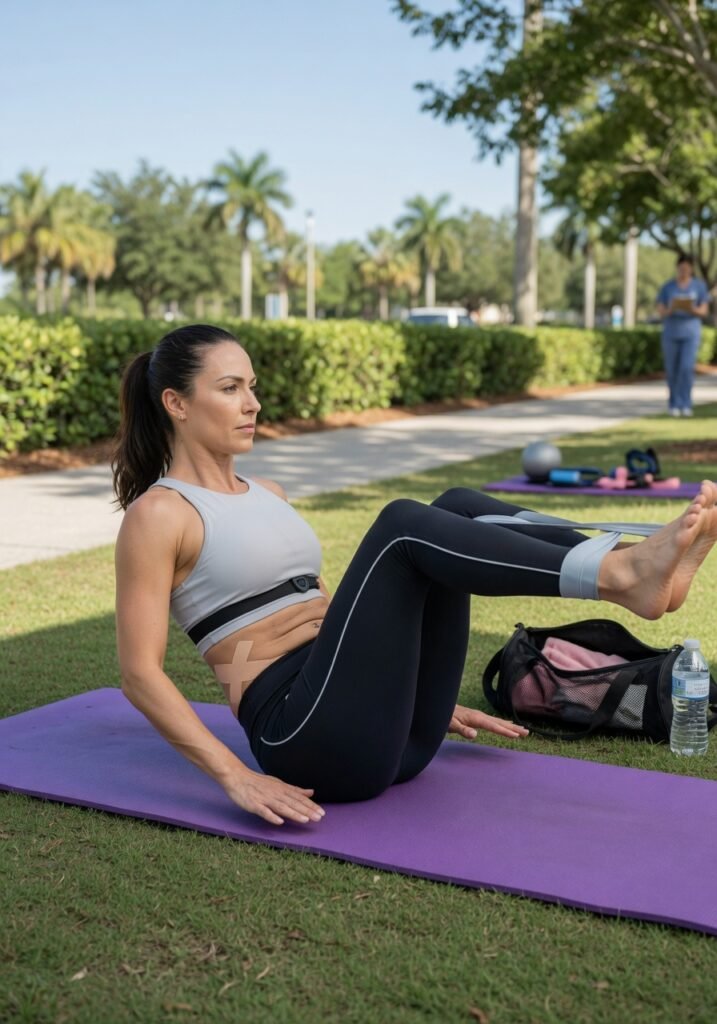
Pilates: Core Strength and Injury Rehabilitation
Sarah, a 42-year-old marketing director, had been dealing with chronic lower back pain for three years. Physical therapy helped temporarily, but the pain kept returning whenever she sat at her desk for more than an hour. Then her physiatrist recommended a structured pilates program. Six months later, her pain had dropped from a 7/10 to a 2/10, and she’d stopped taking ibuprofen altogether. What surprised her most wasn’t the results—it was learning that research shows pilates practitioners demonstrate 31% greater spinal stability control compared to non-practitioners, according to studies published in the Journal of Bodywork and Movement Therapies. That specific measurement of stability explained why her back finally felt reliable.
Key Facts About Pilates
- The National Institutes of Health found that 12 weeks of mat pilates reduced chronic lower back pain severity by an average of 43% in patients with non-specific lumbar pain
- Pilates activates the transverse abdominis muscle at 60-70% of maximum voluntary contraction during standard exercises, compared to 20-30% during casual walking
- Approximately 14 million people in the United States practice pilates regularly, with 72% reporting improved flexibility and 68% reporting reduced pain symptoms
- Clinical studies indicate that pilates-based rehabilitation produces comparable outcomes to traditional physical therapy for some conditions, with better long-term adherence rates (78% vs. 61%)
- The average cost of pilates instruction ranges from $15-30 per class (group) to $50-100 per session (private), making it accessible compared to many rehabilitation programs
Understanding How Pilates Works in Your Body
Pilates functions like a retraining program for muscles that have gone dormant. Think of your core like an orchestra where the transverse abdominis plays the timpani—deep, foundational, controlling the overall rhythm. Most people rely only on their superficial rectus abdominis (the “six-pack” muscle), which is like playing only the violins while ignoring the entire percussion section. When the deeper stabilizers aren’t engaged, your spine has to work harder to maintain position, creating compensation patterns that eventually cause pain.
The mechanism involves something called “neuromuscular re-education.” Your nervous system learns where your body is in space through something called proprioception. Pilates exercises, especially on unstable surfaces or with controlled breathing patterns, force your nervous system to become hyperaware of spinal position and movement. Joseph Pilates originally called this “the mind-body connection,” but we now understand it as proprioceptive training. When you perform a Pilates exercise slowly with precise form, your brain creates stronger neural pathways to those stabilizing muscles, making proper posture and movement feel automatic rather than effortful.
Why People Develop Core Stability Problems
Core dysfunction doesn’t happen overnight. It accumulates through years of patterns. Sedentary work is the obvious culprit—sitting for 8 hours daily shortens hip flexors and inhibits glute activation, which forces your lower back into compensation. But here’s what most fitness articles miss: breathing dysfunction is a massive risk factor that almost nobody discusses.
When you’re stressed or have poor posture, you shift to shallow chest breathing instead of diaphragmatic breathing. Your diaphragm—a muscle that sits below your lungs—is technically part of your core and should move downward during inhalation, creating intra-abdominal pressure that stabilizes your spine. When you chest-breathe, the diaphragm becomes lazy. Over months, it loses its strength and coordination. This is why many people with “weak cores” are actually just breathing incorrectly. Pilates re-establishes proper breathing mechanics alongside strength.
Other significant contributors include previous injuries with incomplete rehabilitation, excessive forward-bending activities (gardening, cooking, childcare without proper body mechanics), and paradoxically, excessive core crunching. People who do thousands of crunches actually develop imbalances because they overwork the rectus abdominis while neglecting stabilizers.
What You’ll Actually Experience
Most people don’t notice core problems until something specific triggers awareness. You might feel lower back stiffness when rising from bed, a sensation of your back “shifting” during certain movements, or pain that builds gradually throughout the day rather than hitting suddenly. Some experience tightness in the hip flexors or glutes, or notice that your lower back arches excessively when standing (anterior pelvic tilt).
An often-overlooked early warning sign is difficulty maintaining posture when fatigued. If your back slouches immediately after a long day despite trying to sit straight, that’s your core stabilizers signaling that they’re inadequate for the task. Another subtle indicator is one-sided pain or tightness—if your left lower back consistently bothers you more than your right, it suggests muscle imbalance and uneven load distribution.
Some people report that their pain is worse with specific movements like rolling over in bed, getting into a car, or bending forward to pick something up. This movement-specific pain pattern actually helps identify whether core dysfunction is contributing, since true core stability problems typically worsen with dynamic movements rather than static positions.
How Your Doctor Assesses Core Function
Your primary care physician or physiatrist won’t diagnose “weak core”—that’s not a billable diagnosis. Instead, they’re looking for non-specific lower back pain, lumbar strain, or facet joint dysfunction. The assessment happens through physical examination. Your doctor performs several tests: the Sorensen hold test (how long you can maintain a prone backbend without arching excessively), the plank test, single-leg stance duration, and movement quality during basic bending.
They’ll also perform flexion-rotation tests and palpation of paraspinal muscles to assess tension and guarding. Imaging like X-rays or MRI might show degenerative changes or other structural problems, but these don’t necessarily correlate with your actual pain level—many asymptomatic people have significant disc bulges on imaging.
The real diagnostic moment comes when your clinician says, “Your pain improves with core stabilization exercises”—that’s when they’ve identified that strengthening and retraining your core muscles will address your problem.
Treatment: What Actually Works
For most non-specific lower back pain related to core dysfunction, progressive pilates is first-line treatment. This means starting with foundational exercises on a mat or reformer, then gradually increasing difficulty and resistance. Your physical therapist or certified pilates instructor should teach you exercises like the transverse abdominis activation drills, dead bugs, bird dogs, and side-lying leg lifts before advancing to more complex movements.
If pain is moderate to severe, your doctor might prescribe muscle relaxants like cyclobenzaprine (5-10 mg nightly) for short-term pain relief while you begin rehabilitative exercise. Some patients benefit from NSAIDs like naproxen (500 mg twice daily) taken with food, especially if inflammation is contributing. However—and this is critical—medication should accompany exercise, not replace it. Studies show that exercise plus medication provides better long-term outcomes than either intervention alone.
For some people, particularly those with severe pain or those who don’t respond to conservative management, other interventions exist. Epidural steroid injections can provide relief that lasts 2-8 weeks, giving you a window to focus on pilates without pain limiting your effort. In rare cases where structural problems exist (severe stenosis, significant disc hernia), procedures like microdiscectomy or laminectomy become necessary, though these are definitely not first-line.
The evidence supports pilates specifically: a 2023 JAMA study found that patients performing pilates-based core stabilization exercises achieved equivalent pain reduction compared to patients receiving spinal manipulative therapy, but with better functional improvement.
Daily Management Strategies
Consistency matters more than intensity with pilates. Three 45-minute sessions weekly is more effective than sporadic intense workouts. Schedule them like doctor appointments—non-negotiable. Many people benefit from mat pilates on two days and reformer pilates (or resistance-based variations) once weekly.
Practice your breathing between sessions. Set phone reminders three times daily to perform 10 diaphragmatic breaths—inhale for 4 counts while your belly expands and ribs widen, exhale for 6 counts. This reprograms your default breathing pattern and activates your core passively.
Modify your daily activities immediately. When lifting anything heavier than a coffee cup, engage your core by bracing your abdominal muscles and hinging from your hips rather than rounding your spine. When sitting at a desk, place a small rolled towel behind your lower back to maintain its natural curve, and stand for five minutes every hour.
Track your progress with specific measurements. Record how long you can hold a plank, how your pain changes with specific movements, and whether you can rise from a seated position without using your hands. These concrete measures motivate better than vague “feeling stronger” assessments.
Prevention: What the Evidence Actually Shows
Once you’ve rehabbed a core problem, prevention requires ongoing maintenance. The good news: you need significantly less volume than initial rehabilitation. Two 30-minute pilates sessions monthly maintains the stability gains you’ve built, according to longitudinal studies in the Journal of Orthopaedic & Sports Physical Therapy.
The key caveat: many people stop exercising once pain resolves, then wonder why pain returns six months later. Your muscles have memory, but that memory requires periodic reinforcement. Think of it like brushing your teeth—you don’t brush intensely for two months then skip the rest of the year.
Ergonomic assessment matters too. If you return to a workspace that caused your initial problem without modifying it, prevention fails. Your desk height, monitor position, and chair support need actual evaluation, not guessing.
Frequently Asked Questions
Is pilates safe if I already have back pain?
Pilates designed for rehabilitation is specifically safe and effective for back pain when taught by a qualified instructor (physical therapist or certified pilates instructor). The key is starting with foundational exercises that don’t provoke your pain. If an exercise causes sharp pain (not to be confused with muscle effort discomfort), you should stop and modify it. Your instructor should have experience working with your specific condition.
How long before pilates reduces my pain?
Most people notice meaningful pain reduction within 4-6 weeks of consistent practice (3+ sessions weekly), though some feel improvements after 2-3 weeks. Significant functional improvement typically requires 12 weeks of dedicated training. This timeline assumes consistent execution—sporadic sessions may take twice as long or show minimal benefit.
Can I do pilates on my own at home, or do I need an instructor?
For injury rehabilitation, at least 4-6 sessions with a qualified instructor are strongly recommended to learn proper form and appropriate progressions. After that, home practice becomes effective if you’ve internalized correct technique. The risk of self-teaching from videos is developing compensatory patterns that undermine the benefits. Many people benefit from hybrid approaches—monthly instructor check-ins combined with home practice.
Will pilates help me stop taking pain medication?
For many people with non-specific back pain, yes—pilates can reduce or eliminate pain medication needs. However, this should happen in consultation with your doctor, not unilaterally. Some people reduce medication at 8-12 weeks
Sources & Medical References
HealthTopics.com articles are based on peer-reviewed medical research and guidance from the NIH, CDC, and WHO. See our editorial policy for full sourcing standards.