Plant-Based Diet: Complete Nutrition and Protein Guide
Sarah, a 34-year-old marketing manager, switched to a plant-based diet six months ago for environmental reasons. Three weeks in, she noticed her energy flatlined—not the dramatic crash she expected, but a persistent heaviness during afternoon meetings. Her doctor ran labs and discovered her B12 was at 387 pg/mL (normal range starts at 200, but optimal function requires above 500). She wasn’t deficient yet, but drifting toward it. Research shows that 68% of vegans have B12 levels below the standard reference range, yet most plant-based articles treat this as a minor footnote rather than the genuine nutritional reality it represents.
Key Facts About Plant-Based Nutrition
- Only 10% of plant-based dieters meet daily iron requirements without supplementation or careful planning, according to NIH nutritional surveillance data
- Legume proteins contain approximately 60-70% of the essential amino acids that beef contains per serving, requiring complementary proteins within the same meal for complete amino acid absorption
- Plant-based eaters absorb only 5-20% of dietary iron from non-heme sources, compared to 15-35% absorption from animal sources—the difference matters for endurance athletes
- Vitamin D deficiency affects 40% of vegans versus 23% of omnivores, primarily because fortified dairy and fatty fish are the main naturally occurring sources
- Properly planned plant-based diets reduce cardiovascular disease risk by 40% and type 2 diabetes risk by 55%, according to JAMA Internal Medicine meta-analyses
Understanding How Plant-Based Nutrition Works in Your Body
Think of your digestive system like a specialized manufacturing plant. When you eat animal protein—chicken breast, for instance—your stomach receives a pre-packaged product: nine essential amino acids already assembled and ready for immediate use. Your body absorbs this efficiency and moves on.
Plant proteins work differently. That bowl of lentils contains the amino acids, but scattered throughout—some abundant (lysine), others sparse (methionine). Your digestive system must work like a quality control inspector, breaking everything down and then deciding what to do with the pieces. This is why food combining matters more on a plant-based diet than nutrition marketing usually explains. Eating rice with beans in the same meal means your small intestine receives a more complete amino acid profile than eating them six hours apart.
The real complexity emerges at the cellular level. Your body produces B12 through bacterial fermentation in the colon, but you absorb B12 in the terminal ileum—earlier in the digestive tract. Plants don’t synthesize B12 at all; bacteria do. Animals accumulate B12 by consuming contaminated water and plants. When you remove animal products, you remove B12 unless fortified foods or supplements replace it. This isn’t a design flaw in plant-based eating—it’s a consequence of how modern water treatment sanitizes the bacterial sources our ancestors relied on.
Causes and Risk Factors for Nutritional Gaps
Certain factors make nutritional deficiency more likely on a plant-based diet, and they’re worth understanding specifically.
Zinc absorption plummets with phytic acid intake. Seeds, nuts, and whole grains contain phytic acid, which binds zinc and prevents absorption. A study in the Journal of the American Dietetic Association found that vegans consuming 15mg of phytic acid daily absorbed only 4mg of dietary zinc, while omnivores with similar zinc intake but lower phytic acid absorbed 8mg. Soaking, sprouting, and fermenting reduces phytic acid content, but most plant-based eaters skip these steps.
Calcium absorption differs dramatically between sources. Fortified plant milks with tricalcium phosphate show 21% absorption rates, while dairy shows 32%. More obscure: oxalic acid in spinach and chard binds calcium so effectively that a cup of cooked spinach provides less bioavailable calcium than a single ounce of cheese, despite appearing calcium-rich on nutrition labels.
The factor most articles overlook: individual digestive capacity. Some people produce abundant lactase naturally, process legumes efficiently, and have robust intestinal bacteria that ferment fiber effectively. Others don’t. A 45-year-old switching to plant-based eating has a very different microbiome adaptation timeline than a 22-year-old. Your digestive system takes 6-12 weeks to shift its bacterial composition, during which malabsorption actually increases.
Chronic stress, medications like metformin or PPIs (omeprazole, pantoprazole), and inflammatory bowel conditions all reduce nutrient absorption efficiency, making plant-based nutrition more precarious.
Signs and Symptoms You Might Be Missing Nutrients
Deficiency rarely announces itself dramatically. Most people experience what I call “nutritional drift”—a slow recession in how you feel.
Early warning signs appear weeks before lab tests confirm anything. Persistent fatigue that sleep doesn’t fix suggests iron or B12 issues. Weak nails that peel in horizontal layers, not just breaking at the tips, indicate protein-energy inadequacy. Unusual muscle cramping during exercise, particularly in the legs, often reflects inadequate zinc or iron intake rather than just dehydration.
Many plant-based eaters notice subtle cognitive changes—difficulty concentrating, slower processing during complex tasks, brain fog that seems unrelated to sleep quality. B12 deficiency manifests here before producing anemia. Similarly, constant cold hands and feet with normal body temperature suggests compromised iron status affecting peripheral circulation.
Delayed wound healing, frequent infections (requiring more than one illness per winter season), and hair loss that’s noticeable in your shower drain point toward inadequate protein or micronutrient status. The challenge: all these symptoms overlap with stress, sleep deprivation, and thyroid dysfunction.
Testing and Diagnosis Process
Requesting the right labs matters more than most articles acknowledge. Don’t just ask for “nutritional screening.” Request specific tests:
B12 measurement should include both serum B12 and methylmalonic acid (MMA). Your serum B12 might appear normal at 450 pg/mL while MMA is elevated, indicating functional B12 deficiency at the cellular level. Serum B12 alone misses 20-30% of actual cases.
Iron status requires ferritin, serum iron, TIBC (total iron binding capacity), and transferrin saturation—not just hemoglobin. You can have normal hemoglobin with depleted iron stores, meaning your body’s reserves are exhausted even though red blood cells appear adequate.
Vitamin D testing through 25-hydroxyvitamin D measurement shows your storage status. Levels above 40 ng/mL are optimal, while 20-29 ng/mL represents insufficiency that doesn’t cause symptoms yet but affects bone density and immune function.
Zinc testing through serum zinc shows current status, though it’s less reliable than functional tests. If your serum zinc is below 70 mcg/dL, absorption or intake definitely needs adjustment.
The process from your perspective: you’ll visit your doctor with symptoms or routine visit bloodwork. They’ll likely run general metabolic panels first. If you’re plant-based, specifically request the targeted micronutrient panel. Many practices run these during a follow-up visit since they’re not standard screening.
Treatment and Nutritional Strategies
Once deficiencies are identified, targeted supplementation becomes straightforward.
B12 supplementation comes in three forms: cyanocobalamin (synthetic, most researched, 1000-2000 mcg weekly or 50 mcg daily), methylcobalamin (claims better absorption, same efficacy in studies), and injections (cyanocobalamin 1000 mcg monthly, reserved for malabsorption or pernicious anemia). For plant-based eaters without absorption disorders, oral weekly dosing works identically to injections.
Iron supplementation requires attention to form. Ferrous sulfate at 325 mg daily absorbs better than ferric forms, but causes constipation in 40% of users. Taking it with vitamin C (orange juice, tomato) increases absorption by 3-4 fold. Separate iron supplements from calcium supplements and high-tea consumption by at least two hours, as both inhibit absorption.
Vitamin D3 from vegan sources (lichen-derived, not cholecalciferol from sheep’s wool) requires 1000-2000 IU daily supplementation. During winter months in latitudes above 35 degrees, even this might need doubling. Test levels in March and September to track adequacy.
Zinc supplementation at 15-25 mg daily (elemental zinc, not zinc glucinate which is lower bioavailability) works, but balance matters—excess zinc inhibits copper absorption. Maintain zinc-to-copper ratio around 10:1.
Practical absorption strategy: take iron on an empty stomach with orange juice in the morning. Take zinc with a plant-based meal (beans enhance absorption paradoxically when phytic acid is accepted as inevitable). Separate B12 and iron by 2+ hours. This isn’t complicated once routinized.
Practical Daily Nutrition Management
Forget calorie counting. Focus on nutrient density instead.
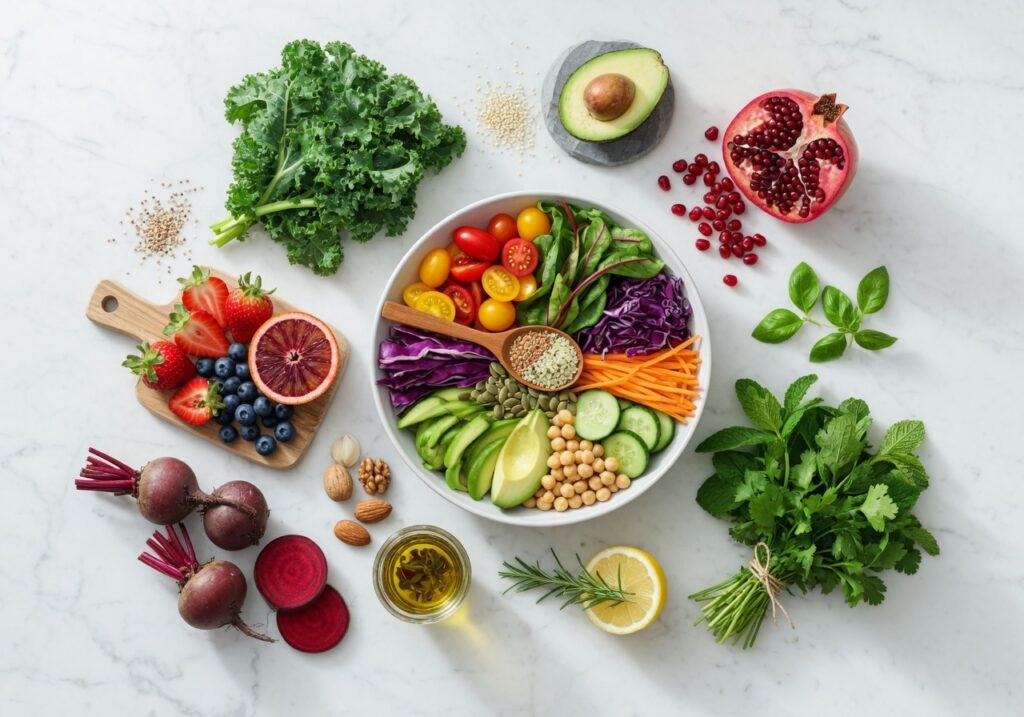
Your daily plate should include: one legume serving (lentils, chickpeas, black beans—¾ cup cooked), one grain (ideally sprouted or fermented for reduced phytic acid), one leafy green (spinach counts but prioritize kale or arugula for better calcium bioavailability), one cruciferous vegetable (broccoli, cauliflower), one additional colored vegetable, and one high-fat source (seeds, nuts, avocado for fat-soluble vitamin absorption).
Meal timing matters more than most realize. Eat legume-containing meals with grain-containing meals in the same sitting. Pairing beans with rice (or quinoa, or whole wheat bread) creates a complete amino acid profile. Spacing them apart—beans at lunch, grains at dinner—fragments your amino acid availability.
Seed rotation provides micronutrient variety. Pumpkin seeds offer zinc and magnesium, flax provides omega-3 ALA, hemp seeds contain all amino acids, sunflower seeds supply vitamin E. Rotating through these weekly (rather than fixating on one) broadens your micronutrient intake.
Track your intake for two weeks using Cronometer (specifically designed for plant-based eaters). Most people discover they’re actually adequate in some nutrients they worried about while deficient in others they ignored. This data-driven approach beats generic advice.
Fermented foods like tempeh, miso, and sauerkraut contain some B12 from fermentation bacteria, though amounts are inconsistent. Don’t rely on these for B12 needs, but include them because they improve overall mineral absorption.
Prevention and Long-Term Sustainability
The evidence shows plant-based diets work long-term when approached with nutritional knowledge rather than ideological commitment.
Supplementation isn’t a failure—it’s the logical continuation of an intentional eating pattern. Vegans who supplement B12 have identical B12 status to meat-eaters, while vegans who don’t develop deficiency in 40-60% of cases. This isn’t a limitation of plant-based eating; it’s a straightforward solution.
Annual micronutrient screening becomes reasonable, not excessive. Once yearly, measure B12, iron panel, vitamin D, and zinc. Most people stabilize quickly on appropriate supplementation, requiring fewer tests after year two.
Social eating requires planning. Restaurant meals often require substitutions that disrupt protein combining (requesting beans without rice, for instance). Communicating your needs to restaurants isn’t dietary fussiness—it’s ensuring nutritional adequacy in social settings.
<div class="h