
“`html
Pneumonia: What Actually Happens in Your Lungs and How to Recover
Sarah, a 52-year-old accountant, came to my office after 10 days of what she thought was a stubborn cold. She’d been running a low fever, felt exhausted, and had a cough that wouldn’t quit. What surprised her most wasn’t the diagnosis—it was learning that the CDC estimates 1 in 25 adults who get pneumonia will die from it, even with treatment. Yet most people think pneumonia is just a worse version of bronchitis they can manage at home. The difference between surviving pneumonia and developing sepsis often comes down to recognizing it early enough.
Key Facts About Pneumonia
- Pneumonia causes more than 50,000 deaths annually in the United States according to CDC mortality data, making it the leading infectious cause of death among adults.
- Bacterial pneumonia typically develops within 2-3 weeks of respiratory infection onset, while viral pneumonia peaks around day 5-7 of illness.
- Streptococcus pneumoniae remains responsible for approximately 30-40% of all community-acquired bacterial pneumonia cases in hospitalized patients.
- Patients over 65 have pneumonia hospitalization rates 5 times higher than younger adults, with in-hospital mortality reaching 7-14% even with antibiotics.
- Aspiration pneumonia—where stomach contents enter the lungs—accounts for 5-15% of community-acquired pneumonia cases but carries substantially worse outcomes if unrecognized.
Understanding What Pneumonia Actually Does to Your Body
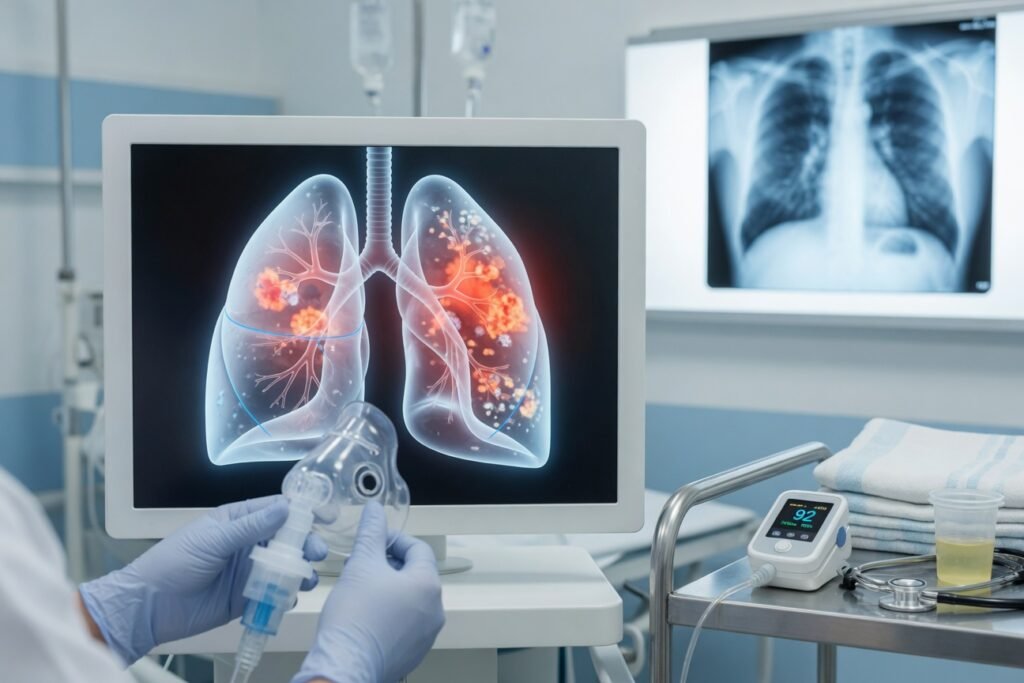
Think of your lungs as a vast network of tiny air sacs—about 300 million of them—where oxygen transfers into your bloodstream. Pneumonia hijacks these sacs, filling them with fluid or pus instead of air. It’s like trying to breathe through a wet sponge. When a bacterium, virus, or fungus invades the lower respiratory tract, your immune system triggers inflammation to fight back. This inflammation causes those air sacs to fill up, and suddenly your lungs can’t do their primary job: gas exchange.
What makes pneumonia different from bronchitis is location and severity. Bronchitis inflames the tubes leading to your lungs. Pneumonia infects the lung tissue itself. That’s why your oxygen levels drop dangerously low in pneumonia, but typically stay normal in bronchitis. Your body responds by making you cough harder, your heart pump faster, and your breathing rate accelerate—physiological attempts to compensate for those flooded air sacs.
Causes and Risk Factors Worth Understanding
Streptococcus pneumoniae, Haemophilus influenzae type b, and Legionella pneumophila are the bacterial culprits behind most community-acquired pneumonia cases. Viruses like influenza and respiratory syncytial virus (RSV) cause viral pneumonia, which can progress to secondary bacterial infection. COVID-19 pneumonia has its own distinctive pattern, typically affecting both lung bases symmetrically on imaging.
The risk factors everyone knows about: smoking, age over 65, chronic obstructive pulmonary disease (COPD), and diabetes. But here’s what gets missed: immunosuppression from any source matters enormously. This includes not just HIV or chemotherapy, but also long-term corticosteroid use for asthma or rheumatoid arthritis, TNF-alpha inhibitors for autoimmune diseases, and even uncontrolled diabetes itself. I’ve seen patients taking low-dose prednisone for polymyalgia rheumatica develop pneumonia from organisms that wouldn’t typically cause disease.
One overlooked risk factor is swallowing dysfunction. Stroke survivors, Parkinson’s disease patients, or anyone with dysphagia has increased aspiration risk. Silent aspiration—where someone breathes in tiny amounts of saliva or food without realizing it—can seed the lungs with oral bacteria over time.
Recognizing Symptoms Before Pneumonia Becomes Critical
Early pneumonia symptoms often mimic a routine viral illness, and that’s the dangerous part. You feel fatigued, maybe run a low-grade fever of 100.5-101°F, and develop a dry cough. Nothing screams “emergency.” Then over 2-5 days, the cough becomes productive—you’re coughing up phlegm that might be rusty-colored, greenish, or blood-tinged. Your chest starts to hurt when you breathe deeply or cough. This pleuritic chest pain happens because pneumonia inflames the pleural lining surrounding your lungs.
Watch for these less obvious warning signs: shortness of breath that’s worse than your cough would suggest, mental confusion or delirium (especially in older adults—sometimes the only symptom), and extreme fatigue that makes climbing stairs feel impossible. Rapid breathing—more than 30 breaths per minute—is a red flag many people dismiss. So is persistent fever despite over-the-counter acetaminophen or ibuprofen. Cold extremities or a blue-tinged complexion around your lips or fingernails indicates dangerously low oxygen saturation.
Some patients describe a “stitch” sensation in one lung area that worsens with breathing. Others develop nausea or diarrhea before respiratory symptoms fully manifest. The pattern varies enough that missing it happens frequently.
How Pneumonia Gets Diagnosed
When I suspect pneumonia, I start with a chest X-ray. You’ll see an infiltrate—an area of consolidation where fluid is replacing air in the lung tissue. It typically shows up as a white or gray shadow on the image, often affecting one lobe initially. A CT scan isn’t necessary unless the diagnosis remains unclear or complications are suspected, but your doctor might order one if you’re immunocompromised.
Blood tests help identify the culprit. Blood cultures can grow the bacteria causing your infection, though results take 24-48 hours. A sputum culture—if you can produce sputum—helps pinpoint the exact organism and which antibiotics it’s susceptible to. Complete blood count (CBC) usually shows elevated white blood cells, sometimes dramatically (20,000-30,000 cells per microliter). Basic metabolic panel checks kidney function and electrolytes, since severe pneumonia can cause complications.
Oxygen saturation measured by pulse oximetry is crucial. Anything below 94% on room air warrants serious concern. Your respiratory rate matters too—are you breathing more than 25 times per minute at rest? Does your oxygen drop with minimal exertion? These findings push toward hospitalization.
Treatment: What Actually Works and When
Bacterial pneumonia requires antibiotics, and timing matters significantly. Studies show that every hour of delay beyond diagnosis increases mortality risk. For community-acquired pneumonia, initial therapy typically includes azithromycin (a macrolide antibiotic) plus a respiratory fluoroquinolone like levofloxacin, or alternatively amoxicillin-clavulanate with azithromycin added. Hospitalized patients often receive intravenous ceftriaxone combined with azithromycin, sometimes with vancomycin added if methicillin-resistant Staphylococcus aureus (MRSA) is suspected.
Viral pneumonia from influenza benefits from oseltamivir (Tamiflu) if started within 48 hours of symptom onset, reducing severe illness risk by roughly 35-40%. COVID-19 pneumonia may require remdesivir, tocilizumab, or other antivirals depending on severity and immunologic status.
Hospitalization becomes necessary if you’re older than 65, have underlying heart or lung disease, oxygen saturation below 94%, altered mental status, kidney dysfunction, or signs of sepsis. Supplemental oxygen maintains saturation above 92%. In severe cases, non-invasive ventilation through a CPAP mask or intubation with mechanical ventilation becomes necessary.
Here’s what many people get wrong: antibiotics for viral pneumonia don’t help—they just expose you to side effects and contribute to antibiotic resistance. Your doctor needs to determine if you have bacterial or viral pneumonia before choosing treatment.
Managing Pneumonia Day-to-Day: Concrete Strategies
If you’re managing pneumonia at home (and only if your doctor confirms it’s safe), keep yourself upright. Lying flat worsens congestion and decreases oxygen saturation. Use a couple of pillows to elevate your head 30-45 degrees. This helps gravity drain secretions and improves ventilation to lung bases.
Cough productively, don’t suppress it. Yes, a constant cough is exhausting, but your body’s clearing infected secretions. However, if your cough prevents sleep entirely, codeine-containing cough suppressants can help at night only. Guaifenesin, an expectorant in Robitussin, may thin secretions and make coughing easier. Avoid lying on your back when coughing to prevent aspiration of secretions into opposite lung.
Hydration requires attention to specifics: water, electrolyte solutions, warm broth, or weak tea help. Avoid excessive caffeine, which acts as a diuretic. Room humidification—from a humidifier or steamy bathroom—helps loosen secretions. Some patients find that inhaling steam from a hot shower provides temporary relief.
Pain management matters for sleep and healing. Acetaminophen or ibuprofen reduces fever and chest wall pain from coughing. Splinting—holding a pillow against your chest when coughing—reduces pleuritic pain significantly.
Prevention: What Evidence Actually Shows Works
Pneumococcal vaccination prevents infection caused by Streptococcus pneumoniae in most cases, though not with 100% certainty. The newer pneumococcal vaccine (Pneumovax 23 or newer recombinant vaccines like Pneumovax 20) reduces severe pneumococcal pneumonia risk by approximately 60-70% in older adults. The influenza vaccine each fall cuts pneumonia risk by roughly 40-50% in vaccinated individuals. These aren’t just “nice to have”—they’re documented to save lives.
Smoking cessation improves lung clearance mechanisms within weeks. Your ciliated airway cells recover function, meaning you clear bacteria more efficiently. This single change reduces pneumonia risk more than most other interventions.
Hand hygiene prevents viral spread that seeds pneumonia development. Regular handwashing, especially before eating and after being in public spaces, genuinely cuts your infection risk. During respiratory illness season, avoid crowded enclosed spaces if you have risk factors.
Managing chronic diseases matters. Poorly controlled diabetes increases pneumonia risk significantly. Optimizing COPD management with inhalers reduces exacerbations that can progress to pneumonia. Sleep apnea treatment improves lung defense mechanisms.
Frequently Asked Questions About Pneumonia
How long does pneumonia take to heal completely?
Bacterial pneumonia typically shows clinical improvement within 3-5 days of appropriate antibiotic therapy, but complete resolution takes 4-6 weeks. Chest X-rays often show infiltrates for 8-12 weeks even after you feel better. Post-pneumonia fatigue can persist for 2-3 months, particularly in older adults or those requiring hospitalization.
Can pneumonia go away on its own without antibiotics?
Viral pneumonia may resolve spontaneously in 2-3 weeks, though your illness will be severe during that period with risk of complications. Bacterial pneumonia without antibiotics carries mortality risk exceeding 20% even in young healthy people—it doesn’t clear on its own. Attempting to treat suspected bacterial pneumonia without antibiotics is genuinely dangerous.
Sources & Medical References
HealthTopics.com articles are based on peer-reviewed medical research and guidance from the NIH, CDC, and WHO. See our editorial policy for full sourcing standards.