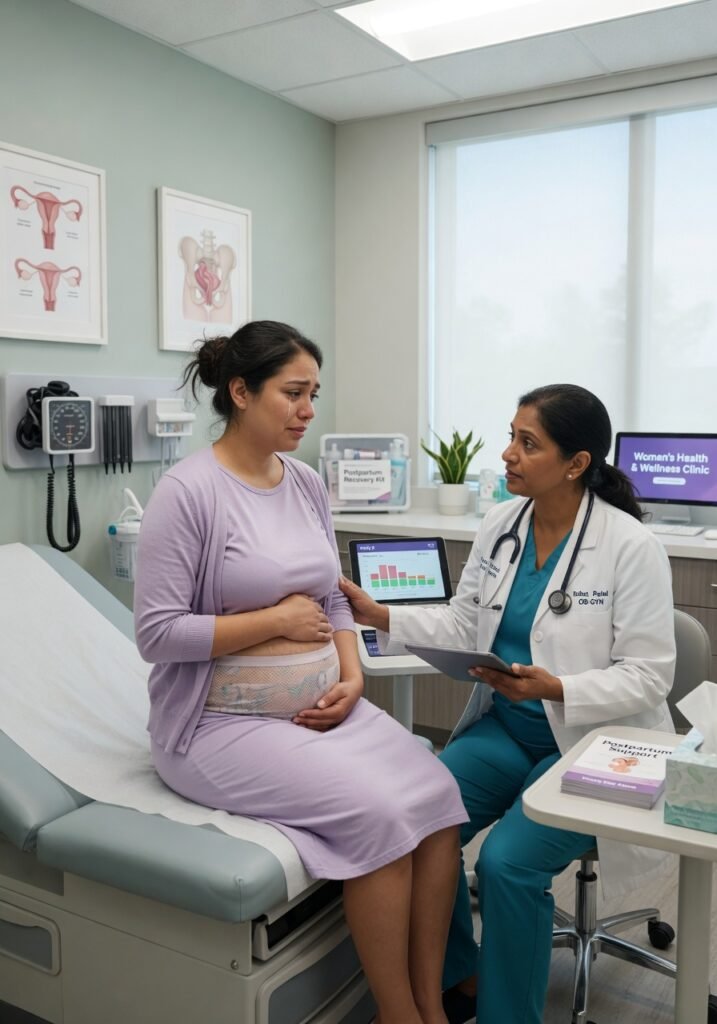
Does postpartum depression mean you’re failing as a mother?
No. And I need to say that plainly because I see women in my practice who believe exactly this. Sarah, a 32-year-old marketing director, delivered a healthy baby boy three weeks ago. By week two, she wasn’t sleeping even when the baby slept. By week three, she found herself staring at her son without feeling the rush of connection she’d expected. She felt guilty enough to hide it from her husband. What Sarah was experiencing wasn’t a character flaw or maternal inadequacy—it was postpartum depression, a medical condition affecting her brain chemistry that responds to treatment.
Postpartum depression (PPD) is a serious mood disorder that develops after childbirth, distinct from the temporary “baby blues” that resolve within two weeks. Unlike those fleeting mood shifts, PPD persists and intensifies, disrupting your ability to function, connect with your baby, and care for yourself. The condition stems from hormonal changes, neurotransmitter disruptions, and sometimes genetic predisposition—nothing you did wrong.
Key Facts About Postpartum Depression
- Between 15-20% of women experience postpartum depression within the first year after delivery, according to CDC surveillance data
- Onset typically occurs within 4-6 weeks postpartum, though it can emerge up to 12 months after birth
- Women with a personal or family history of depression face a 40% increased risk compared to those without such history
- Only about 15% of women with PPD receive treatment, despite the condition being highly responsive to therapy and medication
- Untreated postpartum depression increases the risk of maternal suicide, which accounts for 20% of postpartum deaths according to CDC estimates
Understanding What Happens in Your Brain During Postpartum Depression
Think of your brain chemistry during pregnancy as a symphony building to a crescendo. Estrogen levels climb steadily for nine months, rising 100-fold by delivery. Then delivery happens, and within 24 hours, estrogen crashes to pre-pregnancy levels. Your brain isn’t prepared for this sudden drop. Meanwhile, your body depletes serotonin and dopamine—neurotransmitters essential for mood regulation—while simultaneously managing the physical trauma of delivery and the sleep deprivation of newborn care.
The postpartum period creates a perfect storm for depression in vulnerable individuals. Your body is healing from a significant medical event. You’re producing oxytocin and prolactin for milk production, which interact with mood-regulating systems. Sleep deprivation—chronic and severe in early parenthood—directly impairs serotonin production. If you’re genetically predisposed to depression or have experienced depression before, your brain is less resilient to these simultaneous changes. This isn’t weakness. This is neurobiology working against you.
What Actually Causes Postpartum Depression
Several factors converge to create PPD risk. The hormonal factors are primary: the estrogen crash, thyroid dysfunction (thyroiditis affects 5-10% of postpartum women and often presents with depression), and irregular progesterone metabolism. These aren’t abstract—they directly affect your prefrontal cortex’s ability to regulate emotion and your amygdala’s threat detection system.
Psychosocial factors matter significantly. Relationship stress, lack of partner support, financial strain, and previous traumatic experiences amplify risk. Many physicians discuss depression history or family history, but here’s what often gets missed: women with a history of premenstrual dysphoric disorder (PMDD) have substantially elevated PPD risk because both conditions involve abnormal sensitivity to hormonal fluctuation. If you’ve had severe PMS, your postpartum risk is real, and your obstetrician should know this.
Perinatal loss, birth trauma (including unexpected complications, emergency cesarean section, or NICU admission), and prior PPD episodes multiply risk exponentially. The statistics are stark: women with a previous episode of PPD have a 50-60% recurrence risk in subsequent pregnancies. This is why screening matters before conception whenever possible.
Recognizing the Real Signs of Postpartum Depression
The early warning signs don’t always match what you’d expect. You might assume depression means crying constantly, but that’s not what many women experience. Instead, you notice emotional numbness. You hold your baby and feel nothing—which terrifies you more than sadness would. You can’t access joy or connection even when objectively good things happen.
The sleep disruption goes beyond newborn-related exhaustion. Even when your baby sleeps, you can’t sleep. Your mind races. You lie awake catastrophizing about worst-case scenarios involving your baby—intrusive thoughts about harm that horrify you, though you’d never act on them. You feel physically restless, like your skin doesn’t fit right.
Concentration disappears. You read the same sentence five times and retain nothing. Decision-making becomes paralyzing—what should the baby wear, what formula to use, simple choices feel impossible. Appetite changes occur (both loss and excessive eating are common), along with fatigue that differs from normal postpartum exhaustion—it’s bone-deep and unresponsive to rest.
You withdraw from your partner and support system because explaining how you feel seems impossible, and because being around others feels overwhelming. You experience anxiety and panic attacks, sometimes severe enough to feel like cardiac events. You have persistent guilt about not being “grateful enough” or being a “bad mother.” These aren’t character flaws. They’re symptoms.
How Postpartum Depression Gets Diagnosed
Diagnosis isn’t based on a blood test—there’s no single biological marker. Instead, your healthcare provider uses screening tools like the Edinburgh Postnatal Depression Scale (EPDS), a 10-question questionnaire asking how you’ve felt over the past week. Scores above 12-13 suggest significant depressive symptoms and warrant further evaluation.
Your doctor will take a clinical history, asking specific questions about mood, sleep patterns, concentration, guilt, thoughts of self-harm, and how depression is interfering with daily functioning. The process should feel collaborative, not judgmental. A thyroid panel (TSH and free T4) is standard because postpartum thyroiditis mimics depression in about 40% of cases.
The diagnostic criteria require that symptoms persist for at least two weeks and cause significant distress or impairment. The process can feel vulnerable—you might minimize symptoms out of shame or fear of child protective services. That fear is understandable but unfounded: reporting PPD doesn’t threaten your custody. Untreated depression does.
Evidence-Based Treatment Options
Selective serotonin reuptake inhibitors (SSRIs) like sertraline, paroxetine, and fluoxetine are first-line pharmacological treatments. Sertraline has the lowest rate of breast milk passage, making it preferred if you’re nursing. SSRIs typically take 6-8 weeks to show full benefit, though symptom improvement often begins around week 3-4. Tricyclic antidepressants like nortriptyline work for some patients who don’t respond to SSRIs.
Cognitive behavioral therapy (CBT) is equally effective as medication for many women. Interpersonal therapy (IPT), specifically adapted for postpartum depression, addresses relationship conflicts, role changes, and grief over your pre-baby identity. CBT combined with medication outperforms either treatment alone for moderate to severe PPD. Some women prefer starting with therapy to avoid medication, particularly if breastfeeding. That’s a reasonable choice with your provider’s guidance.
For severe cases with psychotic features or catatonia, hospitalization may be necessary. Electroconvulsive therapy (ECT) is remarkably effective for treatment-resistant cases, though it’s rarely needed. Hormone-based treatments are emerging—estrogen patches show promise in some research, though evidence remains limited.
Concrete Daily Strategies for Managing Postpartum Depression
Start with sleep consolidation. You cannot think through PPD fog without sleep. Even if your partner isn’t available, consider hiring someone for 4-5 hours twice weekly to bottle-feed and handle baby care while you sleep uninterrupted. This isn’t luxurious—it’s medical. One consolidated 4-hour sleep cycle does more for mood than fragmented 20-minute segments.
Create a “worry window.” Set aside 15 minutes daily where you allow yourself to catastrophize about your intrusive thoughts. Write them down. Outside that window, when anxious thoughts arrive, acknowledge them and defer: “I’ll think about this during my worry window.” This sounds simple, but it reduces the constant mental load.
Move your body deliberately. Not exercise as punishment, but a 20-minute walk outside daily—sunlight exposure increases serotonin and regulates circadian rhythm. Physical activity isn’t optional when depressed; it’s medication-level intervention.
Limit newborn-care perfectionism. Formula feeding doesn’t harm your baby. A cluttered house won’t damage development. You cannot nurture your infant effectively from a depressive state, so preserving your mental health IS nurturing your baby. This reframe matters.
Articulate needs to your partner specifically. Not “I need help” but “I need you to handle nighttime feeds Tuesday through Thursday.” Vague requests fail because your partner doesn’t know what you need and you feel unsupported. Specific requests work.
Prevention: What Evidence Actually Supports
If you have a personal history of depression, prophylactic treatment during pregnancy or immediately postpartum reduces recurrence risk substantially. Some women restart antidepressants before delivery; others begin them within 48 hours after. This requires prenatal planning with your psychiatrist and obstetrician.
Maternal screening programs with follow-up intervention reduce untreated depression rates but don’t prevent PPD entirely. Psychoeducation about PPD beforehand and having a support plan in place matter. Antenatal classes addressing postpartum mental health show modest benefit in high-risk groups.
Sleep protection during the fourth trimester is crucial. If sleep deprivation is prevented, PPD risk decreases. This is why partner support or hired help during early weeks is genuinely preventive, not indulgent. The evidence on breastfeeding as protective is mixed—it’s not protective or harmful; it’s neutral, so choose the feeding method that supports your mental health.
Frequently Asked Questions
Will postpartum depression go away on its own?
Baby blues resolve spontaneously within two weeks. Postpartum depression does not. Without treatment, PPD persists for months and often worsens. Women who go untreated typically remain symptomatic for 6-12 months, missing critical bonding time and suffering unnecessarily. Treatment accelerates recovery to weeks rather than months.
Is it safe to take antidepressants while breastfeeding?
Yes, for most medications. Sertraline, paroxetine, and tricyclic antidepressants pass minimally into breast milk—concentrations in infant blood are negligible. The American Academy of Pediatrics considers these compatible with breastfeeding. Untreated maternal depression poses greater risk to your infant than medication passage.
Does postpartum depression mean I’ll never be a good mother?
Absolutely not. Depression is a medical condition, not a reflection of your capabilities as a parent. Many exceptional mothers have experienced PPD. Getting treatment demonstrates commitment to your child’s wellbeing because you’re prioritizing the emotional environment your child needs to develop securely. Your child benefits from a treated mother far more than an untreated one.
Sources & Medical References
HealthTopics.com articles are based on peer-reviewed medical research and guidance from the NIH, CDC, and WHO. See our editorial policy for full sourcing standards.
