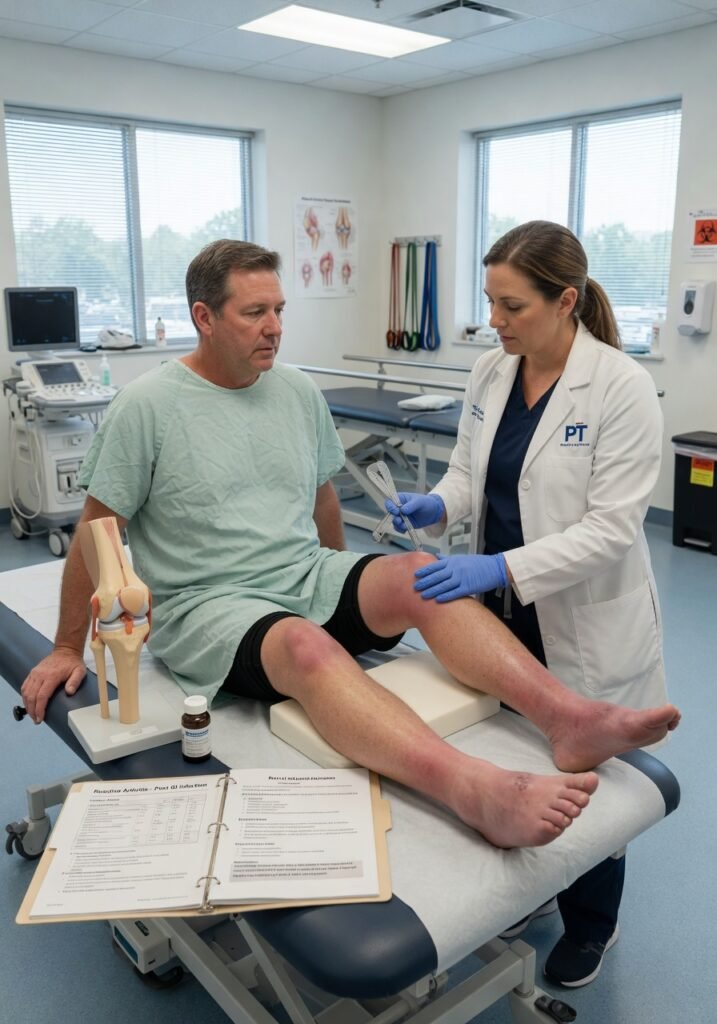
Most people think reactive arthritis is just inflammation that happens to follow an infection—something passive, almost coincidental. Here’s what they’re missing: your immune system is actually making a critical mistake, mistaking proteins on your joint lining for proteins on the bacteria that infected you weeks or months earlier. Sarah, a 34-year-old marketing manager, came to my clinic limping after a bout of food poisoning. Three weeks later, her knee and ankle were swollen and hot to the touch. She’d already seen two urgent care doctors who told her it was just residual swelling from the infection itself. Wrong. Her body’s immune system had launched a misdirected attack against her own joints—reactive arthritis in full swing. The infection was long gone, but the inflammation was just beginning.
What You Need to Know About Reactive Arthritis
Key Facts About Reactive Arthritis
- Approximately 1-3 per 1,000 people develop reactive arthritis annually, according to NIH epidemiologic data, making it more common than many clinicians recognize
- The condition typically emerges 1-4 weeks after infection, though some cases surface up to two months later
- Men are 5-15 times more likely to develop reactive arthritis than women, particularly those under age 40
- Around 50% of patients with reactive arthritis test positive for the HLA-B27 genetic marker, which predisposes them to this specific immune reaction pattern
- Without treatment, symptoms persist for an average of 6-12 months, but appropriate therapy can reduce this timeline significantly
Understanding the Mechanism: Your Immune System’s Case of Mistaken Identity
Think of your immune system like a customs agent at an airport. Normally, this agent scans incoming passengers against a watch list and flags actual threats. In reactive arthritis, something goes wrong with the scanning process. A bacterial infection—usually gastrointestinal or urogenital—triggers your immune system to create antibodies and activate T-cells against that specific pathogen. But here’s the problem: some bacteria share molecular structures with proteins naturally present in your joints.
When the infection clears, your immune system should stand down. Instead, in susceptible people, it keeps attacking. The immune cells enter your synovial fluid—that slippery stuff inside joints—and trigger a cascade of inflammatory chemicals called cytokines. These cytokines recruit more immune cells, which causes swelling, warmth, redness, and pain. It’s not that the bacteria is still there; your body is fighting a ghost.
The genetic component matters tremendously here. The HLA-B27 protein, present in about half of reactive arthritis patients, appears to create a structural presentation that makes this confusion more likely. People with HLA-B27 can develop reactive arthritis from seemingly minor infections that would cause no joint problems in others.
Causes and Risk Factors: What Actually Triggers This
The classic triggers are bacterial infections. Shigella, Salmonella, Yersinia, and Campylobacter from contaminated food are common culprits. Chlamydia trachomatis urogenital infections are another major pathway, particularly in young, sexually active adults. Gonorrhea can trigger it too. Less commonly discussed is the role of respiratory infections—Streptococcus pneumoniae and certain mycoplasma species can set this off, especially in people who’ve had recent upper respiratory infections.
What makes someone susceptible isn’t just the infection itself but the genetic predisposition combined with the specific bacterial species involved. Not everyone who gets food poisoning develops reactive arthritis. Not every person with chlamydia develops joint inflammation. The interplay between your genes and the pathogen matters enormously.
One underappreciated risk factor is prior reactive arthritis. If you’ve had it once, your risk of recurrence is substantially elevated—perhaps 15-20% higher than the general population. This suggests that your immune system has essentially “learned” this maladaptive response and may repeat it.
Recognizing the Signs and Symptoms
The progression usually follows a pattern, though the specifics vary. You recover from what seemed like ordinary diarrhea or a urinary tract infection. You feel mostly fine for one to three weeks. Then your knee becomes stiff and mildly puffy—nothing dramatic at first. You might blame it on sleeping funny.
Within days, the inflammation accelerates. One or both knees become noticeably swollen, warm to the touch. Ankles join in. Sometimes the lower back flares with inflammation. You notice morning stiffness that can last an hour or longer. Some patients describe a deep, aching quality that doesn’t respond much to over-the-counter ibuprofen.
Here’s what gets overlooked: systemic symptoms often accompany the joint inflammation. You might have low-grade fever (99-100.5°F), unusual fatigue that feels disproportionate to the joint pain, and sometimes skin manifestations. Keratoderma blennorrhagicum—thickened, scaly skin on the palms and soles—occurs in 5-15% of cases but is dramatically underrecognized. Oral ulcers appear in some patients. Eye inflammation (conjunctivitis or anterior uveitis) happens in 25-60% of reactive arthritis cases, though many patients don’t realize it’s connected to their joint problem.
Getting the Right Diagnosis
Here’s where diagnosis gets tricky. There’s no single blood test for reactive arthritis. I typically start with clinical suspicion: recent infection plus joint inflammation in a specific pattern (typically lower extremities and spine). I’ll order inflammatory markers like erythrocyte sedimentation rate (ESR) and C-reactive protein (CRP)—both usually elevated but not specific to reactive arthritis.
The HLA-B27 test helps. If you’re HLA-B27 positive and present with this clinical picture, the probability jumps significantly. Negative HLA-B27 doesn’t rule it out, though; about half of reactive arthritis patients are negative for this marker.
Imaging tells part of the story. X-rays of affected joints might show subtle inflammation early on but often appear normal initially. MRI can reveal synovitis before plain films show anything. Ultrasound of the joints demonstrates fluid and synovial swelling clearly.
The real diagnostic criteria come from pattern recognition: arthritis within four weeks of infection, absence of positive rheumatoid factor and anti-CCP antibodies (which would suggest rheumatoid arthritis instead), and compatible symptoms. I always screen for chlamydia with nucleic acid amplification testing and ask detailed questions about recent infections. Culture of synovial fluid is sterile in reactive arthritis—if we find bacteria, we’re dealing with septic arthritis instead, which is a medical emergency.
Treatment Options That Actually Work
NSAIDs like naproxen 500 mg twice daily or indomethacin 25-50 mg three times daily are first-line. They reduce inflammation and pain effectively in mild to moderate cases. I typically continue them for 4-6 weeks while monitoring for gastrointestinal side effects.
For patients with more severe symptoms or inadequate NSAID response, intra-articular corticosteroid injections work remarkably well. A single injection of triamcinolone acetonide into the most symptomatic joint can provide weeks of relief while avoiding systemic corticosteroid effects.
When multiple joints are significantly inflamed or symptoms aren’t controlled after 6-8 weeks, I consider sulfasalazine 500 mg twice daily escalating to 1000 mg twice daily. This disease-modifying antirheumatic drug (DMARD) has strong evidence in reactive arthritis—studies show it can shorten disease duration and prevent recurrence.
For persistent cases unresponsive to conventional therapy, TNF-alpha inhibitors like etanercept or adalimumab show benefit in some patients, though they’re reserved for refractory disease given cost and side effect profile.
The microbiological question comes up constantly: should we treat the original infection if it’s still present? For chlamydia, absolutely—doxycycline 100 mg twice daily for 7 days eliminates the organism and may help prevent perpetuation. For past infections that have cleared, antibiotics don’t change the joint inflammation trajectory, since the problem is now your misdirected immune response, not active infection.
Living Day-to-Day With Reactive Arthritis
The inflammation waxes and wanes, which patients find psychologically difficult. You feel decent one day, then wake up with severe swelling the next. This unpredictability matters more than many doctors acknowledge.
Ice works better than heat in most cases—30 minutes several times daily on the most inflamed joints. Compression with elastic wraps reduces swelling. Elevation when sitting or lying down helps with lower extremity symptoms.
Activity modification is crucial. This isn’t the time for running or high-impact activities, even though you might feel capable on good days. Low-impact options like swimming or stationary cycling preserve fitness without stressing inflamed joints. Physical therapy focusing on gentle range-of-motion exercises and gradual strengthening helps prevent the stiffness that can linger even after inflammation subsides.
Track your symptoms in writing—what you did, what you ate, your pain and swelling levels. Patterns emerge that help you and your doctor predict flares and adjust treatment timing.
Prevention and Long-Term Outlook
The uncomfortable truth: you can’t prevent reactive arthritis once an infection has occurred if you’re genetically susceptible. What you can do is reduce infection risk. For food-borne pathogens, proper food handling matters—cook meat to safe temperatures, avoid cross-contamination, practice hand hygiene. For sexually transmitted infections, barrier protection and regular screening prevent the chlamydia and gonorrhea infections that trigger reactive arthritis in younger adults.
The long-term picture is generally favorable. Most people recover within 6-12 months with appropriate treatment. About 50% have recurrent episodes if re-exposed to triggering infections. A smaller percentage—roughly 15-20%—develop chronic arthritis that persists long-term.
Early, aggressive treatment matters for outcomes. People who receive NSAIDs or sulfasalazine within weeks of symptom onset generally have shorter disease duration and less permanent joint damage than those who wait months.
Frequently Asked Questions
Sources & Medical References
HealthTopics.com articles are based on peer-reviewed medical research and guidance from the NIH, CDC, and WHO. See our editorial policy for full sourcing standards.