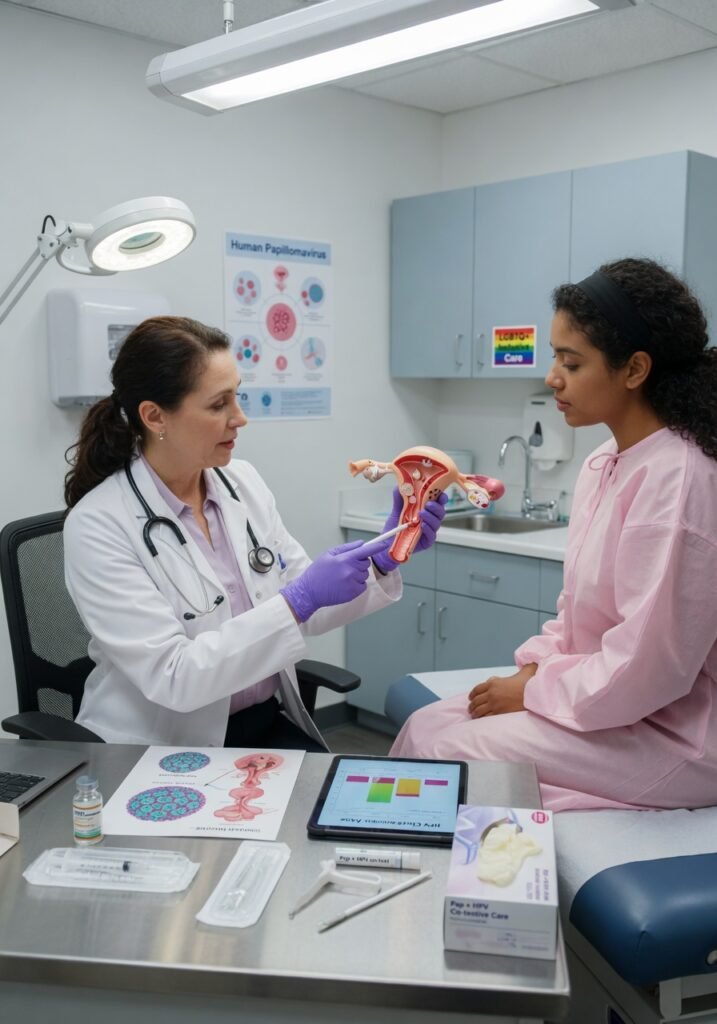
Sarah, a 34-year-old woman, went to her gynecologist for a routine Pap smear and received a call a week later: “You have HPV.” Her first thought? “I’ve been faithful to my partner for eight years. How is this possible?” What Sarah didn’t know—and what most people get wrong—is that HPV doesn’t care about relationship monogamy. You can contract it years before symptoms appear. You can have it without ever developing cancer. Most importantly, getting HPV doesn’t mean your future is locked into a cancer diagnosis. Yet the reverse is also true: thinking HPV is always benign or always goes away on its own can delay critical screening. The gap between what patients fear about HPV and what actually happens medically is vast, and understanding that gap changes everything about how you manage this virus.
Key Facts About HPV
- Approximately 79 million Americans are currently infected with HPV, with peak infection rates between ages 20-24, according to CDC surveillance data
- Of the 200+ known HPV types, only 13 are classified as high-risk for cancer development, though HPV-16 and HPV-18 account for roughly 70% of all cervical cancers
- Between 80-90% of sexually active people acquire at least one HPV infection during their lifetime, but 90% of these infections clear naturally within 1-2 years without intervention
- The Gardasil 9 vaccine protects against 9 HPV types and reduces cervical cancer risk by up to 99% when given before sexual exposure, yet only 60% of eligible U.S. adolescents completed the series as of 2022
- HPV persistence—when the virus remains detectable for more than 6 months—is the primary driver of malignant transformation and is more common in people over 30 than under 25
Understanding How HPV Actually Works in Your Body
Think of HPV like an uninvited guest who sneaks past your immune system’s front door. Your body’s natural defenses are excellent bouncers—they eliminate most HPV infections within months. But sometimes? The virus finds a way to hide in the basal cells of your cervix, throat, or skin before your immune system catches it. This is when things get tricky.
What separates HPV from your average cold virus is its strategy. Once inside, high-risk HPV types produce proteins called E6 and E7 that disable your cell’s natural tumor-suppressing mechanisms. Specifically, E6 attacks p53 (the “guardian of the genome”), while E7 targets the retinoblastoma protein. Over years—sometimes a decade or more—this disruption can cause cells to multiply abnormally. This is why cervical cancer rarely develops overnight. It’s a slow process, which is precisely why screening is so effective.
The mechanism differs slightly depending on HPV type. Low-risk types like HPV-6 and HPV-11 cause genital warts through a different cellular pathway that rarely leads to cancer. High-risk types like HPV-16 are the ones that demand attention.
Causes and Risk Factors That Actually Matter
HPV spreads through skin-to-skin contact, primarily during sexual activity. The virus doesn’t require intercourse—it can spread through any genital contact. Here’s what increases your actual risk:
- Early sexual debut: Starting sexual activity before age 21 is associated with higher rates of persistent infection, likely because the cervix is still undergoing cellular maturation
- Number of sexual partners: Research shows that five or more lifetime partners increases cervical cancer risk roughly threefold compared to one partner, though this reflects cumulative HPV exposure rather than promiscuity per se
- Immune compromise: People living with HIV who have CD4 counts under 200 cells/mm3 have accelerated HPV progression and are 5-10 times more likely to develop cervical cancer. Immunosuppression from organ transplants carries similar risk
- Smoking: Tobacco use reduces local immune response in the cervix and is independently associated with faster progression from HPV to cancer—this is often overlooked but critical
- The less-discussed factor: Hormonal contraceptive use lasting 5+ years shows a modest increased risk for cervical cancer in some studies, though the absolute risk remains low and doesn’t outweigh contraceptive benefits for most people
Condoms reduce HPV transmission by roughly 50-70%, which is substantial but not absolute—the virus can still spread from uncovered areas.
Signs and Symptoms: What You Actually Notice
Here’s what catches most people off guard: many HPV infections cause zero symptoms. You could be infected for years without knowing. This is why screening matters more than waiting for symptoms.
When symptoms do appear, they depend on the HPV type and location:
- Genital warts (low-risk HPV-6, HPV-11): Small, flesh-colored bumps that might appear weeks or months after infection. Some people describe them as itchy or occasionally painful during intercourse
- Cervical changes (high-risk types): You’ll feel nothing initially. The infection only becomes apparent through Pap testing
- Oropharyngeal HPV (throat infection): Often asymptomatic, though some people develop persistent sore throat or difficulty swallowing if lesions are present
- Abnormal bleeding or discharge: If cervical dysplasia develops, you might notice irregular bleeding or changes in cervical discharge, though this is actually quite uncommon in early stages
The early warning sign most articles miss: if you have an abnormal Pap result that shows atypical squamous cells of undetermined significance (ASCUS), that’s your cue to get HPV testing. Don’t wait and assume it’s benign.
Diagnosis: What to Expect
Diagnosis happens through several pathways depending on your situation:
Pap smear with reflex HPV testing: This is the standard for cervical screening. Your provider collects cells from the cervix using a brush. If results show ASCUS or worse, labs automatically test for high-risk HPV. If HPV is detected with normal Pap results, you’ll need more frequent screening—typically colposcopy.
HPV-only testing (primary HPV screening): Some programs now start with HPV testing rather than Pap smears, since HPV presence is more predictive of future cancer risk than cytology alone. If HPV-positive, a Pap test follows.
Colposcopy: Your provider uses a magnifying scope (colposcope) to examine the cervix closely. If abnormalities appear, they take a tissue biopsy. This feels like mild cramping and takes 5-10 minutes. The biopsy is critical—it confirms whether dysplasia is present and grades its severity (CIN1, CIN2, CIN3).
Genital wart diagnosis: Usually visual. Your provider examines the area; biopsy is only needed if appearance is atypical or diagnosis is uncertain.
What your results mean: HPV-positive with normal Pap = continued surveillance. ASCUS with HPV-positive = colposcopy. CIN1 = repeat testing in 12 months. CIN2 or CIN3 = excisional procedure needed to remove abnormal tissue and assess margins.
Treatment: What Doctors Actually Use Now
Here’s a misconception worth correcting: there is no medication that kills HPV. No antiviral drug eradicates the virus once established. Treatment focuses on removing abnormal tissue before cancer develops.
For genital warts: Imiquimod cream is applied three times weekly for up to 16 weeks—it stimulates local immune response. Alternatively, podofilox solution (a cytotoxic agent) can be self-applied twice daily for three consecutive days per week. Cryotherapy (freezing) and laser ablation work well too. Recurrence rates range from 20-50% because the underlying HPV infection persists.
For cervical dysplasia: Loop electrosurgical excision procedure (LEEP) removes abnormal tissue and allows pathologists to examine margins. Success rates exceed 90% for CIN1. For CIN2/CIN3, LEEP is both diagnostic and therapeutic. Cold knife conization is an alternative, primarily used when margins must be pristine.
For established cervical cancer: That’s beyond HPV management—chemotherapy, radiation, and surgical oncology enter the picture. Prevention through screening is why this article focuses on earlier stages.
The most important detail: treatment of dysplasia prevents cancer development. Regular follow-up after LEEP with HPV testing at 6 and 12 months ensures clearance. Persistent HPV after treatment means higher recurrence risk and requires closer monitoring.
Practical Daily Management Strategies
Living with HPV diagnosis means concrete behavioral adjustments:
Screening adherence is non-negotiable. If you’ve had abnormal results, stick to your follow-up schedule—don’t space appointments further apart hoping things improve. Dysplasia that’s dormant can progress if monitoring lapses.
Partner notification: Sexual partners should know about high-risk HPV. They don’t need treatment, but they may benefit from their own screening or vaccination if unvaccinated.
Sexual activity with genital warts: Warts are contagious. Barrier protection helps but isn’t foolproof. Many couples find that treating warts first, then using condoms, reduces transmission risk substantially.
Smoking cessation is medical priority, not lifestyle suggestion. Tobacco accelerates progression from infection to dysplasia. If you smoke and have HPV, quitting directly affects your cancer risk trajectory.
Immune support: While supplements won’t clear HPV, maintaining overall health matters. Adequate vitamin D, regular exercise, stress management—these support immune function that’s already fighting the virus. There’s no special HPV diet, but nutritional adequacy matters.
Prevention: What Actually Works
The HPV vaccine (Gardasil 9) is genuinely one of medicine’s success stories. It prevents infection with nine HPV types including high-risk types 16, 18, 31, 33, 45, 52, and 58. When administered before sexual exposure, it’s approximately 99% effective at preventing cervical cancer caused by these types.
Current recommendations: Standard vaccination at ages 11-12, with catch-up vaccination through age 26 for those not previously vaccinated. Adults 27-45 may benefit from vaccination if not previously exposed, though benefit decreases with age as exposure probability increases.
The nuance everyone glosses over: The vaccine prevents infection but doesn’t treat existing infections. If you’re already HPV-positive, vaccination doesn’t help. This is why early vaccination in those without prior sexual exposure is so critical.
Condoms prevent roughly 50-70% of HPV transmission. They’re protective but not absolute. Regular screening (for cervical and oropharyngeal cancer risk) is still essential even if you use condoms consistently.
Frequently Asked Questions About HPV
Sources & Medical References
HealthTopics.com articles are based on peer-reviewed medical research and guidance from the NIH, CDC, and WHO. See our editorial policy for full sourcing standards.