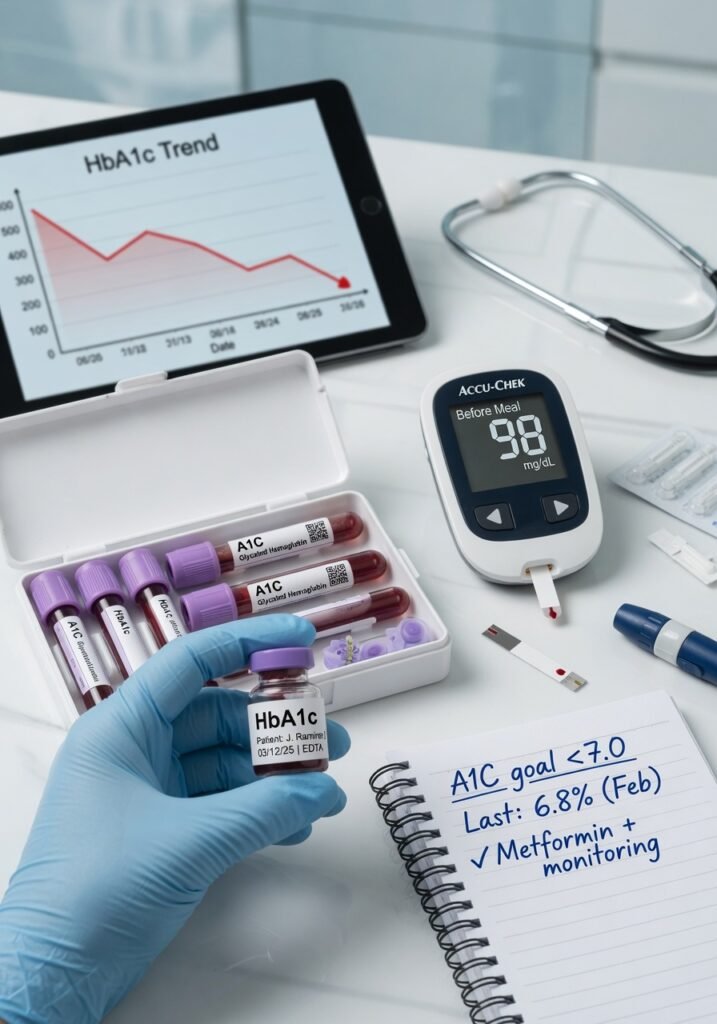

Sarah sits in the exam room holding her latest lab results, staring at the number 7.2 next to “A1C.” Her doctor said that was “pretty good,” but her mother—who has Type 2 diabetes—mentioned her A1C stays under 6.5. So Sarah’s confused. Here’s the misconception almost every patient carries: the A1C test measures your blood sugar right now, and you need to fast before it. False. Your A1C doesn’t care if you ate breakfast two hours ago. It measures something entirely different—the percentage of your hemoglobin that’s been coated with glucose over the past 2-3 months. It’s a historical record, not a snapshot. Understanding this distinction changes how you approach managing it.
What the A1C Test Actually Reveals
5 Essential Facts About A1C:
- A1C measures the average percentage of glucose attached to hemoglobin molecules in red blood cells, with results ranging from 4% to 14% or higher. Normal is below 5.7%.
- According to the CDC, approximately 37.3 million Americans have diabetes, with roughly 1.5 million new cases diagnosed annually, many first detected through elevated A1C levels.
- The test reflects average blood glucose over 90-120 days because that’s the lifespan of red blood cells; it’s not influenced by what you ate yesterday or whether you fasted.
- An A1C of 5.7%-6.4% indicates prediabetes; 6.5% or higher indicates diabetes. For people with established diabetes, targets typically range from 6.5% to 8%, depending on individual factors.
- A 1% reduction in A1C correlates with roughly 18% reduction in cardiovascular events and 25% reduction in microvascular complications, based on landmark diabetes studies.
The Biochemistry Behind the Number
Let me explain what’s happening at the cellular level, because it matters for how you think about lowering your number. Hemoglobin is the protein inside red blood cells that carries oxygen. When glucose levels run high, glucose molecules stick to hemoglobin through a process called glycation—not via enzymes, just passive attachment based on concentration. Once attached, they stay there until that red blood cell dies, which takes about 120 days on average. So your A1C is essentially measuring: how much glucose has been floating around in your bloodstream over the past three months?
Think of it like a glucose-stained window. If you expose a window to smoke for 120 days, the pane gets stained proportionally to how much smoke was present and for how long. Wipe the window today, and it starts getting clean again—but the stain reflects what happened, not what’s happening at this moment. Your A1C works the same way. This is why a single high blood sugar reading doesn’t drastically change your A1C, but sustained elevation over weeks definitely does.
What Drives A1C Up: The Real Risk Factors
The obvious culprits are carbohydrate intake and insulin resistance. Your pancreas secretes insulin to tell cells to take up glucose; when cells stop listening—typically due to excess weight, physical inactivity, or genetic predisposition—glucose accumulates in the bloodstream, coating more hemoglobin molecules. As your insulin resistance worsens, your pancreas compensates by producing more insulin, a temporary solution that eventually fails as beta cells tire out.
But here’s what most articles overlook: chronic sleep deprivation independently worsens A1C by 0.2-0.5% even when diet and exercise stay constant. A study published in JAMA found that people sleeping 5-6 hours nightly had significantly elevated A1C compared to those sleeping 7-9 hours, and the effect was separate from obesity. Sleep deprivation increases cortisol and inflammatory markers that directly impair insulin sensitivity. So if you’re trying to lower your A1C by cutting carbs but sleeping five hours a night, you’re fighting uphill.
Stress itself—the psychological kind—elevates morning fasting glucose through cortisol surges. Some medications matter too: thiazide diuretics for blood pressure, certain antipsychotics, and corticosteroids for inflammation all push glucose higher. If your A1C climbed after starting a new medication, that’s not coincidence.
Early Warning Signs Most People Dismiss
By the time someone’s A1C hits 7% or 8%, they often feel relatively normal. That’s dangerous because it creates false reassurance. But there are subtle early signals. Increased thirst and frequent urination—passing more urine than you’d expect—happen when glucose spills into urine once blood glucose stays elevated above the kidney’s reabsorption threshold. Blurred vision occurs from glucose-induced swelling of the lens. Fatigue that doesn’t improve with rest suggests hyperglycemia; your cells aren’t receiving enough glucose despite high blood levels, because insulin resistance means the glucose can’t get inside efficiently.
A less-discussed sign: recurrent vaginal or yeast infections in women, or persistent jock itch in men. Elevated glucose in sweat and urine creates a breeding ground for fungal infections. If you’re dealing with recurring thrush or yeast issues despite otherwise good hygiene, your primary care doctor should be checking your A1C and fasting glucose.
Slow wound healing deserves mention too. A small cut taking weeks to heal, or recurrent minor skin infections, reflects impaired immunity and poor perfusion from chronic hyperglycemia. These aren’t dramatic symptoms, which is exactly why they get overlooked.
How Diagnosis Actually Works
Your doctor orders the A1C test using a simple blood draw—no special preparation required, no fasting needed. The lab measures what percentage of your hemoglobin has glucose attached. Results come back within a few days. If your A1C is 5.7%-6.4%, you have prediabetes. At 6.5% or higher on repeat testing, Type 2 diabetes is diagnosed. For Type 1 diabetes, the diagnosis typically comes from a different pathway—usually acute symptoms and testing showing very high glucose or positive antibodies—but A1C helps confirm and monitor.
What most patients don’t expect: you’ll probably get tested again 2-3 months after any major change to your diabetes regimen. That’s because A1C reflects the full 90-120 day period. If you start metformin on January 1st and get an A1C check on January 15th, it’ll barely budge. Your previous two-three months still dominate the number. This is why doctors emphasize patience when starting new medications—you need 3 months to see real improvement.
Medications and Concrete Treatment Strategies
If lifestyle changes alone aren’t lowering your A1C, metformin is usually first-line therapy for Type 2 diabetes. It reduces liver glucose production and improves insulin sensitivity. Average A1C reduction: 1-2%. GLP-1 receptor agonists like semaglutide (Ozempic) work differently—they slow gastric emptying and increase satiety, leading to weight loss and better glucose control. These tend to lower A1C by 1-1.5% while also reducing cardiovascular risk.
SGLT2 inhibitors such as empagliflozin (Jardiance) work by increasing urinary glucose excretion—essentially letting your kidneys dump excess glucose. They lower A1C by 0.5-1% and offer heart and kidney protection as bonuses. Sulfonylureas like glipizide force your pancreas to release more insulin; they work fast but can cause weight gain and hypoglycemia. DPP-4 inhibitors like sitagliptin (Januvia) are gentler, lowering A1C by 0.5-0.8% with minimal hypoglycemia risk.
Most people aren’t on a single medication. A common combination: metformin plus a GLP-1 agonist achieves greater A1C reduction than either alone. If your A1C remains high despite two oral medications at decent doses, moving toward insulin makes sense. There’s residual stigma around insulin, but it’s the most predictable tool we have. Basal insulin (long-acting) plus bolus dosing with meals can lower A1C by 2-3% when the rest of the regimen isn’t enough.
Practical Day-to-Day Strategies That Actually Work
Forget generic “eat healthy” advice. Here’s specificity: distribute carbohydrates evenly across meals rather than front-loading breakfast. A breakfast of 60 grams of carbs in refined carbs spikes glucose differently than 15 grams at breakfast, 20 at lunch, 15 at dinner, and 10 grams across two snacks—same total, vastly different A1C impact. Pair carbs with protein and fat; a potato by itself raises glucose faster than a potato with salmon and olive oil.
Resistance training twice weekly, even just 20-30 minutes, improves insulin sensitivity more effectively than the same duration of cardio. Muscle tissue is metabolically active and glucose-hungry; building it creates a better glucose sink. Timing matters: a 15-minute walk after meals blunts post-meal glucose spikes more effectively than a 45-minute walk in the morning.
Monitor your blood glucose if you’re on insulin or sulfonylureas, not just for the numbers themselves but to identify patterns. Many people discover that restaurant pasta raises their glucose by 60 points while homemade pasta of similar carb count raises it 35 points—the difference in food processing quality. This personalization is worth tracking.
Prevention: What the Evidence Actually Shows
The Diabetes Prevention Program study, published in the New England Journal of Medicine, showed that intensive lifestyle intervention—specifically 150 minutes of moderate activity weekly plus 7% weight loss—reduced progression from prediabetes to diabetes by 58% over three years. That’s not theoretical; that’s robust evidence. The intervention group met with lifestyle coaches regularly. Simply knowing you should exercise isn’t the same as structured accountability.
For people with normal glucose but obesity or metabolic syndrome, that same 5-7% weight reduction (which might mean 10-15 pounds for someone at 200) begins improving insulin sensitivity within weeks. You don’t need to get thin; you need to get less insulin-resistant.
If you have prediabetes, retesting A1C yearly makes sense. Some people naturally regress toward normal with no intervention—lifestyle factors shift, people move, stress changes. But many progress to diabetes within 3-5 years without intervention, so the earlier you know your status, the more time you have to act.
Frequently Asked Questions
Sources & Medical References
HealthTopics.com articles are based on peer-reviewed medical research and guidance from the NIH, CDC, and WHO. See our editorial policy for full sourcing standards.