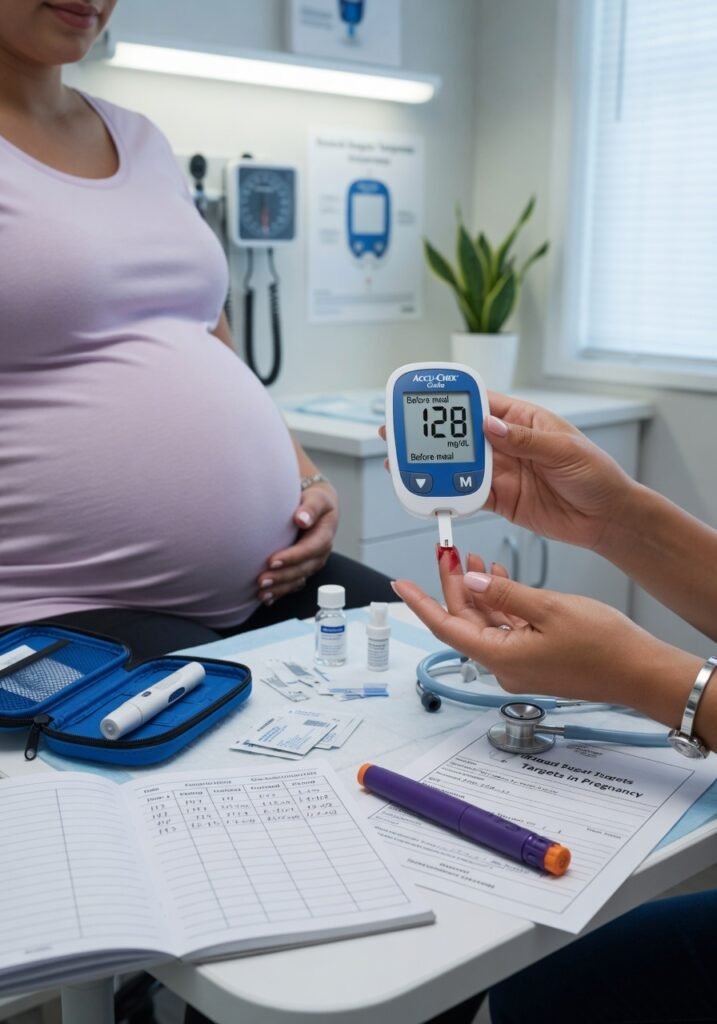
Gestational Diabetes: Managing Blood Sugar in Pregnancy
Sarah, 28 weeks pregnant with her second child, sat in my office convinced that gestational diabetes meant her baby would be born with diabetes. She’d read articles suggesting it was a permanent condition she’d failed to prevent through her own choices. Here’s what most people get wrong: gestational diabetes isn’t a character flaw, it’s not something you caught like an infection, and it absolutely does not automatically mean your child will develop diabetes. What it actually is? A temporary metabolic shift during pregnancy when your body’s insulin resistance increases dramatically—sometimes by 50% or more—because of hormonal changes you cannot control. The placenta produces human placental lactogen, which actively blocks your insulin’s ability to work. Your pancreas tries harder, but sometimes it simply cannot keep pace. This is a physiological reality, not a personal failure.
Key Facts About Gestational Diabetes
- Affects 2-10% of pregnancies in the United States, with higher rates in Hispanic, Black, Native American, and Pacific Islander populations—up to 15-20% in some groups, according to the CDC
- Diagnosed typically between 24-28 weeks gestation using the oral glucose tolerance test, which involves drinking a sweet solution and having blood drawn 1-3 hours later
- Returns to normal glucose metabolism in 90% of women within 6 weeks postpartum, though 50% develop Type 2 diabetes within 10 years
- Requires an average of 3-4 weeks to achieve blood sugar targets through diet and exercise modifications alone in about 80% of cases
- Associated with a 2-3 times increased risk of macrosomia (large baby) if untreated, potentially increasing cesarean delivery rates by up to 35%
Understanding Gestational Diabetes: What’s Actually Happening
Think of your body’s insulin sensitivity like a lock-and-key system. Normally, insulin (the key) fits perfectly into cells and opens the door for glucose to enter. During pregnancy, especially the second and third trimesters, pregnancy hormones—particularly human placental lactogen, cortisol, and progesterone—essentially change the shape of that lock. Your pancreas responds by making more and more insulin keys, but they still don’t fit as well. If your pancreas can manufacture enough extra insulin to overcome this resistance, your glucose stays normal. If it can’t, glucose accumulates in your bloodstream.
Here’s the part doctors don’t always explain clearly: this isn’t happening because your pancreas is weak. It’s happening because you’re literally supporting another human being whose placenta is actively working against your insulin. The same hormones that help your baby grow are metabolically working against you.
Causes and Risk Factors: Why Some Women Develop It
The biggest risk factor is age. Women over 35 have nearly double the risk compared to those under 25. Obesity matters significantly—a BMI over 30 increases risk roughly 3-fold. Family history of Type 2 diabetes puts you at higher risk. Previous gestational diabetes in an earlier pregnancy? You have a 70% chance it returns. Previous birth of a baby over 4,500 grams? That’s a red flag.
But here’s what most articles skip: polycystic ovary syndrome (PCOS) carries a gestational diabetes risk nearly as high as previous gestational diabetes itself. Why? Because PCOS is fundamentally an insulin resistance condition, and pregnancy amplifies whatever insulin resistance you already have. If you have PCOS, your baseline insulin resistance is already elevated before you even become pregnant. Add pregnancy hormones on top of that, and you’re fighting an uphill battle from conception.
Ethnicity also matters—not because of genetics alone, but because populations with higher rates of Type 2 diabetes (Hispanic, Native American, Pacific Islander, South Asian descent) often have genetic predispositions toward insulin resistance that show up dramatically during pregnancy.
Signs and Symptoms: What You’ll Actually Notice
Here’s the uncomfortable truth: most women with gestational diabetes feel completely fine. No symptoms. Nothing. You discover it through screening, not because you suddenly felt different. This is why screening matters so much—you cannot symptomatically feel your blood glucose at 180 mg/dL.
That said, some women do experience warning signs. Unusual thirst that isn’t just “normal pregnancy thirst” can occur—you’re constantly drinking water but never feel fully hydrated. Frequent urination beyond the typical pregnancy-related bathroom trips, especially if it’s waking you multiple times per night. Some notice fatigue that doesn’t improve with rest, though this is easy to attribute to pregnancy itself. Occasional vision blurriness, particularly if it’s new in pregnancy. Recurring yeast infections that keep returning despite treatment—elevated glucose feeds candida growth. One patient told me she noticed her hands and feet swelling asymmetrically, though this is less common.
The most overlooked early sign? Unusual weight loss or failure to gain weight as expected during second trimester. Uncontrolled glucose spills into urine, taking calories with it. If your doctor is monitoring your weight gain and notices a plateau or decline when you should be gaining, that’s worth investigating.
How Gestational Diabetes Gets Diagnosed
The process starts with a non-fasting glucose challenge test at 24-28 weeks. You drink 50 grams of glucose solution—basically orange-flavored sugar water—and have your blood drawn one hour later. You don’t need to fast. If that number is below 140 mg/dL, you’re negative. Done. If it’s 140-199 mg/dL, you proceed to the three-hour test. If it’s 200 or higher, diagnostic testing is recommended even without the three-hour confirmation, per the American College of Obstetricians and Gynecologists.
The diagnostic three-hour oral glucose tolerance test requires fasting overnight. You drink 100 grams of glucose. Blood draws happen at fasting, one hour, two hours, and three hours. Your glucose values are compared to established thresholds: fasting must be under 95 mg/dL, one-hour under 180 mg/dL, two-hour under 155 mg/dL, three-hour under 140 mg/dL. Two or more elevated values = gestational diabetes diagnosis.
Some centers now use a one-step diagnostic test with 75 grams glucose over two hours, which is faster but less standardized. Either way, understand this: these cutoffs aren’t arbitrary. They’re based on epidemiologic data linking maternal glucose levels to fetal complications. A glucose of 140 at one hour isn’t slightly high—it predicts significantly increased risk compared to 130.
Treatment Options Available
Roughly 80% of gestational diabetes cases respond to nutritional management and exercise alone, without medication. Your first step should be meeting with a registered dietitian experienced in gestational diabetes—not just any nutritionist, but someone credentialed specifically in managing this condition.
If diet and exercise don’t bring numbers to target after 2-3 weeks of genuine effort, insulin therapy typically starts. This is important: the recommendation is to use insulin, not oral medications like glyburide or metformin, as first-line pharmacologic treatment in pregnancy, based on safety data from large randomized trials showing fewer neonatal complications.
Insulin regimens vary. Many women start with basal-bolus therapy: long-acting insulin (insulin glargine or detemir) once daily, plus rapid-acting insulin (insulin aspart or lispro) with meals. Some do better with insulin NPH mixed with rapid-acting before breakfast and dinner. Continuous subcutaneous insulin infusion pumps work for some patients, though they’re less commonly used in pregnancy.
Metformin is sometimes used as adjunctive therapy—it reduces hepatic glucose production—though it crosses the placenta. The MiG trial showed metformin alone reduced maternal hypoglycemia risk compared to insulin, but 46% of metformin-assigned women eventually needed insulin anyway. Sulfonylureas like glyburide have higher hypoglycemia risk and are used less frequently now.
Daily Management: Concrete Strategies That Work
Forget generic “eat healthy” advice. For gestational diabetes, specific carbohydrate counting matters. You’re typically aiming for 40-45 grams carbohydrate at breakfast, 30-45 at lunch and dinner, and 15-20 in snacks. But breakfast is special—your fasting insulin resistance is highest in the morning, so your breakfast carb tolerance is genuinely lower than lunch. Many women who spike at breakfast do fine with lunch at the same carb count.
Test your blood glucose consistently: before breakfast, two hours after each meal start, and before bed. You need patterns, not isolated numbers. One high reading means nothing. Three high readings before breakfast in a row means something—you need more basal insulin. Keep a log or use your glucose monitor’s app.
Protein and fiber slow glucose absorption. Pair any carbohydrate with protein. Oatmeal alone will spike you. Oatmeal with Greek yogurt and berries won’t. Walk for 10-15 minutes after meals—even gentle walking reduces postprandial glucose spikes by 20-30% in pregnancy.
Stay hydrated. Dehydration concentrates glucose. Sleep matters—sleep deprivation increases insulin resistance, making morning numbers worse. If you’re lying awake at 3 AM due to pregnancy insomnia, that affects your 6 AM glucose.
Prevention: What the Evidence Actually Shows
Can you prevent gestational diabetes? Partially. Weight loss before pregnancy if you’re overweight reduces risk—a 5-10% weight reduction lowers gestational diabetes incidence by approximately 40% based on prospective cohort data. But once pregnant, attempting weight loss is inappropriate and not recommended.
During pregnancy, regular physical activity—150 minutes of moderate-intensity exercise weekly—reduces gestational diabetes development by about 30% in high-risk women, per NIH-supported trials. Walking, swimming, cycling all count. The key is consistency, not intensity. Three 50-minute walks weekly beats one intense workout weekly.
Dietary patterns matter. Mediterranean-style diets with emphasis on fiber, whole grains, and healthy fats show reduced risk. Diets high in refined carbohydrates and processed foods increase risk. But here’s the nuance: if you already have insulin resistance (PCOS, overweight, family history), dietary prevention alone may not be sufficient. Your physiology may simply exceed what behavior alone can overcome.
Living with Gestational Diabetes: FAQ
Sources & Medical References
HealthTopics.com articles are based on peer-reviewed medical research and guidance from the NIH, CDC, and WHO. See our editorial policy for full sourcing standards.