Rosacea: What It Actually Is (And What It Definitely Isn’t)
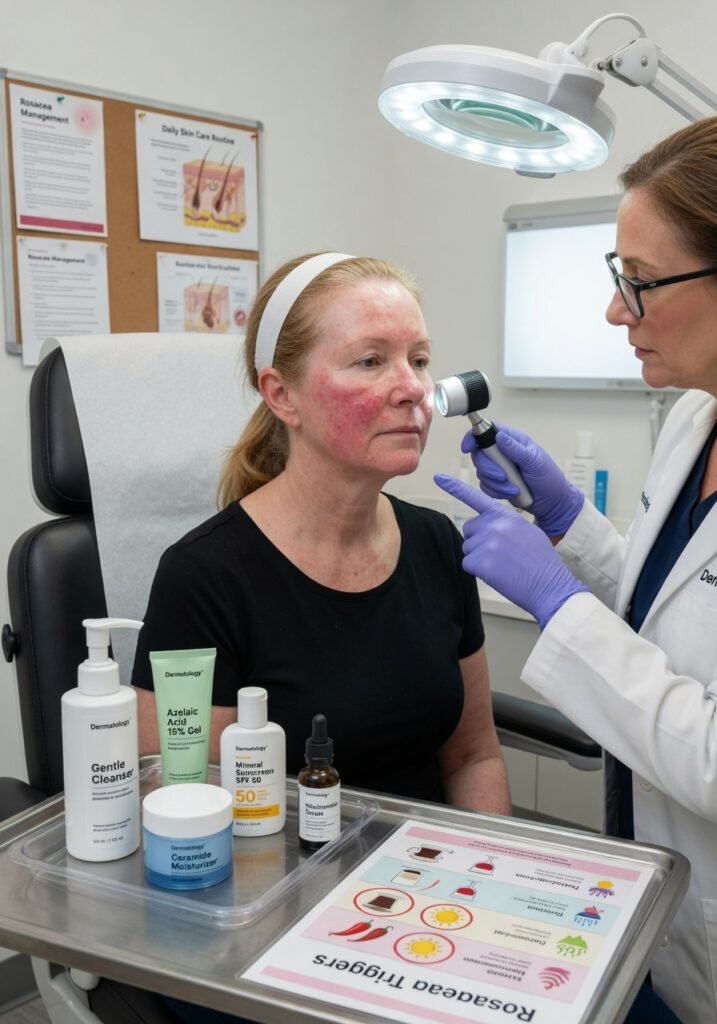
Sarah, a 42-year-old marketing manager, spent three years thinking her persistent facial flushing and acne-like bumps meant she had poor hygiene or needed stronger acne medications. She scrubbed her face twice daily with medicated cleansers, avoided dairy religiously after reading online it caused breakouts, and felt genuinely ashamed during video calls. Her dermatologist’s first words were blunt: “You’ve been making this worse by treating it like acne. This is rosacea, and your skin barrier is already angry. We need to calm it down, not attack it.”
Here’s the misconception that derails most people with rosacea: it’s not acne. It’s not poor hygiene. It’s not something you caused through diet or lifestyle choices. Rosacea is a chronic inflammatory skin condition where your facial blood vessels overreact to normal stimuli—temperature changes, stress, certain foods, even exercise. Your immune system gets confused and starts attacking blood vessels in your face, causing redness, visible blood vessels, and sometimes pustules that look deceptively like acne. But underneath, the mechanism is completely different. Treating rosacea with acne medications often backfires because acne treatments strip away protective oils and irritate an already compromised skin barrier. That’s why so many people with undiagnosed rosacea feel like their skin is getting worse despite their best efforts.
Key Facts About Rosacea
- Rosacea affects approximately 16 million American adults, with women diagnosed more frequently than men, though men often develop more severe forms
- According to the NIH, rosacea typically appears between ages 30 and 60, rarely before age 20
- The CDC reports that fair-skinned individuals of Northern European, Celtic, and Scandinavian descent have the highest prevalence, though rosacea affects all ethnicities
- Four distinct subtypes exist: subtype 1 (flushing and persistent erythema), subtype 2 (papules and pustules), subtype 3 (phymatous changes with skin thickening), and subtype 4 (ocular involvement)
- Approximately 50% of rosacea patients experience ocular symptoms—dry eyes, grittiness, or burning—yet fewer than half report these to their doctors
What’s Actually Happening Inside Your Skin
Think of your facial skin as having a security system. In people with rosacea, that system is set to maximum sensitivity. Normal stimuli—a warm shower, spicy food, emotional stress—trigger an exaggerated immune response involving mast cells and blood vessel reactivity. Your skin releases inflammatory molecules called cytokines that cause blood vessels to dilate and become more permeable. This allows immune cells to leak into surrounding tissue, creating that characteristic redness and the bumps that resemble acne.
Here’s what most articles skip: the role of vascular instability. In rosacea, your facial capillaries don’t just dilate temporarily—they stay partially dilated and become increasingly reactive. Repeated episodes of flushing and inflammation gradually damage the vessel walls themselves. Over time, some capillaries become permanently visible as telangiectasia (those spiderweb-like red lines), and in severe cases, connective tissue can thicken, creating rhinophyma (a bulbous, enlarged nose appearance). This doesn’t happen overnight. It’s why early recognition and management matter.
Causes and Risk Factors
We don’t fully understand why rosacea develops, but we know certain factors shift the odds significantly. Genetics matter—if your parents had rosacea, your risk climbs substantially. Fair skin and Celtic ancestry are protective factors if you think about evolutionary advantage (populations in sunny climates developed darker skin partly to prevent inflammatory conditions), but they’re risk factors now in modern life.
Environmental triggers vary person to person, but common ones include temperature extremes, hot beverages, alcohol (especially red wine and beer), spicy foods, strenuous exercise, emotional stress, and certain skincare ingredients like benzoyl peroxide or salicylic acid. Wind, low humidity, and rapid temperature changes also provoke flares.
Here’s what gets overlooked: small intestinal bacterial overgrowth (SIBO) shows up with unusual frequency in rosacea patients compared to controls. Some research suggests the gut-skin axis matters here—dysbiosis and increased intestinal permeability may trigger systemic inflammation that manifests cutaneously. Demodex mites, microscopic organisms normally present on skin, proliferate excessively in rosacea-prone individuals and may contribute to inflammation, though whether they’re cause or consequence remains debated.
Recognizing the Signs and Symptoms
Most people notice persistent facial redness first, often on the cheeks, nose, chin, and forehead. But the earliest warning sign many miss is frequent flushing—episodes where your face suddenly flushes hot and red, lasting minutes to hours. Pay attention if this happens predictably after specific triggers.
As rosacea progresses, you might develop papules and pustules (small red bumps, sometimes with a whitehead) that look like acne but don’t respond to acne treatment. The skin may feel rough, burning, or stinging even when nothing’s visibly wrong. Some patients report facial swelling, especially on the eyelids or nose. In subtype 4 (ocular rosacea), symptoms include dry, gritty eyes, redness of the sclera, and sensitivity to light—sometimes these eye symptoms appear before any facial changes.
A crucial detail: true rosacea doesn’t have comedones (blackheads or whiteheads). If you see comedones, you likely have acne, rosacea, or both. That distinction changes your treatment entirely.
How Rosacea Gets Diagnosed
There’s no blood test or skin biopsy that confirms rosacea. Diagnosis is clinical, based on your history and what your dermatologist observes. Your doctor will ask about triggers, family history, and whether symptoms improve or worsen with certain treatments.
The National Rosacea Society criteria require at least one of these primary features: flushing, persistent facial erythema, papules/pustules, or telangiectasia. Secondary features that support diagnosis include facial edema, dry skin, burning sensation, plaques, or ocular involvement.
The experience from your side: you’ll describe your symptoms in detail, your doctor examines your face closely (sometimes under magnification), and they rule out similar conditions like lupus, seborrheic dermatitis, or acne. If ocular symptoms exist, you might see an ophthalmologist. This detective work matters because misdiagnosis leads to months of ineffective treatment.
Treatment Options Based on Current Evidence
Topical treatments are first-line for mild to moderate rosacea. Metronidazole gel or lotion (MetroGel, MetroLotion) reduces inflammation and bacterial overgrowth—it’s been used for decades and works particularly well for papulopustular rosacea. Azelaic acid (Finacea, The Ordinary Azelaic Acid Suspension 10%) reduces redness, kills demodex mites, and helps with post-inflammatory hyperpigmentation. Sulfacetamide-sulfur combinations work but have that distinctive rotten-egg smell that many patients dislike.
Ivermectin cream (Soolantra) is newer—FDA-approved in 2014—and specifically targets demodex mites. It works beautifully for many patients with papulopustular rosacea and tends to improve appearance gradually over 3-4 months of consistent use.
Oral antibiotics at sub-antimicrobial doses manage moderate rosacea. Doxycycline 40 mg once daily (Oracea brand, or generic doxycycline hyclate) reduces inflammation without causing antibiotic resistance. Low-dose minocycline also works. These drugs reduce inflammatory cytokines and suppress mast cell activity—they’re not treating infection, they’re modulating inflammation. Most patients need 2-3 months to see full benefit.
For severe rosacea unresponsive to topicals and oral antibiotics, laser therapy—specifically intense pulsed light (IPL) or KTP laser—addresses visible blood vessels and reduces flushing episodes. Results vary, some patients need maintenance treatments yearly.
Oral isotretinoin (Accutane) is reserved for severe, disfiguring rosacea that fails everything else. It’s potent but requires pregnancy prevention, liver monitoring, and dermatology expertise.
Daily Management That Actually Works
Skincare for rosacea demands restraint. Stop double-cleansing. Use a gentle, non-foaming cleanser once or twice daily—cetaphil, CeraVe Hydrating Cleanser, or similar. Lukewarm water only. Pat dry gently, don’t rub.
Your moisturizer matters more than anything else. Use it immediately after cleansing while skin is still slightly damp. Look for ceramides and hyaluronic acid—products like CeraVe Moisturizing Cream (in the tub, not the pump) or Vanicream Moisturizing Cream. Avoid silicones if they seem to trigger flushing in you.
Sunscreen daily—mineral sunscreen (zinc oxide, titanium dioxide) is safer than chemical sunscreen which can irritate. SPF 30 minimum, reapply every two hours if outdoors. UV exposure worsens rosacea significantly.
Trigger avoidance requires tracking. Keep a symptom diary for two weeks. Note what you ate, temperature exposure, stress levels, exercise intensity, and any facial changes. Patterns emerge. If hot showers trigger flushing, take lukewarm ones and apply moisturizer immediately after. If spicy food causes flares, avoid it or take it early in the day when you’re home. If wine does it, try spirits or beer first to see if it’s the tannins or alcohol itself.
For exercise-induced flushing: warm up gradually, avoid overheating (lighter clothing, lower intensity), and apply a thin layer of mineral sunscreen before working out. Swim in cooler pools rather than hot tubs.
Manage stress actively—meditation, yoga, or therapy reduce flushing frequency in many patients. This isn’t placebo; chronic stress elevates inflammatory markers.
Prevention: What the Evidence Shows
You can’t prevent rosacea if genetics loaded the gun, but you can prevent progression and flares. Consistent skincare with the above approach matters. Using topical metronidazole or azelaic acid even during remission periods extends the time between flares for many patients.
The caveat: prevention requires discipline. One week of overindulgence—hot drinks, spicy food, excess alcohol, stress, sun exposure—can undo weeks of calm skin. This frustrates patients, but understanding it shifts expectations. Rosacea management isn’t a cure; it’s lifelong mitigation.
Some evidence suggests omega-3 supplementation and anti-inflammatory diets (Mediterranean-style) reduce rosacea severity, though rigorous trials are limited. Probiotics show mixed results—some formulations help, others don’t. The gut-skin connection suggests benefit, but quality varies.
Frequently Asked Questions
Does rosacea get worse with age?
Yes, untreated rosacea typically progresses. Early subtypes (flushing and erythema) can advance to papulopustular involvement, then potentially phymatous changes with skin thickening. However, early recognition and consistent treatment slow or halt progression significantly. Starting treatment in your 40s versus your 60s makes a measurable difference in long-term outcomes.
Can rosacea go away completely?