Is That Chest Tightness Just Anxiety, or Am I Having a Heart Attack Right Now?
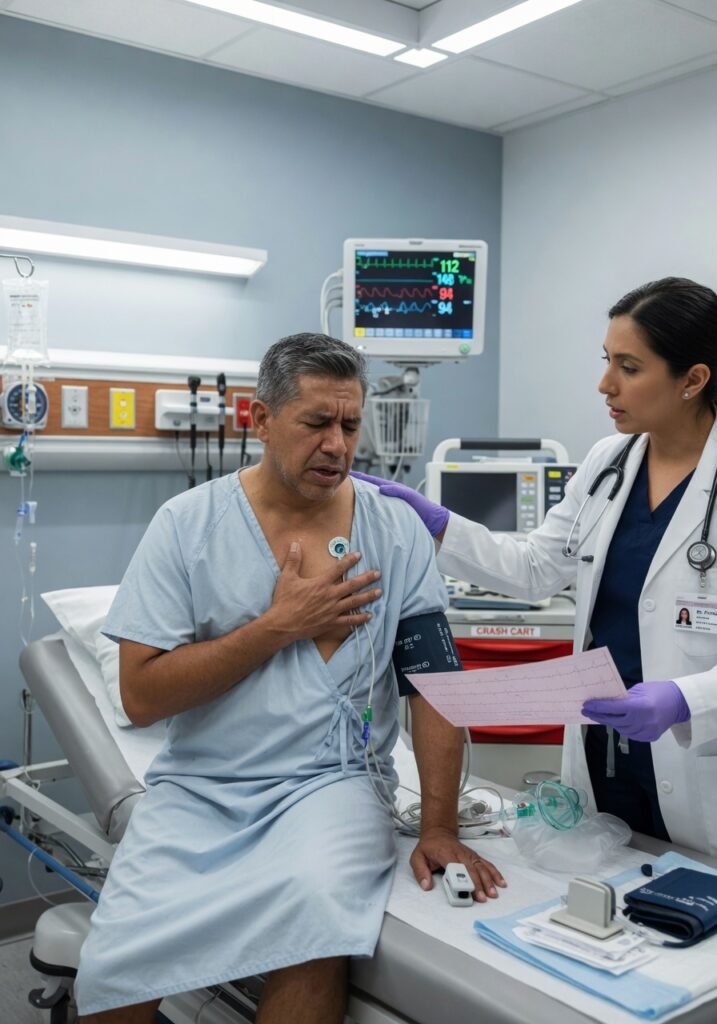
Sarah, a 52-year-old accountant, felt a dull pressure behind her breastbone while sitting at her desk. Her first thought: stress from tax season. She took antacids. Twenty minutes later, the pressure spread to her jaw and left arm. That’s when she called 911. The paramedics found her having an acute anterior wall myocardial infarction. She survived because she acted on a symptom cluster, not a single sensation.
Chest pain terrifies people partly because they can’t reliably distinguish between a heart attack and indigestion by feeling alone. Your heart sits behind layers of muscle, ribs, and lung tissue—which is why cardiac pain doesn’t follow simple rules. The challenge isn’t identifying the “typical” presentation; it’s recognizing when the atypical presentations actually matter.
Key Facts About Chest Pain Emergencies
- Approximately 15% of Americans experience chest pain or discomfort annually, but only 10-15% of these cases involve acute coronary syndrome, according to CDC surveillance data
- Women with acute myocardial infarction are 7 times more likely than men to report jaw pain, nausea, or fatigue as the primary symptom, per a NEJM analysis of over 1.1 million hospitalized patients
- The average delay between symptom onset and hospital arrival is 3-6 hours, with median time from symptom onset to revascularization exceeding 6 hours in nearly 40% of STEMI cases, according to NIH registries
- Troponin I and troponin T blood tests can detect myocardial injury within 2-3 hours of symptom onset, but serial measurements at 3-hour intervals improve diagnostic sensitivity to 99%
- Aortic dissection accounts for only 2-3 per 100,000 hospital admissions but kills 1-2% of patients per hour if untreated in the first 48 hours
Understanding the Chest Pain Emergency: What’s Actually Happening
Think of your heart as an organ with its own dedicated blood supply. When a coronary artery narrows or clots, oxygen-deprived heart muscle sends pain signals. But here’s the subtle part: your nervous system doesn’t send a direct “this is your heart” message. Instead, it activates nerves shared with your arm, jaw, shoulder, and stomach. This is called referred pain. Your brain receives ambiguous signals and essentially guesses the source.
The severity of pain doesn’t predict severity of damage. A completely blocked left anterior descending artery might feel like mild indigestion. A muscle strain around the chest wall might feel terrifying. This disconnect between sensation intensity and actual danger is why we use objective criteria—time, risk factors, accompanying symptoms—to sort true emergencies from false alarms.
Beyond heart attacks, other life-threatening causes share this vague presentation. Pulmonary embolism, aortic dissection, tension pneumothorax, and acute pericarditis can all produce central chest pressure. Your job isn’t to diagnose which one you have; it’s to recognize when the combination of factors suggests something serious enough to justify emergency evaluation.
Causes and Risk Factors: Why Your Chest Hurts Right Now
Acute coronary syndrome (unstable angina or myocardial infarction) remains the most feared cause, and rightfully so. Atherosclerosis narrows coronary arteries over years. A sudden clot or plaque rupture blocks flow completely. Risk factors include age over 45 for men and 55 for women, smoking, diabetes, hypertension, elevated LDL cholesterol, family history, and physical inactivity. Men develop coronary disease roughly 10-15 years earlier than women on average.
Pulmonary embolism occurs when a clot travels to lung arteries, usually originating from leg veins. Immobility during long flights, recent surgery, cancer, oral contraceptive use, and inherited clotting disorders raise your risk. PE produces sudden pleuritic chest pain (worse with breathing) and often shortness of breath.
Aortic dissection happens when the inner lining of your aorta tears. Blood enters the wall itself, creating a false channel. This is catastrophic and rare, but classic in patients with untreated hypertension or connective tissue disorders like Marfan syndrome. The pain is typically sudden, severe, and often described as tearing or ripping—different from the typical squeezing chest pain of heart attacks.
Here’s what most articles miss: esophageal spasm produces genuine chest pain that radiates to the arm and neck, sometimes with diagnostic confusion even for cardiologists. Esophageal spasm involves uncoordinated muscle contractions in your food pipe. It’s benign but agonizing. Distinguishing it from cardiac causes requires esophageal manometry testing, not just EKG.
Other common causes include musculoskeletal pain (reproducible by palpating the chest wall), costochondritis (inflammation where ribs meet the breastbone), pneumonia, pericarditis (heart lining inflammation), anxiety, and gastroesophageal reflux. The problem: benign causes don’t announce themselves clearly. Angina and heart attacks don’t either.
Recognizing the Danger: Signs and Symptoms You Can’t Ignore
Central chest pain or pressure lasting more than a few minutes warrants evaluation, especially if accompanied by shortness of breath, diaphoresis (cold sweat), nausea, or radiation to the arm or jaw. Notice I said “central”—not just left-sided. The myth that cardiac pain always hits the left side leads people to dismiss right-sided chest pain as irrelevant.
Women’s symptoms differ meaningfully. Beyond jaw pain, women commonly report fatigue so severe they can’t climb stairs, indigestion unresponsive to antacids, and unusual shortness of breath during routine activities. Some describe “heaviness” rather than sharp pain. Older adults and diabetics may experience almost no pain at all—a silent ischemia that only shows up on cardiac monitoring.
Early warning signs matter. Many people experience angina—chest discomfort triggered by exertion and relieved by rest—weeks or months before an MI. If your chest tightens during a brisk walk and improves when you sit, that’s unstable angina. It means the situation is deteriorating. Some patients notice new-onset fatigue or dyspnea on exertion months before the acute event. These aren’t dramatic, but they’re real.
Sudden onset distinguishes emergencies from chronic conditions. If the pain hit you during rest or light activity, that’s more ominous than pain triggered by obvious physical exertion. Waking up with chest pressure at 3 AM? Take it seriously. Durations matter too—chest pain lasting more than 20 minutes carries higher risk than brief twinges.
The Emergency Evaluation: What Happens When You Arrive
The paramedics or ED team will obtain a 12-lead electrocardiogram (EKG) within 10 minutes—ideally within minutes of arrival. This electrical recording shows if heart muscle is actively dying or has died. An abnormal EKG with symptoms of acute coronary syndrome (ST elevation on EKG) means you likely need emergency cardiac catheterization, where a cardiologist threads a catheter into your coronary arteries and visualizes the blockage in real-time.
Blood work includes troponin testing (cardiac-specific protein released when muscle dies), complete metabolic panel, CBC, and D-dimer (if PE is suspected). Troponin results take hours, which is why doctors can’t rule out MI in the ED based on one test. You’ll get repeat troponins at 3 hours and possibly 6 hours post-symptom onset. A normal troponin at presentation with normal EKG doesn’t mean you’re safe—it means you’re early.
Chest X-rays reveal pneumonia, pneumothorax, and widened mediastinum (suggesting aortic dissection). CT angiography of the pulmonary arteries (CTPA) rules out PE with excellent sensitivity and specificity. Cardiac ultrasound (echocardiography) may show wall motion abnormalities from recent infarction or other structural problems.
Here’s the reality: the emergency evaluation prioritizes ruling out immediately life-threatening conditions. If you have ST elevation on EKG, you’re going to the catheterization lab regardless of other considerations. If you’re hemodynamically unstable or have signs of shock, advanced imaging takes a backseat to immediate interventions like intubation or vasopressors.
Treatment: What Actually Works
For acute ST-elevation MI (STEMI), primary percutaneous coronary intervention (PCI)—emergency cardiac catheterization with stent placement—is the gold standard. A stent is a metal mesh tube deployed at the site of the blockage, restoring blood flow. This procedure, when performed within 90 minutes of hospital arrival, dramatically improves outcomes compared to thrombolytics alone.
If you arrive at a hospital without catheterization capability, you’ll receive thrombolytics like alteplase or tenecteplase—clot-busting medications given intravenously. These work within hours but carry bleeding risk. High-dose aspirin (usually 325 mg) and a P2Y12 inhibitor like clopidogrel (Plavix) or ticagrelor (Brilinta) prevent further clotting. These dual antiplatelet agents are standard care.
For non-STEMI (unstable angina or NSTEMI), the approach depends on risk stratification. High-risk patients may undergo early invasive catheterization. Moderate-risk patients receive medical management with anticoagulation (heparin or enoxaparin) and antiplatelet therapy, then catheterization if they remain unstable or have recurrent symptoms.
Beta-blockers like metoprolol slow your heart rate and reduce myocardial oxygen demand. ACE inhibitors like lisinopril protect the left ventricle from remodeling after injury. High-intensity statins like atorvastatin (80 mg daily) reduce future events. Nitrates provide symptom relief but don’t prevent death. Morphine is often given for pain and anxiety.
For pulmonary embolism, anticoagulation with unfractionated heparin, enoxaparin, or fondaparinux prevents clot propagation. Massive PE with hemodynamic instability may warrant thrombolysis or catheter-based thrombectomy. Aortic dissection usually requires blood pressure control (typically with nicardipine IV) and cardiothoracic surgery.
Practical Daily Management: Staying Ahead of Crisis
If you have established coronary disease, know your angina pattern. Does it reliably occur at a certain activity level? Does your usual dose of sublingual nitroglycerin work predictably? Any change in pattern—new pain at rest, pain lasting longer than usual, pain not relieved by usual nitroglycerin dose—means you’re having unstable angina and need emergency evaluation.
Keep sublingual nitroglycerin accessible at all times if prescribed. Check expiration dates monthly; nitroglycerin degrades rapidly. If you take a dose and pain persists after 5 minutes, call 911. Don’t drive yourself to the hospital. Paramedics can start treatment en route.
Know your personal risk factors and what they mean behaviorally. If you have diabetes, monitor blood glucose aggressively—both hyperglycemia and hypoglycemia increase cardiac event risk. If you have hypertension, check your BP regularly and report consistently elevated readings to your doctor. Medication adjustments may prevent MI.
Recognize stress as a real cardiac trigger, but not the primary one. Emotional stress can precipitate plaque rupture in vulnerable atherosclerotic lesions. Exercise stress testing (treadmill or pharmacologic) reveals whether your coronaries can handle exertion. Knowing your limits prevents unnecessary emergency runs and genuine emergencies alike.</p