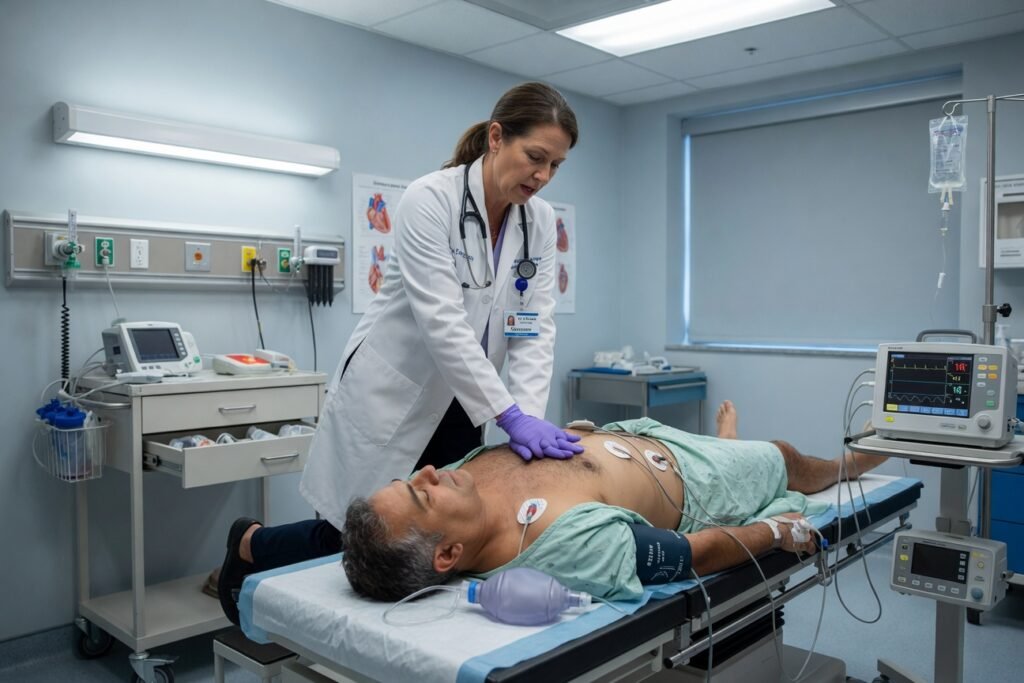
CPR: When and How to Perform It Correctly
A 67-year-old man collapsed at the grocery store in front of his wife. Within 30 seconds, a bystander started chest compressions. By the time the paramedics arrived seven minutes later, he was still conscious and talking. Research shows that bystanders initiate CPR in only 32% of out-of-hospital cardiac arrests, yet when they do, survival rates nearly double compared to waiting for emergency responders alone.
That statistic—from CDC data tracking over 150,000 cardiac events annually—represents something most people don’t realize: the person standing next to a collapsed victim might be the difference between life and permanent brain damage or death. Yet many people delay CPR because they’re unsure of the exact technique, worried about cracking ribs, or uncertain whether the person actually needs it. This article walks you through what CPR actually is, when to use it, and how to do it in a way that genuinely helps.
Key Facts About CPR
- Chest compressions alone at a rate of 100 to 120 compressions per minute are as effective as hands-and-mouth CPR in adults, according to the American Heart Association’s 2020 guidelines.
- Brain damage begins within 4 to 6 minutes of cardiac arrest without any intervention; permanent neurological injury becomes likely after 10 minutes.
- Bystander CPR performed within the first two minutes of collapse increases survival to hospital discharge by approximately 40% compared to no CPR.
- Approximately 475,000 out-of-hospital sudden cardiac deaths occur annually in the United States, with a survival-to-discharge rate of only 10.6% when no bystander intervention occurs.
- Studies using audiovisual CPR devices found that real-time feedback on compression depth and rate improves survival outcomes by 23% in emergency settings.
Understanding CPR: What Actually Happens
When someone’s heart stops beating effectively, blood stops flowing to the brain and vital organs. Think of CPR as manual blood-pumping—you’re physically compressing the heart between the breastbone and spine 100 to 120 times per minute to force blood through the body artificially. It’s not restarting the heart. It’s keeping tissues alive long enough for a defibrillator or paramedic to address the underlying problem.
The brain needs oxygen continuously. Without it, neurons begin dying. CPR performed immediately might preserve enough brain function that when the heart’s rhythm is restored—either through defibrillation or medication—the person wakes up. CPR performed even slightly too late might keep someone alive but with catastrophic brain damage.
This is why speed matters more than perfection. Many people delay CPR because they worry they’ll do it wrong. The truth? Imperfect compressions in the right location at roughly the right pace save lives. Poor CPR is exponentially better than no CPR.
When CPR Is Needed: Recognizing Cardiac Arrest
Cardiac arrest is when the heart stops pumping blood effectively. The person becomes unresponsive, stops breathing normally, and has no pulse. This is different from a heart attack, where blood flow to the heart muscle is blocked but the heart still beats.
The immediate signs are straightforward: an unresponsive person who isn’t breathing or gasping for air. You don’t need to check for a pulse—the AHA changed guidelines specifically because most people take too long checking pulses and delay CPR. If someone collapses suddenly, becomes unresponsive, and isn’t breathing normally, start CPR.
What about agonal breathing—those odd, gasping breaths some people make after collapse? That’s not real breathing. It’s a dying brain’s reflex. It should trigger CPR, not delay it. Many bystanders incorrectly interpret gasping as a sign the person is breathing and delay compressions. Don’t fall into that trap.
Risk Factors: Who’s Most Vulnerable
Sudden cardiac arrest strikes people across age groups and health statuses, but certain factors increase risk substantially. Coronary artery disease remains the leading cause—about 80% of out-of-hospital cardiac arrests occur in people over 60. Men have sudden cardiac death at rates two to three times higher than women before age 75.
Prior heart attack, ventricular arrhythmias, heart failure, and ejection fraction below 35% all increase risk. Left ventricular hypertrophy—thickened heart muscle from untreated high blood pressure—silently damages the electrical system. Medications like certain antiarrhythmics actually increase arrhythmia risk paradoxically; digitalis toxicity causes fatal rhythms; electrolyte abnormalities from dehydration or dialysis problems trigger collapses.
Here’s a less-discussed risk factor that matters: sudden exertion in sedentary people. The combination of years without exercise plus sudden intense activity can precipitate lethal arrhythmias, especially in men over 40 with undiagnosed coronary disease. Young athletes with undetected hypertrophic cardiomyopathy collapse during competition because the structural abnormality was never found on screening. That’s why cardiac screening matters in sports programs.
What Happens During Cardiac Arrest: Warning Signs
Most sudden cardiac arrests happen without preceding symptoms, which is what makes them sudden. But some people do experience warning signs in the hours or minutes before collapse: chest discomfort described as pressure or heaviness, shortness of breath disproportionate to activity, unusual fatigue, heart palpitations described as fluttering or racing, or dizziness on exertion.
The collapse itself is the presentation—loss of consciousness followed by the absence of normal breathing. Some people convulse briefly because of severe brain hypoxia, not because they’re having a seizure. The skin may turn pale or bluish. There’s no warning siren, no countdown. One moment a person is conscious, the next moment they’re down.
In witnessed arrests—where someone saw the collapse—the timeline matters acutely. CPR started within the first minute gives someone a chance. CPR started after five minutes has already allowed significant brain damage. This is why calling 911 or using a public defibrillator immediately matters alongside compressions.
Diagnosis and Assessment in the Field
In the real world, you’re not performing a diagnosis—you’re recognizing a life-threatening emergency and responding. The criteria are simple: unresponsiveness plus abnormal or absent breathing. If someone collapses and doesn’t respond to shoulder shaking and verbal stimulation, and they’re not breathing normally or only gasping, cardiac arrest is your working assumption.
The responder’s job isn’t to confirm the diagnosis—that’s what the ECG monitor in the ambulance does. Your job is to start compressions immediately and keep them going until emergency personnel arrive or the person starts showing signs of life. In hospital settings, electrocardiography reveals the underlying rhythm: ventricular fibrillation (VF) is the most treatable rhythm and responds best to rapid defibrillation; asystole (flatline) has the worst prognosis; pulseless electrical activity looks like organized activity on the monitor but produces no pulse.
For bystanders, there’s no diagnosis step. There’s recognition and action. That simplification was intentional—it removes excuses to delay.
How to Perform CPR Correctly
Position the person: Place them on their back on a firm surface. Remove heavy clothing from the chest if needed but don’t waste time removing all garments.
Hand placement: Place the heel of one hand on the center of the chest between the nipples. Place your other hand on top, interlacing fingers. Your shoulders should be directly above your hands, forming a straight line from shoulders through elbows to the person’s chest.
Compression depth and rate: Push hard and fast at least 2 inches deep but not exceeding 2.4 inches, at a rate of 100 to 120 compressions per minute. A helpful rhythm: the beat of the song “Stayin’ Alive” by the Bee Gees is approximately 103 beats per minute and matches the needed rate. Push at that pace without stopping except briefly if absolutely necessary.
For hands-only CPR (recommended for untrained bystanders): Continue chest compressions until emergency responders arrive or the person shows signs of circulation—spontaneous gasping, movement, or opening eyes. Don’t stop to check for a pulse. Keep pushing.
For trained rescuers: If trained in rescue breathing, provide 30 compressions followed by 2 rescue breaths, then repeat. But if you’re uncomfortable doing rescue breathing, compressions alone are just as effective in adults.
Using an automated external defibrillator (AED): If one is available nearby (often in public buildings, gyms, or airports), have someone retrieve it immediately. Turn it on, follow the voice prompts, place the pads as directed on the chest, and let it analyze the rhythm. If it recommends a shock, ensure no one is touching the person and press the shock button. Resume CPR immediately after the shock.
Keep going: Continue CPR until paramedics arrive and take over, the person shows clear signs of life, you’re too exhausted to continue safely, or a physician declares the person dead. Fatigue is real—if you’re alone and becoming exhausted, switching every two minutes is better than stopping.
Managing the Aftermath: What Happens Next
After emergency responders arrive and take over, they’ll perform advanced cardiac life support—establishing IV access, administering medications like epinephrine or amiodarone, intubating the airway, and transporting to a hospital with cardiac catheterization capability. Many cardiac arrests in younger people are caused by coronary artery blockage that requires emergency angiography and stent placement.
In the hospital, survivors of cardiac arrest are placed in an intensive care unit, often sedated and on mechanical ventilation initially. Targeted temperature management (cooling the body to 32-36°C for 24 hours) has been shown to improve neurological outcomes in some survivors by reducing brain inflammation. Serial neurological exams, EEGs, and advanced brain imaging determine whether brain recovery is possible.
The psychological impact on the bystander who performed CPR is also real and often underappreciated. Debriefing with the hospital or paramedics about what happened and knowing whether the person survived helps many rescuers process the experience. Don’t minimize the emotional weight of performing CPR on someone.
Prevention: Understanding Your Risk
Preventing cardiac arrest means managing modifiable risk factors. Treat high blood pressure aggressively; uncontrolled hypertension causes left ventricular hypertrophy, which predisposes to arrhythmias. Control cholesterol and take statins if you have coronary risk factors. Don’t smoke—smoking increases sudden cardiac death risk substantially even in young people.
Cardiac screening matters for certain groups. Young athletes should be screened with ECG and echocardiography if there’s family history of sudden cardiac death or symptoms like syncope with exertion. Patients with known coronary disease should be on beta-blockers and ACE inhibitors unless contraindicated; these prevent sudden death.
Know your baseline cardiac status. If you have risk factors, get an ECG or stress test. Some people carry undiagnosed structural heart disease. Implantable cardioverter-defibrillators (ICDs) prevent sudden cardiac death in people with prior arrest, ejection fraction under 35%, or certain arrhythmia syndromes. Home automated external defibrillators are available for high-risk individuals.
Finally, learn CPR. You might never need it. But if you do need it, you’ll wish you had.
Frequently Asked Questions
What if I break someone’s ribs doing CPR?
Sources & Medical References
HealthTopics.com articles are based on peer-reviewed medical research and guidance from the NIH, CDC, and WHO. See our editorial policy for full sourcing standards.