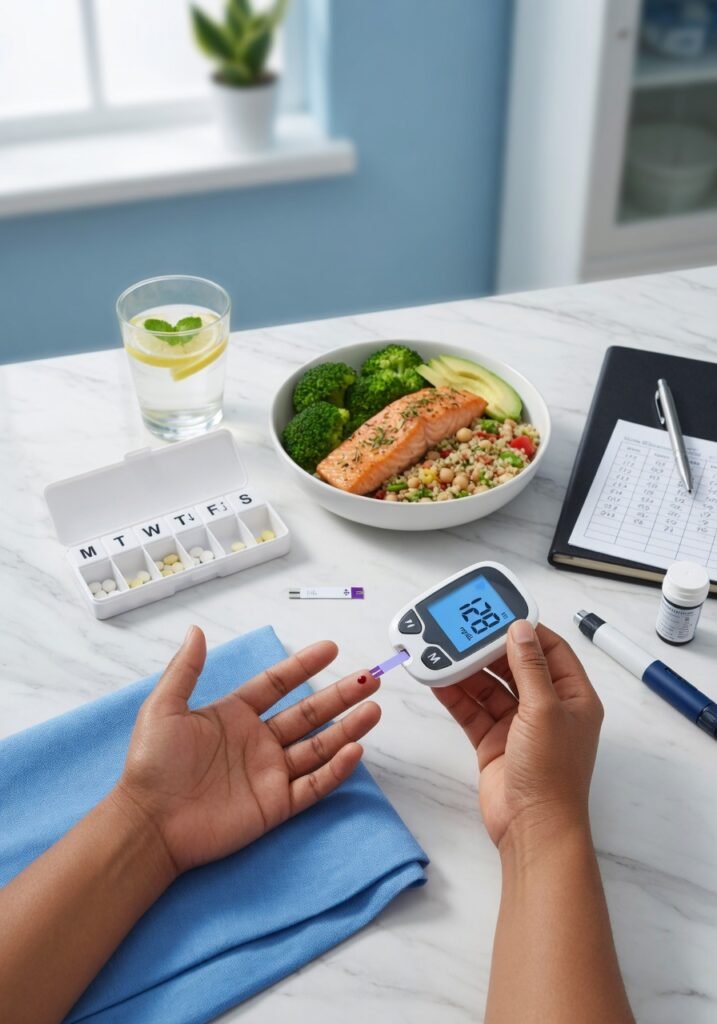

Diabetes Diet: What to Eat, Avoid, and Portion Guide
Sarah, a 48-year-old accountant, sat in my office genuinely confused. “My neighbor’s diabetic and she eats pasta all the time,” she said. “So when my doctor said I have type 2 diabetes, I thought I just needed to cut out sugar. No more candy, no more soda, done.” Three months later, her fasting glucose was still 165 mg/dL. She’d eliminated desserts but hadn’t touched her portion sizes at breakfast—two slices of whole wheat toast with jam, a bowl of oatmeal, orange juice. All carbohydrates. All spiking her blood sugar just as much as ice cream would.
Here’s what most people get wrong about diabetes diet: it’s not about avoiding sugar. It’s about managing total carbohydrate intake, protein timing, and how foods interact with your individual metabolism. You can absolutely eat carbohydrates with diabetes. You just can’t eat them the way you did before your diagnosis—and honestly, most people need to rethink portions and combinations regardless of their diagnosis.
Key Facts About Diabetes Diet
- According to the CDC, approximately 37.3 million Americans have diabetes, and over 90% have type 2 diabetes where diet directly controls blood glucose levels
- A person with type 2 diabetes should limit carbohydrates to roughly 45-60 grams per meal, compared to the average American consuming 150+ grams per meal
- The American Diabetes Association reports that pairing carbohydrates with protein or fat can reduce post-meal blood sugar spikes by 25-35% compared to eating carbs alone
- Portion size matters more than food type for 70% of newly diagnosed type 2 diabetics—one serving of pasta (1 cup cooked) not three cups is the actual recommendation
- Soluble fiber intake of 14 grams daily (found in beans, oats, apples) is associated with 5-10% improvements in HbA1c levels over 8-12 weeks
Understanding How Your Body Handles Food Differently Now
Think of your pancreas as a factory worker controlling a warehouse. When you eat carbohydrates, they break down into glucose. That glucose enters your bloodstream, and your pancreas sees the inventory rising. It releases insulin—think of it as the warehouse manager—which opens the doors to your cells so they can take in that glucose for energy or storage. Simple system, right?
In type 2 diabetes, something goes wrong with the warehouse doors. Your cells stop responding to insulin the way they should. The glucose piles up in your bloodstream while your cells are saying “no thank you.” Your pancreas, sensing the backup, works overtime pumping out more and more insulin. Eventually, it gets exhausted. Your blood sugar stays elevated, and here’s the kicker: all that excess insulin floating around actually makes your body hold onto fat, particularly around your midsection. You didn’t gain weight because you’re lazy. You gained weight partly because your metabolism is malfunctioning.
This is why diet works better than people expect for type 2 diabetes—and why the wrong diet fails spectacularly. If you eat meals that spike your glucose rapidly, you’re asking an already exhausted pancreas to work harder. If you eat balanced meals with fiber, protein, and controlled carbohydrates, you’re reducing the demand on that system. Your cells can actually start responding to insulin again over time.
Causes and Risk Factors That Actually Matter
The classic risk factors everyone mentions: family history, obesity, physical inactivity. True enough. But here’s what I notice in clinic that rarely makes it into articles: sleep deprivation is a silent risk factor that patients completely underestimate. A NIH study found that people sleeping less than six hours nightly have a 28% higher risk of developing type 2 diabetes than those sleeping seven to nine hours. Why? Sleep loss impairs glucose metabolism directly and increases cortisol, which makes your cells more insulin-resistant. You can eat perfectly and still spiral into diabetes if you’re running on four hours of sleep nightly.
Race and ethnicity matter too, though not genetically the way people think. Hispanic Americans, Black Americans, and Native Americans have higher diabetes rates—but mostly because of disparities in healthcare access, food insecurity, and chronic stress, not genetic destiny. A 52-year-old Black man and a 52-year-old white man with identical weights and activity levels don’t have different diabetes risk biologically. They might have different risks based on neighborhood food options and healthcare quality, though.
Other legitimate risk factors: gestational diabetes during pregnancy, polycystic ovary syndrome in women, certain medications like corticosteroids, and even smoking—which increases insulin resistance by about 40% independent of weight.
What You’ll Actually Notice Before Diagnosis
Most people catch type 2 diabetes during a routine physical blood test, not from symptoms. But if you’re paying attention, you’ll notice things. Increased thirst that’s genuinely annoying—you’re drinking water constantly. Frequent urination, especially at night disrupting sleep (which worsens the problem, remember). Fatigue that doesn’t match your activity level. A colleague once described it to me: “I felt like I was running through mud all day.”
The overlooked early warning sign: recurrent infections. Women with undiagnosed diabetes get more yeast infections because elevated glucose feeds the fungus. Men get more urinary tract infections. Both genders get more skin infections that seem stubborn. Your immune system isn’t broken, but high blood sugar impairs white blood cell function.
Some people experience blurred vision or numbness in their feet—but that’s already moderate diabetes, not early stage. If you’re having those symptoms, you’ve probably been high for months.
How Doctors Actually Diagnose This
Your doctor orders a fasting glucose test—you show up after not eating for 8-12 hours, they draw blood, and measure your glucose. Normal is under 100 mg/dL. Prediabetes is 100-125 mg/dL. Diabetes is 126 or higher on two separate tests.
They also order an HbA1c test, which is more useful because it shows your average blood sugar over the past three months. It’s less affected by what you ate yesterday or whether you were stressed during the blood draw. HbA1c under 5.7% is normal, 5.7-6.4% is prediabetes, and 6.5% or higher means diabetes.
They might also do a glucose tolerance test where you drink a sugary liquid and they measure how your body handles it over two hours—more revealing of how your metabolism actually functions.
From a patient perspective, it often feels anticlimactic. Blood work, conversation about diet and exercise, prescription handed over. Then the actual work begins when you’re home trying to figure out what to actually eat.
Treatment: What Actually Works and Why
Lifestyle modification—that’s diet and exercise—genuinely is first-line treatment for type 2 diabetes, and honestly, it works better than most people believe. A 5-10% weight loss combined with consistent physical activity can bring many people’s blood sugar into normal range without medication. A study published in JAMA found that intensive lifestyle intervention prevented or delayed diabetes development by 58% in prediabetic adults.
But lifestyle alone doesn’t work for everyone, and that’s not failure—that’s biology. Your pancreas might be too exhausted.
Metformin is typically the first medication prescribed. It reduces how much glucose your liver produces and improves insulin sensitivity in your cells. Most people tolerate it fine, though stomach upset is common initially. Take it with food.
If metformin alone doesn’t bring your HbA1c to target (usually under 7%), your doctor might add a GLP-1 receptor agonist like semaglutide (Ozempic) or tirzepatide (Mounjaro). These slow stomach emptying and increase insulin release when your blood sugar is high. They also suppress appetite—intentionally. People lose 10-15% of body weight on these drugs, which further improves diabetes control. Yes, people use them for weight loss without diabetes now, which is a separate conversation.
SGLT2 inhibitors like empagliflozin (Jardiance) work differently—they make your kidneys dump glucose into your urine. Sounds odd, but it works.
Insulin is reserved for when the pancreas truly can’t keep up anymore, or for type 1 diabetes where insulin production is zero.
Practical Daily Management: Concrete Strategies
Plate composition matters more than perfection. Fill half your plate with non-starchy vegetables. One quarter with lean protein—chicken, fish, tofu, beans. One quarter with whole grains or starchy vegetables in controlled amounts. This simple visual guide works better than calorie counting for most people.
Measure portions for one week. Most people drastically underestimate portion sizes. Use a kitchen scale for pasta, rice, and grains for just seven days. You’ll internalize what a real serving looks like. One cup of cooked rice is about 45 grams of carbohydrate. Most people eat two or three cups per meal.
Eat carbohydrates with protein or fat at every meal. Apple with almond butter, not apple alone. Toast with eggs and avocado, not toast with jam. The fiber, protein, and fat slow glucose absorption, preventing spikes.
Drink water, not calories. One 20-ounce bottle of regular soda contains 65 grams of carbohydrate. That’s like eating four slices of bread in liquid form in five minutes. Your blood sugar doesn’t stand a chance.
Monitor your own glucose if prescribed a meter. Many people get meters and never use them. Use yours two hours after meals to see which foods actually spike you. Everyone responds slightly differently. Some people tolerate white rice fine; others spike dramatically. You need data about your own body.
Prevention: What Actually Prevents Diabetes
If you have prediabetes, you can prevent progression to type 2 diabetes. The Diabetes Prevention Program study showed that 150 minutes of moderate physical activity weekly plus a 7% weight loss reduced diabetes risk by 58% over three years. That’s legitimate prevention.
The caveat: you have to maintain it. People who dropped back to their old habits regained the benefit. This isn’t something you do for three months and stop.
For people without prediabetes, prevention means not letting weight creep up, sleeping adequately, managing stress (cortisol matters), and regular activity. Resistance training specifically improves insulin sensitivity—muscle tissue is metabolically active and uses glucose efficiently.